

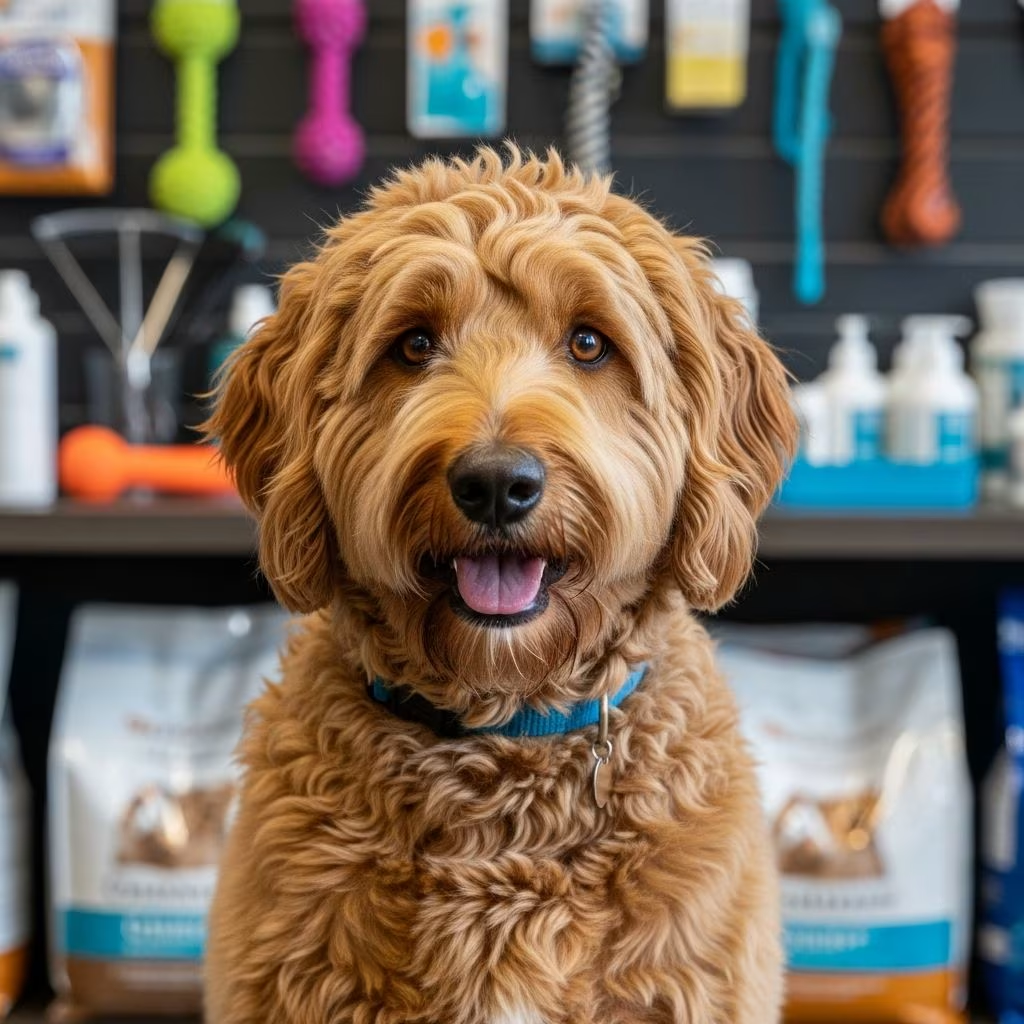
Labradoodles have captured hearts worldwide as affectionate, smart dogs with low-shedding coats, originating from a deliberate cross between Labrador Retrievers and Poodles. Developed initially for service work, they now thrive as family pets, therapy dogs, and companions due to their gentle nature and adaptability.
The Fascinating Origins of the Labradoodle
The story of the Labradoodle begins in the 1980s in Australia, spearheaded by Wally Conron at the Royal Guide Dog Association of Victoria. Conron aimed to create a guide dog suitable for a visually impaired woman whose husband suffered from severe allergies. By crossing a standard Poodle – known for its low-shedding, curly coat – with a Labrador Retriever – prized for its calm temperament and trainability – the first Labradoodles emerged. One standout puppy, Sultan, demonstrated exceptional qualities, sparking further development.
While the term “Labradoodle” appeared earlier in Sir Donald Campbell’s 1955 autobiography, describing his own Labrador-Poodle mix named Maxie, it was Conron’s work that popularized the hybrid. Early litters showed promise, with 29 out of 31 puppies qualifying as guide dogs, far exceeding typical success rates.
Australian breeders refined the mix in the 1990s by introducing breeds like the English and American Cocker Spaniels to enhance coat texture and body structure, leading to the Australian Labradoodle (ALD). This multi-generational breeding focused on consistency in appearance, health, and personality, distinguishing it from first-generation crosses.
Defining the Australian Labradoodle Breed
The Australian Labradoodle represents a stabilized hybrid, bred over generations from Australian Labradoodle parents. According to breed standards, a purebred ALD requires four consecutive generations of like-to-like matings, ensuring predictable traits without fresh infusions of other breeds. Organizations like the Australian Labradoodle Association of America (ALAA) oversee this development, emphasizing temperament, coat quality, and structural soundness through rigorous health testing.
- Multi-generational breeding: Both parents are ALDs, producing consistent litters unlike F1 crosses.
- People-oriented focus: Exceptional eye contact and eagerness to please set them apart.
- Breed infusions: Limited additions of Cocker Spaniels for silky coats and sturdy builds, with DNA tracking to maintain purity.
Not recognized by major kennel clubs like the AKC as a pure breed, Labradoodles remain a designer hybrid, but their standardized traits make ALDs reliable companions.
Physical Characteristics and Variations
Labradoodles vary by generation and size, influenced by parent breeds. First-generation (F1) crosses yield unpredictable traits, while multi-generational ones offer uniformity.
| Size Category | Height | Weight | Typical Use |
|---|---|---|---|
| Miniature | 14-16 inches | 15-30 lbs | Apartment living, small families |
| Medium | 17-20 inches | 30-45 lbs | Active households |
| Standard | 21-24 inches | 45-65 lbs | Service work, large yards |
Coats range from woolly and curly (most hypoallergenic) to fleece-like or shaggy, with low-shedding qualities not guaranteed in early generations. Colors include black, chocolate, apricot, red, and parti patterns. Their square, athletic build combines the Poodle’s elegance with the Labrador’s sturdiness.
Temperament: Why Labradoodles Win Hearts
Labradoodles embody the best of their parent breeds: the Labrador’s outgoing friendliness and the Poodle’s sharp intellect. They are intelligent, trainable, and deeply bonded to humans, making them intuitive therapy and service dogs.
- Affectionate and loyal: They crave companionship, often shadowing family members.
- Playful yet gentle: High energy suits active lifestyles, but they remain patient with children and other pets.
- Sociable: Non-aggressive watchdogs who greet strangers warmly.
- Trainable: Eager to learn tricks and commands, excelling in obedience.
Early socialization curbs puppy bounciness, fostering well-mannered adults. Higher-generation Labradoodles predictably display calm, even tempers.
Grooming and Coat Care Essentials
Despite low shedding, Labradoodles require regular maintenance to prevent matting. Woolly coats need brushing 2-3 times weekly; fleece types daily during shedding seasons.
- Brushing: Use a slicker brush and comb to remove tangles.
- Bathing: Every 4-6 weeks with dog-specific shampoo.
- Professional grooming: Every 6-8 weeks for clips like teddy bear or kennel cuts.
- Ear and nail care: Clean floppy ears weekly; trim nails monthly.
Hypoallergenic claims vary; not all are suitable for severe allergies, as dander persists.
Health Considerations and Lifespan
Labradoodles enjoy hybrid vigor but inherit risks from parent breeds. Average lifespan is 12-15 years with proper care. Key concerns include:
- Hip and elbow dysplasia: Screen parents via OFA certifications.
- Progressive retinal atrophy (PRA): Genetic testing recommended.
- Ear infections: Due to floppy ears and water-prone coats.
- Addison’s disease: Rare but monitor for symptoms.
Choose breeders providing health clearances. Annual vet checks, balanced diet, and exercise mitigate issues.
Training Your Labradoodle for Success
Their intelligence shines in training; start early with positive reinforcement. They master agility, obedience, and nosework effortlessly.
- Basic commands: Sit, stay, come – achieved in weeks.
- Socialization: Expose to varied environments by 12 weeks.
- Mental stimulation: Puzzle toys prevent boredom-induced mischief.
- Exercise needs: 60-90 minutes daily, mixing walks, fetch, and swims.
Consistent leadership yields a responsive, happy dog.
Nutrition and Exercise for Optimal Health
Fuel their energy with high-quality kibble suited to size and activity. Portion control prevents obesity; adults need 2-3 cups daily, split into meals.
Exercise blends physical and mental workouts:
- Daily walks or runs.
- Swimming – ideal for joints.
- Interactive play like fetch or tug.
Avoid overfeeding treats; maintain lean body condition.
Labradoodles in Families and Lifestyles
Versatile for apartments (mini sizes) or homes with yards, they adapt well if exercised. Excellent with kids, seniors, and other animals, their gentle vibe suits therapy roles.
Considerations:
- Allergies: Test via breeder visits.
- Time commitment: Not for absent owners.
- Cost: $2000-$4000 from ethical breeders.
Frequently Asked Questions (FAQs)
Are Labradoodles truly hypoallergenic?
Many have low-shedding coats reducing allergens, but no dog is 100% hypoallergenic. Individual reactions vary.
How much exercise do Labradoodles need?
At least 60 minutes daily, plus mental challenges to prevent hyperactivity.
Do Labradoodles make good service dogs?
Yes, especially ALDs bred for temperament; 29/31 early ones succeeded as guides.
What’s the difference between Labradoodle and Australian Labradoodle?
Australian versions are multi-generational with added spaniel for consistency.
How often should I groom a Labradoodle?
Brush 2-3 times weekly; professional every 6-8 weeks.
References
- ALD HISTORY | WALA Labradoodles — WALA Labradoodles. 2023. https://www.walalabradoodles.org/about-australian-labradoodles/australian-labradoodle-history
- About – ALAA – Australian Labradoodle Association of America — ALAA. 2024. https://alaa-labradoodles.com/about/
- History of Australian Labradoodles — Legendary Labradoodles. 2023. https://legendarylabradoodles.com/labradoodles-101.html
- Labradoodle – Wikipedia — Wikipedia. 2025-01-15. https://en.wikipedia.org/wiki/Labradoodle
- History of Labradoodles – Canadoodle — Canadoodles. 2024. https://canadoodles.com/about-labradoodles/history-of-the-labradoodle/



