

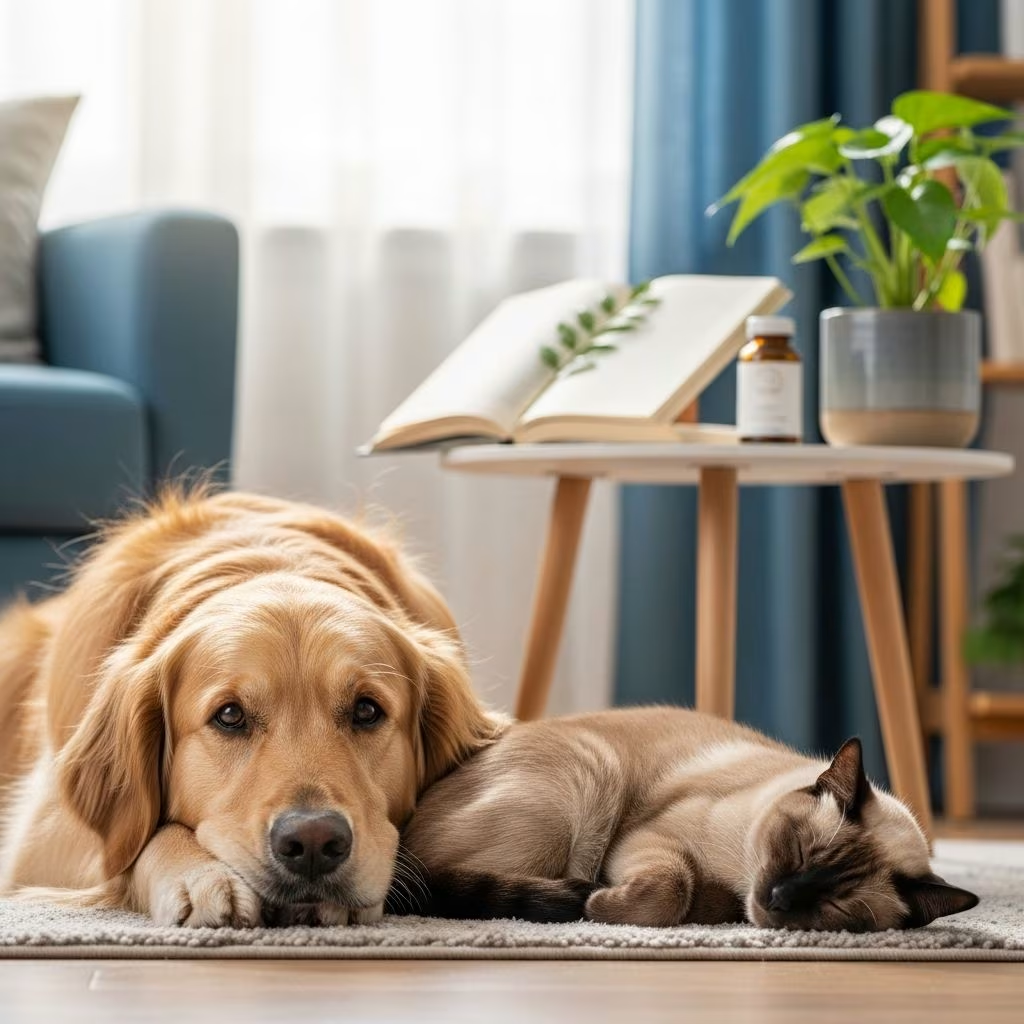
Understanding L-Theanine: A Natural Calming Solution for Pets
L-Theanine is a nutritional supplement gaining recognition among veterinarians and pet owners as an effective, natural approach to managing anxiety in dogs and cats. This amino acid, naturally derived from green tea leaves, has become increasingly popular for its ability to promote relaxation and emotional well-being without the sedative effects associated with some pharmaceutical alternatives. Understanding how L-Theanine works and its applications can help pet owners make informed decisions about their pets’ mental health and stress management.
What Is L-Theanine?
L-Theanine is an amino acid that occurs naturally in green tea leaves and has been studied extensively for its calming properties in both humans and animals. The supplement is available under the brand name ANXITANE®, which has been formulated specifically for use in dogs and cats. Unlike sedative medications that may cause drowsiness or impair cognitive function, L-Theanine works through a unique mechanism that promotes relaxation while maintaining alertness and normal functioning.
The compound’s popularity stems from its ability to cross the blood-brain barrier, where it exerts its calming effects by modulating key neurotransmitters responsible for stress and anxiety responses. This characteristic makes L-Theanine a valuable tool for veterinarians seeking non-pharmaceutical interventions for anxiety-related conditions in companion animals.
How L-Theanine Works in Your Pet’s Brain
The mechanism by which L-Theanine produces its calming effects involves several important neurotransmitter systems in the brain. When ingested, L-Theanine crosses the blood-brain barrier and interacts with glutamate receptors, reducing excitatory signals that contribute to anxiety and hyperactivity. Most significantly, L-Theanine increases the production of gamma-aminobutyric acid (GABA), an inhibitory neurotransmitter that helps regulate anxiety and stress responses.
Additionally, L-Theanine influences the production of serotonin and dopamine, neurotransmitters that play crucial roles in regulating mood and emotional well-being. By increasing alpha brain waves, L-Theanine promotes what researchers describe as a state of “wakeful relaxation,” where pets remain alert and responsive while experiencing reduced anxiety. This mechanism distinguishes L-Theanine from sedative medications, as it does not impair motor skills, cognitive function, or alertness—a significant advantage for pets requiring anxiety management alongside normal daily activities.
Primary Benefits of L-Theanine for Dogs and Cats
Stress Reduction During Challenging Events
One of the most well-documented benefits of L-Theanine is its ability to reduce stress during specific stressful events. Dogs and cats often experience anxiety during veterinary visits, thunderstorms, fireworks, car rides, and travel. L-Theanine helps pets cope with these temporary stressors by promoting a relaxed mental state. In a notable 2015 study examining storm sensitivity in dogs, researchers found that owners reported a “significant decrease” in global anxiety scores during thunderstorms after their dogs received L-Theanine supplementation. Additionally, the time required for dogs to return to their normal behavioral baseline following stressful events was notably reduced.
Anxiety and Phobia Management
Beyond temporary stressful events, L-Theanine has proven effective in managing chronic anxiety conditions, including separation anxiety, noise phobias, and fear of strangers. For cats, L-Theanine can be particularly beneficial during environmental changes, introductions to new pets or family members, or relocation to new homes. The supplement helps manage undesirable anxiety-related behaviors such as excessive vocalization, aggression, hiding, and destructive tendencies.
Behavior Modification Support
L-Theanine’s calming properties make it an excellent adjunct to behavior modification programs. A 2010 study demonstrated that dogs receiving behavioral therapy combined with L-Theanine showed greater reductions in anxiety-related behaviors—including panting, drooling, lip licking, yawning, seeking attention, vocalizing, and compulsive behaviors—compared to dogs receiving behavioral therapy alone. This synergistic effect suggests that L-Theanine can enhance the effectiveness of professional training and behavioral interventions.
Physiological Stress Markers
Beyond behavioral improvements, L-Theanine has been shown to reduce physiological markers of stress. Elevated heart rate and cortisol levels—hormonal and cardiovascular indicators of chronic stress—can be mitigated through L-Theanine supplementation. This reduction in physiological stress markers contributes to overall improvements in emotional well-being and long-term health in pets exposed to frequent stressors.
Cognitive Enhancement and Focus
An additional benefit of L-Theanine is its ability to enhance focus and cognitive performance in dogs. By promoting a relaxed yet alert mental state through increased alpha brain waves, L-Theanine can help dogs maintain concentration during training sessions or mentally demanding activities. Furthermore, L-Theanine possesses antioxidant properties that may protect against oxidative stress in the brain, potentially supporting cognitive health and slowing age-related cognitive decline in senior pets.
Clinical Applications and Veterinary Uses
Veterinarians recommend L-Theanine for various clinical situations and behavioral concerns. Primary applications include:
- Managing separation anxiety and fear-induced aggression in dogs and cats
- Helping pets cope with environmental stressors such as travel, loud noises, and socialization challenges
- Supporting behavior modification programs for anxiety-related behavioral issues
- Improving emotional well-being in pets exposed to chronic stressors, such as multi-pet households or frequent routine changes
- Reducing stress and anxiety during veterinary procedures and medical examinations
Both dogs and cats have been studied for their response to L-Theanine supplementation, with research confirming effectiveness in both species. While dogs have been more extensively studied, the available evidence suggests cats respond similarly to L-Theanine’s calming effects, particularly when stressed by environmental changes or veterinary procedures.
Dosage Guidelines and Administration
L-Theanine is available in various forms, including tablets, capsules, and hard chews, making administration convenient for different pets and preferences. Dosage recommendations typically vary based on the pet’s weight, age, and specific anxiety condition. Pet owners should always consult with their veterinarian to determine the appropriate dosage for their individual pet, as requirements may differ based on the severity of anxiety and concurrent medications.
Most formulations allow for flexible dosing schedules, with L-Theanine suitable for both short-term use during specific stressful events and long-term chronic anxiety management. Consistent administration over time may be necessary for maximum effectiveness, particularly for chronic anxiety conditions, with many studies showing significant improvements within 15-30 days of regular supplementation.
Safety Profile and Potential Side Effects
Excellent Safety Record
One of the most compelling aspects of L-Theanine is its exceptional safety profile in both dogs and cats. A comprehensive safety evaluation confirmed that L-Theanine administered via hard chews is safe for dogs even at five times the recommended dose, demonstrating a wide margin of safety. The Journal of Veterinary Behaviour has published findings confirming that L-Theanine is “remarkably safe” while promoting calmness and reducing irritability and anxiety-related behavior.
Minimal Side Effects
Side effects from L-Theanine supplementation are rare and generally mild when they occur. Unlike sedative medications that commonly cause drowsiness, lethargy, or impaired cognitive function, L-Theanine maintains pets’ alertness and normal functioning. This distinguishes it as a superior option for pet owners seeking anxiety management without compromising their pet’s ability to interact, play, and participate in normal activities.
Synergistic Effects with Other Treatments
L-Theanine has been found to have synergistic effects when combined with other calming supplements or medications, potentially enhancing its anxiety-reducing properties. This versatility makes L-Theanine an ideal component of comprehensive anxiety management plans that may include behavioral training, environmental modifications, and other therapeutic interventions. Pet owners considering combining L-Theanine with other supplements or medications should consult their veterinarian to ensure compatibility and optimal outcomes.
Comparing L-Theanine with Other Anxiety Management Approaches
| Approach | Mechanism | Sedation | Alertness Maintained | Long-term Use |
|---|---|---|---|---|
| L-Theanine | Modulates GABA, serotonin, dopamine | No | Yes | Safe and effective |
| Pharmaceutical Sedatives | Central nervous system depression | Yes | No | May require monitoring |
| Behavioral Training | Conditioning and desensitization | No | Yes | Requires time and effort |
| Environmental Modifications | Reducing stressor exposure | No | Yes | Variable effectiveness |
Frequently Asked Questions About L-Theanine
Q: Is L-Theanine safe for long-term use in pets?
A: Yes, L-Theanine has an excellent safety profile and can be used for both short-term management of specific stressful events and long-term chronic anxiety management. Comprehensive safety studies have confirmed its safety even at doses significantly higher than recommended levels.
Q: How quickly does L-Theanine work?
A: L-Theanine may begin working within a few hours for acute stressful situations, though optimal benefits for chronic anxiety typically develop within 15-30 days of consistent supplementation.
Q: Can L-Theanine be used alongside prescription anxiety medications?
A: L-Theanine may have synergistic effects when combined with other calming supplements or medications. However, consult your veterinarian before combining L-Theanine with prescription medications to ensure compatibility and avoid adverse interactions.
Q: Does L-Theanine work for all dogs and cats?
A: While L-Theanine is effective for most pets experiencing anxiety, individual responses may vary. Your veterinarian can help determine whether L-Theanine is appropriate for your specific pet and assess its effectiveness over time.
Q: Are there any breeds or ages that should avoid L-Theanine?
A: L-Theanine is generally safe for dogs and cats of all ages and breeds. However, consult your veterinarian if your pet has specific health conditions or is taking medications, to ensure L-Theanine is appropriate for your individual pet.
Q: What forms of L-Theanine are available?
A: L-Theanine is available in various forms including tablets, capsules, and hard chews, allowing pet owners to choose the administration method that works best for their pet’s preferences and needs.
Conclusion: A Natural Solution for Pet Anxiety
L-Theanine represents a significant advancement in natural anxiety management for dogs and cats, offering a safe, effective alternative to pharmaceutical sedatives for many pets. Its mechanism of action—promoting relaxation through neurotransmitter modulation—maintains alertness and cognitive function while reducing anxiety and stress-related behaviors. With extensive research confirming its safety and efficacy, combined with minimal side effects, L-Theanine has earned its place as a valuable tool in veterinary anxiety management.
Whether your pet experiences occasional stress during veterinary visits and thunderstorms or chronic anxiety from separation or environmental changes, L-Theanine offers a promising natural solution. Working with your veterinarian to determine the appropriate dosage and administration method for your individual pet can help maximize the benefits of this remarkable supplement. By incorporating L-Theanine into a comprehensive anxiety management plan that may include behavioral training and environmental modifications, pet owners can significantly improve their pets’ emotional well-being and quality of life.
References
- L-Theanine – Thorne Vet — Thorne Veterinary. 2024. https://thornevet.com/glossary/l-theanine/
- L-Theanine: A Natural Calming Aid for Dogs — Under the Weather Pet. 2024. https://www.undertheweatherpet.com/blogs/under-the-weather/l-theanine-a-natural-calming-aid-for-dogs
- Using L-Theanine for Cats: Benefits, Dosage, Risks — Lolahemp. 2024. https://lolahemp.com/blogs/cat-health/l-theanine-for-cats
- Ingredient Spotlight: L-Theanine — Veterinary Formula LLC. 2024. https://www.veterinaryformula.com/blogs/news/ingredient-spotlight-l-theanine
- L-Theanine | VCA Animal Hospitals — VCA Animal Hospitals. 2024. https://vcahospitals.com/know-your-pet/l-theanine
- So what is L-theanine? — Drool by Dr. Chris Brown. 2024. https://www.drool.pet/blogs/the-tips/so-what-is-l-theanine
- L-Theanine For Dogs: A Natural Way to Soothe Stress and Anxiety — Nira Pet. 2024. https://nirapet.com/blogs/learn/l-theanine-for-dogs-a-natural-way-to-soothe-stress-and-anxiety



