

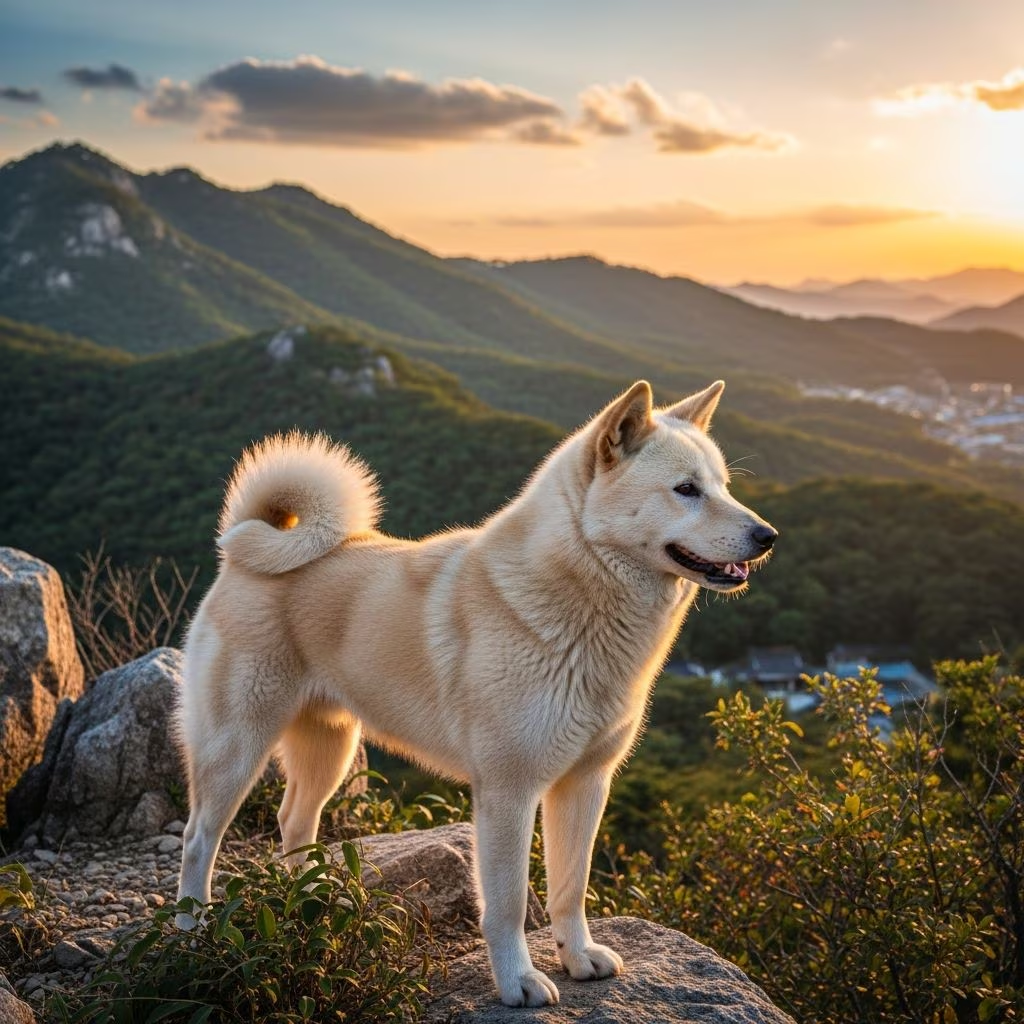
Korean Jindo Dog Breed: Complete Behavior and Traits Guide
The Korean Jindo is a remarkable and distinctive dog breed with deep roots in South Korean culture. Recognized as South Korea’s national dog, the Jindo is a medium-sized powerhouse known for its unwavering loyalty, intelligence, and independent nature. Originating from Jindo Island off the coast of South Korea, this breed has earned a reputation as an exceptional hunter, vigilant guard dog, and devoted companion. Whether you’re considering bringing a Jindo into your home or simply want to learn more about this fascinating breed, understanding their unique characteristics, behavioral traits, and care requirements is essential.
Physical Characteristics and Appearance
Korean Jindos are medium-sized, well-proportioned dogs that immediately catch the eye with their alert and dignified bearing. These dogs embody strength, agility, and intelligence in their physical presence, making them stand out among other breeds.
Size and Build
Male Korean Jindos typically stand 50 to 55 centimeters (20 to 22 inches) tall at the shoulder, while females are slightly smaller, ranging from 45 to 50 centimeters (18 to 20 inches). In terms of weight, males generally weigh between 18 to 23 kilograms (40 to 51 pounds), with females weighing 15 to 19 kilograms (33 to 42 pounds). Despite their medium size, they possess a solidly built, muscular frame that conveys power and athleticism.
The Jindo’s body structure is notably square, with a moderately deep chest that reaches to or just above the elbow at its deepest point. They feature well-developed briskets, well-sprung ribs, and a strong, straight back with well-muscled loins. This configuration allows for both speed and endurance, qualities that serve them well in their traditional hunting roles.
Distinctive Head and Facial Features
The Jindo’s head is broad and rounded between the ears, with a well-developed underjaw that gives the profile a distinctive appearance. The breed’s most recognizable feature is their upright, triangular ears that lean forward past vertical. Uniquely, Jindos have ears that splay outward to the sides, creating a shape reminiscent of airplane wings—a characteristic that sets them apart from other spitz-type breeds.
The Jindo has almond-shaped eyes that should be dark brown in color. Their noses are typically black on non-white dogs, though white Jindos may have flesh-colored noses. The muzzle is well-proportioned without being bulky, and they possess a complete set of evenly spaced white teeth with a scissors bite. Male Jindos typically have larger, more masculine heads, while females often display more fox-like features.
Coat and Coloring
Korean Jindos are double-coated spitz-type dogs, with a soft, lightly colored undercoat and stiff hair on their outer coat. This double coat provides excellent protection in various weather conditions and contributes to their distinctive appearance. Jindos can display several color variations, including red fawn, white, black, black and tan, wolf grey, or brindle patterns.
Tail and Overall Presence
One of the breed’s most characteristic features is their high-set tail that curves like a sickle. When the tail is down, the tip should reach the hocks. Combined with their alert posture, keen eyes, and forward-pointing ears, Jindos present an image of intelligence, strength, loyalty, and agility.
Temperament and Behavioral Traits
Understanding the Korean Jindo’s temperament is crucial for potential owners, as this breed possesses several distinctive personality characteristics that significantly influence their suitability for different households.
Core Personality Traits
Korean Jindos are characterized by their calm, confident, and thoughtful nature. They are intelligent, alert, and naturally dominant dogs that view themselves through the lens of pack hierarchy. The breed’s most prominent personality trait, according to the Korean Jindo Association of America, is fierce free loyalty. Jindos are rarely fearful or aggressive without reason, but they are inherently territorial and will not back down if challenged.
These dogs possess exceptional problem-solving skills and an independent streak that served them well during their days roaming free on Jindo Island. Their intelligence combined with their desire for freedom makes them modern-day escape artists, capable of discovering ways to open gates, crates, and overcome most standard fencing.
Loyalty and Social Bonding
Jindos are famously known as “one-man dogs,” forming deep, unwavering bonds with their primary owner or family. Their loyalty is unmatched, and they develop profound connections with those they consider their people. Interestingly, Jindos have remarkable memories and may recall and continue to care for previous owners who raised them as puppies, yet they have no difficulty forming new attachments with new owners later in life.
This deep bonding tendency means that Jindos thrive in stable environments with consistent caregivers. They tend to be aloof with strangers and may be hesitant to share their favorite person with other pets.
Territorial and Guard Dog Instincts
A combination of intelligence, strong predatory instincts, and a desire to control and expand their territory makes Jindos exceptional guard dogs but challenging in certain living situations. They rarely bark without provocation, but when they do vocalize, it’s a deep, resounding sound intended to protect their domain. If a Jindo feels threatened, it will respond with protective barking and assertive behavior.
The breed’s relative unwillingness to accept new people means Jindos do not do well in homes with many different people coming and going. They prefer to be the master of their domain and may exhibit reactionary behavior toward other dogs, particularly those they perceive as challenging their authority.
Energy Level and Exercise Needs
Jindos are dogs of medium to high energy that require proper living space, regular walks, consistent care, and substantial attention. When owners fail to provide adequate exercise, the high-energy Jindo will find ways to satisfy its need to move, which often results in escape attempts or destructive behavior.
These dogs prefer high-intensity activities such as hunting, lure coursing, and agility competitions. Sometimes used as sled dogs, Jindos welcome opportunities to work, especially in cold weather. Mental stimulation through tricks, games, and problem-solving activities is equally important as physical exercise.
Training and Socialization
The Korean Jindo’s intelligence and independent nature significantly impact training approaches and requirements. Proper training and early socialization are absolutely essential for this breed.
Intelligence and Trainability
The breed has been described as “too intelligent” for some owners, and this assessment carries significant truth. The same intelligence that allows Jindos to learn how to open gates and crates also makes them apt and capable students when motivated. However, their dominance and independent streak require experienced handlers with strong leadership skills.
Jindos learn best with positive reinforcement methods. If training is too heavy-handed or harsh, these sensitive dogs may shut down emotionally and become resistant to further instruction. Untrained, they can exhibit unchecked dominance and behavioral problems.
Early Socialization
Early and thorough socialization is absolutely critical for the Korean Jindo breed. This process helps subdue the breed’s natural guarding tendencies and teaches them to distinguish between genuine threats and normal social situations. Socialization should begin early in puppyhood and continue consistently throughout the dog’s life.
Young Jindos should be gradually introduced to various people, environments, sounds, and experiences in controlled, positive ways. This helps develop a well-adjusted dog that, while remaining loyal and protective, can navigate social situations more appropriately.
Handling and Leadership Requirements
Due to their assertive disposition, Jindos require a firm yet gentle handler to thrive as well-adjusted companions. Owners must establish clear boundaries and consistent rules while maintaining a positive, respectful relationship with their dog. Confident, experienced dog owners are best suited for this breed, as Jindos will challenge inexperienced or weak handlers.
Strong leadership doesn’t mean harsh or punitive training; rather, it means setting clear expectations, following through consistently, and earning the dog’s respect through fairness and consistency.
Exercise and Activity Requirements
Meeting the Korean Jindo’s substantial exercise and enrichment needs is non-negotiable for a healthy, well-behaved dog. These are not couch potatoes; they are working dogs with significant physical and mental demands.
Daily Physical Exercise
Jindos require vigorous daily exercise to maintain physical and mental health. Long walks, runs, and high-intensity play sessions should be incorporated into daily routines. These dogs excel in activities that tap into their natural hunting instincts and athleticism.
On walks, owners should use a strong leash and harness and be prepared to restrain their Jindo if they encounter other dogs, as their prey drive and territorial nature may cause reactionary behavior. Due to these tendencies, off-leash dog parks are not recommended for this breed.
Mental Stimulation
Beyond physical exercise, Jindos require substantial mental stimulation to prevent boredom and associated behavioral problems. Puzzle toys, training sessions, scent work, and interactive games all provide valuable mental engagement. The breed’s problem-solving abilities make them excellent candidates for advanced obedience, agility training, and other dog sports.
Fencing Requirements
If kept in a yard, fencing must be at least 6 feet high due to their strong hind legs that enable them to jump high. Additionally, fencing should be secure and difficult to escape, as Jindos are master escape artists with the intelligence and determination to overcome standard enclosures.
Health Considerations
While Korean Jindos are generally hardy dogs, the breed has predispositions to certain health conditions that prospective owners should understand.
Genetic Health Concerns
Jindos have a predisposition for a specific form of lupus that causes depigmentation of the lip and nose, lesions of the skin, and scar formation. This autoimmune condition requires veterinary monitoring and management.
Another condition to watch for is cystinuria, a genetic disease that leads to kidney and bladder stones. Responsible breeders screen for this condition to minimize its incidence in offspring.
Lifespan and General Health
Korean Jindos typically have a lifespan of 12 to 15 years, which is solid for a medium-sized dog. Regular veterinary check-ups, appropriate vaccinations, dental care, and preventative health measures are essential for maintaining long-term health and wellness.
Suitability as Family Pets
The Korean Jindo is not the ideal choice for every family. Specific living situations and family dynamics make a significant difference in whether this breed will thrive.
Best Home Environments
Jindos thrive best in homes with experienced dog owners who can provide strong, consistent leadership. They do well in single-person or single-family homes where they can bond deeply with their primary caregiver. Homes with adequate space for exercise and secure, high fencing are essential.
These dogs excel in homes where they have clear roles and responsibilities, such as serving as guard dogs or participating in dog sports and activities.
Not Ideal for Certain Situations
This breed may not be the best choice for families with small children, as their size, strength, and sometimes unpredictable behavior around unfamiliar people require experienced handling. Jindos are not well-suited to homes with multiple pets, particularly those with other dominant dogs. Homes with frequent visitors or changing household members are not ideal, as Jindos struggle with multiple social relationships and prefer stable, consistent environments.
Multi-Pet Households
While some Jindos can accept other pets, the breed’s assertive nature and dominance tendencies require careful consideration in multi-pet homes. Opposite-sex pairs are generally preferable to same-sex combinations. Introducing a Jindo to a home with a strong alpha dog, particularly a male, is generally not recommended.
Frequently Asked Questions
Q: Are Korean Jindos good for first-time dog owners?
A: Korean Jindos are not recommended for first-time or inexperienced dog owners. These intelligent, dominant dogs will challenge weak or inconsistent handlers. They require experienced owners who can provide strong, consistent leadership and manage their complex behavioral traits.
Q: How much exercise does a Korean Jindo need daily?
A: Jindos require vigorous daily exercise, including long walks, runs, and high-intensity activities. They also need substantial mental stimulation through training, games, and problem-solving activities. Without adequate exercise, these high-energy dogs may become destructive or attempt to escape.
Q: Can Korean Jindos live with other dogs?
A: Some Jindos can live peacefully with other dogs, but many cannot. They assert dominance and may not tolerate challenging behavior from other dogs. In multi-dog homes, opposite-sex pairs are generally better than same-sex combinations, and introducing them to homes with strong alpha dogs is not recommended.
Q: Are Korean Jindos good family dogs?
A: Jindos are not ideal family dogs for most households. They are “one-man dogs” that form deep bonds with a single person and may be aloof or wary with other family members. They’re not well-suited to homes with small children or frequent visitors.
Q: What health problems do Korean Jindos have?
A: Jindos can be predisposed to a specific form of lupus affecting the skin and nose, and cystinuria, a genetic disease causing kidney and bladder stones. Responsible breeding practices help minimize these conditions.
Q: How can I prevent my Jindo from escaping?
A: Jindos are escape artists requiring at least 6-foot-high fencing and secure enclosures. Crates should be robust and difficult to open. Providing adequate exercise and mental stimulation also helps reduce escape attempts.
References
- Korean Jindo — Wikipedia. Accessed November 28, 2025. https://en.wikipedia.org/wiki/Korean_Jindo
- Jindo Facts – Dog Breeds — Wisdom Panel. Accessed November 28, 2025. https://www.wisdompanel.com/en-us/dog-breeds/korean-jindo
- Jindo Breed Information Guide: Photos, Traits, & Care — BARK. Accessed November 28, 2025. https://bark.co/blogs/breeds/jindo-breed-guide
- Discover The Korean Jindo: Nature’s Fearless Hunter — YouTube. Accessed November 28, 2025. https://www.youtube.com/watch?v=UTRyxOYsDIs
- Korean Jindo Dog – Dog Breed Information — American Kennel Club. Accessed November 28, 2025. https://www.akc.org/dog-breeds/korean-jindo-dog/



