

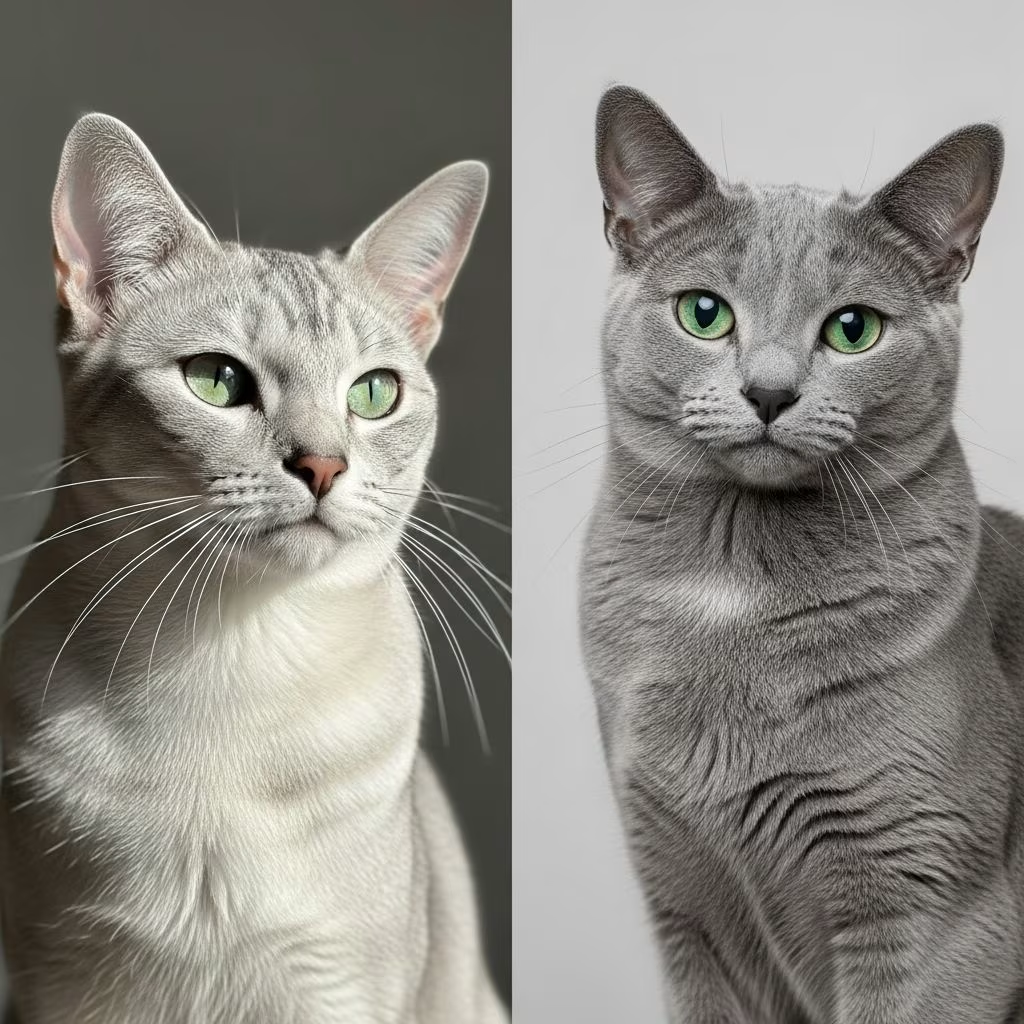
Both the **Korat** and **Russian Blue** cats captivate with their shimmering blue-gray coats and striking green eyes, hailing from distant lands—Thailand and Russia, respectively. Despite visual similarities, differences in fur structure, body type, lifespan, and personality set them apart, helping you decide the ideal breed for your home.
Korat Cat at a Glance
The Korat, also known as the Si-Sawat in its native Thailand, is a rare, ancient breed revered for centuries as a symbol of good luck. This medium-sized cat features a heart-shaped head, single-layered coat of short, fine blue-gray fur with silver tipping, and vivid green eyes. Korats are muscular yet compact, weighing 6-10 pounds, standing 9-13 inches tall, and measuring 15-18 inches long. They boast a lifespan of 10-15 years and are known for playful, affectionate natures that thrive on human interaction.
- Origin: Thailand (ancient breed mentioned in 14th-century manuscripts)
- Size: 6-10 lbs, 9-13 inches tall
- Coat: Single, short, fine blue-gray with silver tips
- Eyes: Green (amber in kittens, maturing slowly)
- Temperament: Energetic, loyal, people-oriented
Russian Blue Cat at a Glance
The Russian Blue originated from Russia’s Archangel Islands, gaining popularity in Europe and the U.S. for its plush double coat that creates a shimmering effect. This elegant, slender cat has a wedge-shaped head, large pointed ears, and emerald green eyes. Adults weigh 7-12 pounds (up to 15 lbs in some lines), stand 8-10 inches tall, and reach 14-18 inches in length, with an impressive lifespan of 15-20 years. They are reserved yet devoted, preferring calm environments.
- Origin: Russia (imported to England in 1860s)
- Size: 7-12 lbs, 8-10 inches tall
- Coat: Double, short, thick blue-gray with silver guard hairs
- Eyes: Emerald green in adults
- Temperament: Gentle, intelligent, low-maintenance
Korat vs Russian Blue: Key Differences
While both breeds share blue coats and green eyes, **key distinctions** include head shape (heart vs wedge), fur type (single vs double coat), body build (semi-cobby vs slender), origin, and lifespan. Russian Blues live longer (15-20 years vs 10-15), and Korats are rarer and more energetic.
Size Comparison
Korats tend to be taller (9-13 inches) but lighter (6-10 lbs), while Russian Blues are stockier (7-12 lbs) and shorter (8-10 inches). Both measure 14-18 inches nose-to-tail.
| Feature | Korat | Russian Blue |
|---|---|---|
| Weight | 6-10 lbs | 7-12 lbs (up to 15 lbs) |
| Height | 9-13 inches | 8-10 inches |
| Length | 15-18 inches | 14-18 inches |
Head Shape
The Korat’s **heart-shaped head** features wide-set ears with rounded tips and loose neck skin, creating a plush, expressive face. Russian Blues have a **wedge-shaped head** with prominent cheekbones, a triangular jaw, and a defined neckline for a sleek, angular profile.
Ears
Korat ears have a wide base and rounded tops, positioned to frame the heart-shaped face. Russian Blue ears are larger, more pointed, and set high on the wedge head.
Eye Color
Both have stunning **green eyes**, but Russian Blues sport uniform emerald green. Korat eyes are peridot green with possible darker centers or lighter fringes; kittens start with amber/golden tones, maturing over 4 years.
Body Morphology
Korats exhibit a **semi-cobby** (compact, muscular) build with long legs and a thick torso. Russian Blues are **semi-foreign**—slender, elegant, with a long body akin to Siamese influences.
Fur Type
This is the **biggest differentiator**: Korats have a **single coat**—short, fine, light blue at roots darkening to silver tips. Russian Blues possess a **double coat**—dense undercoat plus guard hairs with silvery tips, creating a plush, shimmering blue-gray sheen.
Temperament Comparison
Both are loving companions, but Korats are **highly energetic and dog-like**, following owners room-to-room, craving play and attention—ideal for active homes. Russian Blues are **reserved and mild-mannered**, preferring quiet routines, gentle interactions, and indoor life; shy with strangers but loyal to family.
| Trait | Korat | Russian Blue |
|---|---|---|
| Energy Level | High (playful, jungle ancestry) | Moderate (relaxed, orderly) |
| Affection | Very (velcro cat) | Devoted but selective |
| With Strangers | Curious | Reserved/shy |
| Indoor/Outdoor | Neutral | Indoor preferred |
Health and Lifespan
Russian Blues are hardy with **no major genetic issues**, often reaching 20 years. Korats have a solid 10-15 years but rare risks like GM1/GM2 gangliosidosis. Both benefit from regular vet care.
- Lifespan: Korat 10-15 years; Russian Blue 15-20 years
- Health Notes: Korats may need screening for gangliosidosis; Russian Blues are robust
Care and Grooming
**Minimal grooming** for both: Korat’s single coat needs weekly brushing. Russian Blue’s double coat sheds little but requires gentle brushing to maintain shine. Provide scratching posts, toys, and dental care. Feed high-quality diet; both are active but watch Russian Blue portions.
Who Should Get Which?
Choose **Korat** for high-energy households needing a playful, bonded companion. Opt for **Russian Blue** in calm homes wanting a long-lived, low-shed lap cat. Both dislike loud chaos.
Frequently Asked Questions
Are Korat and Russian Blue cats hypoallergenic?
Neither is truly hypoallergenic, but Russian Blues produce less Fel d 1 allergen due to their coat; both suit moderate allergies with grooming.
Which lives longer, Korat or Russian Blue?
Russian Blues live longer (15-20 years vs Korat’s 10-15).
Are Korats rarer than Russian Blues?
Yes, Korats are less common and more expensive ($400-$2,000).
Can Korat and Russian Blue cats be mixed?
Yes, crosses exist, blending traits; purebreds preserve distinctions.
Do they get along with dogs or kids?
Both can with socialization; Korats are bolder with dogs, Russian Blues gentler with supervised kids.
How to tell Korat vs Russian Blue kittens apart?
Kittens look similar; Korats mature eye color slower (up to 4 years).
References
- Korat vs Russian Blue Cat: Key Differences Explained — A-Z Animals. 2023. https://a-z-animals.com/pets/cats/cat-comparison/korat-vs-russian-blue-cat/
- Korat vs Russian Blue cat—who’s wild and who’s mild? — Untamed. 2024. https://untamed.com/blogs/cat-breeds/korat-vs-russian-blue-cat
- Korat Cat vs Russian Blue: Main Differences (With Pictures) — Catster. 2024-01-15. https://www.catster.com/cat-breeds/korat-cat-vs-russian-blue/
- Russian Blue vs. Korat–Comparing Two Breeds — Feline Forums. 2023. https://felineforums.com/threads/russian-blue-vs-korat-comparing-two-breeds.448/
- Russian Blue vs Korat Cat: Differences, Personality & Cost — Bailey’s CBD. 2024. https://baileyscbd.com/blogs/cat-breeds/russian-blue-vs-korat-cat-differences-personality-cost



