Kiwi Birds: 5 Unique Species, Traits, And Conservation Status
Discover the extraordinary world of kiwi birds, New Zealand's flightless treasures facing habitat challenges and thriving through conservation.
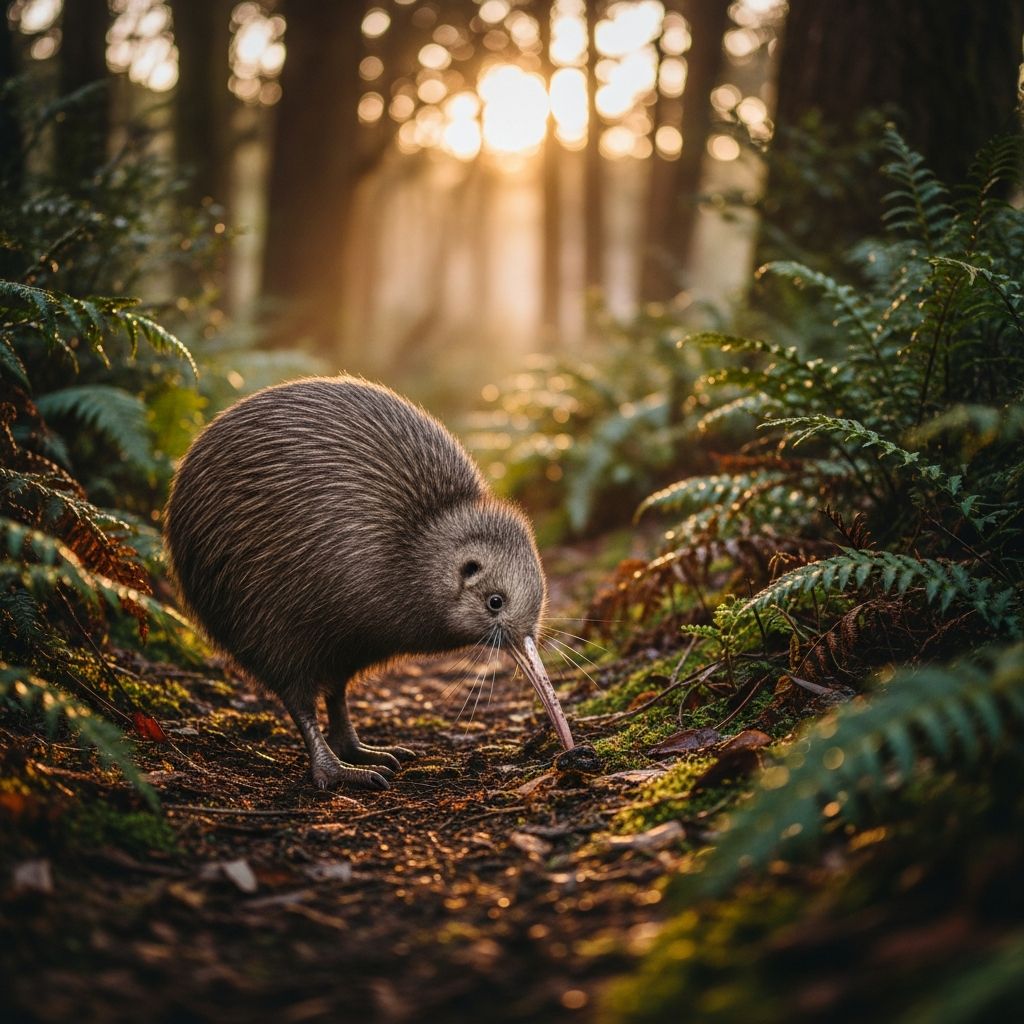
Kiwi Birds: New Zealand’s Unique Icons
New Zealand’s kiwi birds stand out as one of the world’s most peculiar avian species, blending bird and mammal characteristics in a flightless form perfectly adapted to their island home. These enigmatic creatures, revered as national symbols, navigate dense forests and grasslands under the cover of night, relying on acute senses rather than flight for survival.
Distinctive Physical Traits of Kiwi Birds
Kiwi birds possess an array of features that set them apart from typical birds. Their feathers resemble soft fur, providing insulation in cool, damp environments, while tiny vestigial wings remain hidden beneath, rendering flight impossible. A long, slender bill equipped with nostrils at the tip allows them to sniff out prey in the soil, a rare trait among birds that emphasizes smell over sight.
Standing about knee-high to humans, kiwis weigh between 2 to 11 pounds depending on the species, with strong legs enabling swift, silent movement. Their body temperature hovers around 100°F (38°C), closer to mammals than most birds, supporting a low-energy lifestyle suited to nocturnal foraging. Facial bristles act as sensory whiskers, aiding navigation in the dark.
- Fur-like feathers: Loose and hair-like for warmth and camouflage.
- Sensory bill: Nostrils at the tip for detecting underground food.
- Powerful legs: Built for digging burrows and quick escapes.
- No tail or keel: Adaptations for a ground-dwelling existence.
Diverse Habitats Across New Zealand
Kiwi birds thrive in a variety of New Zealand landscapes, from subtropical podocarp and beech forests to sub-alpine scrub, tussock grasslands, and even mangroves. They favor steep, wet areas with shrubs, where they dig burrows for shelter instead of nesting in trees. These adaptable birds avoid heavily trampled or compacted soils, preferring spots near rivers with wetland pockets for easy soil access.
Historic deforestation has shrunk their natural ranges, pushing them into exotic plantation forests and rough farmlands. While planted forests offer refuge, conversions to dairy pastures pose risks during clearing phases. In predator-free zones, kiwis emerge during daylight, revealing their flexibility beyond strict nocturnality.
| Habitat Type | Key Features | Kiwi Suitability |
|---|---|---|
| Native Forests | Podocarp, beech; damp, steep | Ideal for burrowing and foraging |
| Grasslands/Scrub | Tussock, sub-alpine | Good with cover from predators |
| Plantation Forests | Exotic trees; established stands | Mixed; risk during planting |
| Wetlands/Riversides | Soft soil, vegetation pockets | Preferred for easy probing |
Foraging Habits and Omnivorous Diet
Primarily nocturnal, kiwis venture out at dusk to probe the ground for invertebrates like earthworms, insects, and larvae, using their bill to detect vibrations and scents. They supplement with fruits, seeds, and small vertebrates, consuming up to their body weight in food nightly to fuel high metabolism.
This soil-aerating behavior benefits ecosystems by promoting plant growth and nutrient cycling. In territories marked by scent droppings, kiwis aggressively defend prime foraging areas from rivals, showcasing territorial instincts uncommon in birds.
Monogamous Bonds and Remarkable Reproduction
Kiwi pairs form lifelong monogamous bonds, with males incubating massive eggs—up to 20% of the female’s body weight—for about 90 days. Lacking an egg tooth, chicks hatch fully feathered and independent, sustained by yolk reserves for weeks.
Nest sites include burrows or hollow logs, often camouflaged. Post-hatching, the male guides the chick for up to 20 days, though it forages solo soon after. Breeding occurs from late winter to early summer, with high parental investment ensuring precocial young capable of evading threats.
Five Recognized Species and Their Ranges
New Zealand hosts five kiwi species, each with specific distributions and conservation statuses:
- North Island Brown Kiwi: Widespread in North Island forests; four forms including Northland subspecies.
- Great Spotted Kiwi: Largest species, top half of South Island.
- Little Spotted Kiwi: Smallest, vulnerable to stoats; found in sanctuaries like Zealandia.
- Rowi (Okarito Kiwi): Rarest, one wild population due to predation and habitat loss.
- Haast Tokoeka: South Island mountains, adapted to rugged terrain.
These ratites evolved in isolation, filling mammal-like niches without mammalian competitors.
Major Threats Jeopardizing Kiwi Survival
Introduced predators like stoats, weasels, dogs, and cats devastate populations, with fewer than 5% of chicks reaching adulthood amid combined threats. Habitat loss from deforestation, farming expansions, and plantation conversions exacerbates vulnerability, especially for isolated groups prone to inbreeding.
Accidents and human encroachment compound issues, but kiwis’ adaptability offers hope where predators are managed.
Conservation Successes and Sanctuary Networks
New Zealand’s Department of Conservation established kiwi sanctuaries since 2000, including Whangarei, Moehau, Tongariro, Okarito, and Haast, plus sites like Zealandia and Maungatautari. Predator control and habitat restoration have boosted numbers.
Collaborations, such as San Diego Zoo Wildlife Alliance’s work on a private island with Maori communities and Massey University, use radio-tracking to study nesting success. Over 47 adults tracked have informed strategies, proving intensive management works. Save the Kiwi initiatives emphasize broad habitat protection.
Kiwi in Culture and Global Fascination
As New Zealand’s national icon, kiwis symbolize resilience and uniqueness, appearing on currency and in Maori lore. International zoos like San Diego and Columbus contribute to breeding programs, raising awareness. Their quirky charm—flightless, furry, egg-laying oddities—captivates global audiences, driving support for in-situ conservation.
Frequently Asked Questions (FAQs)
Are kiwi birds able to fly?
No, kiwis are flightless ratites with vestigial wings hidden under feathers.
What do kiwi birds eat?
Mainly invertebrates like worms and insects, plus fruits and seeds.
How long do kiwi eggs take to hatch?
Up to 90 days, with males incubating the oversized eggs.
Why are kiwis nocturnal?
To avoid predators; they may be diurnal in safe sanctuaries.
How many kiwi species exist?
Five, each with unique ranges and threats in New Zealand.
Can kiwis live outside forests?
Yes, in grasslands, farmlands, and plantations if soil is accessible.
References
- Kiwi | San Diego Zoo Animals & Plants — San Diego Zoo Wildlife Alliance. 2023-10-15. https://animals.sandiegozoo.org/animals/kiwi
- The Kiwi: National Bird of New Zealand and the Threats to Their Survival — Convinnation. 2024-05-20. https://www.connovation.co.nz/blogs/news/the-kiwi-national-bird-of-new-zealand-and-the-threats-to-their-survival
- Kiwi (bird) — Wikipedia (references DOC/NZ sources). 2026-01-28. https://en.wikipedia.org/wiki/Kiwi_(bird)
- Loss of Habitat – Save the Kiwi — Save the Kiwi. 2023-11-10. https://savethekiwi.nz/about-kiwi/threats-to-kiwi/loss-of-habitat/
- Kiwi: New Zealand native land birds — Department of Conservation (NZ Govt). 2025-09-05. https://www.doc.govt.nz/nature/native-animals/birds/birds-a-z/kiwi/
Similar Articles








Read full bio of Sneha Tete