

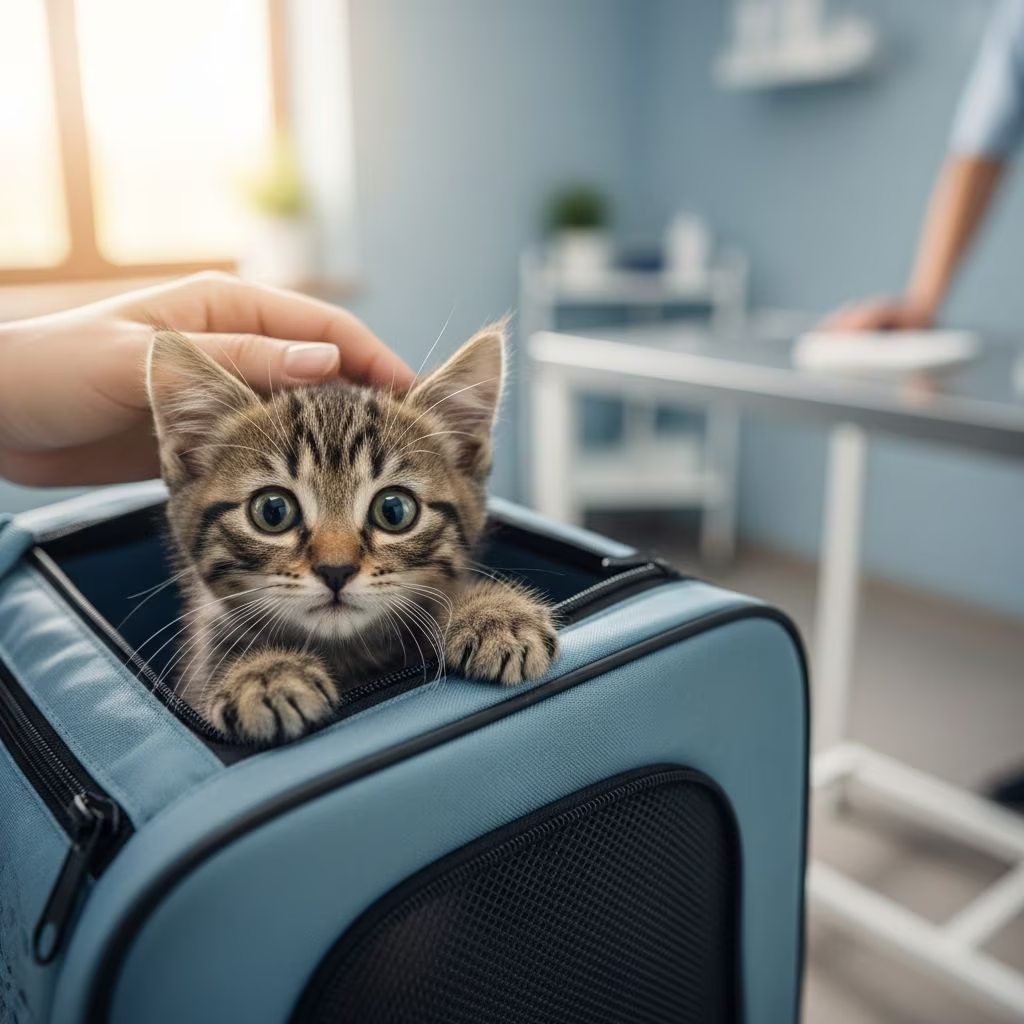
Bringing home a new kitten marks the start of an exciting journey filled with joy and responsibility. One of the most critical steps in this process is scheduling the first veterinary appointment, ideally within the first week of adoption. This initial checkup lays the foundation for your kitten’s long-term health by identifying potential issues early, establishing a vaccination schedule, and providing tailored care advice.
Why the Initial Veterinary Exam Matters
The debut vet visit serves multiple vital functions. Veterinarians perform a thorough health assessment to detect congenital defects, parasites, and infectious diseases that could affect your kitten’s development. Early intervention prevents the spread of zoonotic parasites—those transmissible to humans—and ensures compatibility with other household pets. For instance, testing for feline leukemia and immunodeficiency virus informs safe socialization strategies.
Without this exam, subtle problems like heart murmurs or hernias might go unnoticed, leading to costly treatments later. Statistics show a high prevalence of intestinal parasites in young kittens, underscoring the need for prompt fecal analysis and deworming.
Timing Your Kitten’s Debut Appointment
Schedule the visit as soon as possible after bringing your kitten home, preferably within 3-7 days. Newborn or orphaned kittens require immediate attention if showing signs of distress, such as poor feeding or respiratory issues. For kittens with a healthy mother, the first formal exam typically occurs at 6-8 weeks, coinciding with initial vaccinations.
Allow 60-90 minutes for the appointment, accounting for paperwork, exams, and discussions. Confirm with the clinic if fasting or a stool sample is needed beforehand.
What to Pack for the Visit
Preparation enhances efficiency and provides the vet with crucial data. Assemble these essentials:
- Medical records: Paperwork from shelters, breeders, or prior treatments, including any vaccinations.
- Stool sample: Fresh feces in a clean container for parasite screening—collect within 24 hours.
- Carrier: Secure, ventilated, lined with a familiar blanket to reduce stress.
- Notes on behavior: Diet details (brand, frequency), appetite, litter habits, and any concerns like sneezing or lethargy.
- Treats or toys: For comfort during the exam.
Complete the clinic’s registration form online in advance to streamline check-in.
Step-by-Step: The Veterinary Examination Process
The visit unfolds methodically, starting with history-taking and progressing to hands-on evaluation.
Initial Assessment by Technician
A veterinary technician begins with basics: weight measurement, heart and respiratory rates, and rectal temperature. They discuss preventive measures like flea control while observing your kitten’s demeanor.
Comprehensive Physical Inspection
The veterinarian conducts a head-to-tail exam:
- Observation: Watches movement and behavior for abnormalities.
- Oral cavity: Checks teeth, gums, and palate for defects.
- Eyes and ears: Uses tools to inspect for infections or discharge.
- Skin and coat: Scans for fleas, mites, wounds, or dermatitis.
- Lymph nodes and joints: Palpates for swelling or pain.
- Cardiovascular and respiratory: Listens with a stethoscope.
- Abdomen: Feels organs for masses or discomfort.
This holistic approach flags issues like congenital heart conditions or organ irregularities.
Diagnostic Tests Performed
Beyond the physical, key tests include:
| Test | Purpose | Common Findings |
|---|---|---|
| Fecal Exam | Detects worms, giardia | High prevalence in kittens; may not catch all |
| Bloodwork | Screens for FeLV, FIV | Guides multi-cat household plans |
| Parasite Check | Fleas, mites, ear mites | Initiates preventives |
Deworming is routine, even if tests are negative, due to limitations in detection.
Vaccinations and Preventive Protocols
Your kitten receives core vaccines like FVRCP (feline viral rhinotracheitis, calicivirus, panleukopenia) during this visit, with boosters scheduled every 3-4 weeks until 16 weeks. Discuss lifestyle-based options, such as rabies at 12-16 weeks. Flea, tick, and heartworm preventives start now, alongside spay/neuter counseling around 5 months.
Cost Breakdown: Budgeting for the First Visit
Expect $30-$200+, varying by location, tests, and vaccines. Base exam: $50-100; fecal/blood: $20-50 each; initial vaccines: $20-50. Shop around, but prioritize AAHA-accredited clinics for quality.
| Service | Avg. Cost |
|---|---|
| Exam | $50-100 |
| Fecal Test | $20-40 |
| Vaccines (per dose) | $20-50 |
| Deworming | $15-30 |
Key Questions for Your Veterinarian
Maximize the appointment by asking:
- Is my kitten’s weight appropriate for its age?
- What nutrition plan do you recommend?
- Which vaccines are essential now?
- Grooming and dental tips?
- Flea/tick/heartworm prevention options?
- Emergency clinic recommendations?
- Spay/neuter timing?
Post-Visit Care Instructions
Follow up on medications, monitor for vaccine reactions (mild lethargy normal), and adhere to booster schedules. Transition to kitten-specific food, ensure litter training, and maintain a stress-free environment.
Frequently Asked Questions (FAQs)
When should I take my newborn kitten to the vet?
Immediately if orphaned or ill; otherwise, at 6-8 weeks.
Do I need a stool sample?
Yes, for parasite detection—bring fresh within 24 hours.
What if my kitten resists the carrier?
Use familiar scents and treats; practice beforehand.
Are all vaccines given at once?
No, series required; starts with core shots.
How often are follow-ups needed?
Every 3-4 weeks until 16 weeks, then annually.
Long-Term Health Benefits
This foundational visit reduces future risks, promotes preventive care, and builds a trusting vet relationship. Proactive ownership yields a healthier, happier companion for years.
References
- New Kitten Checklist — AAHA. 2023. https://www.aaha.org/resources/new-kitten-checklist/
- Kitten First Vet Visit – What to Expect & What it Will Cost — Quail Hollow Vet. 2024-05-15. https://www.quailhollowvet.com/site/blog/2024/05/15/kitten-first-vet-visit-cost
- Kittens First Vet Visit Checklist — Apple Valley Animal Hospital. 2024-02-15. https://www.applevalleyanimalhospital.com/site/blog/2024/02/15/kittens-first-vet-visit-checklist
- Kitten First Vet Visit – What to Expect & What it Will Cost — Madison Park Vet. 2024-03-15. https://www.madisonparkvet.com/site/blog/2024/03/15/kitten-first-vet-visit-cost
- Kitten’s First Vet Visit Checklist — VHC. 2024-02-15. https://www.vhc.la/site/blog/2024/02/15/kitten-first-vet-visit-checklist
- New Kitten First Vet Visit Checklist — Monte Vista Vet. 2023-11-30. https://www.montevistavet.com/site/blog/2023/11/30/kittens-first-vet-visit
- Kitten’s First Vet Visit: Checklist, What To Expect & Cost — Chewy. N/A. https://www.chewy.com/education/cat/new-cat/what-to-expect-during-your-kittens-first-vet-visit



