

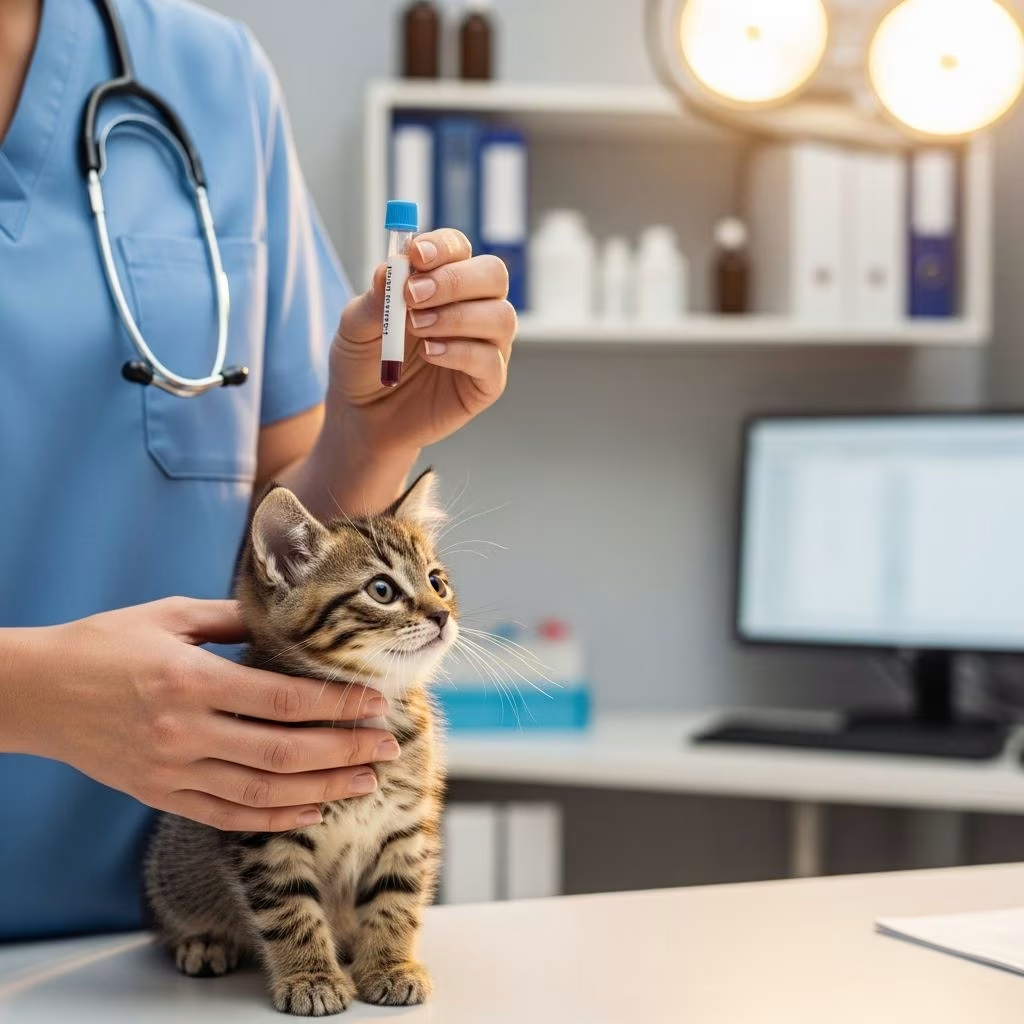
When Can I Get My Kitten Tested for FIV and FeLV?
Testing your kitten for Feline Immunodeficiency Virus (FIV) and Feline Leukemia Virus (FeLV) is an essential part of responsible pet ownership. These serious viral infections can significantly impact your kitten’s health and lifespan, making early detection crucial. However, the timing of these tests matters significantly due to maternal antibodies that can interfere with FIV results. Understanding when and why to test your kitten will help you make informed decisions about your new feline companion’s healthcare.
Understanding FeLV and FIV in Kittens
Before discussing testing timelines, it’s important to understand what these viruses are and why they pose such a threat to your kitten’s health. Feline Leukemia Virus (FeLV) is a serious viral infection that can compromise your kitten’s immune system, leading to anemia, cancer, and lymphomas. FeLV is highly contagious and easily transmitted through mutual grooming, shared litter boxes, and even through bites. In kittens with FeLV, the prognosis is particularly grim, with many infected kittens rarely living past one year of age.
Feline Immunodeficiency Virus (FIV) is similarly concerning, causing immune system suppression and leading to secondary infections, inflammation of the mouth (gingivitis and stomatitis), conjunctivitis, and various cancers. While some cats with FIV can live relatively normal lifespans with proper care, others face more severe complications. Approximately 80 to 90 percent of cats diagnosed with FeLV will die within three to four years of diagnosis, making prevention and early detection critically important.
FeLV Testing Timeline: Starting Early
Unlike FIV testing, FeLV testing can be performed at any age, including as early as six weeks old. This is because FeLV point-of-care (POC) tests detect viral antigen circulating in the blood of infected kittens, rather than antibodies. Maternal antibodies do not interfere with FeLV antigen detection, making the test reliable from birth onward.
However, veterinarians typically recommend testing kittens as soon as possible or by three months of age for practical reasons. A FeLV-positive kitten poses a significant risk to other cats in your household through easy transmission via mutual grooming and close contact. If your kitten tests positive for FeLV, they won’t benefit from the FeLV vaccine, and you’ll need to implement strict isolation protocols to protect other feline family members.
For young kittens under six months of age, a second FeLV test should be performed 90 days or more after the initial test to confirm results. This follow-up testing is crucial because very young kittens may not test positive for weeks to months after infection, and the initial test could potentially yield a false negative result during the virus’s incubation period.
FIV Testing Timeline: Waiting for Maternal Antibodies to Clear
FIV testing follows a different protocol than FeLV testing due to the presence of maternal antibodies. When a mother cat has FIV antibodies, she passes these antibodies to her kittens through nursing and colostrum. This creates a critical problem: kittens under six months of age who test positive for FIV antibodies may actually be antibody-negative and infection-free once maternal antibodies clear.
For this reason, veterinarians do not recommend testing kittens for FIV before six months of age. It’s not uncommon for kittens under six months to have false positive FIV test results due to these passively acquired maternal antibodies. Testing too early leads to unnecessary stress and potentially incorrect treatment decisions. The American Association of Feline Practitioners recommends waiting until kittens are at least six months old, with some organizations suggesting eight months or older as the most reliable testing window.
If your kitten does test positive for FIV before six months of age, retesting when they’re six months old or older is strongly recommended. By this age, maternal antibodies have typically cleared, and any positive result is more likely to reflect true infection rather than passive immunity from nursing.
Combined Testing Protocol
Many veterinarians recommend testing kittens for both FeLV and FIV simultaneously using a simple blood test. However, the interpretation of results differs based on your kitten’s age:
For kittens under six months: FeLV results are considered reliable and conclusive. FIV results are considered inconclusive and should not be reported unless a positive result is observed. If a positive FIV result appears, the kitten should be retested at six months of age for confirmation.
For kittens six months and older: Both FeLV and FIV results are considered reliable and conclusive. A negative result at this age provides strong assurance that your kitten is virus-free.
Why Timing and Proper Testing Matter
Testing at the appropriate age ensures accurate results and helps you make informed decisions about your kitten’s health and living situation. A FeLV-positive kitten must be kept indoors to prevent transmission to other cats and should be isolated from other feline household members. Similarly, if your kitten tests positive for FIV, careful management and isolation from other cats is recommended until confirmation testing is performed.
Early testing also allows you to establish baseline health information for your veterinary records. This information becomes increasingly valuable as your kitten grows, helping your veterinarian provide the best possible care tailored to your kitten’s specific health needs.
Test Types and Reliability
Point-of-care (POC) tests are the most commonly used method for FeLV and FIV screening in veterinary practices. These tests are quick, performed in-office, and provide results within minutes. For FeLV testing, whole blood samples perform better than serum samples, which is an important consideration when your veterinarian collects the test sample.
If your kitten tests positive for FIV on an initial POC test, confirmatory testing using a PCR assay can immediately clarify whether the kitten is truly infected or simply carrying maternal antibodies. This helps avoid unnecessary worry and treatment decisions based on inconclusive results.
Managing Positive Test Results
If your kitten tests positive for FeLV, your veterinarian will discuss the health implications and appropriate management strategies. FeLV-positive kittens require special care, isolation from other cats, and regular veterinary monitoring to manage secondary infections and complications.
For FIV-positive results in kittens under six months, remain cautious about allowing your kitten to interact with other household cats until retesting at six months confirms the diagnosis. Many kittens with false positive results will test negative at the retest, allowing normal household integration to proceed.
If your kitten tests negative for both FeLV and FIV at six months of age or older, this provides strong assurance that your kitten is virus-free and poses no transmission risk to other cats in your home.
Vaccination Considerations
FeLV vaccination is highly recommended for all kittens up to and including one year of age, particularly in areas with high FeLV prevalence. However, if your kitten tests positive for FeLV, vaccination will not provide benefit. Blood samples for FeLV testing should ideally be collected before FeLV vaccination, as the vaccine itself may temporarily produce detectable antigens that could interfere with test results.
Special Situations and Risk Factors
Kittens with known or suspected exposure to FeLV should be retested no earlier than one month after exposure to rule out false negative results obtained during the virus’s incubation period. Cats at ongoing risk of FIV infection, such as outdoor cats, should be tested periodically throughout their lives if they are not FIV vaccinated.
It’s important to note that each kitten in a litter should be tested individually rather than using pooled blood samples. If a queen or any one of her litter tests FeLV-positive, all should be considered potentially infected and isolated with follow-up testing to resolve their status.
Frequently Asked Questions
Q: Can I test my kitten for FIV at eight weeks of age?
A: While technically possible, FIV results are considered inconclusive in kittens under six months due to maternal antibodies. Testing at six months or older provides more reliable results. However, many veterinarians will perform the test at an earlier visit along with FeLV testing and simply not report FIV results unless they’re positive.
Q: What does it mean if my kitten tests positive for FIV under six months?
A: A positive FIV result in a young kitten often reflects maternal antibodies rather than true infection. Retesting at six months of age is recommended to clarify the kitten’s actual status. Most kittens with early positive results will test negative when retested.
Q: Can I test my kitten for FeLV at six weeks of age?
A: Yes, FeLV testing is reliable at any age, including as early as six weeks. However, a second test 90 days later is recommended to confirm negative results and rule out false negatives during the incubation period.
Q: If my kitten tests positive for FeLV, can they still be vaccinated?
A: No, FeLV-positive kittens will not benefit from FeLV vaccination. Vaccination is only protective for cats that test negative for the virus.
Q: How should I prepare my kitten for FIV and FeLV testing?
A: No special preparation is needed. Your veterinarian will perform a simple blood draw, and results are typically available within minutes using point-of-care tests. Your kitten can eat and drink normally before the appointment.
Q: Should I isolate my new kitten from other cats until testing is complete?
A: Yes, it’s advisable to isolate a new kitten from other household cats until negative test results are confirmed. This protects your other cats if the new kitten happens to be infected with FeLV or FIV.
Q: What is the cost of FIV and FeLV testing?
A: Testing costs vary by veterinary practice but typically range from $50 to $100 for combined FeLV and FIV screening. Some practices may charge less if tests are performed together rather than separately.
Key Takeaways for Kitten Testing
Understanding the proper timing for FIV and FeLV testing is essential for responsible kitten care. FeLV testing can and should be performed as early as six weeks, with a follow-up test at 90 days or later. FIV testing should be delayed until six months of age to avoid false positive results from maternal antibodies. By following these guidelines and working closely with your veterinarian, you can ensure your kitten receives appropriate health screening and protection from these serious viral infections.
References
- Disease Screening: FeLV and FIV — University of Florida College of Veterinary Medicine. 2024. https://ufl.pb.unizin.org/shelteranimalphysicalhealth/chapter/disease-screening-felv-and-fiv/
- FeLV and FIV Testing in Kittens — VCA Animal Hospitals. 2024. https://vcahospitals.com/pediatric/kitten/health-wellness/felv-fiv-testing
- Testing Kittens for FeLV and FIV — DVM360 Proceedings. 2024. https://www.dvm360.com/view/testing-kittens-felv-and-fiv-proceedings
- 2020 AAFP Feline Retrovirus Testing and Management Guidelines — American Association of Feline Practitioners. PMC National Center for Biotechnology Information. 2020. https://pmc.ncbi.nlm.nih.gov/articles/PMC11135720/
- FeLV and FIV Health Testing Guidelines for Shelters — Alley Cat Allies. 2024. https://www.alleycat.org/resources/protocols-testing-feline-immunodeficiency-virus-fiv-and-feline-leukemia-virus-felv/
- Feline Leukemia and Feline Immunodeficiency Virus — Winter Park Veterinary Hospital. 2024. https://wpvet.com/feline-care-guides/feline-leukemia-and-feline-immunodeficiency-virus/
- FIV, FeLV, and Feline Heartworm Clinical Reference Guide — IDEXX Laboratories. 2024. https://www.idexx.com/files/feline-triple-infectious-disease-clinical-reference-guide-en-na.pdf



