

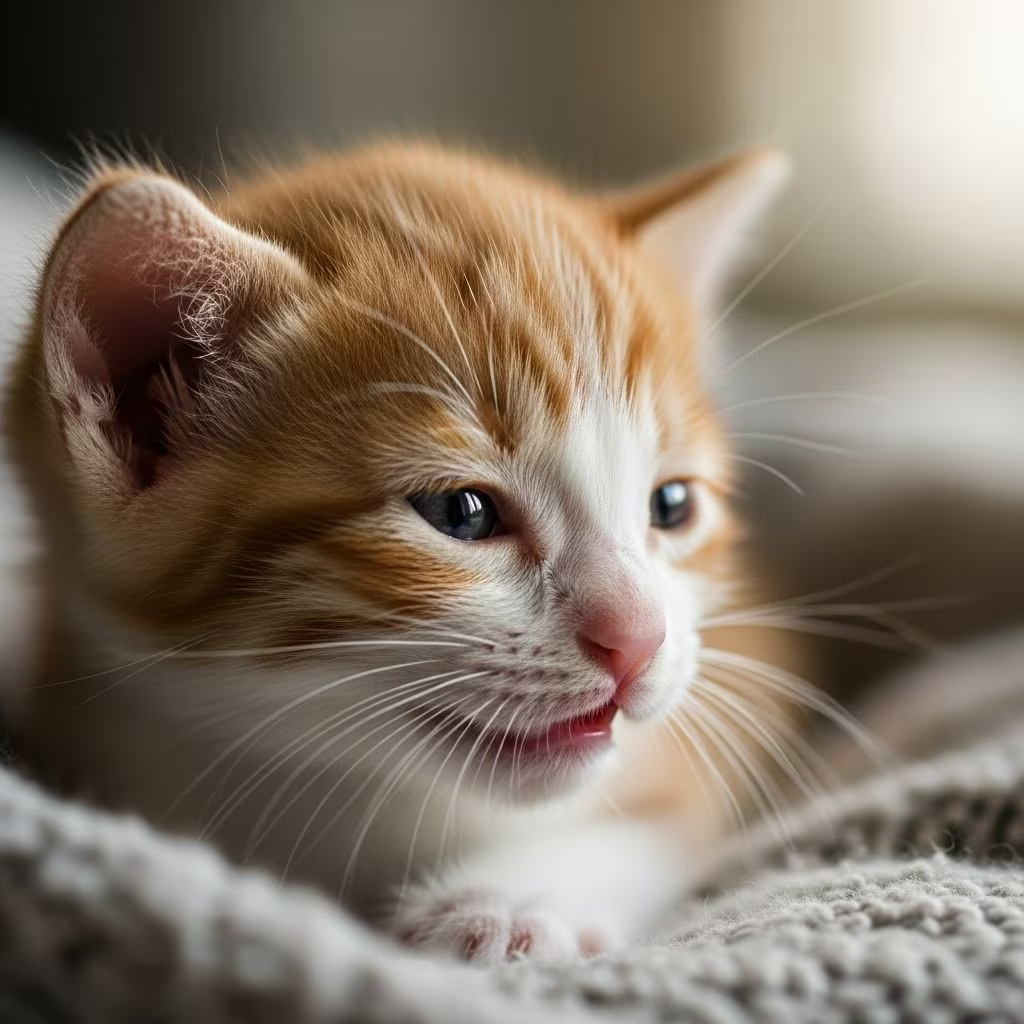
One of the most enchanting experiences of kitten ownership is hearing that gentle rumbling sound emanating from a tiny feline body. The purr stands as one of the most recognizable and beloved vocalizations in the animal kingdom, yet many cat owners find themselves curious about the origins of this mysterious behavior. Whether you’re preparing to welcome a new kitten into your home or simply wish to deepen your understanding of feline communication, learning about the purring journey offers fascinating insights into kitten development and emotional expression.
The Early Emergence of Purring Behavior
One of the most delightful surprises for new kitten parents is discovering that purring begins remarkably early in a kitten’s life. Research indicates that kittens can initiate purring within just a few days of birth, though the timeline varies considerably among individual animals. While some precocious kittens may produce their first purrs almost immediately after arriving in the world, others may take up to three weeks to develop this vocalization.
This early emergence of purring is not a random occurrence but rather a purposeful developmental milestone. The initiation of purring coincides with critical bonding experiences between mother cats and their offspring, suggesting that this behavior serves important communicative and relational functions during the earliest stages of life.
The Neurological and Physical Mechanics of Purring
Understanding how kittens produce purring sounds requires examining the sophisticated biological processes at work within their small bodies. Modern scientific research has largely debunked earlier theories suggesting that purring originated from blood flowing through major veins. Instead, researchers now understand that purring results from a coordinated neural and muscular process.
The mechanism begins in the kitten’s brain with what scientists call a neural oscillator—essentially a biological signal generator that initiates the purring sequence. This neural command directs the muscles surrounding the larynx, commonly known as the voice box, to perform rapid opening and closing movements. As these laryngeal muscles contract and relax, they manipulate the vocal cords and the space between them called the glottis.
The actual purring sound emerges when air flowing through the respiratory system passes over these vibrating laryngeal structures. This process differs fundamentally from other cat vocalizations in one crucial aspect: purring occurs continuously throughout the entire breathing cycle, during both inhalation and exhalation. Meows and other cat sounds, by contrast, are produced only during exhalation, making purring unique in its uninterrupted nature.
The frequency at which kittens and cats purr also deserves attention. Research suggests that cat purrs typically occur within a frequency range of 20 to 150 hertz—a range that scientists believe may facilitate healing and bone growth, a hypothesis supported by veterinary observations that cats recover more efficiently from injuries and surgical procedures compared to other domestic animals.
Developmental Milestones and Purring Progression
Observing a kitten’s development provides context for understanding when and how purring emerges as a behavioral skill. During the first two weeks of life, newborn kittens exist in a vulnerable state, with their senses gradually awakening. Their eyes remain closed, and their hearing develops slowly. At this stage, kittens primarily communicate through mewing—high-pitched cries that alert their mother to hunger or distress.
By the third week of life, significant changes occur in kitten development. Eyes begin to open fully, ears become erect and functional, and the sense of smell becomes well-developed. During this same period, some kittens begin attempting their first purrs, though these early vocalizations may be quite faint and uncertain. The timing coincides with increasing physical coordination, as kittens begin taking their first wobbly steps and becoming more aware of their littermates.
As kittens progress through their fourth and fifth weeks, purring typically becomes more confident and consistent. By this stage, kittens are learning to walk with improved coordination, engaging in play behaviors, and beginning to groom themselves. Their social awareness expands as they interact more deliberately with littermates and begin exploring their immediate environment.
Communication Functions of Kitten Purring
The emergence of purring in young kittens serves multiple critical communication functions that strengthen the bond between mother and offspring. Understanding these purposes provides insight into why this behavior evolved and persists across feline species.
Maternal Bonding and Location Signaling
Mother cats utilize purring as a soothing mechanism for their vulnerable kittens. The vibrations and sound of maternal purring serve as a calming influence, particularly important for kittens born deaf and blind. The purr acts as an acoustic beacon, allowing newborns to locate their mother for feeding and warmth. In turn, kittens purr to communicate their wellbeing to their mother, essentially signaling “I am here and I am okay”.
Nutritional Communication
As feeding times approach, kittens employ purring to capture their mother’s attention and express their hunger. This nutritional communication through purring remains one of the most persistent behavioral patterns that carries into adulthood, where domestic cats continue purring at their human caregivers during mealtimes.
Differences Between Domestic and Wild Purring Patterns
An intriguing distinction exists between domestic cats and their feral cousins regarding purring patterns. Domestic kittens and cats maintain purring behavior throughout their lives, employing it in numerous social contexts. Feral cat mothers, however, actively discourage their kittens from purring to minimize auditory signals that might attract predators. This behavioral difference reflects the distinct survival pressures faced by wild versus domesticated felines.
Beyond Contentment: The Complex Meanings of Adult Cat Purring
While many people associate purring exclusively with happiness and contentment, the reality of feline communication proves considerably more nuanced. Adult cats employ purring as a versatile communication tool conveying multiple emotional and physical states.
The Contentment Purr
When cats relax on a human’s lap, receive affectionate petting, or feel genuinely comfortable in their environment, purring indeed reflects positive emotional states. This contentment purr represents genuine relaxation and serves to reinforce bonding behaviors between cats and their human companions.
The Solicitation Purr
Cats employ a distinctly different purring style when requesting something specific from their caregivers, particularly food. This solicitation purr carries acoustic characteristics that differ markedly from contentment purring. The solicitation purr incorporates elements resembling both meowing and standard purring and carries a frequency profile similar to a human infant’s cry—a sound to which humans are naturally primed to respond. This sophisticated vocal manipulation suggests that domestic cats have evolved their vocalizations specifically to communicate effectively with human caregivers.
Purring During Distress and Pain
Perhaps counterintuitively, cats also purr when experiencing pain, stress, or fear. Veterinarians frequently observe cats purring during stressful situations such as medical examinations or in the presence of illness. Rather than indicating contentment, this stress-induced purring likely functions as a self-soothing mechanism, similar to how a mother cat’s purring calms frightened kittens. The healing frequencies produced by purring vibrations may also provide physiological benefits during recovery from injury or illness.
Interpreting Your Kitten’s Purring Through Context and Body Language
Becoming fluent in feline communication requires attention to surrounding circumstances and physical signals rather than relying solely on the presence or absence of purring. Several contextual clues help decode what your kitten’s purring truly communicates.
Time of day and recent activities: If your kitten approaches you early in the morning while purring and gently patting your face, they likely request breakfast rather than expressing pure contentment. Understanding temporal patterns in your kitten’s behavior provides crucial interpretive context.
Body positioning: A kitten curled in a tight ball on your lap while purring almost certainly expresses contentment, whereas a kitten purring while showing tense body language or flattened ears may be communicating stress or discomfort.
Recent triggering events: If purring begins immediately following a stressful event like a trip to the veterinarian’s office or the arrival of a loud visitor, stress-related purring is more likely than contentment-based purring.
Vocalization characteristics: Hunger purrs and solicitation purrs often contain mewing components and differ acoustically from pure contentment purring. Listening carefully to the specific qualities of your kitten’s vocalizations provides additional interpretive information.
When Kittens Don’t Purr: What It Might Mean
While most kittens eventually develop purring ability, some kitten owners notice that their young cats remain silent despite being old enough to purr. This variation requires thoughtful consideration and observation.
Some kittens simply develop behavioral patterns more slowly than others. A kitten that does not purr by three weeks of age may simply require additional time to develop this vocalization, and patience often reveals that purring eventually emerges. Additionally, some cats are naturally quiet and prefer alternative communication methods such as silent meowing or physical affection displays.
However, absence of purring combined with other behavioral changes warrants veterinary attention. Since purring requires coordinated function of both laryngeal muscles and respiratory systems, medical issues affecting either system could interfere with purring ability. Birth defects, respiratory conditions, or laryngeal muscle issues might compromise a kitten’s ability to purr. Adult cats may also lose purring ability if laryngeal muscles become paralyzed due to infection or tumor growth.
If your kitten fails to purr while also displaying other concerning signs such as unusual lethargy, decreased appetite, or behavioral changes, consulting with a veterinarian ensures that underlying medical conditions receive appropriate evaluation and treatment.
The Broader Context: Purring Across Feline Species
While domestic kittens and cats represent the purring felines most familiar to human observers, purring extends across multiple wild cat species. Small wildcats including bobcats, lynxes, and ocelots all employ purring as part of their communicative repertoire. Notably, most large cats including lions, tigers, and leopards do not purr, with snow leopards and cougars representing exceptions to this pattern. This distribution across feline species suggests that purring evolved as a communication strategy particularly suited to smaller cats living in closer proximity to one another.
Practical Guidance for New Kitten Parents
For individuals preparing to welcome a new kitten into their home, understanding purring development offers reassurance and realistic expectations. Unless you are obtaining a kitten directly from a breeder at an extremely young age, your new kitten almost certainly will already be purring before you meet them. Most kittens leave their mothers around eight weeks of age, well after purring has become an established behavior.
Recognizing that purring communicates multiple messages helps you develop a more nuanced relationship with your kitten. Rather than assuming purring always indicates happiness, observe the complete picture: your kitten’s body language, the time and context of purring, and any other behavioral signs. This holistic approach enables you to recognize when your kitten needs food, when they seek affection, when they feel stressed, and when they may require medical attention.
Remember that individual cats vary tremendously in their purring intensity and frequency, just as humans vary in their verbosity. Some cats are naturally vociferous purrers while others remain relatively quiet. Neither pattern indicates a problem; they simply reflect normal variation in feline personalities and communication styles.
The presence of purring, even in situations where you might expect your cat to be unhappy, should never lead you to dismiss signs of actual distress or illness. If your kitten appears unusually tired, shows decreased appetite, or behaves abnormally in other ways, the fact that they continue purring should not prevent you from seeking veterinary evaluation. Purring and good health are not automatically linked; sick cats purr, and a complete health assessment provides necessary reassurance.
References
- When Do Kittens Start Purring? — Wag Walking. Accessed January 29, 2026. https://wagwalking.com/wellness/when-do-kittens-start-purring
- When Will My Kitten Start to Purr? The Origin Story — Catster. Accessed January 29, 2026. https://www.catster.com/cat-behavior/when-will-kitten-start-to-purr
- Kitten timeline: What are your kitten’s milestones? — Burgess Pet Care. Accessed January 29, 2026. https://www.burgesspetcare.com/blog/cat/kitten-timeline
- Why Do Kittens Purr? — NexGard SPECTRA. Accessed January 29, 2026. https://nexgard.com.au/pet-care/kitten-care/why-do-kitten-purr



