

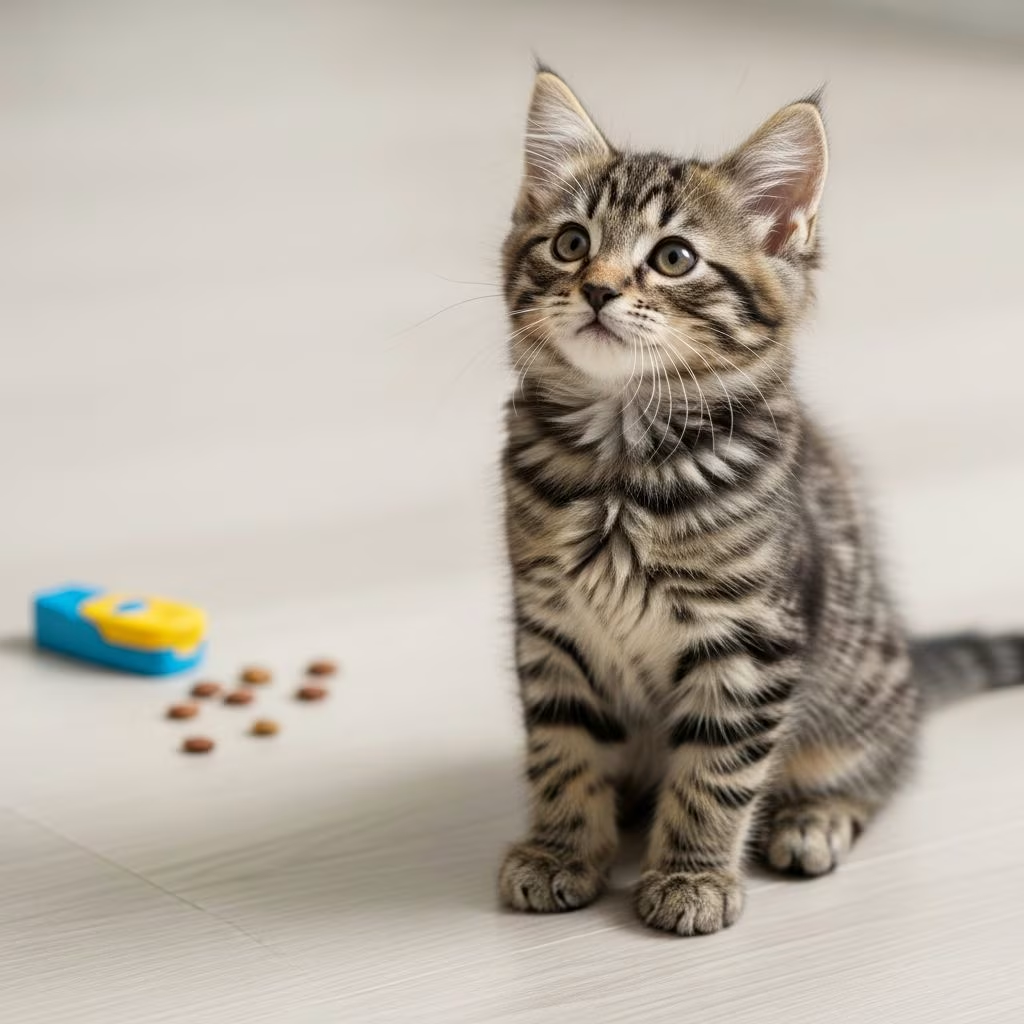
Training a kitten establishes foundational behaviors that ensure a peaceful coexistence in your home. Starting early with **positive reinforcement** techniques fosters trust and encourages desirable actions without fear or stress. This approach not only curbs unwanted habits but also strengthens the human-feline bond, making daily interactions smoother and more enjoyable.
Why Early Training Matters for Kittens
Kittens possess highly malleable brains during their first few months, absorbing lessons rapidly and forming lifelong habits. Obedience training during this window prevents issues like furniture destruction or excessive meowing from becoming entrenched problems. Research from veterinary behaviorists highlights that kittens trained before 12 weeks adapt better to household rules, reducing stress for both pet and owner.
Key advantages include improved litter box usage, reduced aggression during play, and tolerance for grooming or handling. Without guidance, natural instincts like claw sharpening on couches or leaping onto counters can escalate, leading to frustration. Consistent sessions, limited to 5-10 minutes, respect their short attention spans while yielding progressive results.
Core Principles of Positive Feline Training
At the heart of successful kitten obedience lies **positive reinforcement**, where desired behaviors earn rewards such as treats, affection, or play. This method outperforms punishment, which can erode confidence and provoke defensiveness in cats. Veterinary guidelines recommend limiting treats to under 10% of daily caloric intake to avoid weight gain.
- Praise promptly: Verbal approval like “excellent” immediately after the action reinforces the connection.
- Varied rewards: Alternate between food, strokes, or toys to maintain engagement and prevent treat dependency.
- Timing is critical: Deliver reinforcement within 2-3 seconds of the behavior for optimal learning.
Consistency across family members ensures the kitten doesn’t receive mixed signals, accelerating habit formation.
Mastering Clicker Training Techniques
**Clicker training** employs a distinct clicking sound from a small device to mark precise moments of good behavior, followed by a reward. Cats quickly link the click to positive outcomes, making it a powerful tool for complex commands. Sessions begin with “charging” the clicker: repeatedly click and treat without expecting action, building anticipation.
- Observe natural behaviors like sitting; click and reward instantly.
- Introduce a cue word, such as “sit,” just before the behavior occurs.
- Phase out continuous treats, using intermittent rewards to solidify the response.
This technique excels for teaching sits, stays, or coming when called, with studies from animal behavior labs showing cats mastering basics in under two weeks.
Effective Luring Methods for Reluctant Learners
Not all kittens motivate via treats; **luring** uses toys like wand feathers to guide movements. For instance, to direct scratching to a post, trail the lure along its surface, rewarding contact with extended play. This playful method taps into predatory instincts, making training feel like a game.
Progress gradually: start with low-demand actions, increasing complexity as confidence builds. Combine with verbal cues for multi-sensory learning, ensuring the kitten associates words with motions.
Building a Vocabulary of Clear Commands
Simple, consistent phrases form the language of obedience. Select one-word cues like “scratch” for appropriate clawing or “off” for surfaces. Pair with rewards during success, and use a sharp hiss or “eh-eh” to interrupt errors gently—avoid yelling, which startles without teaching.
| Behavior | Cue Example | Training Tip |
|---|---|---|
| Sit | “Sit” | Hold treat above nose, click when haunches lower. |
| Come | “Here” | Call excitedly, reward approach with play. |
| Leave it | “No” | Hiss, redirect to toy immediately. |
| High-five | “Paw” | Lure paw up, mark contact. |
Focus on one command weekly to prevent overload, tracking progress in a journal for motivation.
Solving Common Household Mischiefs
Preventing Furniture Damage
Scratching satisfies natural urges; deter it by making forbidden spots uninviting with sticky tape or foil, which cats dislike on paws. Attract to posts using catnip sprays or lures, praising vigorously on use. Multiple posts in high-traffic areas increase compliance.
Stopping Countertop Adventures
Counters tempt with heights and scents; cover with deterrents and offer superior alternatives like tall cat trees. Clicker-train perching on the tree, rewarding longer stays to shift preferences.
Managing Playtime Aggression
Biting or pouncing stems from hunting play; withdraw attention at first offense, saying “ouch” dramatically. Redirect to toys, teaching that roughhousing ends fun. As kittens mature, this fades, but early lessons prevent adult issues.
Optimizing Your Training Environment
A distraction-free zone enhances focus: quiet rooms, no TV, and pre-meal timing when hunger heightens treat appeal. Short bursts prevent overstimulation—watch for tail flicks or ear flattening signaling breaks.
- Stock toys abundantly for redirection.
- Schedule daily routines around feeding and play.
- Enrich environment with perches and tunnels.
Advanced Obedience for Ambitious Owners
Beyond basics, teach leash walking by associating harness with treats, progressing to outdoor strolls. Tricks like rolling over or target touching via shaping—rewarding successive approximations—challenge intellect and impress guests. Patience yields levels from routine adherence to distraction-proof responses.
Frequently Asked Questions
How long until my kitten obeys commands?
Basics emerge in 1-2 weeks with daily practice; mastery takes 4-6 weeks depending on consistency and kitten temperament.
What if treats don’t motivate my kitten?
Switch to play-based lures or affection; every cat has unique motivators—experiment briefly to find preferences.
Is punishment ever okay?
No—negative methods breed fear. Always redirect positively for lasting change.
Can older kittens be trained?
Yes, though slightly slower; same principles apply, with extra patience for ingrained habits.
How do I train multiple kittens?
Separate sessions initially, then group with individual rewards to avoid competition.
Sustaining Long-Term Success
Obedience thrives on ongoing reinforcement: daily practice, environmental tweaks, and health checks ruling out medical causes for regressions. Celebrate milestones to keep sessions fun, evolving into a partnership where your kitten eagerly anticipates cues. With dedication, your home becomes a haven of mutual respect and delight.
References
- Kitten Training – Obedience Tips for Your New Cat — Hill’s Pet Nutrition. 2023-05-15. https://www.hillspet.com/cat-care/training/kitten-obedience-training
- Mastering the Art of Cat Training: Tips and Techniques — The International Cat Association (TICA). 2024-02-10. https://tica.org/blogs/mastering-the-art-of-cat-training-tips-and-techniques/
- Ultimate Guide to Cat Training — Outdoor Bengal. 2023-11-20. https://www.outdoorbengal.com/blogs/clicker-training-cats/cat-training-guide
- Kitten 101: Creating Positive Behaviors — Small Door Veterinary. 2024-01-08. https://www.smalldoorvet.com/learning-center/puppies-kittens/creating-positive-kitten-behaviors
- Kitten Training: 20 Tips for Training Your New Cat — Sheba. 2023-09-12. https://www.sheba.com/lifestyle/kitten-training



