

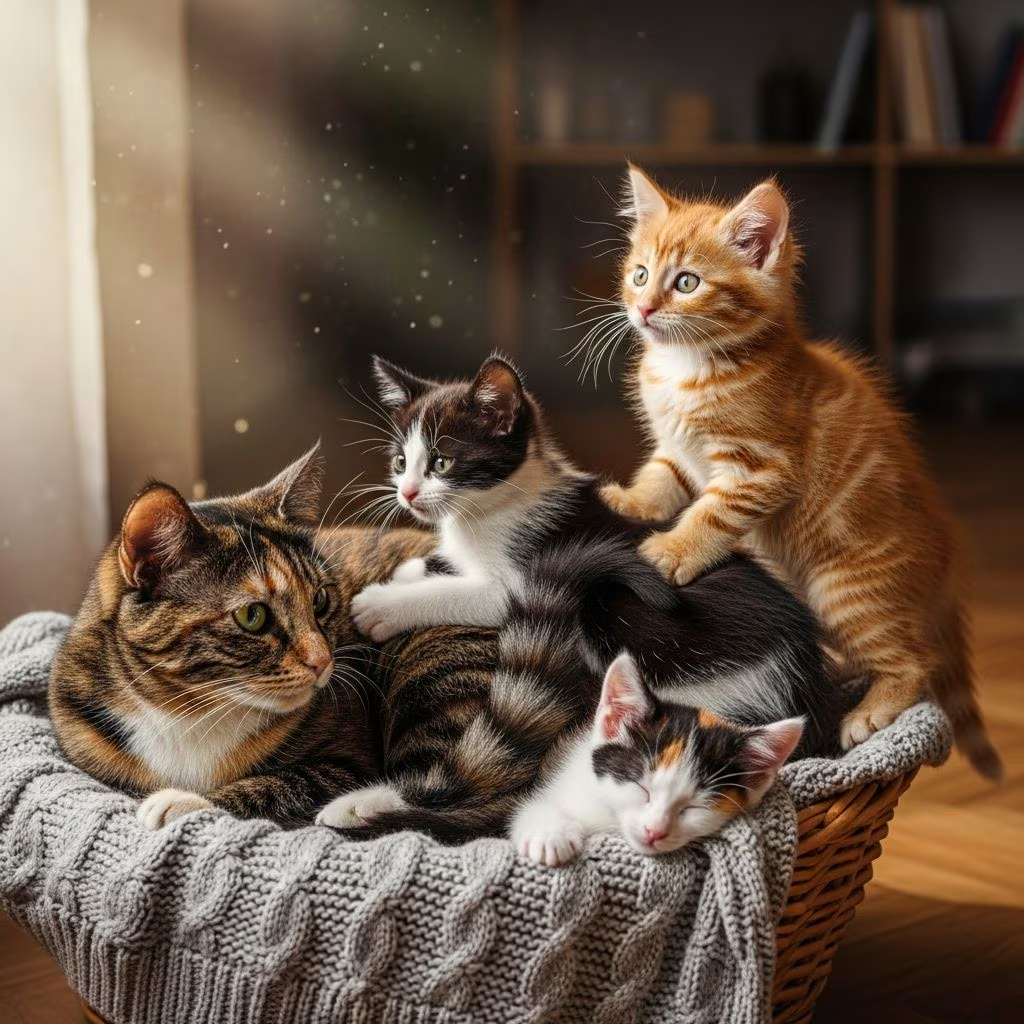
Understanding when kittens are developmentally ready to leave their mothers is one of the most important decisions cat breeders and prospective adopters must make. The answer isn’t simply a single number, as each kitten develops at a unique pace influenced by genetics, health status, and individual temperament. However, research and behavioral science provide clear guidelines that help ensure kittens transition successfully to their new homes with both physical and emotional readiness.
Understanding the Critical Development Phases
Kittens experience distinct developmental stages that each serve essential purposes in their growth and learning. Rather than viewing these stages as rigid boundaries, it’s more helpful to understand them as overlapping periods where different physiological and behavioral changes occur simultaneously. A kitten’s readiness to leave its mother depends on progressing through each stage appropriately.
The earliest weeks of a kitten’s life are fundamentally different from later stages. Newborn kittens cannot regulate their own body temperature, cannot digest solid food, and cannot perform basic hygiene tasks like toilet elimination without maternal assistance. As kittens mature, they gradually gain independence in these areas, but the timeline for acquiring these skills varies among individuals.
The Nursing Dependency Phase: Birth to Four Weeks
During the first month of life, a kitten’s survival depends almost entirely on its mother. The nursing phase is non-negotiable for most kittens because the mother cat provides irreplaceable biological and behavioral support that cannot be adequately replicated through artificial means.
The lactating mother produces specialized milk containing essential amino acids, particularly taurine, which plays a critical role in developing the kitten’s nervous system, vision, heart function, and immune defenses. This milk composition is specifically calibrated to support rapid kitten growth and cannot be substituted with standard cow’s milk or even most commercial kitten formulas without risking nutritional deficiencies.
Beyond nutrition, the mother cat provides:
- Thermal regulation: Newborn kittens cannot generate sufficient body heat for the first several weeks. The mother’s body warmth prevents dangerous hypothermia that could be fatal.
- Elimination stimulation: Kittens cannot control their bowel and bladder functions independently. The mother uses grooming and licking to stimulate these biological processes until kittens develop voluntary control.
- Disease protection: Maternal antibodies present in breast milk provide temporary immune protection against infections the mother has encountered.
- Behavioral imprinting: Early maternal contact establishes fundamental trust and security that shapes future emotional development.
Separating kittens from their mother before four weeks of age creates serious risks including failure to thrive, digestive problems, and increased susceptibility to infections. The only exceptions are situations where the mother cat is ill, injured, deceased, or actively rejecting her litter. In these rare cases, round-the-clock hand-rearing with appropriate kitten formula and heating equipment becomes necessary, though this approach requires specialized knowledge and carries higher failure rates.
The Transition and Weaning Period: Four to Eight Weeks
Around the fourth week of life, kittens begin teething and show increased interest in solid foods. This period marks a natural shift away from exclusive milk nursing, though the mother still plays an essential role in guiding her kittens through this dietary transition.
As tiny teeth erupt, nursing becomes uncomfortable for the mother cat. She instinctively begins spending more time away from her litter, and when kittens attempt to nurse, she gently discourages them. This natural discouragement motivates kittens to explore food sources beyond milk.
The appropriate diet during this transition includes specially formulated wet food designed for growing kittens. Dry kibble, while convenient, poses choking hazards for young animals whose throats are still developing. A helpful intermediate step involves creating a moistened mixture combining kitten formula with either wet or softened dry food, creating a gruel-like consistency that’s easier for developing kittens to consume.
Throughout the four to eight-week period, the mother remains an important mentor. She demonstrates appropriate eating behaviors, helps her kittens understand social boundaries, and continues providing comfort during stressful moments. By the eighth week, most kittens are fully weaned from milk and can consume age-appropriate solid food independently.
However, early weaning isn’t equivalent to readiness for separation from the mother cat entirely. The mother’s continued presence serves developmental purposes beyond nutrition during this critical period.
The Socialization and Learning Phase: Eight to Twelve Weeks
The period from eight to twelve weeks represents one of the most transformative stages of kitten development. During this time, kittens transition from dependence to semi-independence while engaging in intensive learning that shapes their personality and behavior for life.
Kittens at this age are intensely curious and relatively fearless. They explore their environment with enthusiasm, interact extensively with littermates, and observe their mother’s responses to novel situations. This observation-based learning is crucial for developing appropriate behaviors, including how to interact respectfully with other cats and how to respond to threatening situations.
The socialization window during weeks three through nine is particularly sensitive. Kittens exposed to diverse people, environments, textures, sounds, and experiences during this window develop greater adaptability and confidence. In contrast, kittens with limited exposure during this critical period often exhibit fearfulness and difficulty adjusting to new situations later in life.
The mother cat’s presence during the late socialization phase provides security and modeling for appropriate behavior. When a kitten is frightened by something new, the mother’s calm response helps the kitten calibrate its own fear response. When kittens play too roughly with each other, the mother demonstrates and enforces boundaries through gentle corrections.
Timeline Comparison: Industry Standards
| Age Range | Developmental Stage | Readiness for Separation | Key Considerations |
|---|---|---|---|
| 0-4 weeks | Nursing dependency | Not appropriate | Complete maternal dependence; survival risk without mother |
| 4-8 weeks | Weaning transition | Only with veterinary guidance | Partial dependence; may need formula supplementation |
| 8-10 weeks | Early independence | Possible but not ideal | Fully weaned; early socialization complete; maturity still developing |
| 10-12 weeks | Behavioral consolidation | Recommended | Better emotional resilience; extended learning period with mother |
| 12+ weeks | Full independence | Optimal | Maximum behavioral maturity; stronger immune system; optimal adjustment |
Physical and Emotional Readiness Indicators
Beyond age, several observable indicators help determine whether an individual kitten is genuinely ready for separation:
- Body weight: Kittens should weigh at least two pounds before adoption, indicating adequate nutritional intake and growth.
- Independent eating: The kitten should confidently consume kitten food without relying on nursing for significant caloric intake.
- Litter box training: Most kittens demonstrate reliable litter box use by eight to nine weeks when separated from their mother.
- Playful independence: The kitten should spend significant time playing with littermates and exploring rather than constantly seeking maternal comfort.
- Vaccination status: Initial vaccinations and parasite prevention treatments should be completed before separation.
- Health assessment: A veterinary examination should confirm the absence of respiratory infections, digestive issues, or other health problems that would benefit from continued maternal care.
Special Circumstances Affecting Separation Timing
Some situations require adjusting standard separation timelines. Kittens recovering from illness benefit from extended maternal care beyond typical weaning age. A mother cat’s immune system and warmth provide comfort and support that accelerates healing in ways artificial environments cannot replicate.
Sickly or failure-to-thrive kittens may need to remain with their mother until eight weeks minimum, and some require additional time. Premature or undersized litters often develop more slowly than average, necessitating delayed separation to ensure adequate growth.
Behavioral factors also matter. Extremely shy or anxious kittens frequently adjust better to separation when given an extra two to four weeks of observation and learning from their mother’s calm responses to environmental stimuli.
Feral kitten populations present an inverse situation. Feral mothers teach their young hunting techniques, independence, and wariness that complicates human socialization efforts. In feral rescue situations, kittens are often removed earlier when they begin consuming solid food to prevent imprinting on wild behaviors incompatible with domestic life.
The Risks of Premature Separation
Research consistently demonstrates that kittens separated before ten weeks of age face increased risks for behavioral and health problems. Kittens lacking sufficient time with littermates often exhibit inappropriate play behaviors, including excessive aggression or rough handling of humans.
Early separation also correlates with increased stress-related behaviors such as over-grooming, inappropriate elimination, and anxiety-based aggression. Some kittens separated too early develop oral behaviors like suckling on blankets or human clothing—a substitute for the comfort nursing provides. These behaviors can persist into adulthood and prove difficult to eliminate.
Immunologically, kittens benefit from gradual maternal antibody decline combined with their own developing immune response. This natural transition occurs over ten to twelve weeks. Kittens separated earlier may experience delayed immune maturation, increasing susceptibility to infections during the critical adjustment period to a new home.
Preparing Kittens for New Homes
Responsible breeders and shelters use the weeks before separation strategically. Handling by multiple people, exposure to household sounds and sights, introduction to different surfaces and textures, and basic training on scratching posts and litter box use all occur during the final weeks with the mother.
This preparation phase significantly impacts how smoothly kittens adjust to their new environments. Kittens accustomed to varied human contact and environmental stimuli during their final weeks with the mother transition more confidently than those raised in isolated conditions.
The actual separation process benefits from gradual transition when possible. Some adopters maintain contact with the kitten’s littermates or mother through visits during the first weeks after adoption, easing the transition through familiar scents and continued socialization opportunities.
Frequently Asked Questions
Can a kitten leave its mother at eight weeks?
While some kittens are physically capable of surviving separation at eight weeks, this timing is earlier than optimal. Kittens at this age lack full emotional resilience and benefit from an additional two to four weeks of maternal learning and sibling interaction.
What happens if a kitten is separated too early?
Early separation increases risks for behavioral problems including excessive aggression, stress-related anxiety, inappropriate elimination, and oral fixations. Health risks also increase due to incomplete immune development and higher infection susceptibility during transition stress.
Is it better to adopt littermates together?
Adopting littermates provides significant behavioral benefits. Kittens raised with sibling playmates develop more appropriate social skills and exhibit fewer behavior problems than singleton kittens. The continued sibling interaction extends into the new home, easing the transition stress.
How can I tell if my kitten is ready to leave its mother?
Ready kittens exhibit independent eating, reliable litter box use, confident exploration of their environment, sustained play with littermates, appropriate weight gain, clear health status, and current vaccinations. A veterinary assessment provides professional confirmation.
What should I feed a newly separated kitten?
Newly separated kittens require high-quality kitten formula food specifically formulated for their developmental stage. Wet food or moistened kibble is easier for developing teeth to manage. Maintaining the same brand the kitten consumed with its mother eases the dietary transition.
References
- Properly Separating Kittens from Mom and Siblings — BC Humane Society. 2024. https://www.bchumane.org/properly-separating-kittens-from-mom-and-siblings/
- Developmental Stages of Kitten Behavior — Seattle Humane. 2024. https://www.seattlehumane.org/resource-library/developmental-stages-of-kitten-behavior/
- When Can a Kitten Leave Its Mother? The Precise Timeline — Untamed. 2024. https://untamed.com/blogs/cat-care/when-can-a-kitten-leave-its-mother
- How Old Is That Kitten? Kitten Progression: At-a-Glance — Alley Cat Allies. 2024. https://www.alleycat.org/resources/kitten-progression/



