

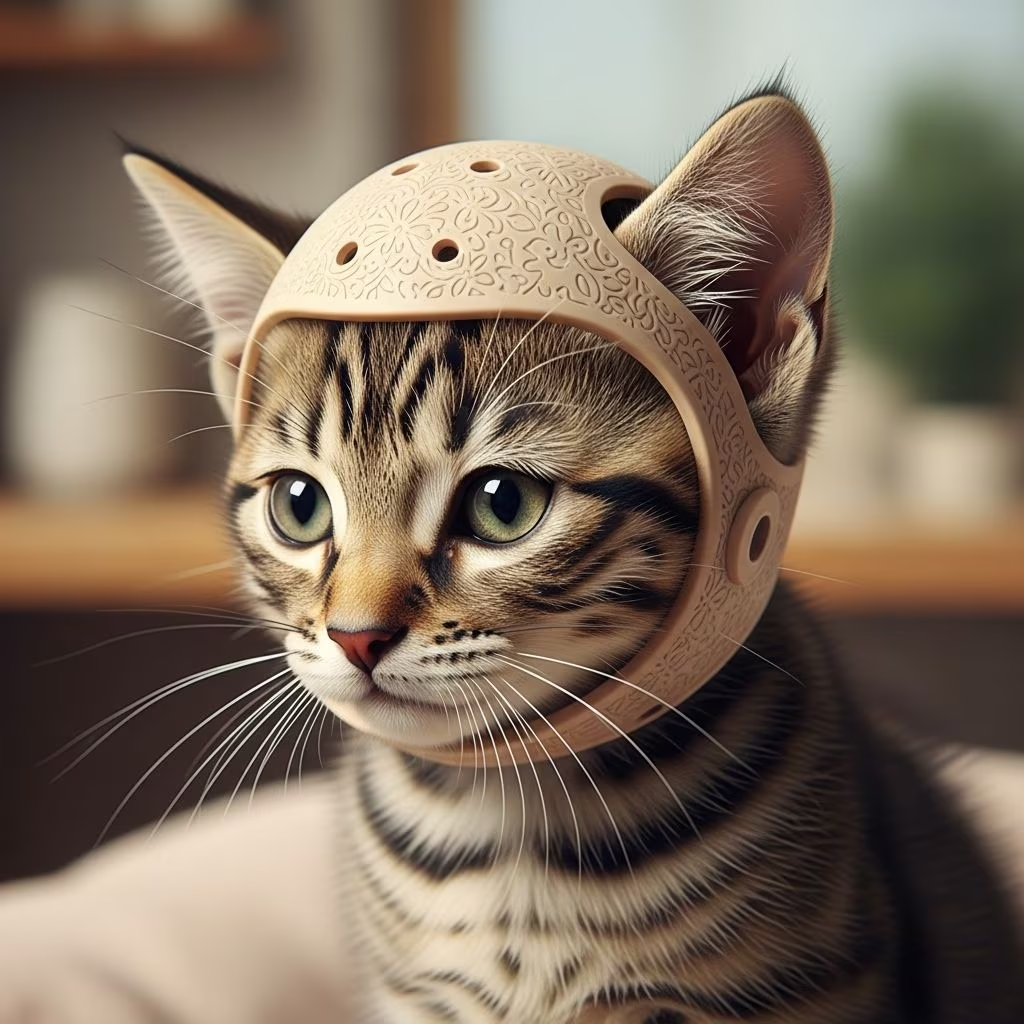
Faces of No-Kill: Kitten with Serious Head Wound Gets Custom Helmet
In the world of animal rescue, some stories stand out for their remarkable resilience and the collective effort required to save a life. The story of Turtle the kitten is one such tale—a narrative of survival, innovation, and the power of community coming together to help an animal in desperate need. When Turtle arrived at a shelter with a serious head wound, her prognosis seemed uncertain. However, through the dedication of shelter staff, veterinary experts, and compassionate community members, this brave little kitten not only survived but learned to thrive with the help of a custom-designed protective helmet.
The Arrival and Initial Assessment
Turtle’s story began like many rescue animals—with an uncertain past and an urgent present. When she arrived at the shelter, staff members immediately recognized the severity of her condition. The kitten had sustained a significant head wound that posed serious risks to her recovery and long-term quality of life. Beyond the physical injury, caregivers had to consider the emotional and developmental impact of such trauma on a young animal.
The shelter team knew they were facing a complex medical situation that would require more than standard veterinary care. They needed to think creatively about how to protect Turtle’s healing wound while allowing her the freedom to move, play, and socialize—all essential aspects of healthy kitten development. This was where the collaboration between different organizations and innovative thinking would prove crucial.
Understanding the Injury and Medical Challenges
Head wounds in kittens present unique medical challenges. The brain is still developing, and any injury to this critical organ requires careful monitoring and protection. In Turtle’s case, the wound was extensive enough that standard bandaging and wrapping would not be sufficient. The kitten needed something that would protect the injury while still allowing her to see, hear, and interact with her environment—crucial for a kitten’s mental development and recovery.
Traditional approaches to protecting head wounds typically involve cone collars or extensive wrapping, both of which can be stressful for young animals and may impede their ability to engage with the world around them. Shelter veterinarians and staff members recognized that Turtle deserved a better solution, one that would address her medical needs while preserving her quality of life during recovery.
The Custom Helmet Solution
Rather than accepting conventional limitations, the shelter team decided to pursue an innovative approach: a custom-designed protective helmet specifically tailored to Turtle’s needs. This was not a decision made in isolation but resulted from collaboration between multiple stakeholders committed to the kitten’s wellbeing.
The custom helmet was engineered to provide comprehensive protection for Turtle’s head wound while allowing her adequate vision, hearing, and the ability to eat and drink normally. Unlike rigid or restrictive alternatives, this specialized equipment was designed with the kitten’s comfort and development in mind. The helmet represented a significant investment in Turtle’s recovery and a testament to the creative problem-solving that characterizes modern animal rescue efforts.
The Role of Shelter Collaboration
One of the most inspiring aspects of Turtle’s story is how multiple organizations and individuals came together to ensure her survival and recovery. The no-kill movement is fundamentally built on the principle of collaboration—the understanding that saving animals requires not just shelters acting alone, but entire communities working in concert.
In Turtle’s case, this collaboration took many forms:
– Veterinary expertise: Specialized veterinarians assessed Turtle’s condition and developed a medical treatment plan- Innovative engineering: Professionals worked to design and create a protective helmet that met Turtle’s specific medical needs- Foster care support: Community members volunteered to provide temporary housing and care during recovery- Organizational coordination: Shelter staff managed case coordination and ensured continuity of care
This multi-faceted approach demonstrates why the no-kill movement has become increasingly successful across the United States. When shelters have access to resources, expertise, and community support, they can save animals with complex medical needs that might otherwise be considered unsalvageable.
Recovery and Adaptation
Wearing the custom helmet presented its own set of adjustments for young Turtle. The kitten had to learn to navigate her environment with this new piece of protective equipment, to play and socialize while wearing it, and to trust the humans caring for her. Each of these elements was crucial to her psychological recovery as much as the physical healing of her wound.
Shelter staff and foster caregivers worked patiently with Turtle, helping her acclimate to the helmet and ensuring she received the love and attention she needed to develop into a healthy, emotionally resilient kitten. This hands-on approach to recovery—treating not just the physical injury but the emotional needs of the animal—is increasingly recognized as essential to successful rehabilitation.
Over time, Turtle’s wound began to heal. The custom helmet protected her injury from further trauma and contamination while her body’s natural healing processes worked. As weeks passed, the kitten became increasingly comfortable with her protective gear, and staff members began to see the playful, curious personality emerging beneath her medical challenges.
Community Support and Public Engagement
Turtle’s story captured the hearts of animal lovers in her community and beyond. News of the kitten’s journey spread through social media and local news outlets, inspiring people to learn more about the work being done to save animals with complex medical needs. This public engagement served multiple purposes:
– Raising awareness about the no-kill movement and its potential- Demonstrating the importance of community support for animal shelters- Inspiring donations and resources for ongoing rescue efforts- Showing that animals with significant medical challenges can have meaningful, happy lives
The community’s response to Turtle’s story reinforced an important truth about animal rescue: people want to help when they understand an animal’s needs and can see tangible results from their support. Turtle became not just an individual rescue success story but a symbol of what’s possible when communities commit to saving animal lives.
The Broader Context: No-Kill Movement and Shelter Success
Turtle’s story is part of a larger narrative about the transformation of animal shelters in the United States. The no-kill movement, pioneered by organizations like Best Friends Animal Society, is fundamentally changing how shelters approach their mission. Rather than viewing euthanasia as an inevitable response to overcrowding or medical complexity, modern shelters are embracing alternatives—fostering networks, medical innovations, and community partnerships that make lifesaving possible.
No-kill does not mean saving every animal regardless of circumstances; rather, it means saving every dog and cat in a shelter who can be saved, accounting for community safety and ensuring good quality of life for pets. This approach requires:
– Robust medical capabilities and access to specialized veterinary care- Strong foster networks to provide temporary and long-term housing- Community engagement and volunteer support- Creative problem-solving and willingness to try innovative approaches- Collaboration between multiple organizations and stakeholders
Turtle’s case exemplifies all of these elements. Her survival was made possible not by any single factor but by the convergence of medical expertise, innovative thinking, organizational support, and community compassion.
Life After Recovery
As Turtle’s head wound continued to heal and her strength returned, the time came to remove her protective helmet. By this point, the kitten had grown stronger and more confident, her personality fully blossoming despite—or perhaps because of—her challenging experience. The helmet, which had been so crucial to her survival, gradually became less necessary as her physical recovery progressed.
The removal of the helmet marked a milestone in Turtle’s journey, a tangible sign of her progress and resilience. It also represented the culmination of months of dedicated care, innovative medical treatment, and community support. Staff members and foster volunteers who had been part of Turtle’s recovery celebrated this achievement, knowing it meant the kitten was on a clear path toward adoption and a permanent home.
Finding a Forever Home
With her medical recovery complete and her personality fully developed, Turtle became available for adoption. Her story had already touched the hearts of many people in the community, and there was no shortage of interest in providing this brave kitten with a forever home. The adoption process ensured that Turtle would go to people who understood her history, appreciated her resilience, and could provide her with the loving, stable home she deserved after everything she had endured.
Today, Turtle’s adoptive family treasures not just the kitten herself but the remarkable journey that brought her into their lives. They understand that they are not simply adopting a pet; they are becoming part of a larger story about animal rescue, community compassion, and the power of refusing to give up on an animal in need.
Key Lessons from Turtle’s Story
The experience of caring for Turtle and helping her recover offers valuable lessons for the broader animal rescue community:
Innovation Matters
When faced with unprecedented medical challenges, shelter staff were willing to think creatively and pursue non-traditional solutions. The custom helmet exemplifies how innovation can save lives and improve outcomes for animals with complex needs.
Collaboration is Essential
No single organization or individual could have saved Turtle alone. It took veterinarians, engineers, shelter staff, foster volunteers, and community members all working together toward a common goal.
Every Animal Deserves a Chance
Turtle’s serious head wound could easily have been a reason to give up, but instead, it became an opportunity to demonstrate what’s possible when we remain committed to lifesaving.
Community Support Transforms Outcomes
The generosity and compassion of community members—both in terms of direct care and financial support—made the difference between life and death for this remarkable kitten.
The Future of No-Kill and Animal Rescue
Stories like Turtle’s are becoming increasingly common as the no-kill movement gains momentum and shelters develop better resources, partnerships, and innovative approaches to animal care. The goal of organizations like Best Friends Animal Society is to create a future where every shelter in every community reaches no-kill status, where every animal who can be saved is saved, and where stories like Turtle’s become the norm rather than the exception.
This vision requires sustained commitment from shelters, communities, volunteers, and supporters. It requires investment in medical infrastructure, foster networks, and staff training. It requires organizations willing to collaborate across traditional boundaries. And it requires individuals who believe that animals like Turtle deserve a fighting chance at life and happiness.
References
- Faces of No-Kill: Kitten with serious head wound gets custom helmet — Best Friends Animal Society. 2025. https://bestfriends.org/stories/features/faces-no-kill-kitten-serious-head-wound-gets-custom-helmet
- Best Friends Animal Society — Official Organization Website. 2025. https://bestfriends.org/
- The No-Kill Movement: Understanding Lifesaving in Animal Shelters — Best Friends Animal Society. 2025. https://bestfriends.org/



