

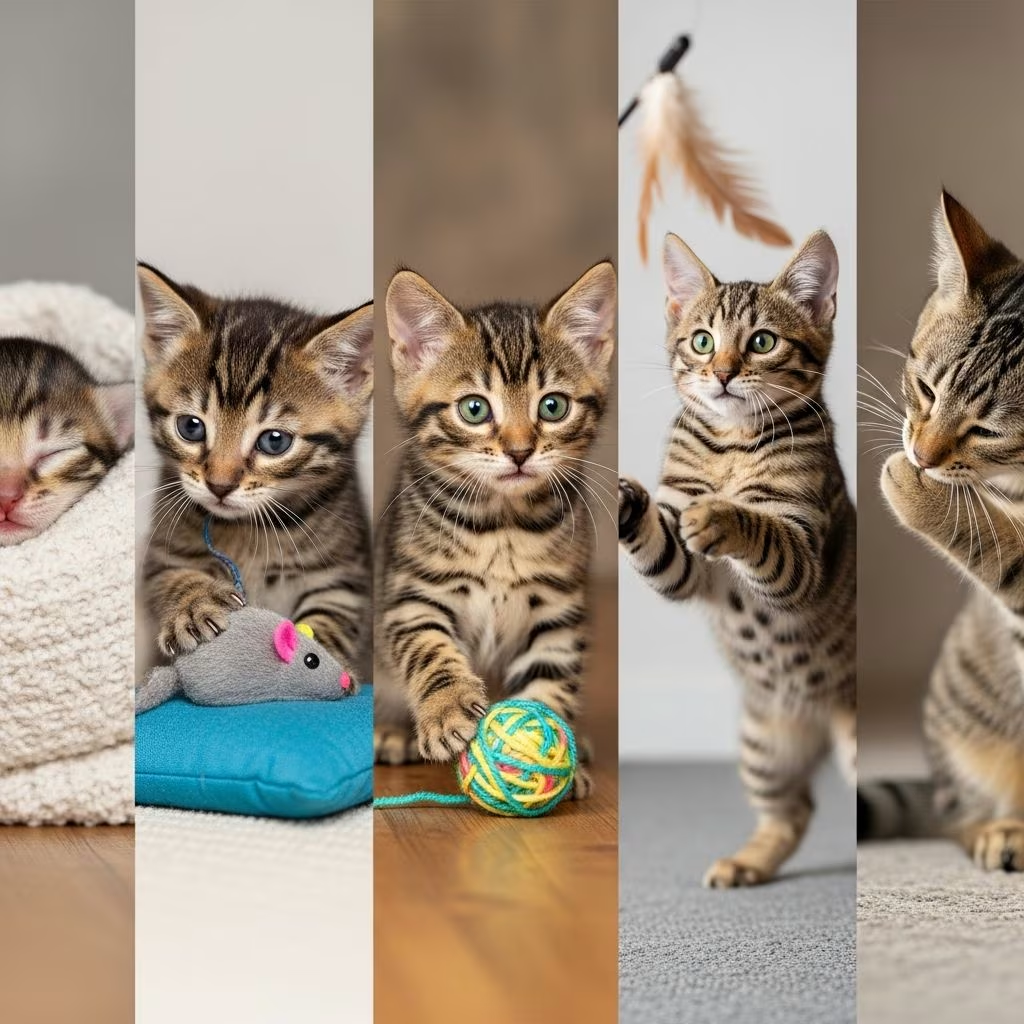
Bringing a kitten into your home is an exciting adventure filled with tiny paws, curious eyes, and endless energy. Understanding the various phases of kitten development helps ensure they thrive physically, emotionally, and socially. This guide breaks down the journey from helpless newborn to independent young cat, highlighting key changes and care requirements along the way.
The Newborn Phase: Birth to Two Weeks
In the initial days after birth, kittens are utterly dependent on their mother. They cannot regulate body temperature, eliminate waste without stimulation, or even see the world around them. Their primary focus is nursing mother’s milk, which provides vital colostrum for immune protection.
- Physical traits: Eyes and ears sealed shut; weight around 3-4 ounces at birth; pink, wrinkled skin covered in soft fur.
- Behavior: Rooting for nipples, kneading paws during feeding, and sleeping nearly 90% of the time.
- Care tips: Maintain a warm environment (85-90°F); monitor for steady weight gain of about 0.5 ounces daily.
By the end of week one, kittens may start wiggling more actively, and their eyes begin to crack open around days 7-14. Ears unfold, but vision remains blurry, limited to detecting light and movement. This neonatal stage sets the foundation for all future growth.
Early Exploration: Weeks 2 to 4
As kittens hit the two-week mark, remarkable transformations occur. They stand on wobbly legs, attempt short walks, and their senses sharpen rapidly. This period marks the shift from total helplessness to budding independence.
| Age | Key Milestones | Average Weight |
|---|---|---|
| 2 Weeks | Standing, eyes/ears open, first attempts at walking | 8-12 oz |
| 3 Weeks | Improved vision/hearing, incisor teeth emerge, hissing or purring begins | 12-16 oz |
| 4 Weeks | Confident walking, playing with siblings, grooming starts | 1-1.5 lbs |
Hearing fully develops by week four, allowing kittens to respond to sounds. They begin interacting with littermates through gentle play, which hones motor skills. Introduce shallow litter boxes now, as instinctive digging behaviors emerge. Nutrition-wise, supplement mother’s milk with kitten formula if needed, transitioning slowly to gruel.
Socialization Boom: Weeks 4 to 8
Weeks 4-8 represent a whirlwind of activity. Kittens’ full set of 26 milk teeth erupts, enabling weaning onto solid foods. Vision matures, eyes shift from blue to their adult color, and personality shines through play.
- Play development: Pouncing, chasing, wrestling with siblings builds coordination and confidence.
- Social skills: Critical window for human interaction; handle gently daily to foster friendliness.
- Health checks: First vaccines around 6-8 weeks; deworming essential.
Energy surges, with kittens sleeping 18-20 hours but exploding into hyperactive bursts. Provide toys, scratching posts, and safe climbing areas. Average weight gain peaks here, up to 3.5 ounces weekly. This is ideal adoption age for many, as they’re weaned and socialized.
Juvenile Leap: 2 to 4 Months
Entering months 2-4, kittens undergo rapid growth spurts. They triple birth weight, bones lengthen, and muscles strengthen for acrobatic feats like leaping onto shelves.
Behaviorally, curiosity drives exploration. They test boundaries, climb curtains, and ambush feet. Litter training solidifies; most use boxes flawlessly by now.
- Nutrition needs: High-protein kitten food (twice adult calories); feed 4-6 small meals daily.
- Vet milestones: Second vaccine series, flea prevention starts.
- Spay/neuter prep: Consider by 4 months to curb spraying/marking.
Sleep patterns mimic adults: 13-16 hours daily, interspersed with play marathons. Monitor for overactivity leading to injury; kitten-proof wires and small objects.
Teething Turbulence: 4 to 6 Months
The teething phase brings discomfort as 26 baby teeth give way to 30 permanent ones between 5-7 months. Kittens chew excessively on furniture, fingers—anything—to soothe sore gums.
Physically, sexual maturity looms; females may go into heat by 6 months. Males show mounting behaviors. Ranking emerges in multi-pet homes, with dominance displays.
| Challenge | Solution |
|---|---|
| Chewing | Teething toys, frozen treats |
| Energy spikes | Interactive play sessions, puzzle feeders |
| Boundary testing | Consistent training, positive reinforcement |
This “teenager” stage tests owners. Provide ample exercise to prevent destructive habits. Growth slows slightly, but muscle tone refines for hunting prowess.
Adolescent Adventures: 6 to 12 Months
From 6-12 months, kittens transition to young adults. Full adult dentition arrives, size approaches mature weight (depending on breed: 6-10 lbs average).
- Behavior shifts: Heightened independence, vocalization increases, spraying if intact.
- Health focus: Spay/neuter by 6 months ideal; annual exams begin.
- Diet transition: Gradually shift to adult food around 10-12 months.
Exploration peaks; secure windows/screens. Social play evolves into sophisticated hunting games. By one year, most are emotionally mature, though some breeds mature slower.
Nutrition Through the Stages
Proper feeding fuels development. Newborns need mother’s milk or formula every 2 hours. Wean at 4 weeks to wet kitten food, adding dry by 8 weeks. Peak calorie demands hit 2-4 months—up to 200-250 kcal/day for a 2-lb kitten.
- Fresh water always available.
- Avoid cow’s milk post-weaning (lactose intolerance).
- Portion control prevents obesity.
Consult vets for breed-specific needs; Persians may require softer foods.
Health and Vaccination Timeline
Preventive care is crucial. Core vaccines (FVRCP for respiratory viruses, panleukopenia) start at 6-8 weeks, boosters every 3-4 weeks until 16 weeks. Feline leukemia testing advised.
| Age | Vaccines/Treatments |
|---|---|
| 6-8 weeks | First FVRCP, deworming |
| 12 weeks | Second FVRCP, rabies (some areas) |
| 16 weeks | Final boosters, FeLV vaccine |
Regular weigh-ins detect issues early. Watch for diarrhea, lethargy—common in orphans.
Behavioral Training Essentials
Socialization during 2-7 weeks imprints lifelong temperament. Expose to household noises, gentle handling.
- Litter training: Place in box after meals; praise success.
- Scratching: Provide posts; use deterrents on furniture.
- Bit play: Redirect to toys; never encourage hands as prey.
Positive reinforcement works best. Adolescence may bring rebellion—patience pays off.
Common Challenges and Solutions
New owners face hurdles:
- Overgrooming: Stress-related; enrich environment.
- Fear aggression: Gradual desensitization.
- Weight issues: Vet-guided diet.
Frequently Asked Questions
When do kittens open their eyes?
Typically 7-14 days after birth, starting as slits.
What’s the best age to adopt a kitten?
8-12 weeks, post-weaning and socialization.
How often should I feed my kitten?
4-6 times daily up to 4 months, then 3 times.
Is my kitten too playful?
Normal; channel into toys and playtime.
When to spay/neuter?
By 5-6 months to prevent behaviors/health risks.
References
- Preparing for Your Kitten’s Developmental Milestones — Willow Glen Pet Hospital. 2023. https://willowglenpethospital.com/preparing-for-your-kittens-developmental-milestones/
- Tracking Your Kitten’s Development and Growth Stages — Royal Canin. 2024. https://www.royalcanin.com/us/es-us/cats/kitten/kitten-development-from-birth-to-adulthood
- Developmental Stages of Kitten Behavior — Seattle Humane. 2023. https://www.seattlehumane.org/resource-library/developmental-stages-of-kitten-behavior/
- Kitten Development Stages and Kitten Age Chart — PetMD. 2025-01-15. https://www.petmd.com/cat/care/kitten-development-understanding-kittens-major-growth-milestones
- Kitten Development Timeline: Weekly Milestones — Hill’s Pet Nutrition. 2024. https://www.hillspet.com/cat-care/new-pet-parent/kitten-growth-timeline-by-week



