

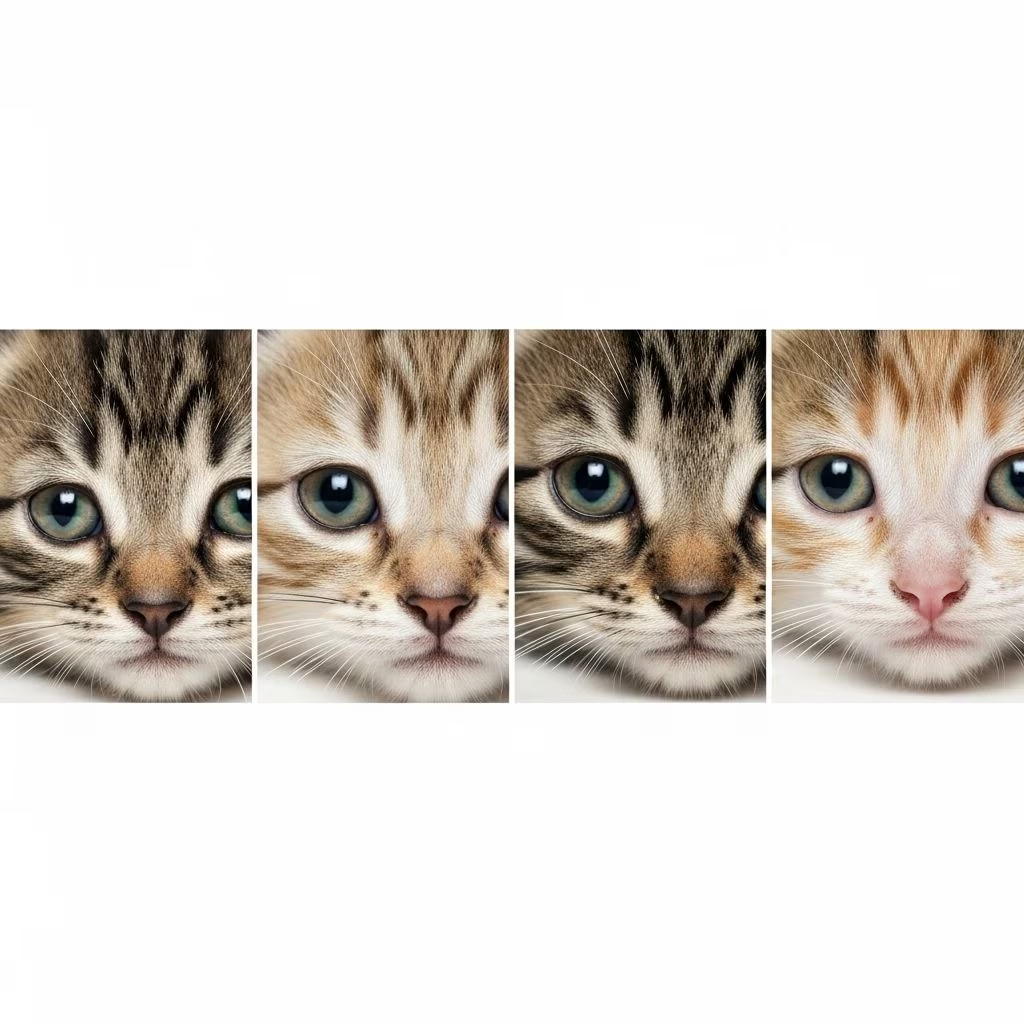
Newborn kittens typically begin opening their eyes between 7 and 14 days after birth, with full opening by around two weeks, though vision remains blurry initially. This gradual process protects their sensitive retinas and allows safe adjustment to light.
The Biology Behind Closed Eyes at Birth
Kittens enter the world in an altricial state, meaning they are born relatively helpless and underdeveloped compared to their parents. Their eyelids remain fused shut for the first week or more to shield delicate eye structures from potential harm during birth and early life. This closure prevents bacterial infections in their immature immune systems and keeps the eye surface moist before tear production fully starts. The sealed eyelids also safeguard hypersensitive retinas unprepared for intense light exposure, which could cause permanent damage if opened prematurely.
During this period, kittens rely on other senses like smell and touch to navigate toward their mother for nursing and warmth. Ear canals begin opening around day 7, adding to their sensory awakening, but vision stays offline until eyelids separate naturally. Forcing eyes open is dangerous and can lead to injury or infection; patience is key.
Week-by-Week Guide to Eye Opening
Kitten development follows a predictable yet variable timeline influenced by genetics, breed, nutrition, and environment. Here’s a detailed progression:
- Days 1-6: Eyes completely closed; kittens are blind and deaf, focusing solely on scent and heat for survival.
- Days 7-10: Eyelids start to crack at the corners; one eye may open slightly before the other. Vision is minimal and unfocused.
- Days 10-14: Eyes open wider, revealing a cloudy blue appearance. Kittens squint against light as pupils don’t yet dilate or contract effectively.
- Weeks 2-3: Eyes fully open; kittens respond to movement and light but can’t focus sharply, especially at distance.
- Weeks 4-5: Vision sharpens; kittens explore confidently, tracking objects with better coordination.
| Age | Eye Status | Vision Quality | Other Milestones |
|---|---|---|---|
| Birth-7 days | Fully closed | None | Umbilical cord detaches; weight doubles |
| 8-12 days | Beginning to open | Blurry, light-sensitive | Ears unfold; start wiggling |
| 2 weeks | Fully open, blue | Poor focus, squinting | Attempting to stand; wobbly |
| 3 weeks | Open, improving | Responds to motion | Play begins; better balance |
| 7-8 weeks | Color changing | Sharpens significantly | Weaning; teeth emerge |
Why Newborn Kitten Eyes Are Always Blue
All kittens emerge with striking blue eyes due to underdeveloped iris pigment cells that haven’t yet produced melanin. This temporary hue results from light scattering through clear iris layers, similar to a blue sky effect. By weeks 3-6, melanin production ramps up, darkening eyes to greens, yellows, oranges, or browns based on genetics.
Breeds like Siamese or Ragdolls often retain blue eyes permanently, a trait linked to selective breeding for point coloration. Final color stabilizes around 8 weeks, though subtle shifts can occur up to 12 weeks or beyond. Monitor for changes: persistent blue past 12 weeks signals a lifelong feature.
Factors Influencing Eye Development Speed
Not all litters progress identically. Key influencers include:
- Genetics and Breed: Some purebreds open eyes earlier or later; mixed breeds vary widely.
- Nutrition: Mother’s milk quality affects growth; orphaned kittens on formula may lag if not fed properly.
- Environment: Warm, stress-free nesting promotes timely development; cold or noisy areas delay it.
- Health: Infections or prematurity can postpone opening beyond 16 days.
Healthy litters average 10-14 days for full opening, but ranges from 2-16 days are normal. Track each kitten individually, as littermates differ.
Spotting and Addressing Eye Problems Early
While most eye openings proceed smoothly, watch for red flags that demand intervention. Common issues include:
- Crusty or Matted Eyelids: Bacterial/viral infections cause discharge sealing eyes shut. Clean gently with warm water on a cotton ball—no soap.
- Swelling or Redness: Indicates conjunctivitis; seek vet care promptly to prevent spread.
- Discharge: Yellow/green pus signals infection; clear tears may mean irritation.
- Delayed Opening: Beyond 16 days, consult a vet for underlying issues like dehydration or illness.
Maintain hygiene: Clean bedding daily, isolate sick kittens, and ensure mama cat grooms the litter. Early vet visits can resolve most problems before vision impairs permanently.
Care Tips for Supporting Healthy Vision
Support your kittens’ eye health with proactive steps:
- Provide a quiet, dimly lit nest to ease light transition.
- Monitor weight gain—poor nutrition slows development.
- Gently wipe eyes if crusty, using boiled/cooled water.
- Vaccinate at 6-8 weeks against feline diseases affecting eyes.
- Introduce solid food around weaning to fuel growth.
For orphans, use kitten milk replacer and stimulate elimination. By 8 weeks, schedule a full exam to confirm vision maturity.
Myths and Facts About Kitten Eyes
- Myth: All kittens open eyes on day 7. Fact: Timeline varies 7-14 days typically.
- Myth: Blue eyes mean poor vision. Fact: Color is temporary; vision improves independently.
- Myth: Pry open stuck eyes. Fact: This risks damage—clean and wait or see vet.
Long-Term Vision Maturation
Even after opening, full vision takes months. By 4-5 weeks, depth perception emerges; by 2-3 months, adult acuity matches 20/100 to 20/200 human vision—excellent for hunters despite not seeing color like us. Regular play hones tracking skills essential for survival.
FAQs on Newborn Kitten Eyes
Q: Can kittens open eyes too early?
A: Rarely before day 7; premature opening risks light damage.
Q: Why do some kittens have mismatched eye openings?
A: Normal asymmetry; both catch up within days.
Q: When should I worry if eyes stay blue?
A: After 12 weeks, it’s likely permanent—common in certain breeds.
Q: How to clean crusty kitten eyes safely?
A: Damp warm cotton ball; vet if persistent.
Q: Do all kittens follow the same eye color change?
A: No, genetics dictate final shades by 8 weeks.
References
- Newborn Kittens: When do kitten open their eyes? — Heart of Brooklyn Veterinary. 2024-04-15. https://www.heartofbrooklynveterinary.com/site/blog/2024/04/15/newborn-kittens
- Newborn Kittens: When Do Kittens Open Their Eyes? — Clover Vet Hospital. 2023-08-15. https://www.clovervethospital.com/site/blog/2023/08/15/newborn-kittens-open-eyes
- When Do Kittens Open Their Eyes? — Lane Veterinary. N/A. https://lanevet.com/blog/when-do-kittens-open-their-eyes/
- How to Determine a Kitten’s Age — Kitten Lady. N/A. http://www.kittenlady.org/age
- Kitten Growth Stages & Development by Week — Purina US. N/A. https://www.purina.com/articles/cat/kitten/health/kitten-development-stages
- How Old Is That Kitten? Kitten Progression — Alley Cat Allies. N/A. https://www.alleycat.org/resources/kitten-progression/
- When Do Kittens Open Their Eyes? — PetMD. N/A. https://www.petmd.com/cat/general-health/when-do-kittens-open-their-eyes



