

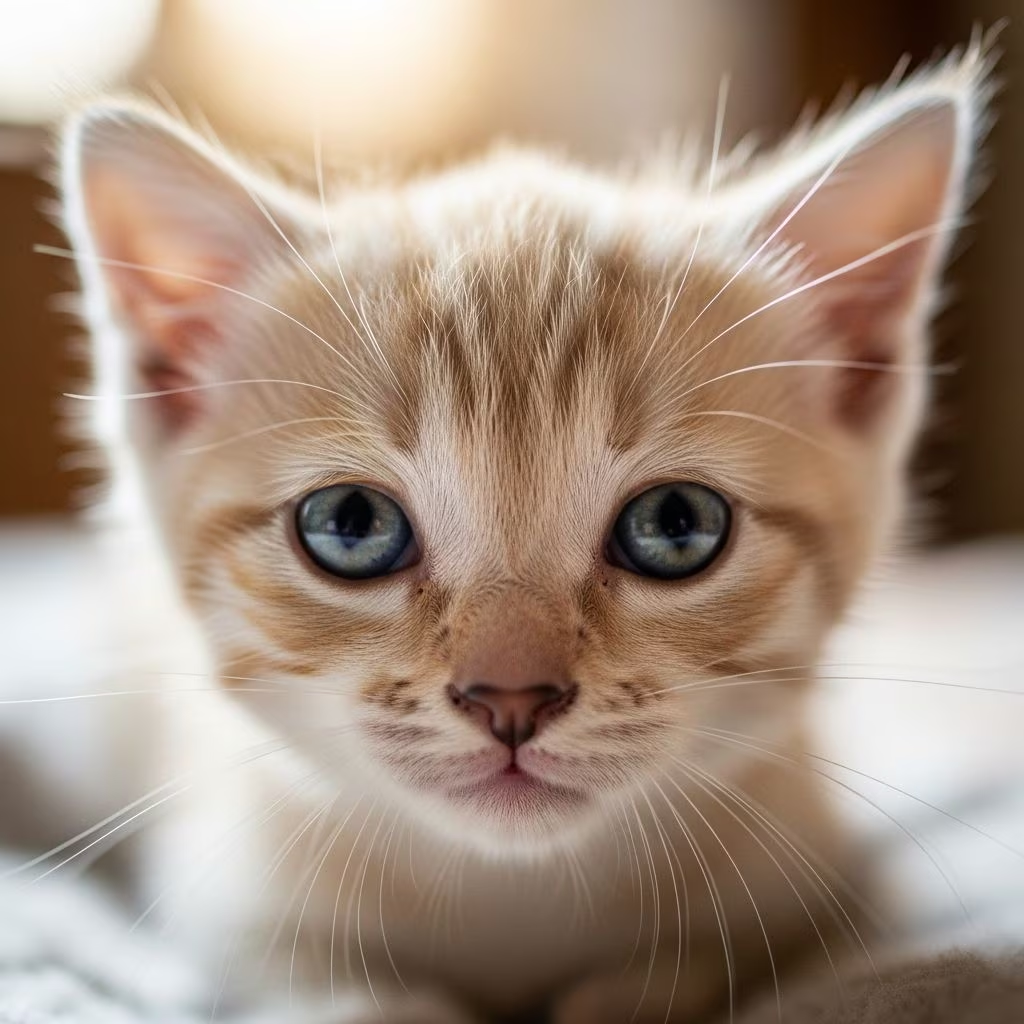
Watching newborn kittens grow is one of the most rewarding experiences for cat caregivers. One of the most significant milestones in a kitten’s early life is the opening of their eyes. This natural process represents a critical stage in their sensory development and marks the beginning of their visual interaction with the world. Understanding when and how this occurs helps caregivers provide appropriate support during these crucial early weeks.
The Initial Stage: Why Kittens Are Born With Closed Eyes
Kittens arrive in the world with their eyes firmly shut, a characteristic of altricial animals—those born in an underdeveloped state requiring extensive maternal care. This adaptation serves several important biological purposes. The fused eyelids protect developing eyes from environmental damage and excessive light exposure.
During gestation and birth, a kitten’s eyes are still undergoing significant development. The retinas, which are responsible for processing light and transmitting visual information to the brain, remain extremely sensitive at birth. If exposed to ambient light immediately, these delicate structures could sustain damage that would compromise lifelong vision. Additionally, the nervous system controlling vision has not fully matured, meaning the kitten cannot yet process visual stimuli effectively.
The protective mechanism of closed eyes also reduces complications during the birthing process. The smaller profile of a kitten with sealed eyelids makes passage through the birth canal easier for the mother, reducing injury risk to both mother and kitten. This is an elegant example of how evolution has adapted feline reproduction for survival.
Timeline of Eye Opening: What Happens Week by Week
Days 1-7: The Waiting Period
During the first week of life, newborn kittens remain almost completely dependent on their mother. Their eyes stay completely sealed during this time. At this stage, kittens rely almost entirely on their sense of smell and touch to navigate their immediate environment, locate their mother, and find nursing opportunities.
Interestingly, while eyes are closed, other sensory systems are beginning to activate. Around 7 days of age, the ear canals start to open gradually. This emerging hearing ability complements the kitten’s already-functional olfactory system, creating a multi-sensory awareness that guides early survival behaviors.
Days 8-12: The Cracking Open Phase
Between 8 and 12 days of age, the eye-opening process begins in earnest. The sealed eyelids gradually separate, though the process is rarely simultaneous for both eyes. One eye frequently opens slightly ahead of the other, and this asymmetry is completely normal.
During this phase, the corners of the eyes start to crack open, initially revealing only narrow slits. The opening happens gradually over several days rather than as a sudden event. Caregivers should never attempt to manually open a kitten’s eyes, as premature exposure to light and interference with the natural process can cause discomfort or developmental complications.
Days 14-21: Full Opening and Initial Vision
By two weeks of age, most kittens have their eyes fully open. At this stage, both eyes are usually dilated, revealing the characteristic bright blue color that all kittens share at birth. However, full opening does not mean full vision capability.
A two-week-old kitten’s vision remains quite poor. Their ability to focus on objects at various distances is limited, and their visual processing speed is slow compared to adult cats. Movement may be detectable, but fine details and static objects at a distance remain unclear. By week three, however, visual capabilities improve noticeably, and kittens begin responding more deliberately to movement and light.
Week 4-5: Enhanced Vision and Exploration
Four to five weeks marks a significant leap in visual acuity. Kittens’ eyesight becomes noticeably sharper, and they begin exploring their surroundings with dramatically increased confidence. This period coincides with greater mobility, as their legs have developed sufficient strength and coordination for walking and climbing.
The improved vision during this window enables kittens to engage in play behaviors that develop hunting skills and coordination. They can now track moving toys, follow their littermates, and navigate more complex environments with greater accuracy. This combination of visual improvement and physical development creates an ideal stage for increased social interaction and environmental enrichment.
The Blue Eye Mystery: Understanding Kitten Eye Color Changes
Why Are All Kittens Born With Blue Eyes?
Every kitten, regardless of breed or genetic background, is born with blue eyes. This universal trait occurs because the pigment in the iris has not yet fully developed. The blue color comes from light scattering off the developing iris tissue, a phenomenon similar to why human babies often have blue eyes at birth.
The absence of melanin pigment in newborn kitten eyes is a natural part of development. As kittens mature, melanin production increases, gradually changing eye color from the bright blue of infancy to the permanent shade they will carry into adulthood.
Timeline of Eye Color Transition
Eye color changes occur gradually over several weeks. During weeks three through six, kittens’ eyes remain predominantly blue, though the shade may begin to darken subtly as melanin accumulation begins. Around week seven, more noticeable color changes emerge as the adult eye color begins appearing.
By approximately eight weeks of age, a kitten’s permanent eye color is largely established. However, some subtle variations may continue into early adulthood as melanin deposition reaches completion. The final color depends entirely on genetics and can range from green and yellow to amber, copper, and brown.
Special Cases: Cats That Keep Blue Eyes
Some kittens retain their blue eyes into adulthood. If a kitten’s eyes remain blue after 12 weeks of age, they will almost certainly maintain that color permanently. This trait is particularly common in certain breeds, such as Siamese, Ragdolls, and some color-pointed varieties. In these breeds, genetic factors suppress melanin production in the iris, resulting in lifelong blue eyes as part of the breed standard.
Developmental Milestones Associated With Eye Opening
Mobility and Coordination
As kittens’ eyes open and vision develops, their physical capabilities expand dramatically. A kitten that has just opened its eyes is still relatively immobile, but developmental progress accelerates over the following weeks. By two weeks, kittens begin crawling with greater purpose. Four weeks marks the emergence of walking, jumping, and sustained play behaviors.
The improvement in vision directly enables these physical advances. Kittens can now navigate their environment with visual guidance rather than relying solely on tactile and olfactory cues. Their depth perception, while still developing, supports coordination and movement planning at more complex levels.
Social Recognition and Behavior
Once eyes are open and vision is functional, kittens begin recognizing their caregivers and littermates. This visual recognition strengthens bonding and enables the social learning essential to kitten development. By week four, kittens are highly active and playful, engaging in mock hunting and social interactions that would be impossible without adequate vision.
Teeth Emergence
The timing of eye opening roughly coincides with the beginning of tooth emergence. At around three weeks of age, when vision has improved significantly, the first baby teeth—the tiny incisors at the front of the mouth—begin emerging through the gums. The combination of improved vision and new teeth supports the kitten’s transition from exclusive milk nutrition toward solid food exploration.
Health Concerns and Warning Signs
Delayed Eye Opening
While most kittens begin opening their eyes between 7 and 14 days of age, variation occurs based on genetics, breed, and individual development rates. However, if a kitten has not opened its eyes by day 16, veterinary evaluation is prudent. Delayed opening can indicate underlying health issues or developmental concerns requiring professional assessment.
Signs of Infection or Irritation
Several eye-related symptoms warrant immediate veterinary attention:
- Swollen or crusty eyelids—May indicate conjunctivitis or other infections
- Excessive discharge—Clear or yellow drainage can signal irritation or systemic illness
- Red or inflamed eye tissue—May represent infection or other ocular disease
- Persistent eye closure beyond normal timeline—Could indicate pain or developmental problems
Proper Eye Care During Development
Caregivers should avoid touching or manipulating a kitten’s eyes during the opening process. The eyes are extremely sensitive during development, and unnecessary handling risks causing discomfort or injury. If discharge or debris accumulates around the eyes, gentle cleaning with a soft, damp cloth may help, but force should never be applied.
Maintaining a clean kitten environment, free from dust and irritants, supports healthy eye development. Adequate nutrition also plays a role in proper visual system development, making quality kitten food essential during early weeks.
Frequently Asked Questions
Q: Is it normal for one eye to open before the other?
A: Yes, asymmetrical opening is completely normal. One eye frequently opens slightly ahead of the other over the course of several days. This variation in timing does not indicate any problem with either eye.
Q: Can I help my kitten open its eyes faster?
A: No. Never attempt to pry open a kitten’s eyes manually. The natural opening process is timed to protect developing vision and allow proper adjustment to light. Interference can cause discomfort and potential vision damage.
Q: When will my kitten’s eye color be permanent?
A: Most kittens’ permanent eye color is established around eight weeks of age. If eyes remain blue after 12 weeks, they will likely stay blue permanently.
Q: What should I do if my kitten’s eyes seem infected?
A: Contact your veterinarian promptly. Signs like discharge, redness, swelling, or cloudiness warrant professional evaluation to rule out conjunctivitis or other infections.
Q: How does vision improve after eyes first open?
A: Vision improves gradually. At two weeks, vision is poor and blurry. By three weeks, kittens respond to movement and light. By four to five weeks, eyesight becomes noticeably sharper and supports more confident exploration.
References
- When Do Kittens Open Their Eyes? — Lane Veterinary. 2024. https://lanevet.com/blog/when-do-kittens-open-their-eyes/
- Kitten Development Stages and Kitten Age Chart — PetMD. 2024. https://www.petmd.com/cat/care/kitten-development-understanding-kittens-major-growth-milestones
- Newborn Kittens: Eyes & Walking — Washington Dog and Cat Hospital. 2022. https://www.washingtondogandcathospital.com/site/blog/2022/07/30/when-do-newborn-kittens-open-their-eyes
- Kitten Vision: More Than Meets the Eye — Kitten Coalition. 2024. https://kittencoalition.org/kitten-vision-more-than-meets-the-eye/
- How to Determine a Kitten’s Age — Kitten Lady. 2024. http://www.kittenlady.org/age



