

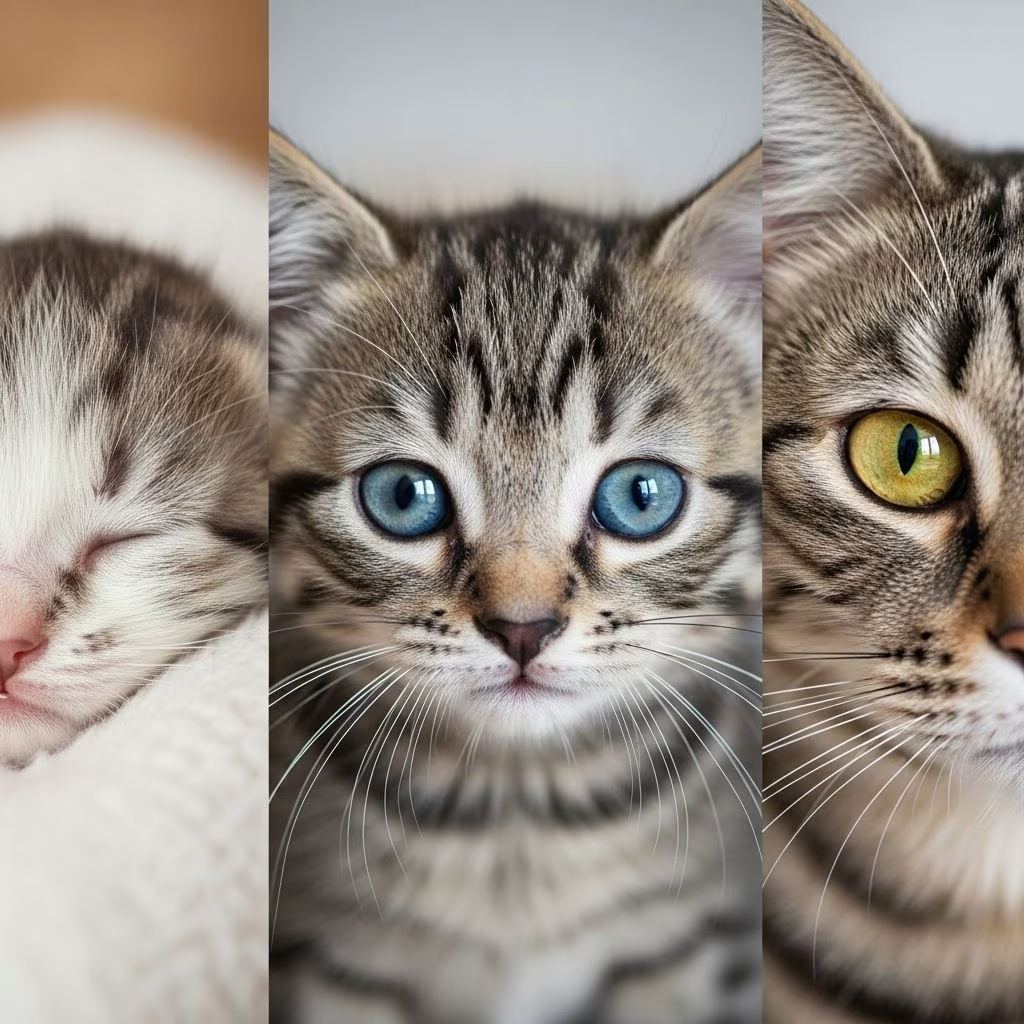
When a litter of kittens is born, their eyes remain closed for the first week or two of life. As they gradually develop and their eyes begin to open, new pet owners often notice something striking: all kittens appear to have the same bright blue eyes. This universal eye color at birth is one of the most distinctive features of newborn felines, but it is temporary. Understanding the progression of kitten eye development—from those initial blue eyes to their permanent adult color—helps caregivers monitor their kittens’ health and appreciate the remarkable changes occurring during these critical early weeks.
The Initial Eye Opening Process
Kittens are born in a state called altricial development, meaning they arrive into the world underdeveloped and entirely dependent on their mother for survival. Unlike many other animals, kittens do not have the luxury of open eyes from birth. Instead, their eyelids remain firmly sealed shut during the first week or so of life. This protective mechanism serves an important purpose: their eyes and nervous systems are not yet sufficiently mature to handle the sensory input that comes with sight.
Between 7 and 14 days of age, kittens begin the gradual process of opening their eyes. This is not an instantaneous event but rather a slow, progressive opening that occurs over several days. The process typically follows a predictable pattern. Around days 7 through 10, the corners of the eyes begin to crack open, and sometimes one eye opens slightly before the other. This asymmetrical opening is entirely normal and nothing to worry about. By days 10 through 14, the eyes open wider, though at this stage, the kittens’ vision remains blurry and unfocused.
It is crucial for caregivers to resist the urge to help this process along. Attempting to pry open a kitten’s eyes artificially can cause injury and interfere with their natural development. The timing of eye opening varies from kitten to kitten based on genetics, breed, and environmental factors, so patience is essential.
Why All Kittens Are Born With Blue Eyes
One of the most enchanting aspects of newborn kittens is their uniform blue eye color. However, this is not a coincidence or purely aesthetic feature—it reflects the stage of their biological development. All kittens are born with blue eyes because the pigment in their irises has not yet fully developed. The iris is the colored part of the eye that controls how much light enters through the pupil, and in newborn kittens, this pigment is still forming.
The reason for this delayed pigmentation development relates to how feline eyes mature. Unlike humans, whose eyes are essentially fully formed at birth, kitten eyes continue significant development after birth. The sensitive retinas of newborn kittens are not yet ready to process light in its full intensity. If kittens were born with open eyes and fully pigmented irises, the brightness of the world could potentially damage their developing vision. The blue coloration we see in newborn eyes is actually the result of light scattering through the developing eye structures, similar to why the sky appears blue. This protective mechanism allows kittens’ eyes to adjust gradually and safely to the world around them as they mature.
Vision Development Milestones During the First Weeks
As kittens’ eyes open and their vision begins to develop, distinct milestones occur. By two weeks of age, both eyes are usually fully dilated and open, though vision remains significantly blurry. At this stage, kittens can detect movement and light, but their ability to focus on objects is limited. Their depth perception is particularly underdeveloped, and they rely heavily on their other senses—smell, touch, and hearing—to navigate their environment and locate their mother for feeding.
By the third week of life, a remarkable transformation in visual capability occurs. Many kittens can now focus with both eyes, meaning their binocular vision is beginning to function. This is when their eyes start to respond more noticeably to movement and light. Their exploration of their immediate environment becomes more confident, and they begin to interact with littermates in more visually coordinated ways. By weeks four and five, their eyesight becomes noticeably sharper, and they start exploring their surroundings with genuine curiosity and increasing confidence. At this point, they are no longer entirely dependent on their sense of smell and are beginning to use vision as a primary tool for understanding their world.
The Timeline for Eye Color Transition
The shift from blue eyes to permanent eye color is one of the most visually dramatic transformations a kitten undergoes. During weeks three through six, kittens’ eyes remain predominantly blue, though the shade may begin to darken slightly. Around weeks six through ten, the adult eye color begins to emerge, visible as a gradual change from the baby blue. This transition is not instantaneous but rather occurs gradually, with new pigment developing in the iris.
The timeline for permanent eye color establishment varies among individual kittens, but by approximately eight weeks of age, the permanent eye color is generally established. However, some subtle changes in eye color can continue into adulthood, so the eight-week mark represents when the adult color is clearly recognizable rather than absolutely final. By around nine weeks or two months of age, the adult eye color is fully visible and stable.
For kittens whose eyes remain blue after twelve weeks of age, permanence is essentially guaranteed. These kittens will likely keep their blue eye color throughout their lives. This is particularly common in certain breeds, such as Siamese, Ragdolls, and other pointed breeds, where blue eyes are a breed characteristic.
What Adult Eye Colors Emerge and Why
Kittens’ final eye colors vary widely depending on their genetics and breed heritage. The most common adult eye colors include green, yellow or golden, orange, copper, and brown. Some kittens retain the blue color, while others develop amber eyes or even heterochromia—different colors in each eye. The specific color a kitten develops is determined by the concentration and distribution of melanin in the iris, which is controlled by their genetic inheritance.
The relationship between a kitten’s genetics and eye color is complex. Multiple genes influence eye pigmentation, which is why littermates can have noticeably different eye colors despite sharing the same parents. Environment plays virtually no role in eye color determination; it is purely a matter of inheritance. Breed plays a significant role in predicting eye color, as different breeds have been selectively bred for specific eye colors. For example, Siamese and Ragdoll cats are known for their striking blue eyes, while many domestic shorthairs develop green or golden eyes.
Health Considerations During Eye Development
While the natural development of kitten eyes is a beautiful process, caregivers should remain vigilant for signs that something might be amiss. Several warning signs warrant veterinary attention. Swollen or crusty eyelids can indicate infections such as conjunctivitis and should not be ignored. Excessive tearing or any discharge—whether clear or yellowish—may signal irritation or illness requiring professional evaluation. If a kitten has not opened its eyes by day 16, a veterinary check-up is advisable to rule out developmental issues or infection.
Red or inflamed eyes are another concern that should prompt veterinary attention, as they can indicate eye infections or underlying health problems. Additionally, caregivers should avoid touching or manipulating a kitten’s eyes during this sensitive developmental period, as the tissues are delicate and easily injured. If caregivers need to interact with young kittens, gentle handling and caution around the face are essential.
Supporting Healthy Eye Development
Creating an optimal environment for kitten eye development involves several practical considerations. During the early weeks when eyes are still opening and adjusting to light, keeping kittens in a quiet, dimly lit area helps prevent light sensitivity and discomfort. This does not mean keeping them in complete darkness, but rather avoiding harsh, direct light that could be startling or uncomfortable for their developing eyes.
Daily observation is important during this developmental stage. Caregivers should check for any signs of infection, unusual discharge, or abnormal behavior related to the eyes. If kittens are nursing with their mother, she will naturally encourage their growth and provide most of the care they need. However, if caregivers are hand-rearing kittens, maintaining cleanliness and avoiding contamination becomes even more critical.
Once kittens have opened their eyes and begun their visual journey, their socialization rapidly improves. They become increasingly responsive to sights and sounds, begin recognizing their caregivers, and attempt to walk with greater confidence. By four weeks of age, kittens are typically highly active and playful, using their developing vision to explore their environment and interact with littermates in increasingly complex ways.
Frequently Asked Questions About Kitten Eye Development
Q: Is it normal for kitten eyes to open at different rates?
A: Yes, it is completely normal for kittens’ eyes to open at slightly different rates, with one eye sometimes opening before the other. The process is gradual, and minor asymmetry in timing is not concerning.
Q: Can I help speed up the eye-opening process?
A: No, you should never attempt to pry open a kitten’s eyes. Doing so can cause injury and interfere with their natural development. Allow the process to happen at its own pace.
Q: Why do some kittens have different eye colors from their littermates?
A: Eye color is determined by genetics. Even littermates from the same parents can inherit different combinations of genes that influence melanin production and distribution in the iris, resulting in different eye colors.
Q: At what age is a kitten’s final eye color set?
A: By approximately eight weeks of age, a kitten’s adult eye color is generally established. Some subtle changes may continue into adulthood, but the recognizable adult color is visible by this point.
Q: What should I do if a kitten’s eyes seem abnormal?
A: Any signs of swelling, discharge, redness, or if eyes have not opened by day 16, contact a veterinarian. These could indicate infections or developmental issues requiring professional attention.
The Remarkable Transformation of Kitten Eyes
The journey of a kitten’s eyes from tightly closed newborn slits to wide-open windows on the world is one of the most fascinating aspects of feline development. The universal blue eyes of newborns gradually transform into the diverse and beautiful colors that characterize adult cats, a process driven entirely by genetics and the natural maturation of eye tissues. Understanding this timeline helps caregivers appreciate the rapid changes occurring in young kittens and recognize when professional veterinary attention might be necessary. By observing and supporting this delicate developmental process, caregivers contribute to ensuring that their kittens develop healthy, functional vision that will serve them throughout their lives. Whether a kitten retains striking blue eyes or develops warm golden or striking green ones, the journey to that final color is a testament to the remarkable biological processes that unfold during the first weeks of feline life.
References
- When Do Kittens Open Their Eyes? — Lane Veterinary. Accessed 2026-01-29. https://lanevet.com/blog/when-do-kittens-open-their-eyes/
- How to Determine a Kitten’s Age — Kitten Lady. Accessed 2026-01-29. https://kittenlady.org/age
- Newborn Kittens: Eyes & Walking — Washington Dog and Cat Hospital. Accessed 2026-01-29. https://www.washingtondogandcathospital.com/site/blog/2022/07/30/when-do-newborn-kittens-open-their-eyes
- Kitten Progression: At-a-Glance — Alley Cat Allies. Accessed 2026-01-29. https://www.alleycat.org/resources/kitten-progression/
- How Old Is That Kitten? Kitten Age Chart — Somerset Vets. Accessed 2026-01-29. https://www.midwayvetlovesmypet.com/site/blog/2024/04/30/how-old-kitten-is
- Kitten Vision: More Than Meets the Eye — Kitten Coalition. Accessed 2026-01-29. https://kittencoalition.org/kitten-vision-more-than-meets-the-eye/



