

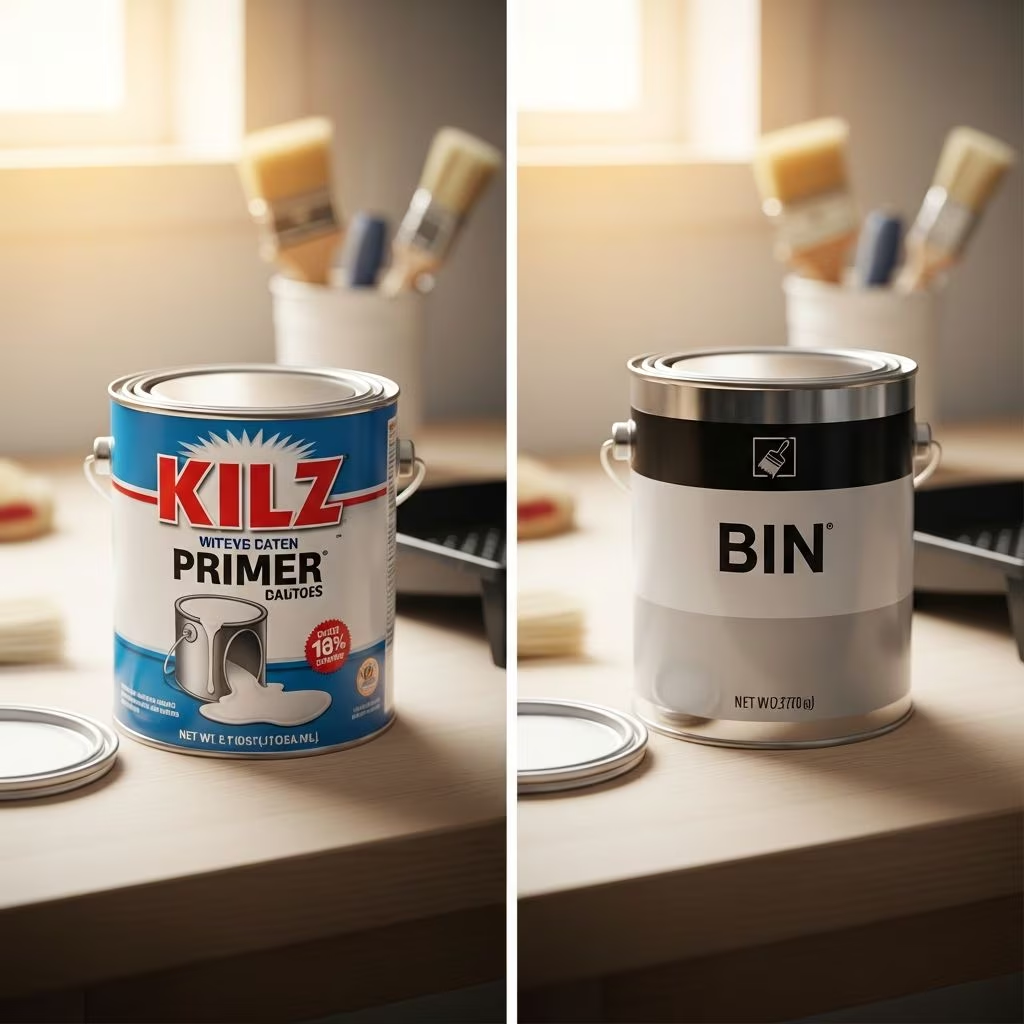
Pet owners frequently face the challenge of persistent cat urine odors and stains on walls, floors, and furniture. Selecting the right primer is crucial for blocking these issues before applying topcoat paint. This guide examines **Kilz** and **BIN** primers, two popular choices for such tasks, highlighting their formulations, performance, and best applications based on user experiences and product specifications.
Understanding Primer Basics for Pet Damage
Primers create a barrier that prevents stains and odors from bleeding through paint layers. For cat urine, which contains ammonia and other compounds, the primer must seal deeply and neutralize smells effectively. Oil-based options like traditional Kilz excel in adhesion, while shellac-based products like BIN offer rapid sealing.
Key factors include stain coverage, odor encapsulation, drying speed, ease of use, and cost. Both products address these but cater to different needs: lighter issues versus severe damage.
Deep Dive into Kilz Primer
Kilz Original, an oil-based primer, stands out for its accessibility and mild profile. Its thinner viscosity allows straightforward application without dilution, making it suitable for brushes, rollers, or sprayers. Users appreciate its low odor, which minimizes irritation during indoor work—ideal for homes with sensitive pets or family members.
- Affordable pricing: Typically lower cost per gallon, stretching budgets for larger areas.
- Mild scent: Less overpowering than solvent-heavy alternatives.
- Smooth application: Flows evenly for a professional finish.
- Versatile sanding: Once cured, it accepts light sanding for topcoat prep.
However, for cat urine, Kilz performs best on light to moderate stains. Expect 2-3 coats for full blocking, with each layer needing extended drying—up to hours between coats and weeks for complete curing. Cleaning spills requires care to avoid marring the surface.
Exploring BIN Primer’s Strengths
BIN, a shellac-based primer from Zinsser, targets heavy-duty sealing. Its thick formula demands thinning for sprayers but delivers exceptional one- or two-coat coverage on severe stains like old cat urine saturation. The shellac composition rapidly locks in odors, preventing resurgence.
- Superior stain blocking: Handles deep penetration from pet accidents.
- Fast dry time: Touch-dry in 15 minutes; recoat in 45; full cure in days.
- High durability: Resists cleaning damage and fills minor cracks.
- Broad surface compatibility: Works on drywall, wood, plaster, and masonry.
The trade-off is a strong alcohol-solvent odor, necessitating ventilation and respirators. Cleanup uses ammonia or denatured alcohol, and sprayer flushing requires ample solvent post-use.
Head-to-Head Comparison Table
| Feature | Kilz Original | BIN Shellac-Based | Winner |
|---|---|---|---|
| Stain/Odor Coverage | Good for minor-moderate; multi-coat needed | Excellent for severe; 1-2 coats | BIN |
| Price per Gallon | Lower (~$20-30) | Higher (~$40-50) | Kilz |
| Dry Time (Recoat) | 1-2 hours | 45 minutes | BIN |
| Full Cure Time | 1-3 weeks | 1-3 days | BIN |
| Odor Level | Mild | Strong | Kilz |
| Ease of Sanding/Cleaning | Moderate | Easy and durable | BIN |
| Application Needs | No thinning | Thin for sprayers | Kilz |
Application Techniques for Best Results
Proper prep amplifies both primers’ effectiveness. Start by cleaning the area with an enzymatic cleaner to break down urine crystals—avoid bleach, which can reactivate odors. Rinse thoroughly and let dry completely.
For Kilz: Stir well, apply thin coats to avoid runs. Allow ample time between layers. Use in well-ventilated spaces, though its scent is gentler.
For BIN: Thin 10-20% with denatured alcohol for spraying. Apply generously to saturate stains. Multiple thin coats outperform one heavy layer. Post-application, air out the room extensively.
Topcoating: Wait for full cure. Oil-based Kilz pairs with latex or oil paints; BIN accepts most finishes. Test compatibility on a small area.
Real-World Performance with Cat Urine
Homeowners report Kilz suffices for fresh or isolated spots, with many praising its value for whole-room priming beyond pets. However, recurrent odors sometimes emerge if stains are deep.
BIN shines in chronic cases, like multi-pet households or aged damage. Forum users on platforms like Houzz and AR15.com endorse it for smokers’ homes or pet issues, noting zero bleed-through after years. One drawback: solvent cleanup demands dedication, especially with sprayers transitioning to water-based paints.
Cost-Benefit Analysis for Pet Owners
Budget projects with light stains favor Kilz—its economy covers more square footage affordably. Severe or odor-plagued areas justify BIN’s premium, as fewer coats and faster turnaround save time and labor.
Long-term: BIN’s robustness reduces repaints, potentially offsetting higher upfront costs. Consider project scale: small repairs lean Kilz; full renovations suit BIN.
Safety and Environmental Notes
Both are flammable; store away from pets. Kilz’s oil base requires mineral spirits cleanup; BIN uses alcohol-based solvents. Wear gloves, masks, and eye protection. Dispose per local hazardous waste rules.
For eco-conscious users, newer water-based Kilz variants offer lower VOCs, though original oil formulas block better for urine.
Alternatives and Complementary Products
Beyond these, Zinsser Cover-Stain or Kilz Premium provide middle-ground options. Pair primers with pet-safe paints and ongoing enzymatic treatments for prevention. For floors, epoxy sealers may outperform wall primers.
Frequently Asked Questions (FAQs)
Can Kilz fully eliminate cat urine smell?
It blocks mild odors effectively with multiple coats but may falter on heavy saturation.
Is BIN safe around cats during application?
No—remove pets and ventilate thoroughly due to fumes. Re-enter after 24-48 hours.
How many coats of BIN for old urine stains?
Usually 1-2; test a spot first.
Does Kilz work on wood floors?
Yes, but prep thoroughly; BIN edges for tannin bleed.
What’s the shelf life of these primers?
2-5 years unopened; stir well if older.
Choosing Your Ideal Primer
Opt for Kilz if budget and mild issues dominate. Choose BIN for guaranteed, rapid sealing of tough pet damage. Test small areas and prioritize ventilation for success.
References
- Kilz vs. Bin Primer for Cat Urine: 2026 Comparison — Catster. 2026-01-01. https://www.catster.com/lifestyle/kilz-vs-bin-primer/
- Kilz Original vs Zinsser BIN Primer — AR15.com Forums. 2014-05-01. https://www.ar15.com/forums/t_1_139/2682443_Kilz-Original-vs-Zinsser-BIN-Primer.html
- Kilz vs. Zinsser: The Ultimate Primer Showdown — OreaTe AI Blog. 2024-01-01. https://www.oreateai.com/blog/kilz-vs-zinsser-the-ultimate-primer-showdown/31a313885d512d0484a3b35f08ca4f3a
- Home Renovation with Pets: Kilz vs. Bin Primer Comparison — CatsLuvUs. 2024-08-30. https://shop.catsluvus.com/2024/08/30/home-renovation-with-pets-kilz-vs-bin-primer-comparison/
- Primer Wars: Kilz vs Zinsser — Which Blocks Stains Best? — YouTube (Video Transcript). 2023-01-01. https://www.youtube.com/watch?v=0ENfedeKEKQ
- Primers: Kilz Original vs. Zinsser Shellac-based — Houzz Discussions. 2015-01-01. https://www.houzz.com/discussions/6050740/primers-kilz-original-vs-zinsser-shellac-based



