

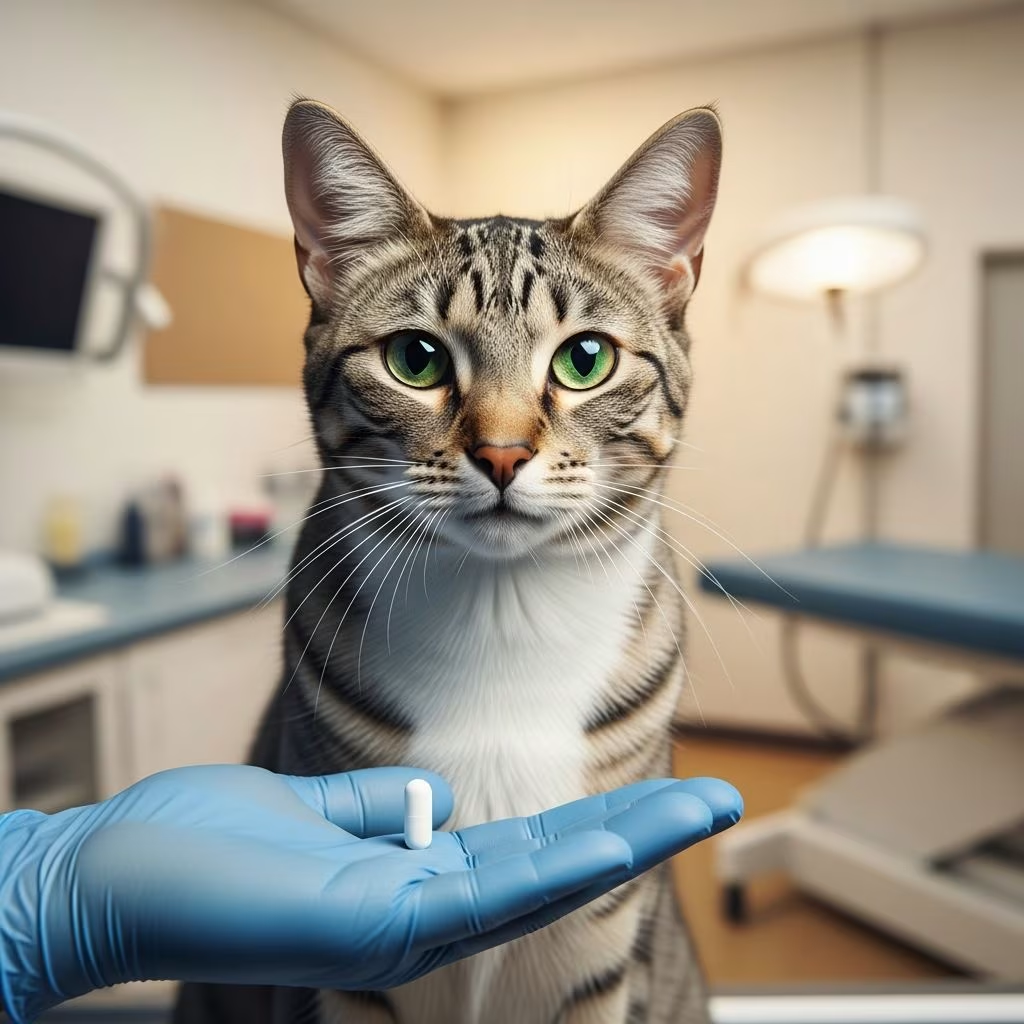
Ketoprofen, commonly known by the brand name Ketofen, is a non-steroidal anti-inflammatory drug (NSAID) utilized in veterinary medicine to alleviate pain and reduce inflammation in cats. It works by inhibiting enzymes responsible for producing prostaglandins, which contribute to pain and swelling. This medication proves particularly valuable for short-term management of acute conditions or post-surgical recovery in felines.
Understanding Ketoprofen’s Mechanism in Felines
In cats, ketoprofen targets cyclooxygenase (COX) enzymes, primarily COX-1 and COX-2, to decrease prostaglandin synthesis. This action not only controls pain but also helps manage fever associated with inflammatory processes. Unlike some NSAIDs, ketoprofen exhibits chiral pharmacokinetics, where the S(+) enantiomer demonstrates stronger anti-inflammatory effects and slower clearance compared to the R(-) form after intravenous or oral administration.
Pharmacokinetic studies reveal that following a single oral dose of 1 mg/kg, ketoprofen achieves rapid absorption, with peak plasma concentrations within hours, making it suitable for acute pain relief. Its elimination half-life varies, but the drug maintains therapeutic levels effectively for 24 hours, supporting once-daily dosing.
Primary Applications for Cats
- Acute Pain Management: Effective for short-term relief from injuries, dental procedures, or soft tissue trauma.
- Postoperative Care: Reduces discomfort following surgeries like spaying, neutering, or orthopedic interventions.
- Musculoskeletal Inflammation: Helps with conditions such as sprains, strains, or early-stage arthritis flare-ups.
- Fever Reduction: Assists in controlling pyrexia linked to infections or inflammatory diseases.
Veterinarians often prescribe ketoprofen for these uses due to its potent activity against acute, subacute, and chronic inflammation models observed in clinical settings.
Dosage Guidelines Tailored for Cats
Precise dosing is critical to maximize benefits while minimizing risks. Always administer under veterinary direction, as individual cat health factors influence the regimen.
| Condition | Dosage | Route | Frequency/Duration |
|---|---|---|---|
| Acute Pain/Inflammation | 1 mg/kg | PO, IV, SC, IM | Once daily, up to 5 days |
| Initial Loading Dose (if applicable) | 2 mg/kg (IV/PO first dose) | IV or PO | Single dose, followed by maintenance |
| Chronic Pain (rare in cats) | 0.25 mg/kg (dogs; cautious in cats) | PO | Once daily, up to 30 days (vet monitored) |
For a typical 4 kg cat, this equates to approximately 4 mg daily for acute cases. Tablets are available in 12.5 mg, 25 mg, 50 mg, and 75 mg strengths, or as 100 mg/mL injectable solution. Oral suspensions or capsules may also be compounded for easier administration. Treatment duration rarely exceeds 5 days in cats to avoid cumulative toxicity.
Administration Methods and Tips
Ketoprofen can be given orally via tablets or compounded liquids, or injected subcutaneously (SC), intravenously (IV), or intramuscularly (IM) by professionals. For home use:
- Hide tablets in pill pockets or wet food if palatable.
- Injectable forms require veterinary administration.
- Give with food to reduce gastrointestinal upset.
- Wash hands post-administration to prevent accidental human exposure.
Monitor for full course completion unless side effects emerge, as premature cessation can lead to relapse.
Safety Considerations and Contraindications
While well-tolerated at recommended doses—up to three times the standard without major issues in safety studies—ketoprofen carries risks.
- Absolute Contraindications: Hypersensitivity to NSAIDs, pre-existing liver, kidney, heart, or bleeding disorders, gastrointestinal ulcers, or dehydration.
- Caution in: Elderly cats, those on diuretics, ACE inhibitors, or other nephrotoxins, as interactions may elevate toxicity.
- Pregnancy/Lactation: Avoid due to potential fetal harm or residue in milk.
Avoid concurrent use with corticosteroids or other NSAIDs to prevent additive gastrointestinal or renal damage.
Recognizing and Managing Side Effects
Common side effects include vomiting, diarrhea, loss of appetite, or lethargy, often resolving upon discontinuation. Serious signs—melena, hematuria, jaundice, or seizures—demand immediate veterinary attention.
In target animal safety tests, even at five times the dose, most cats showed no severe changes, but renal tubular lesions or abomasal ulcers occurred at higher multiples, emphasizing adherence to dosing. Regular bloodwork monitors kidney and liver function during extended use.
Comparative Overview of Feline NSAIDs
Ketoprofen stands alongside other NSAIDs for cat pain management:
| NSAID | Cat Dosage (mg/kg) | Route/Frequency | Key Notes |
|---|---|---|---|
| Ketoprofen | 1 | PO/IV/SC/IM q24h | Up to 5 days acute |
| Meloxicam | 0.1 | PO/IV/SC/IM q24h | Common alternative |
| Robenacoxib | 1-2 PO; 2 SC | q24h | Short-term post-op |
Ketoprofen’s flexibility in routes makes it versatile, though meloxicam is more frequently used long-term in some practices.
Veterinary Monitoring Protocols
Pre-treatment baselines include blood chemistry, urinalysis, and fecal occult blood tests. Re-check after 5-7 days or if symptoms appear. Hydration maintenance is vital, as NSAIDs can impair renal perfusion.
Frequently Asked Questions (FAQs)
Can I give ketoprofen to my cat without a vet?
No. Never administer human or veterinary NSAIDs without professional guidance, as overdosing risks severe organ damage.
How quickly does ketoprofen work in cats?
Effects begin within 1-2 hours orally, peaking at 4-6 hours, ideal for acute relief.
Is ketoprofen safe for kittens?
Generally not recommended under 6 months or low weight; consult vet for alternatives.
What if my cat vomits after dosing?
Withhold further doses and contact your vet; it may indicate GI intolerance.
Can ketoprofen be combined with opioids?
Yes, often for multimodal analgesia, but only under vet supervision.
Alternatives and Multimodal Approaches
For cats intolerant to ketoprofen, options include meloxicam, buprenorphine, or gabapentin. Multimodal therapy combining NSAIDs with opioids enhances efficacy while reducing individual doses.
References
- Ketoprofen (Ketofen®) for Dogs and Cats — PetPlace.com. Accessed 2026. https://www.petplace.com/article/drug-library/drug-library/library/ketoprofen-ketofen-for-dogs-and-cats
- Summary of Product Characteristics – Ketofen Tablets — Veterinary Medicines Directorate (VMD), UK Gov. 2023. https://www.vmd.defra.gov.uk/productinformationdatabase/files/SPC_Documents/SPC_87039.PDF
- Ketofen® (ketoprofen) Prescribing Information — Zoetis. 2023. https://www.zoetisus.com/content/_assets/docs/vmips/package-inserts/ketofen-prescribing-information.pdf
- NSAIDs Used for Pain Management in Dogs and Cats — MSD Veterinary Manual. 2024. https://www.msdvetmanual.com/multimedia/table/nsaids-used-for-pain-management-in-dogs-and-cats
- Ketoprofen in the cat: pharmacodynamics and chiral pharmacokinetics — PubMed (Journal of Veterinary Pharmacology and Therapeutics). 2003. https://pubmed.ncbi.nlm.nih.gov/12618066/



