

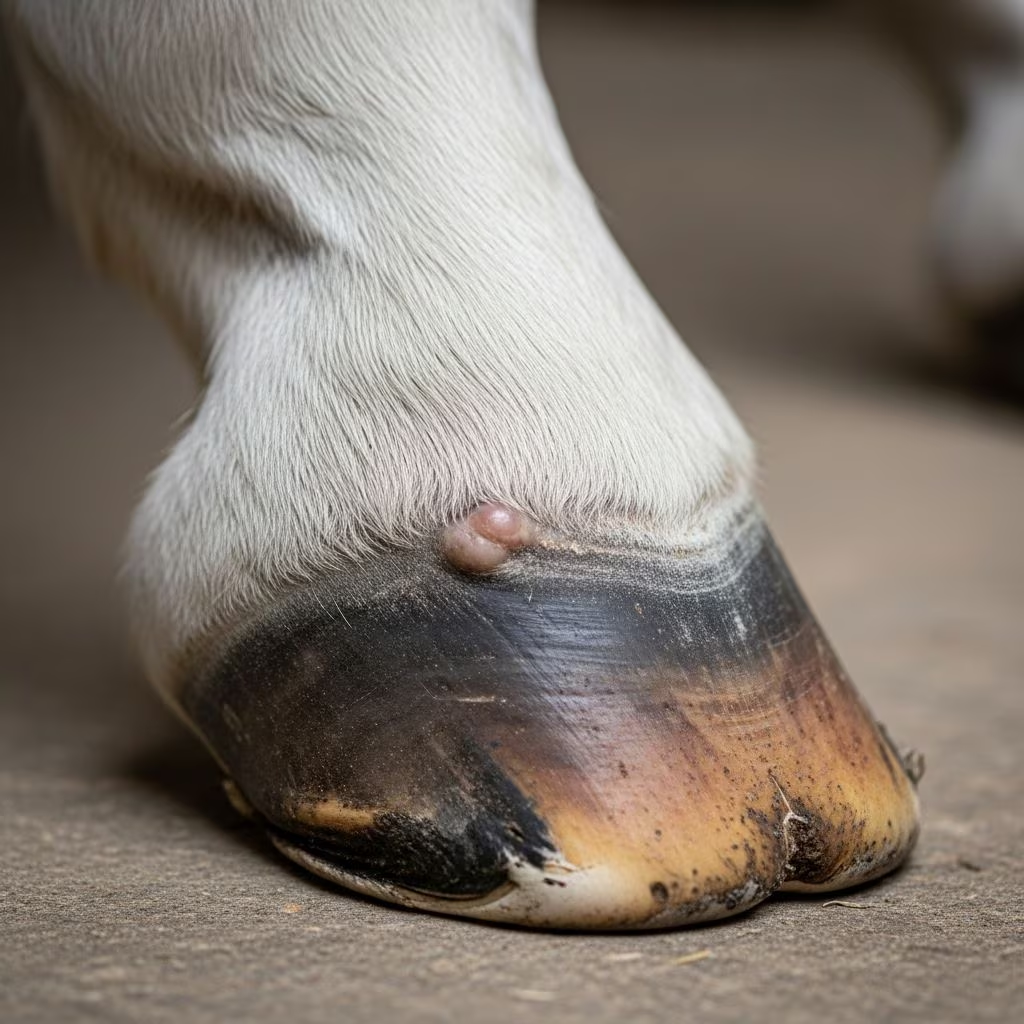
Benign tumors known as keratomas develop inside the hoof capsule of horses, often leading to progressive lameness and discomfort if untreated. These rare growths, composed primarily of abnormal keratin, can distort hoof structures and mimic other foot issues, making early detection crucial for equine welfare.
The Nature and Formation of Equine Keratomas
Keratomas arise from the hoof’s keratin-producing cells, forming a mass between the inner hoof wall and the coffin bone, also called the distal phalanx. This location creates pressure within the rigid hoof capsule, which cannot expand, potentially compressing sensitive tissues, bones, tendons, and joints. The tumor’s keratin is typically soft and poorly organized, increasing vulnerability to bacterial or fungal infections that exacerbate symptoms.
Two primary shapes characterize these tumors: cylindrical forms, resembling columns aligned with the hoof wall’s horn tubules, and rarer spherical variants that may appear in the sole, frog, or above the coronary band. Most originate near the coronary band—the soft tissue at the hoof’s top where new horn grows—and extend downward, commonly at the toe or quarters. While single keratomas predominate, cases with multiple tumors in one hoof or across hooves occur occasionally.
Potential Triggers Behind Keratoma Development
The precise origins of keratomas remain unclear, with no strong links to breed, age, gender, or lifestyle. However, chronic irritation, inflammation, or trauma to the hoof’s germinal epithelium—such as from injury to the coronary band—is a suspected factor. This localized stress may prompt uncontrolled keratin production, leading to tumor formation. Unlike malignant cancers, keratomas do not metastasize but can cause secondary bone lysis or hoof capsule distortion through mechanical pressure.
Once formed, the mass grows slowly, often undetected until it interferes with hoof mechanics. Its porous structure invites microbial invasion, resulting in draining tracts resembling abscesses. Horses may endure repeated infections in the same spot, delaying diagnosis as owners treat symptoms without addressing the root cause.
Recognizing Clinical Signs of Keratomas
Early indicators are subtle, frequently spotted by farriers during routine trims. A key visual cue is a well-defined bulge or irregularity in the white line—the junction between hoof wall and sole—appearing as a rounded or oval horn abnormality on the ground surface. As the tumor enlarges, more overt signs emerge:
- Progressive lameness, worsening with exercise or on hard ground.
- Recurrent abscesses draining from consistent sole or wall sites.
- Hoof wall bulging or coronary band swelling.
- White line thickening, separation, or distortion.
- Toe-pointing stance to relieve pressure on the affected area.
Lameness arises from direct pressure on sensitive laminae, bone erosion, or associated infections. Some horses remain sound if the tumor avoids sensitive structures, but most eventually show gait changes detectable via lameness exams.
Diagnostic Approaches for Confirming Keratomas
Veterinarians start with a thorough history and physical exam, noting recurrent abscesses or hoof changes. Hoof testers pinpoint pain, while flexion tests assess lameness degree. Imaging is pivotal:
| Method | Description | Key Findings |
|---|---|---|
| Radiography (X-rays) | Lateral, dorsopalmar, and flexed views of the foot. | Circumscribed lysis (bone loss) at the coffin bone’s solar margin or wall interface; mass shadow between bone and wall. |
| Ultrasonography | Probe over coronary band or sole defects. | Soft tissue masses or fluid pockets if infected. |
| Venography | Contrast dye injected into veins. | Displacement or vascular occlusion by tumor. |
These confirm the keratoma’s presence and rule out fractures or pedal osteitis. Biopsy is rare pre-surgery due to the hoof’s inaccessibility but may follow excision for histology, revealing concentric squamous epithelial rings laden with keratin.
Surgical Intervention: The Gold Standard Treatment
Conservative management suits asymptomatic cases, but lameness or infections demand surgical removal. The procedure involves hoof wall resection: under sedation, local nerve blocks, or general anesthesia, vets remove a window of hoof wall or sole to access and excise the tumor. Techniques include:
- Standing surgery: Preferred for cooperative horses; quicker recovery, lower cost.
- Recumbent under GA: For large or complex cases.
Post-excision, the site is flushed, cultured if infected, and packed with bandages changed every 48-72 hours. Healing relies on secondary intention, with new horn growth from the coronary band. Success rates exceed 90%, with most horses regaining full soundness in 4-8 weeks.
Aftercare and Rehabilitation Strategies
Immediate post-op care prevents complications:
- Stall rest with deep bedding for 2-4 weeks.
- Regular bandage changes; monitor for discharge.
- Systemic antibiotics/anti-inflammatories if needed.
- Gradual hand-walking after 10-14 days.
Farrier involvement is vital: special shoes stabilize the hoof, redistributing weight. Serial trims correct distortions. Long-term, maintain hoof health via balanced nutrition—biotin-rich feeds support keratin quality—and regular farrier checks. Recurrence is uncommon but warrants vigilance.
Preventive Measures and Prognosis Outlook
No foolproof prevention exists, but minimizing hoof trauma helps: proper shoeing, avoiding overwork on uneven terrain, and prompt abscess treatment reduce risks. Nutritional support with methionine and zinc aids horn integrity. Prognosis is excellent post-surgery; performance horses often resume careers, though chronic cases may have residual changes.
Common Myths and Facts About Keratomas
| Myth | Fact |
|---|---|
| Keratomas are cancerous. | They are benign, non-spreading tumors. |
| They always cause immediate lameness. | Many grow silently until large. |
| Non-surgical treatments suffice. | Surgery is curative; others manage symptoms only. |
Frequently Asked Questions (FAQs)
What exactly is a keratoma in a horse’s hoof?
A keratoma is a non-cancerous keratin overgrowth forming a tumor inside the hoof, often between the wall and bone, leading to pressure and potential lameness.
How do I know if my horse has a keratoma?
Look for repeated abscesses in one spot, hoof bulging, white line changes, or lameness. Vet exam with X-rays confirms it.
Is surgery the only option for keratomas?
Yes for symptomatic cases; monitoring works for silent ones, but removal resolves issues permanently.
Can keratomas return after treatment?
Rarely, if all abnormal tissue isn’t removed, but proper surgery minimizes risk.
How long until a horse recovers from keratoma surgery?
Typically 4-12 weeks, with full performance return in 2-6 months depending on case severity.
Advanced Considerations for Vets and Owners
For practitioners, intraoperative histology guides complete excision. Owners should track hoof photos monthly. In multi-hoof cases, systemic factors like nutrition warrant review. Research gaps persist on etiology, but trauma models dominate hypotheses.
References
- Keratomas in Horses: Lameness Causing Foot Tumours — Mad Barn. 2023. https://madbarn.com/keratomas-in-horses/
- Keratomas in Horses – Musculoskeletal System — MSD Veterinary Manual. 2024-10-15. https://www.msdvetmanual.com/musculoskeletal-system/disorders-of-the-foot-in-horses/keratomas-in-horses
- Keratomas in Horses — PetMD. 2023. https://www.petmd.com/horse/conditions/skin/keratomas-horses
- Keratomas in Horses – Causes, Treatment and Associated Conditions — Vetster. 2024. https://vetster.com/en/conditions/horse/keratomas
- What is a Keratoma & How to Identify It — American Farriers Journal. 2019-06-01. https://www.americanfarriers.com/articles/14785-what-is-a-keratoma-and-how-to-identify-it



