

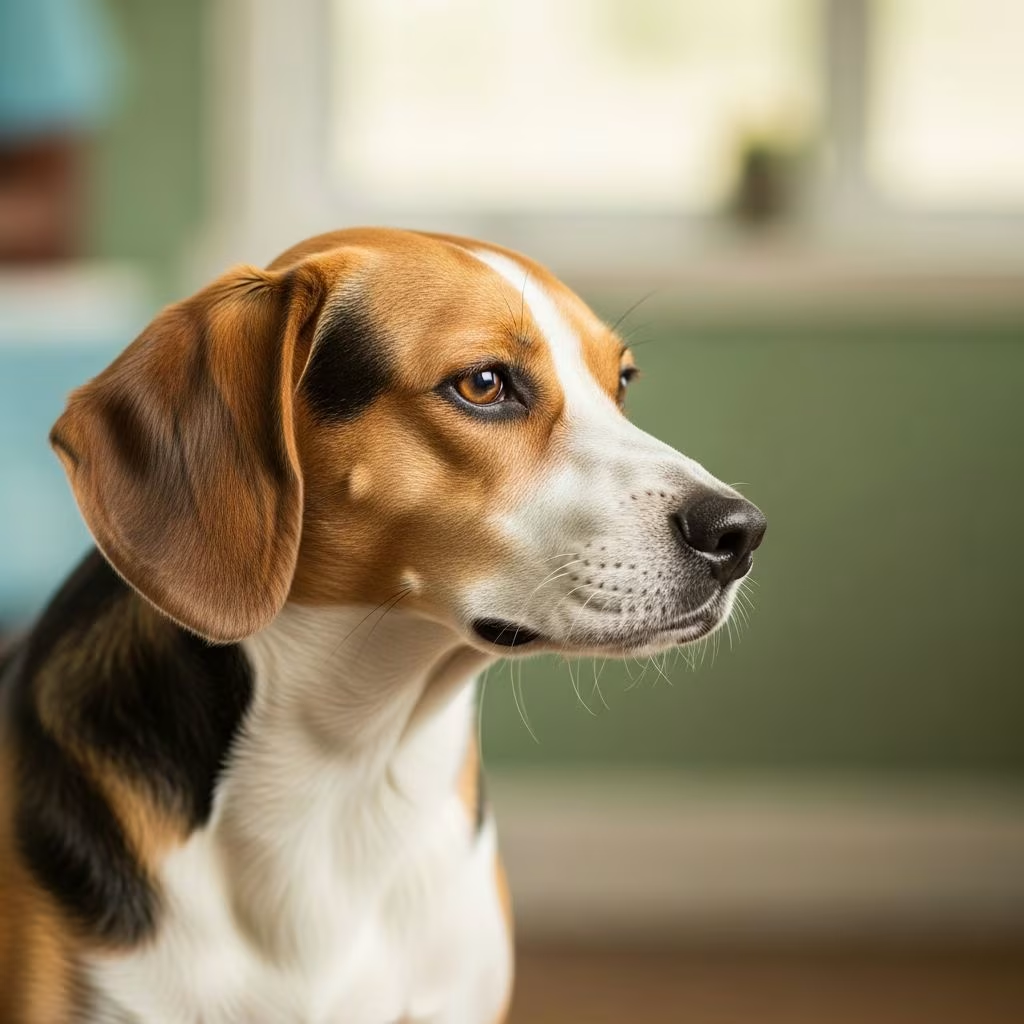
Kennel cough, medically recognized as Canine Infectious Respiratory Disease Complex (CIRDC), represents one of the most common respiratory infections affecting dogs across all breeds and age groups. Understanding the contagious window of this illness is essential for responsible dog owners who wish to prevent transmission while managing their pet’s recovery and social activities. The challenge with kennel cough lies not only in its rapid transmission but also in its prolonged contagious period that often extends well beyond visible symptoms.
The Incubation Period and Initial Contagiousness
When a dog encounters the pathogens responsible for kennel cough, a critical window begins that determines when symptoms will appear and when contagiousness starts. The incubation period—the time between initial exposure and symptom onset—typically spans 2 to 14 days, though most dogs develop clinical signs within this timeframe. Importantly, dogs become contagious during this entire incubation window, often before owners realize their pet has been infected. This characteristic makes kennel cough particularly challenging to control in multi-dog environments such as shelters, boarding facilities, and doggy daycare centers.
The virus or bacteria responsible for kennel cough spreads through respiratory droplets expelled when infected dogs sneeze, cough, or vocalize. Additionally, contaminated surfaces—including food bowls, water dishes, toys, door handles, and even human hands—can serve as transmission vectors. This multi-route transmission pattern explains why kennel cough spreads so readily in communal dog settings and why environmental hygiene becomes crucial during an outbreak.
Duration of Active Illness Versus Contagious Period
A frequent misconception among dog owners is that contagiousness ends when a dog stops coughing. In reality, these timelines operate independently. In healthy adult dogs, the visible illness typically resolves within 1 to 3 weeks, characterized by the distinctive honking or hacking cough that often precedes a retching sound. However, the infectious period extends considerably beyond symptom resolution.
Research indicates that dogs remain contagious for 10 to 14 days after their cough completely disappears. Some studies suggest contagiousness may persist for up to 2 to 3 months in certain cases, particularly when multiple pathogens are involved or when the primary causative agent is the bacterium Bordetella bronchiseptica. This extended transmission window explains why veterinarians recommend conservative isolation practices even when a dog appears clinically recovered.
Pathogen-Specific Contagious Timelines
Kennel cough is not a single-agent disease but rather a syndrome caused by various viral and bacterial pathogens. Each causative organism demonstrates different virulence patterns and transmission durations:
- Parainfluenza virus: Typically produces milder illness that resolves within approximately 6 days, with a correspondingly shorter contagious period
- Bordetella bronchiseptica: Causes more persistent symptoms lasting around 10 days and remains contagious for up to 14 days after symptom resolution
- Mycoplasma, adenovirus, and herpesvirus: Create varying illness durations and transmission periods depending on individual dog factors
- Combined infections: When dogs simultaneously contract multiple pathogens, the illness typically extends to 14-20 days, with correspondingly prolonged contagiousness
This variation in pathogenic profiles explains why contagious periods differ significantly between individual cases. Without laboratory testing to identify the specific causative agent—which is often not performed for kennel cough—veterinarians and owners must apply conservative timelines.
Impact of Antibiotics on Contagious Duration
Antibiotic therapy represents one of the few interventions that can measurably reduce the contagious period. However, antibiotics only prove effective against bacterial forms of kennel cough. Since many cases involve viral pathogens exclusively, antibiotics provide no therapeutic benefit in those situations. When a veterinarian suspects or confirms bacterial involvement—particularly Bordetella bronchiseptica—doxycycline emerges as the most commonly prescribed antibiotic.
Upon initiation of appropriate antibiotic therapy, dogs typically show clinical improvement within 24 to 72 hours. Theoretically, contagiousness decreases proportionally during this window. Nevertheless, veterinary guidance remains consistent: even with antibiotic treatment, dogs should remain isolated from other canines for at least one week following the complete cessation of coughing. This conservative approach acknowledges that bacterial shedding may continue despite clinical improvement and accounts for individual variation in treatment response.
Transmission Routes and Environmental Considerations
Understanding how kennel cough spreads through the environment proves crucial for preventing transmission beyond direct dog-to-dog contact. The pathogens causing kennel cough demonstrate remarkable environmental persistence, surviving on contaminated surfaces for extended periods—sometimes spanning weeks or even months depending on conditions.
Common transmission pathways include:
- Direct respiratory droplet exposure from sneezing or coughing
- Close physical contact between infected and susceptible dogs
- Contaminated food and water bowls
- Shared toys and bedding
- Door handles, gates, and other high-touch surfaces
- Human hands that contact infected dogs then touch susceptible animals
Effective environmental decontamination requires more than superficial cleaning. Surface disinfection with appropriate antimicrobial solutions typically requires 5 to 10 minutes of contact time to successfully eliminate pathogens. A quick spray and wipe often fails to provide sufficient decontamination. Using a diluted bleach solution (1 part bleach to 32 parts water) proves particularly effective for disinfecting contaminated items and surfaces.
Risk Factors Affecting Contagious Duration
Not all dogs shed kennel cough pathogens for identical periods. Several factors influence how long individual animals remain contagious:
| Risk Factor | Impact on Contagious Period |
|---|---|
| Age (Senior dogs) | Extended contagious period, symptoms may persist 4-6 weeks |
| Immunocompromised status | Prolonged shedding and delayed recovery |
| Concurrent health conditions | Increased contagious duration and higher complication risk |
| Vaccination status | Vaccinated dogs may have shorter and milder illness |
| Multiple pathogen involvement | Significantly extended contagious window |
| Antibiotic responsiveness | Bacterial cases treated with antibiotics show reduced duration |
Senior dogs and those with pre-existing medical conditions present particular challenges. These populations frequently experience prolonged illness lasting up to 6 weeks, during which they shed infectious material for extended periods. Similarly, dogs with compromised immune systems shed pathogens longer than healthy counterparts, necessitating extended isolation protocols.
Recognizing When Dogs Become Non-Contagious
Establishing a clear endpoint for contagiousness proves essential for reintegrating dogs into social activities safely. The most evidence-based marker involves complete cessation of clinical coughing combined with a waiting period afterward. Current veterinary guidance recommends keeping dogs isolated for at least 7 days following the complete disappearance of coughing episodes.
This conservative approach acknowledges that even after visible symptoms resolve, microscopic shedding may continue. Dogs with completely normal respiratory function for a full week demonstrate substantially reduced transmission risk, making them safe candidates for return to boarding facilities, doggy daycares, parks, and group training classes.
Guidelines for Safe Reintroduction to Social Activities
The question of when dogs can safely resume normal social activities requires individualized consideration based on recovery trajectory. Following complete symptom resolution, the timeline for reintroduction includes:
- Days 1-7 after last cough: Continued isolation, controlled indoor environments only
- Day 7 onwards: Generally considered safe for normal social interactions, including boarding facilities
- For antibiotic-treated dogs: May resume social activities one week after symptom cessation, though some veterinarians recommend an additional 3-5 days of caution
- For particularly at-risk groups: Senior dogs, puppies, and immunocompromised individuals may warrant extended isolation beyond standard guidelines
During the initial illness and isolation period, owners should reduce their dog’s physical activity levels to minimize coughing episodes. Restricted activity not only helps the dog recover more comfortably but also reduces respiratory droplet transmission to any nearby animals.
Special Considerations for Cross-Species Transmission
While kennel cough primarily affects dogs, transmission to other species occasionally occurs under specific circumstances. Cats represent the most likely alternative host, though transmission requires close contact and the cat typically must have significant immune system compromise. Very young kittens and cats with severely compromised immune systems face the highest risk. Transmission to humans remains exceptionally rare and requires direct contact with infectious respiratory secretions coupled with the human’s own immune system vulnerability.
Pet owners with mixed households should isolate infected dogs from at-risk cats during the acute illness phase, though the risk of clinical feline disease remains minimal under normal circumstances.
When Kennel Cough Progresses Beyond Typical Illness
While most dogs recover uneventfully from kennel cough, some develop serious complications requiring escalated veterinary intervention. Dogs showing fever, lethargy, appetite loss, or difficulty breathing require immediate veterinary evaluation, as these signs suggest progression to secondary pneumonia or other severe complications. Puppies, senior dogs, and immunocompromised individuals face elevated complication risk and warrant closer monitoring throughout their illness.
If coughing persists beyond 3 to 4 weeks or worsens after initial improvement, veterinary reassessment becomes necessary to evaluate for complications or alternative diagnoses.
Frequently Asked Questions
Can a dog be contagious without showing symptoms?
Yes. During the incubation period (2-14 days after exposure), dogs shed infectious material before developing visible symptoms. Additionally, some dogs become chronic carriers that shed pathogens intermittently without displaying clinical signs.
How long should dogs with kennel cough stay home from daycare?
Most veterinarians recommend keeping dogs home until 7 days after their cough completely stops. For antibiotic-treated cases, a similar timeline applies, though conservative owners may choose to extend this to 10-14 days.
Do antibiotics make kennel cough less contagious?
Antibiotics reduce contagiousness in bacterial kennel cough cases by improving symptoms and reducing shedding within 24-72 hours of starting treatment. They have no effect on viral cases.
Can vaccinated dogs still spread kennel cough?
Yes, vaccinated dogs can contract and spread kennel cough, though they typically experience milder illness and shorter contagious periods than unvaccinated dogs.
Is kennel cough ever truly eliminated from a dog’s system?
Most dogs clear the infection completely within several weeks. However, some dogs become chronic carriers, periodically shedding pathogens throughout their lives, though typically without developing clinical symptoms.
References
- Canine Infectious Respiratory Disease Complex (Kennel Cough) — American Veterinary Medical Association. 2024. https://www.avma.org/resources-tools/pet-owners/petcare/canine-infectious-respiratory-disease-complex-kennel-cough
- The Risks of Kennel Cough — Cornell University College of Veterinary Medicine, Riney Canine Health Center. 2024. https://www.vet.cornell.edu/departments-centers-and-institutes/riney-canine-health-center/canine-health-topics/risks-kennel-cough
- How Long Does Kennel Cough in Dogs Last? — Wedgewood Veterinary Clinic. 2024. https://www.wedgewood.com/blog/how-long-does-kennel-cough-in-dogs-last/
- How Long Is Kennel Cough Contagious In Dogs? — Kingsdale Animal Hospital. 2024. https://www.kingsdale.com/how-long-is-kennel-cough-contagious-in-dogs
- Kennel Cough Causes, Symptoms & Treatment — Trudell Animal Health. 2024. https://trudellanimalhealth.com/blogs/blog/kennel-cough-causes-symptoms-amp-treatment
- Kennel Cough — People’s Dispensary for Sick Animals (PDSA). 2024. https://www.pdsa.org.uk/pet-help-and-advice/pet-health-hub/conditions/kennel-cough
- Kennel Cough in Dogs — Small Door Veterinary. 2024. https://www.smalldoorvet.com/learning-center/medical/kennel-cough



