

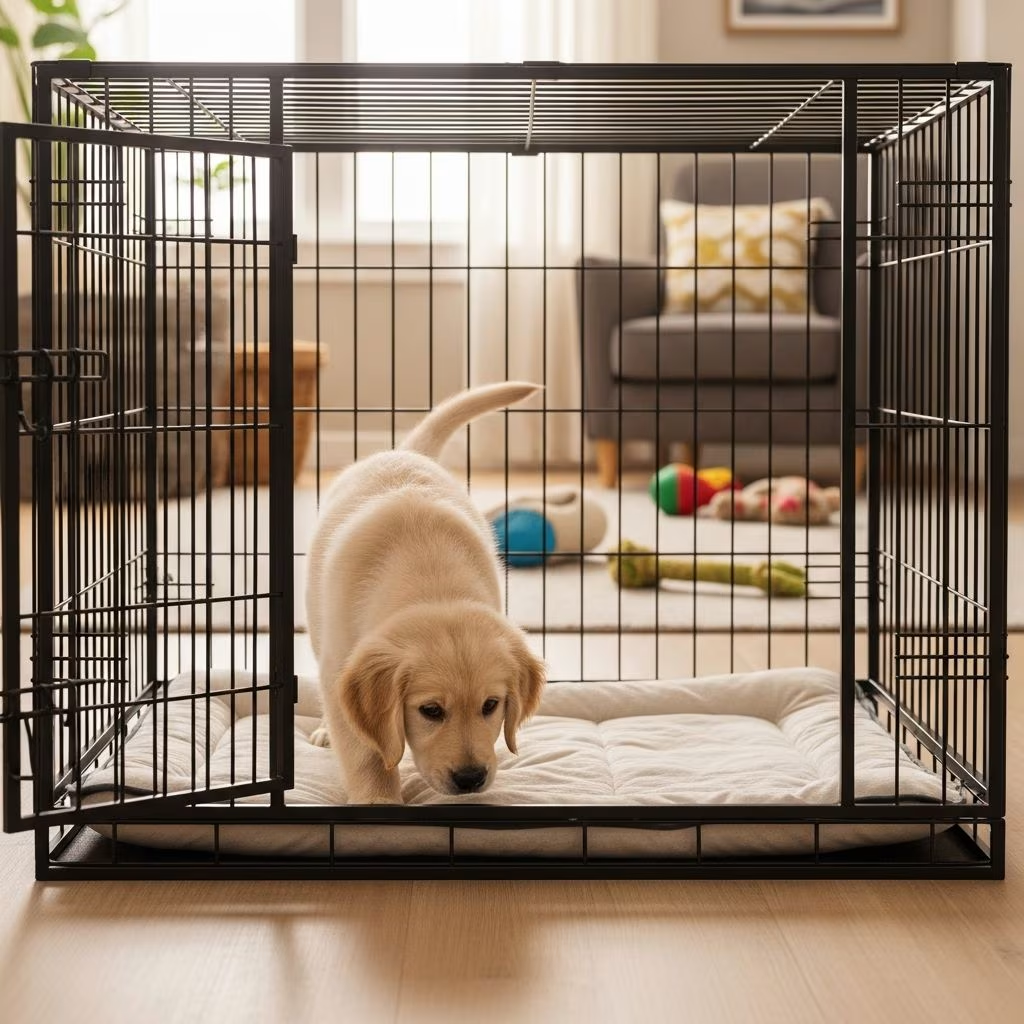
Introducing your young puppy to a crate represents one of the most valuable investments you can make in their long-term well-being and your household’s harmony. Contrary to common misconceptions, crate training is not about confining your puppy or creating a prison-like environment. Rather, it establishes a designated refuge that aligns with your dog’s natural instincts to seek secure, enclosed spaces for rest and security. When executed thoughtfully, crate training becomes a foundation for numerous aspects of responsible pet ownership, from managing bathroom habits to ensuring safety when you cannot supervise directly.
Understanding the Natural Appeal of Enclosed Spaces
Dogs have an inherent preference for sheltered environments where they can retreat and feel protected from external stimuli. This behavior traces back to their ancestral roots, where wolves would den in caves and other enclosed areas for safety and comfort. Your puppy instinctively recognizes a properly prepared crate as an extension of this denning instinct, making it a place of refuge rather than punishment when introduced correctly.
The psychological comfort that a crate provides extends beyond simple physical security. An appropriately sized enclosure offers sensory benefits by reducing overwhelming environmental input, helping your puppy regulate stress levels and develop emotional resilience. Many puppies actually seek out their crates voluntarily once they associate them with positive experiences, viewing crate time as an opportunity for peaceful rest.
Selecting the Appropriate Crate for Your Growing Puppy
Crate selection forms the foundational step before any training begins. The dimensions of your puppy’s crate should allow them to stand, turn around, and lie down comfortably without excessive extra space. A crate that is too large permits your puppy to use one corner as a bathroom while sleeping in another, which undermines the natural instinct to maintain cleanliness in their resting area. Conversely, a crate that is too small restricts movement and creates anxiety rather than comfort.
Consider your puppy’s anticipated adult size when selecting a crate. Rather than purchasing multiple sizes as your puppy grows, many pet owners invest in a single appropriately-sized crate equipped with a removable divider panel. This adjustable approach allows you to reduce the interior space as your puppy initially acclimates, then gradually expand the available area as they mature, all within the same crate structure.
Material selection also influences training success. Wire crates offer superior visibility and ventilation, allowing your puppy to observe household activity while maintaining enclosed security. Plastic airline-style crates provide a more cave-like environment that some puppies find particularly soothing. Your choice should reflect your puppy’s personality and your household’s specific needs.
Preparing the Environment for Initial Introduction
Strategic placement of the crate within your home significantly impacts training outcomes. Position the crate in a central living area where your family naturally congregates—your kitchen, family room, or living space. This placement prevents isolation and allows your puppy to observe normal household routines without separation anxiety. Your puppy will learn that crate time does not signify abandonment but rather a natural component of daily life.
Prepare the interior to maximize comfort and appeal. Line the crate with soft blankets or specialized crate pads designed for easy cleaning. Add a familiar scent by including an item that carries the aroma of their littermates or mother if available. These sensory elements create a welcoming atmosphere that encourages voluntary exploration.
Phase One: Building Initial Familiarity
Begin the acclimation process by introducing the crate with the door completely open or removed entirely. This approach eliminates any perception of confinement and allows your puppy to explore at their own pace without pressure. Your role during this phase is observation and subtle encouragement rather than directive training.
Place small, high-value treats in strategic locations: near the crate opening, just inside the threshold, and progressively deeper into the interior. Allow your puppy to discover and retrieve these treats independently. Simultaneously, toss enticing toys or puzzle feeders containing treats into the crate to create positive associations through self-motivated investigation.
Adopt an upbeat, casual demeanor during this exploration phase. Your enthusiasm and relaxed attitude communicate to your puppy that the crate is an exciting, safe space worthy of investigation. Praise your puppy’s voluntary entries with genuine excitement, reinforcing their decision to explore.
This initial phase typically requires several days to one week of repeated exposure, though individual puppies progress at different rates. Resist the urge to accelerate the timeline or force reluctant puppies into the crate. Patience during this foundation stage yields exponentially better results than rushing toward door closure.
Phase Two: Introducing Door Control and Closure
Once your puppy demonstrates comfort exploring the open crate and readily enters to retrieve treats or investigate toys, you can introduce door movement. Begin by feeding your puppy’s regular meals inside the crate with the door remaining fully open. This nutritional association strengthens positive feelings toward the space. If your puppy shows reluctance to eat inside, gradually progress the food bowl position—start beside the crate, then just inside the entrance, then incrementally deeper until the bowl reaches the crate’s rear.
After your puppy has enjoyed several meal sessions and appears relaxed, introduce brief door closure while they engage with food or treats inside. Close the door for just a few seconds while they focus on eating, then immediately reopen it. Your puppy should barely notice the closure because their attention remains concentrated on the rewarding experience occurring within the crate.
Gradually extend the duration of door closure across multiple training sessions over several days. Progress from seconds to minutes, always ensuring your puppy is engaged with something pleasurable—food, treats, or interactive toys—during this period. The goal is for your puppy to associate door closure with the beginning of positive experiences rather than restriction.
Phase Three: Extending Duration and Building Independence
As your puppy demonstrates comfort with a briefly closed door, you can begin extending the duration they remain crated while you remain nearby. Begin with ten-minute sessions, sitting quietly beside or near the crate. Your presence provides security while teaching your puppy to settle independently within the enclosed space.
Gradually increase duration and reduce your proximity. Sit further away, exit the room for brief periods, then return before your puppy becomes distressed. The key principle involves returning while your puppy remains calm, reinforcing the message that departures consistently result in returns. This builds confidence and eliminates anticipatory anxiety about separation.
Many training experts recommend reaching a baseline of thirty minutes of calm crating with you mostly out of sight before progressing to longer unsupervised periods or overnight confinement. This timeline might require several weeks of consistent, patient repetition, but the investment yields a puppy comfortable in their crate for years to come.
Establishing Verbal Cues and Commands
As your puppy progresses through training phases, introduce a consistent verbal cue such as “kennel,” “crate,” or “bed.” Use this command immediately before offering a treat and pointing toward the crate interior. When your puppy enters, enthusiastically praise the behavior and provide the promised treat, then close the door briefly. This structured repetition creates a reliable command that eventually allows you to direct your puppy into the crate on demand.
Consistency across all household members proves essential for command training success. Everyone interacting with your puppy should use the identical cue word and reward sequence, preventing confusion that undermines learning.
Managing Vocalizations and Common Challenges
Many new puppy owners struggle with crying, whining, and barking during crate training. Understanding the distinction between different vocalizations guides appropriate responses. A puppy who has just returned from a potty break and whines briefly while settling represents normal adjustment to the crate environment. A puppy who desperately cries and shows obvious signs of needing elimination requires a bathroom break.
The critical error many owners make involves responding to whining by releasing the puppy from the crate, which teaches that vocalization produces the desired outcome. Instead, remain calm and wait for a moment of quiet before opening the door. This teaches your puppy that silence, not noise, triggers releases.
If your puppy demonstrates genuine distress or anxiety, reassess your timeline. You may have progressed too quickly, and returning to earlier phases with shorter durations and increased proximity will reduce anxiety and prevent negative associations from forming.
Connecting Crate Training to Household Management
Crate training facilitates numerous household management goals beyond creating a comfortable retreat. The same instinct that prevents your puppy from soiling their sleeping space makes crates invaluable training tools for housebreaking. Puppies naturally avoid eliminating where they rest, making a properly-sized crate an effective aid in establishing consistent bathroom habits.
Establish predictable routines that coordinate crate time with outdoor bathroom breaks. Immediately after releasing your puppy from the crate, take them outside to their designated potty area. Reward successful outdoor elimination with praise and treats. This routine capitalizes on your puppy’s natural inclination to eliminate shortly after waking from rest.
Nighttime Sleeping Arrangements
Once your puppy demonstrates reliable comfort with crate time during the day, nighttime crating can begin. Young puppies have limited bladder control, typically managing only one hour per month of age (a three-month-old can usually hold their bladder for approximately three hours). Overnight crating requires appropriate timing based on your puppy’s age and bathroom capacity.
Place the crate in your bedroom during initial nighttime training, allowing your puppy to sense your presence while remaining in their secure sleeping space. As your puppy matures and develops better bladder control, gradually move the crate to your desired permanent location.
Avoiding Common Training Mistakes
Never use the crate as a punishment tool. Sending a puppy to the crate when they’ve misbehaved creates negative associations that directly undermines training progress. The crate should represent only positive experiences—rest, treats, security, and comfort.
Avoid crating your puppy for extended periods without appropriate breaks. Puppies require frequent opportunities for play, socialization, exploration, and elimination. Excessive crating creates frustration and anxiety while potentially encouraging bathroom accidents within the space you’re trying to establish as a clean refuge.
Do not crate your puppy immediately before departure, as this creates anxiety about alone time. Instead, vary when you place your puppy in the crate relative to your departure routine. Occasionally crate them during times you remain home, further dissociating crate time from abandonment.
Timeline Expectations for Successful Acclimation
Training duration varies significantly among individual puppies based on personality, previous experiences, and training consistency. Some puppies demonstrate comfort with overnight crating within several days, while others require several weeks of patient progression. Rushing this timeline consistently produces setbacks requiring additional time to overcome.
Consistency represents the most significant factor influencing training speed. Daily repetition with multiple short sessions produces faster, more reliable results than sporadic training efforts. Brief, positive interactions throughout the day build confidence more effectively than fewer, longer sessions.
Frequently Asked Questions
At what age can I begin crate training? Puppies as young as eight weeks old can begin gradual crate introduction. The approach should emphasize short, positive sessions with open doors, progressing only as the individual puppy demonstrates comfort.
Should I cover the crate? Some puppies find crate covers—partial coverings that create a cave-like environment—reassuring and settling. Others find them anxiety-inducing. Offer this option based on your puppy’s response to enclosed visibility.
Can crate training cause separation anxiety? When implemented thoughtfully as a positive space, crate training actually reduces separation anxiety by establishing a secure refuge associated with safety. Improper usage—such as punitive confinement—can contribute to anxiety development.
How long can my puppy stay crated? A general guideline suggests puppies can remain crated for approximately one hour per month of age, plus one additional hour. A three-month-old might manage roughly four hours maximum, though younger puppies typically require more frequent breaks.
What if my puppy has an accident in the crate? Occasional accidents occur and should not result in punishment. Clean thoroughly with enzymatic cleaner to eliminate odor that encourages repeat elimination. Reassess your schedule to ensure appropriate bathroom break frequency.
References
- How to Crate Train Your Puppy: A Step-by-Step Guide from an Expert — Chewy. 2024. https://www.chewy.com/education/dog/new-dog/how-to-crate-train-a-puppy-a-step-by-step-guide-from-an-expert
- How to Crate Train Your Dog or Puppy — Humane World for Animals. 2024. https://www.humaneworld.org/en/resources/crate-training-101
- How To Crate Train Your Dog — PAWS (Progressive Animal Welfare Society). 2024. https://www.paws.org/resources/how-to-crate-train-your-dog/
- How to Crate Train Your Dog in Nine Easy Steps — American Kennel Club (AKC). 2024. https://www.akc.org/expert-advice/training/how-to-crate-train-your-dog-in-9-easy-steps/
- Crate Training — Sumter County, FL Official Government Website. 2024. https://www.sumtercountyfl.gov/1338/Crate-Training



