Keeping Multiple Cockatiels: A Complete Guide
Learn how to successfully house and care for multiple cockatiels together.
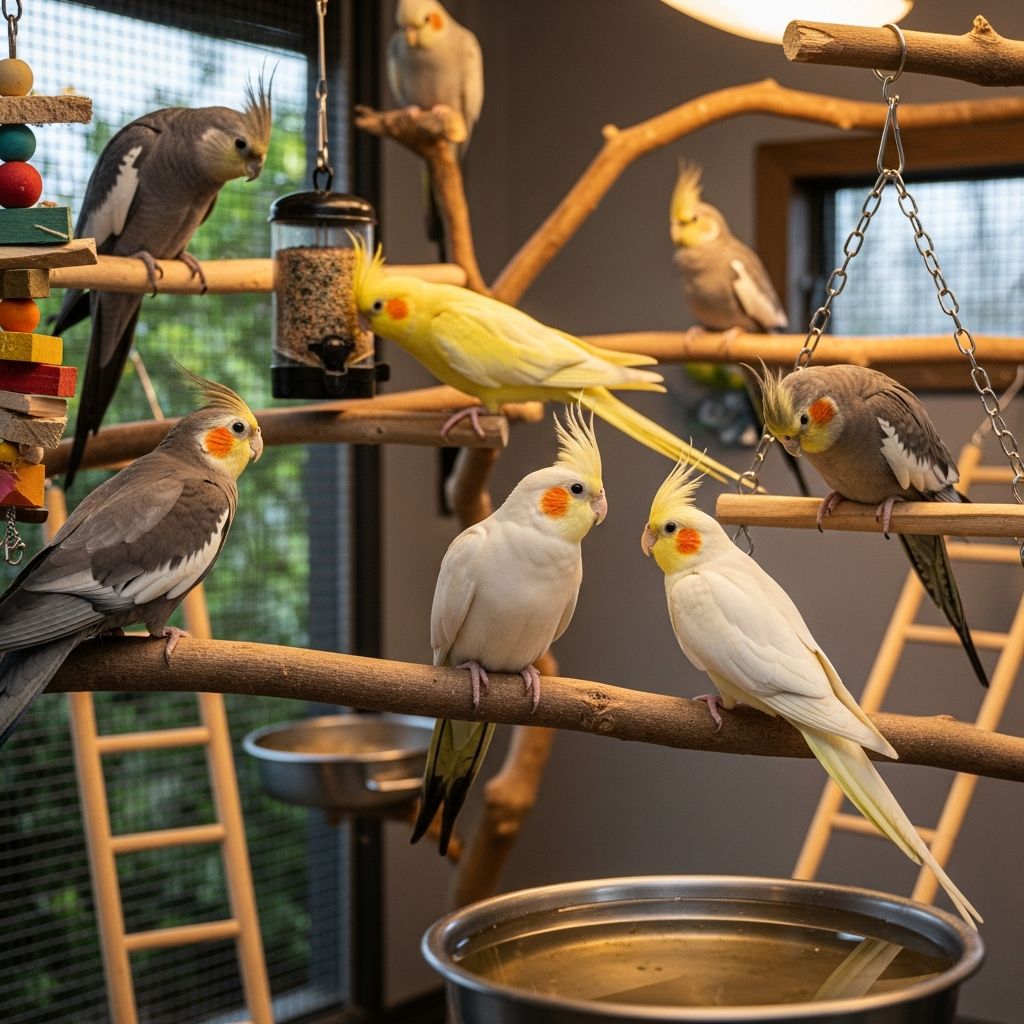
Cockatiels are social creatures that can thrive in multi-bird households when proper care and planning are implemented. Whether you’re considering adding another cockatiel to your existing feathered companion or establishing a small flock from the start, understanding the nuances of keeping multiple cockatiels is essential for their health, happiness, and behavioral well-being. This comprehensive guide explores everything you need to know about maintaining a harmonious multi-cockatiel environment.
Understanding Cockatiel Social Structure
Cockatiels are inherently social birds that form strong pair bonds in the wild and can develop meaningful relationships with other birds in captivity. Unlike some parrot species that are aggressively territorial, cockatiels generally demonstrate a capacity for companionship when introduced properly. However, each bird has a distinct personality, and not all cockatiels will automatically get along with their potential cage mates. The success of keeping multiple cockatiels depends significantly on careful introduction protocols, adequate space, and appropriate resource management.
Before introducing multiple cockatiels to share a living space, it’s crucial to assess their individual temperaments. Some birds are naturally more social and adaptable, while others may be territorial or anxious about sharing their environment. Younger birds often adapt better to new companions than older, established birds, but age is not the sole determining factor in compatibility.
Cage Requirements for Multiple Cockatiels
The most critical aspect of successfully keeping multiple cockatiels is providing adequate housing. A cage that’s suitable for a single cockatiel is generally inadequate for multiple birds. The increased population requires exponentially more space, not just a proportional increase based on bird count.
Minimum Cage Dimensions
For multiple cockatiels, experts recommend cages significantly larger than standard single-bird enclosures. A double flight cage or aviary-style housing provides essential vertical and horizontal space that allows birds to maintain distance from one another when needed. The minimum cage size should accommodate:
- Adequate flight space for each bird to move independently
- Multiple perches distributed throughout different cage levels
- Sufficient distance between perches to prevent territorial conflicts
- Strategic placement that prevents dominant birds from controlling all valuable resources
Vertical space is particularly important because cockatiels naturally move between different height levels, and adequate vertical room provides escape routes when birds feel stressed or threatened. A cage that’s taller rather than just wider offers better behavioral outcomes for multiple birds.
Cage Setup Considerations
Beyond size, the physical layout of the cage significantly impacts multi-bird harmony. Strategic perch placement creates distinct zones within the cage, allowing each bird to establish personal space while maintaining social connection. Arrange perches in a circuit pattern around the cage, providing multiple pathways for birds to navigate without necessarily encountering one another.
Consider installing a divider system that allows separation when needed. While bonded birds may not require regular use of a divider, having this option provides safety during adjustment periods or if behavioral issues emerge. Some bird owners install clear acrylic dividers to prevent foot or wing injuries while maintaining visual contact between separated birds.
Resource Management and Prevention of Conflict
One of the most effective strategies for preventing aggression among multiple cockatiels is implementing duplicate resources throughout the cage. This eliminates competition and reduces the likelihood of territorial disputes over valued items.
Essential Duplicate Resources
| Resource Type | Recommendation for Multiple Birds | Placement Strategy |
|---|---|---|
| Food Bowls | One per bird plus extras | Distribute at different cage locations |
| Water Bowls | One per bird plus extras | Keep separate from food bowls |
| Perches | Multiple varied types throughout cage | Create circuits allowing escape routes |
| Toys and Enrichment | Duplicate popular toys | Rotate and reposition regularly |
| Sleeping Areas | Individual roosting spots for each bird | Private locations where birds won’t be disturbed |
Providing multiple food and water stations prevents dominant birds from monopolizing feeding areas and ensures all birds have equal access to nutrition. This approach also promotes synchronized eating behaviors that strengthen flock bonding. When birds can eat together without competition, it naturally encourages social cohesion.
Introduction and Bonding Protocols
The method and timeline for introducing multiple cockatiels dramatically influence their long-term compatibility. Rushing the introduction process or failing to properly acclimate birds to one another frequently results in behavioral problems and potential injury.
Step-by-Step Introduction Process
Initial Quarantine: If acquiring new cockatiels, always quarantine them separately for 30 days to screen for illness or disease before any contact with existing birds. This protects your entire flock from potential health complications.
Separate Cage Proximity: Before sharing a cage, place separate cages in close proximity, allowing birds to observe and acclimate to one another visually and aurally. This period may extend from several days to several weeks depending on individual bird personalities and previous socialization experiences.
Neutral Territory Introductions: Allow birds to interact in neutral spaces outside their cages under close supervision. Many bird owners conduct introductions on a play stand or large table where neither bird has territorial claims. Keep these sessions brief initially, gradually increasing duration as comfort levels improve.
Shared Space Transitions: Once birds demonstrate positive interactions without aggression, gradually transition them to shared cage space. Some experts recommend using a divider initially, allowing visual and verbal contact while preventing physical conflict during adjustment periods. Monitor behavior constantly and be prepared to separate birds if aggression escalates.
Recognizing Positive Versus Negative Interactions
Understanding bird behavior is essential during the bonding process. Positive signs include birds eating together, preening near one another, playing in proximity, and maintaining calm body language. Birds that are successfully bonding will seek out each other’s company and display relaxed plumage and posture.
Negative indicators include excessive hissing, beak bashing that connects with impact, plucking feathers from cage mates, aggressive charging, or one bird consistently cornering another and preventing access to resources. If negative behaviors persist, separation may be necessary, and consultation with an avian behavioral specialist is recommended.
Avoiding Common Pitfalls
Odd Numbers of Birds: Keeping three birds presents unique challenges, as odd numbers often result in a bonded pair that excludes the third individual. This dynamic frequently leads to the excluded bird experiencing stress, isolation, or becoming a target for aggression. When keeping multiple birds, consider even numbers or maintaining sufficient space that each bird can establish compatible pairings.
Sex Pairing Considerations: Same-sex pairings are generally more successful for non-breeding situations, as male-female pairs often engage in breeding behaviors that can complicate cohabitation. However, individual personalities matter more than sex alone. Some mixed-sex pairs coexist peacefully, while some same-sex pairings develop aggression. Evaluate individual bird temperaments rather than relying solely on sex determination.
Rushing the Process: One of the most common mistakes is introducing birds too quickly without adequate preparation and bonding work. The investment in time during introduction phases pays dividends in long-term harmony. Birds that are properly acclimated are significantly more likely to maintain peaceful, positive relationships.
Health and Behavioral Monitoring
Keeping multiple cockatiels requires diligent health monitoring since illness can spread rapidly through a shared environment. Observe each bird daily for signs of stress, illness, or injury that may result from cage mate interactions.
Health Considerations: Stressed birds have compromised immune systems and are more susceptible to infections and disease. Regular veterinary check-ups become even more important with multiple birds. Watch for feather plucking, loss of appetite, excessive vocalization, or behavioral changes that may indicate health problems or social stress.
Behavioral Enrichment: Multiple birds actually benefit from increased enrichment opportunities, as they can stimulate and entertain one another. Provide varied toys, foraging opportunities, and environmental changes to maintain mental stimulation and prevent boredom-related behavioral issues.
Individual Bonding With Multiple Cockatiels
A common concern among potential multi-cockatiel owners is whether birds will bond less strongly to humans when they have avian companions. While birds with companions may distribute their social attention, they can still develop meaningful relationships with their human caregivers, particularly if individual interaction time is prioritized.
Spend dedicated one-on-one time with each bird outside the cage. This reinforces your bond and allows you to monitor each individual’s health and personality without interference from cage mates. Many multi-bird owners report that their birds develop unique relationships with different household members, creating a more complex but equally rewarding social dynamic.
Frequently Asked Questions
Q: Can two male cockatiels live together?
A: Yes, two male cockatiels can live together successfully, especially if they’re introduced properly and have adequate space. Same-sex pairings generally work well for non-breeding situations.
Q: What’s the best age to introduce a second cockatiel?
A: Younger birds typically adapt better to new companions, but introduction success depends more on individual temperament and proper protocols than specific age ranges. Adult birds can still bond successfully with careful introduction.
Q: Should I get two cockatiels at the same time or introduce them later?
A: If you want a strong bond with your bird, acquire one first and establish that relationship. Introducing a second cockatiel after several months allows your first bird to become comfortable and confident before adapting to a companion. Two birds acquired simultaneously are more likely to bond primarily with each other rather than with you.
Q: Can a cockatiel live alone if I spend several hours with it daily?
A: Yes, cockatiels can thrive as single birds with consistent human interaction and enrichment. However, they’re social creatures that benefit from the stimulation of avian companionship when properly introduced and given adequate space.
Q: What size cage do I need for two cockatiels?
A: A minimum of a double flight cage is recommended for two cockatiels, with dimensions significantly larger than single-bird cages. Larger is always better, and an aviary-style enclosure provides optimal space for multiple birds.
Q: How can I tell if my cockatiels are bonded?
A: Bonded cockatiels display positive behaviors including eating together, mutual preening, playing in proximity, and seeking each other’s company. They maintain relaxed body language and show no signs of stress or aggression.
Q: Is it safe to house cockatiels with other bird species?
A: Cockatiels can sometimes coexist with larger parrot species, but housing with smaller birds like budgies or canaries is risky due to size differences and potential predatory behavior. Consult an avian specialist before mixing species.
References
- Bonding Our Rescue Cockatiels To Live Together — TheParrotTeacher. 2025-07-07. https://www.youtube.com/watch?v=lQ4SVf6rYfw
- Can 2 same sex cockatiels be kept together? — Lafeber Pet Birds. https://lafeber.com/pet-birds/questions/can-2-same-sex-cockatiels-be-kept-together/
- Cockatiel Behavior and Socialization Guide — Avian Avenue Parrot Forum. https://forums.avianavenue.com/index.php?threads/getting-another-cockatiel-or-two.244743/
Similar Articles








Read full bio of Sneha Tete