Kate Benjamin: Designing Stylish Homes for Cats
How design expertise and feline passion created a cat product revolution.
From Cat Lover to Design Innovator: The Story of Kate Benjamin and Hauspanther
Kate Benjamin’s journey into the world of cat design began not with a business plan, but with a simple observation: why shouldn’t cat owners have access to stylish, well-designed products that work as hard as they look? What started as a passion project has transformed into a thriving business that bridges the gap between aesthetics and animal welfare. Through Hauspanther, Benjamin has created a unique brand that proves design isn’t just about making things beautiful—it’s about making cats’ lives better.
A Lifelong Love Affair with Cats
Benjamin’s connection to cats runs deep. Growing up in rural upstate New York, she was surrounded by indoor and outdoor cats that she adored from a young age. However, it wasn’t until she reached her 30s that she finally had the opportunity to have her own cat. Today, Benjamin shares her home and studio with an impressive 12 cats—a number she cheerfully admits is “a bit unreasonable for a regular person,” though she justifies it by noting that her cats are both her passion and her business.
The story of how she acquired her growing feline family is telling. Her first cat, Simba, came to her sight unseen from a friend who was moving. In typical cat fashion, when Benjamin brought in a second cat hoping they’d be friends, Simba hated him. A stray kitten soon followed, then another cat after its previous owner passed away. As Benjamin recalls, “the numbers just kept growing.” Rather than viewing this as a burden, Benjamin has embraced the chaos, recognizing that her multi-cat household provides constant inspiration for developing new Hauspanther products.
The Birth of a Design Revolution
Finding the Gap in the Market
In the mid-2000s, Benjamin was working as the director of marketing for a startup that designed children’s products. Within the mommy-blogger community, she noticed lively discussions about modern children’s toys and furniture—conversations centered on a simple but powerful idea: having kids shouldn’t mean your home has to look terrible. This observation sparked a realization that would change her career trajectory: why wasn’t anyone having similar conversations about cats?
Benjamin decided to start her own blog, focusing on products she considered good examples of cat design. These weren’t just aesthetically pleasing items; they were innovative, functional products that genuinely improved daily life. This blend of beauty and practicality would become the cornerstone of everything she would build moving forward.
Design as a Tool for Behavioral Change
Benjamin’s most significant insight came from understanding that design could address behavioral problems at their root. She recognized a critical limitation: a cat behaviorist might recommend specific environmental changes—placing a litter box in a particular location or hanging a shelf in a certain spot—but if a pet owner doesn’t like the way the recommended product looks, they won’t implement the advice. And when environmental recommendations go unheeded, cats continue to suffer and act out because they lack what they need to thrive.
This realization became Benjamin’s “a-ha!” moment. She wasn’t just creating pretty things for cats; she was crafting products and environments that would genuinely improve feline lives and, in some cases, potentially save them from serious consequences.
The Life-Saving Power of Good Design
From Scratch Damage to Shelter Survival
Benjamin frequently illustrates this concept with a specific scenario: a new cat owner brings home a kitten without purchasing a scratching post. The cat naturally gravitates toward the beautiful leather sofa, scratching its leg. The pet parents panic, worried their new companion will destroy their home. What happens next can determine the cat’s fate—some owners consider declawing, others contemplate putting the cat outside where it faces risks, and some surrender the animal to a shelter where it might be euthanized.
However, if Benjamin can demonstrate that a stylish, well-designed cat scratcher exists that their cat will actually use, the outcome changes entirely. The cat’s natural behaviors are satisfied, the furniture remains intact, and the pet remains in the home. This is the true power of design-centered thinking: it can quite literally save a cat’s life.
The Hauspanther Design Aesthetic
Mid-Century Modern Meets Feline Function
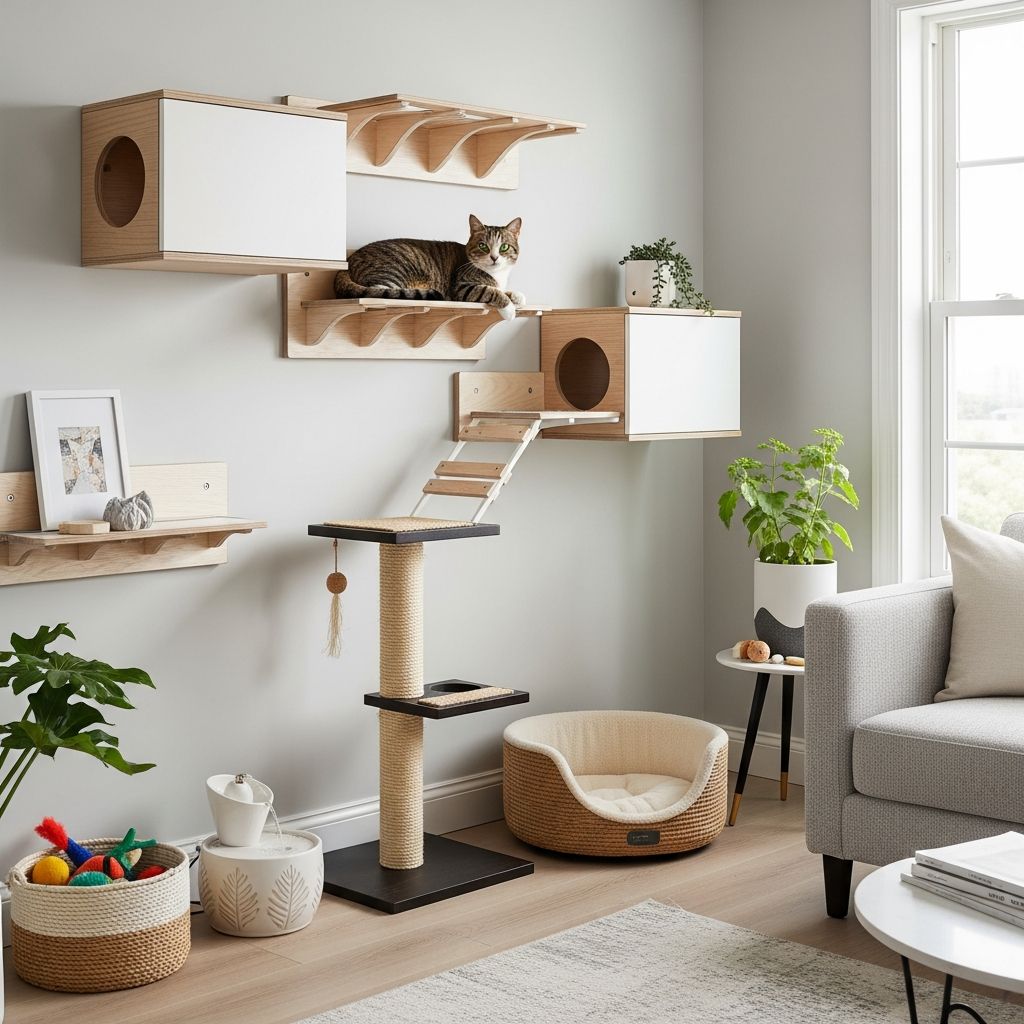
Hauspanther’s design philosophy centers on mid-century modern aesthetics combined with clean, contemporary lines. However, Benjamin is quick to note that the brand’s appeal extends beyond a single design style. Hauspanther products are versatile enough to complement virtually any home aesthetic, whether minimalist, traditional, eclectic, or anything in between. This flexibility is intentional—Benjamin understands that pet parents come from diverse design backgrounds and shouldn’t have to choose between their personal style and their cat’s wellbeing.
When designing toys, Benjamin favors pieces that double as art installations on the floor, featuring abstract designs that engage cats while adding visual interest to living spaces. The furniture line maintains a distinctly modern sensibility, ensuring that cat beds, scratchers, and climbing structures enhance rather than detract from home décor.
The Design Process: Inspiration from Daily Life
Observation as a Tool for Innovation
With 12 cats constantly moving through her studio, Benjamin has developed a sophisticated design process rooted in careful observation. She doesn’t rely on guesses about what cats might want; instead, she watches her own feline companions to identify unmet needs and behavioral opportunities. This direct observation translates into products that actually resonate with cats rather than simply looking good to humans.
Her studio functions as a catification laboratory where she prototypes new ideas before they’re manufactured through her manufacturing partners. This hands-on approach ensures that every product released under the Hauspanther banner has been tested, refined, and proven to work with real cats in real homes.
Beyond Products: The Broader Mission
Writing About the Cat Industry
Benjamin’s influence extends far beyond physical products. As an author and blogger, she continues to write about the greater cat industry, examining trends, innovations, and best practices in feline care and design. Her New York Times bestselling books, “Catification” and “Catify to Satisfy,” co-authored with renowned cat behaviorist Jackson Galaxy, have reached hundreds of thousands of readers. These books blend Galaxy’s behavioral expertise with Benjamin’s design perspective, providing comprehensive guides to creating cat-friendly homes that are also beautiful and functional.
Looking forward, Benjamin focuses on both major innovations—identifying entirely new product categories that don’t yet exist—and incremental improvements to existing designs, whether that’s a fresh cat bed concept or an enhanced toy design. Her ongoing mission is clear: constantly search for ways to make cats’ lives better through thoughtful design.
Common Misconceptions About Cats
Breaking Myths That Harm Feline Welfare
When asked about the biggest misconception regarding cats, Benjamin doesn’t hesitate: people mistakenly believe cats need very little. The idea that you can leave a cat alone for days with just a litter box, food bowl, and water is, in Benjamin’s words, “ridiculous.” Cats are social creatures requiring regular interaction, mental stimulation, and an enriching environment to thrive. This misconception often leads to behavioral problems that could be prevented through proper engagement and environmental design.
The Future of Hauspanther
Continued Growth and Innovation
Benjamin’s vision for Hauspanther’s future involves multiple parallel initiatives. She continues to produce content on the Hauspanther website, exploring topics relevant to the broader cat industry while maintaining her role as a thought leader in cat design. Simultaneously, she pursues both breakthrough innovations—identifying significant gaps in the market where entirely new product categories could make a difference—and thoughtful refinements to existing offerings.
Beyond her core Hauspanther business, Benjamin also consults on residential catification projects, helping individual homeowners transform their spaces into cat-friendly environments. She works with cat cafes, shelters, and rescue organizations to improve their facilities through design principles. In 2020, she expanded her product line to include freeze-dried nutrition for cats, further extending her mission to improve feline health and wellbeing.
Manufacturing and Product Development
Partnership and Quality Control
Hauspanther cat furniture is manufactured through a partnership with Primetime Petz, a company based in Texas. Benjamin works closely with the manufacturing team on all aspects of product development, ensuring that designs translate from concept to production without compromising quality or functionality. The product range includes climbing perches, scratchers, beds, toys, and numerous other items designed to engage cats while enhancing home aesthetics.
This collaborative approach allows Benjamin to scale her vision while maintaining quality standards. Her studio continues to serve as a space where she handcrafts prototypes and tests new ideas before they enter mass production, ensuring every product released has been rigorously evaluated.
Frequently Asked Questions About Kate Benjamin and Hauspanther
Q: How did Kate Benjamin get started with Hauspanther?
A: Benjamin started a blog in the mid-2000s about well-designed cat products after observing similar conversations in the children’s products community. She recognized a gap in the market for stylish, functional cat furniture and accessories, eventually launching her own handmade product line in 2009 before creating Hauspanther as a brand in 2013.
Q: What is the main philosophy behind Hauspanther?
A: Hauspanther operates on the principle that good design can save cats’ lives by solving behavioral problems at their root. By creating products that are both aesthetically pleasing and behaviorally appropriate, Benjamin helps pet owners implement recommendations that improve their cats’ environments and prevent behavioral issues that might lead to declawing, outdoor placement, or shelter surrender.
Q: How many cats does Kate Benjamin have?
A: Benjamin currently has 12 cats, which she acknowledges is “a bit unreasonable” for most people. However, she justifies the number because her cats serve as constant sources of inspiration and testing grounds for new Hauspanther products.
Q: What books has Kate Benjamin written?
A: Benjamin co-authored two New York Times bestselling books with renowned cat behaviorist Jackson Galaxy: “Catification” and “Catify to Satisfy.” These books combine her design expertise with Galaxy’s behavioral knowledge to help readers create cat-friendly homes that are both functional and beautiful.
Q: What is the design aesthetic of Hauspanther products?
A: Hauspanther features a mid-century modern aesthetic with clean, contemporary lines. However, the products are designed to complement various home styles, from minimalist to traditional to eclectic. Toys are often abstract art-like pieces, while furniture maintains a distinctly modern sensibility.
Q: Does Kate Benjamin work on other projects beyond Hauspanther?
A: Yes, Benjamin consults on residential catification projects, works with cat cafes, shelters, and rescue organizations, and has expanded into freeze-dried cat nutrition products. She also continues to write about the broader cat industry and maintains an active presence as a thought leader in cat design and welfare.
References
- Kate Benjamin Finds Inspo for Her Hauspanther Cat Products in Her 12—Yes 12—Cats — Chewy. 2024. https://www.chewy.com/education/cat/general/hauspanther-kate-benjamin-interview
- Kate Benjamin, Cat Style Expert — Hauspanther. 2024. https://www.hauspanther.com/kate-benjamin-cat-style-expert/
- Interview! Kate Benjamin, Designer, Blogger of House Panther — Community Cats Podcast. 2024. https://www.communitycatspodcast.com/episode-206-kate-benjamin/
- Why Kitties and their Owners Think Kate Benjamin ’93 Is Purrfect — Cornell Alumni Magazine. 2024. https://alumni.cornell.edu/cornellians/hauspanther-benjamin/
Similar Articles






Read full bio of medha deb