
K9 Precision Performance Teams
Master synchronized canine routines and competitive drill formations
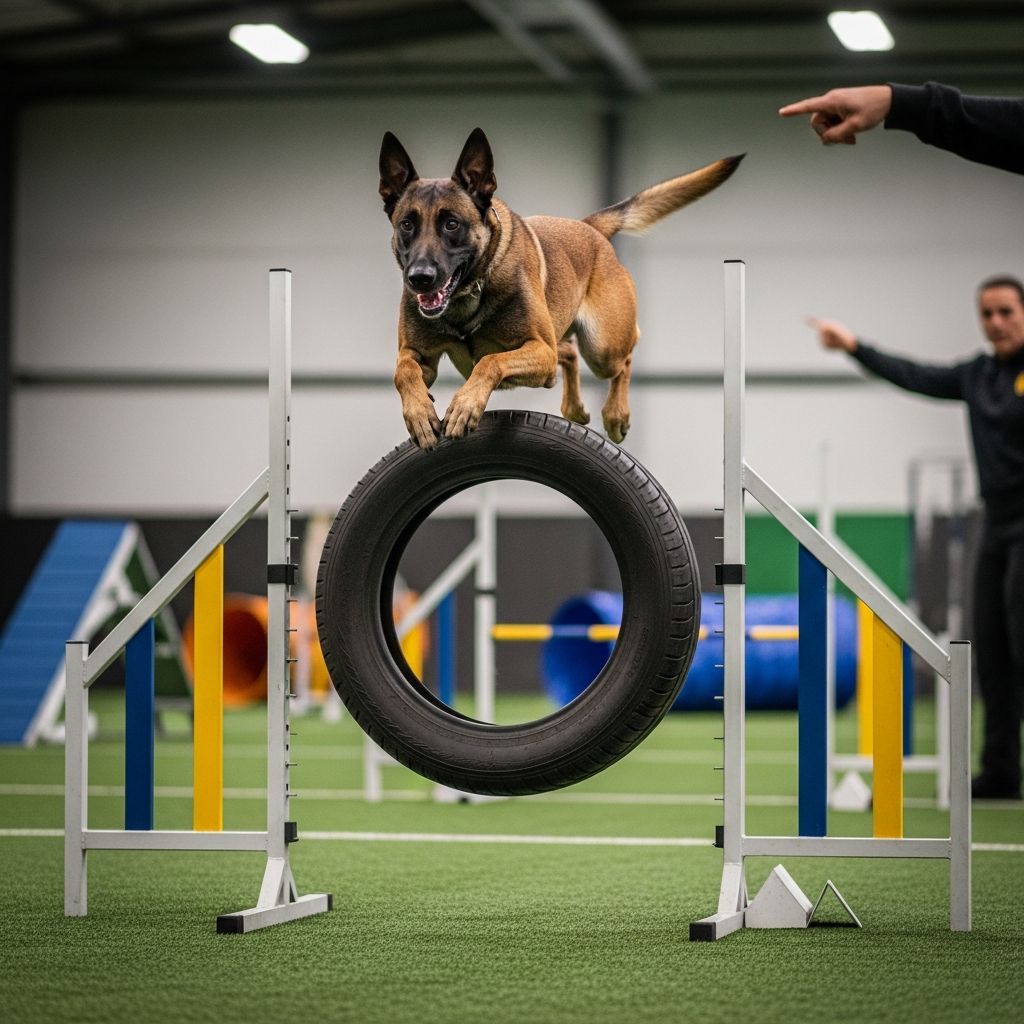
The sight of a canine and handler moving in perfect synchronization, executing intricate patterns with flawless precision, represents one of the most impressive demonstrations of teamwork in the dog training world. K9 drill and demonstration teams showcase the culmination of months of dedicated training, strategic planning, and unwavering commitment to excellence. These specialized teams blend athletic prowess, obedience, and showmanship into performances that captivate audiences and demonstrate the remarkable bond between human and animal.
Beyond their entertainment value, drill teams serve as powerful tools for building foundational skills that directly translate into everyday life. The discipline required to execute synchronized routines strengthens core obedience commands, enhances focus despite environmental distractions, and develops the handler-dog relationship into a truly collaborative partnership. For those considering participation in competitive drill team circuits, understanding the mechanics of choreography, training methodology, and performance execution provides the roadmap to success.
Understanding the Mechanics of Choreographed Canine Routines
Choreographed K9 routines represent a unique fusion of geometric precision and artistic expression. These performances employ movement patterns that draw inspiration from multiple disciplines, creating a dynamic visual spectacle that demands exceptional coordination between handler and canine partner.
The foundational structure of drill routines often incorporates geometric formations reminiscent of military precision marching or band field shows. Handlers and dogs position themselves to create intricate shapes and patterns visible to spectators, maintaining strict spacing and alignment throughout transitions. Alternatively, some routines adopt a more organic approach, resembling square dance or line dance formations where handlers and canines weave through predetermined paths with deliberate timing and placement.
Movement Vocabulary and Command Execution
The specific movements performed during drill demonstrations extend far beyond standard heeling. While dogs typically heel on either the left or right side of their handlers, the advanced skill set includes:
- Directional pivots and rotational movements
- Sitting and lying down positions executed on cue
- Calling the dog to a front-facing position
- Transitioning smoothly back to heeling formation
- Backing up in controlled, measured steps
- Weaving between the handler’s legs
- Executing spins in either direction
- Performing trick behaviors integrated into the routine flow
Each movement must be executed with split-second timing to maintain the visual harmony of the entire formation. Judges and audiences evaluate not only the execution of individual movements but also the smoothness of transitions between commands and the handler’s ability to maintain consistent pace and direction regardless of environmental conditions.
Foundation Skills: Building the Necessary Behavioral Repertoire
Successful participation in drill team activities requires establishing a robust foundation of core obedience behaviors. These fundamental skills serve as building blocks upon which more complex choreographed sequences are constructed.
Advanced Obedience as the Essential Prerequisite
The foundation of any police dog’s training is advanced obedience, which demands immediate compliance to both verbal commands and hand signals under realistic circumstances. For drill team participants, this means the dog must respond reliably to directional cues, movement commands, and positioning directives regardless of external stimuli.
Dogs must demonstrate the ability to stay in designated positions for extended periods, maintain heel position while navigating varied terrain and crowd environments, recall promptly when called from any distance or distraction level, and execute on-leash and off-leash behaviors with consistency. This level of control becomes increasingly critical as handlers introduce their canine partners to the complexities of group performances where timing and precision directly impact team safety and aesthetic quality.
Working in Group Environments
Drill teams by their nature require dogs to function effectively in close proximity to other handlers, other dogs, and distracted audiences. Training protocols must systematically expose canines to these exact conditions, gradually increasing environmental complexity as behavioral confidence develops.
Dogs learn to maintain focus on their specific handler despite the presence of competing stimuli. This includes other team members moving through space, additional canines executing their own routines nearby, sudden movements from audience members, and unexpected environmental changes such as weather variation or acoustic disturbances.
The development of this specialized concentration skill enables dogs to filter relevant information—their handler’s commands and positional cues—from irrelevant environmental noise. Through progressive exposure in controlled settings that gradually increase in complexity, canines develop the mental resilience required for confident performance in public venues.
Strategic Training Architecture and Progressive Development
Transforming a well-obedience-trained dog into a precision drill team performer requires methodical progression through increasingly complex training phases. Rushing this developmental timeline compromises both performance quality and handler-dog relationship dynamics.
Initial Skill Assessment and Team Placement
Before beginning drill team training, handlers should evaluate their canine partner’s suitability for group performance work. Assessment criteria include the dog’s responsiveness to direction, comfort level in crowded environments, and natural confidence when navigating novel situations. Dogs demonstrating high handler focus, quick command processing, and adaptability to changing environmental conditions typically excel in drill team contexts.
Handlers must acknowledge their own learning curve as well. Drill team participation represents a significant time commitment with steep learning requirements. Handlers function as both students and teachers, simultaneously acquiring choreography knowledge while conveying directional information to their canine partners through precise physical cues and verbal commands.
Foundational Choreography Development
Initial drill routines should emphasize simplicity and clarity. Basic actions form the foundation—straightforward heeling patterns, simple directional changes, and fundamental position commands executed with precision. These elemental movements allow handlers and dogs to synchronize their timing and develop mutual understanding of the communication system before attempting sophisticated choreography.
Many successful drill teams recommend practicing handler movements independently before introducing canine partners into the routine. This permits handlers to master their spatial navigation, timing sequences, and movement transitions without the added complexity of managing a dog’s behavior simultaneously. Once handlers demonstrate proficiency with the choreography, canine partners are gradually introduced, initially in isolated segments before full routine integration.
Incremental Complexity Introduction
As handler-dog pairs develop competency with basic routines, choreography complexity gradually increases. Advanced sequences might incorporate rapid directional changes, extended stationary holds, intricate weaving patterns, or synchronized movement across wider performance spaces. Each new element receives isolated practice before integration into the complete routine.
Progressive exposure to performance conditions accelerates competency development. Handlers should conduct practice sessions in diverse environments—open fields, gymnasium spaces, parking areas, and ultimately in venues matching actual competition or demonstration settings. This environmental variety ensures that dogs develop reliable behavior execution regardless of surface texture, acoustic conditions, or architectural features.
The Critical Role of Precision in Performance Excellence
The distinction between adequate performance and exceptional demonstration hinges upon precise execution across multiple dimensions: spacing between team members, timing synchronization, straight line formation maintenance, and consistent movement velocity.
Spacing and Geometric Precision
In choreographed formations, maintaining consistent spacing between handlers and canines creates the visual impact that distinguishes professional performances. Audiences unconsciously evaluate formation alignment and relative positioning. Teams maintaining exact spacing appear more polished, coordinated, and professionally executed than teams with variable positioning.
Handlers must develop spatial awareness that extends beyond their individual dog to encompass their role within the larger formation. This requires understanding positioning relative to neighboring team members, recognizing when spacing deviates from intended patterns, and making micro-adjustments without disrupting overall flow. Consistent practice with the same performance location allows teams to develop spatial memory that facilitates precise positioning execution.
Timing and Synchronization Excellence
Synchronized movement demands that all team members transition between choreographic elements at identical moments. A handler executing a directional change one beat early or late creates visual discord that undermines the entire formation’s aesthetic quality.
Developing precise timing requires extensive repetition until movement sequences become semi-automatic for both handlers and canines. Many successful teams utilize rhythmic counting systems or musical accompaniment during practice sessions to establish consistent pacing. When handlers internalize the rhythm of their choreography, they can maintain tempo regardless of external distractions, ensuring that all team members remain synchronized throughout performance execution.
Practical Implementation: From Practice to Performance
Transitioning from training environment to competitive or demonstration performance requires structured progression that builds handler and canine confidence while maintaining behavioral reliability.
Training Schedule Development and Maintenance
Consistent training allows dogs to build on their skills effectively, with handlers and dogs practicing regularly to refine execution and maintain already-learned behaviors. A well-structured training schedule typically incorporates weekly practice sessions of 30-60 minutes, with periodic longer sessions for intensive choreography work and conditioning maintenance.
Training sessions should balance practice of complete routines with isolated drilling of specific movements that require refinement. Dedicating portion of sessions to weak elements while maintaining proficiency in well-executed sequences prevents skill degradation while targeting improvement areas.
Handlers should maintain detailed training logs documenting practice focus, observed behavioral challenges, execution successes, and timing data. This systematic record-keeping identifies patterns in performance variability, pinpoints specific sequences requiring additional practice, and provides objective measurement of long-term progress.
Cross-Training and Skill Diversification
While specialized focus on drill team choreography remains essential, strategic cross-training enhances overall handler-dog performance capability. Dogs can benefit from exposure to basic detection work, varied obedience challenges, or recreational activities that maintain engagement while building physical conditioning.
Cross-training provides psychological enrichment that prevents training monotony and maintains canine enthusiasm for performance participation. Dogs that experience diverse training activities often demonstrate increased focus during drill team sessions, as the variety maintains novelty and interest in handler-directed activities.
Community Engagement and Networking
Successful drill team participants actively engage with the broader community of handlers, trainers, and competitive performance organizations. Sharing experiences, troubleshooting behavioral challenges, and learning from other teams’ innovative choreography approaches accelerates skill development.
Attending drill team competitions and demonstrations provides opportunities to observe high-performing teams, identify choreographic techniques worth incorporating, and develop relationships with handlers and organizations that can provide feedback and guidance. Many established teams willingly mentor newer participants, sharing training methodologies and performance insights accumulated through years of experience.
Equipment and Resource Considerations
Proper equipment investment directly impacts training efficiency and performance quality. Specialized gear designed for drill team work differs from standard pet training equipment, incorporating features that facilitate precise handler-dog communication during complex choreographic sequences.
Harness and Leash Selection
Performance harnesses should distribute pressure evenly across the dog’s body, permitting subtle directional cues without causing discomfort or restricting natural movement. Quality leashes maintain consistent length and weight, transmitting handler intentions clearly without introducing unpredictable slack or tension variations.
Different training and performance phases may benefit from different equipment configurations. Training equipment might emphasize communication clarity, while performance equipment prioritizes aesthetic presentation and minimal visual distraction. Handlers should familiarize their canine partners with any equipment changes well before performances, ensuring that dogs respond consistently regardless of gear modifications.
Training Space and Environmental Setup
Quality training facilities with appropriate surface textures, consistent lighting, and minimal environmental hazards accelerate skill development. Spaces that permit safe off-leash work facilitate certain training phases while maintaining handler control through implicit boundaries or secure containment features.
Investment in variable training environments—indoor facilities, outdoor open spaces, and spaces with crowd simulation—strengthens behavioral reliability across diverse conditions. Some teams utilize video recording to document training sessions, permitting objective evaluation of spacing, timing, and handler-canine synchronization that subjective observation may miss.
Frequently Asked Questions About K9 Drill Team Participation
- What age should dogs begin drill team training?
- Dogs should possess solid foundational obedience before drill team participation begins. Most successfully trained dogs have reached 12-18 months of age with demonstrated reliability in basic commands executed in distraction-rich environments. Attempting drill team training with younger, insufficiently trained dogs typically results in frustration and behavioral regression.
- How long does it require to develop a competition-ready routine?
- From initial concept to performance readiness typically requires 3-6 months of consistent practice for handler-dog pairs with existing advanced obedience foundation. Teams beginning with basic obedience training require 6-12 months or longer for polished performance development.
- Can mixed-breed dogs participate in drill teams?
- Absolutely. Drill team participation emphasizes handler-dog partnership and synchronized execution rather than breed-specific criteria. Mixed-breed dogs demonstrating appropriate obedience, focus capacity, and environmental confidence excel in drill team environments alongside purebred participants.
- What’s the recommended practice frequency for optimal performance development?
- Most high-performing teams practice 2-3 times weekly, with sessions lasting 45-90 minutes. This frequency permits skill refinement and behavioral maintenance while preventing overtraining that might introduce stress or enthusiasm loss in canine partners.
- How should handlers manage performance anxiety and handler stress?
- Thorough preparation through extensive practice builds confidence for both handler and dog. Many successful teams employ visualization techniques, practice in competition-simulation conditions, and benefit from experienced team members’ mentorship in managing performance pressure and executing established routines despite environmental changes.
Building Community Through Performance Participation
Beyond the technical aspects of choreography and obedience execution, participation in K9 drill teams builds broader community connections. Handlers form lasting relationships with fellow enthusiasts, develop mentoring relationships with experienced performers, and contribute to public appreciation of the remarkable human-canine partnership.
Demonstrations performed for public audiences—police academy events, community gatherings, educational programs—showcase the possibilities of dedicated training and handler-dog commitment. These performances inspire observers to deepen their engagement with their own canine companions and often recruit new participants into the drill team community.
The skills developed through drill team participation extend far beyond performance contexts. Dogs that have trained in precision choreography demonstrate enhanced obedience reliability, improved environmental adaptation, and stronger handler focus in everyday life. Handlers develop communication clarity, timing sensitivity, and training expertise that enriches all their interactions with canine partners.
Whether pursued competitively or as a community engagement activity, K9 drill team participation represents a fulfilling avenue for deepening the human-canine bond while contributing to public education about canine capabilities and training possibilities. The synchronized movement, precise execution, and collaborative spirit that characterize these teams exemplify the extraordinary achievements possible when handlers and dogs work together toward shared excellence.
References
- Training Tracking Dogs for Police: Effective Techniques and Best Practices — Bullocks K9 Kennels. https://www.bullocksk9kennels.com/post/training-tracking-dogs-for-police-effective-techniques-and-best-practices
- What Police Dogs Learn from Their Trainers — Dog Trainer College. https://www.dogtrainercollege.us/what-police-dogs-learn-from-their-trainers/
- Basic Police Working Dog Training Academy: Things That Should Be Considered Before Making Your Choice — USPCA K9. September 2020. https://www.uspcak9.com/index.php?day=23&id=15%3Abasic-police-working-dog-training-academy-things-that-should-be-considered-before-making-your-choice&month=09&option=com_dailyplanetblog&view=entry&year=2020
- Training the Tactical K-9 Team — Police1. https://www.police1.com/police-products/k9/k9-training/articles/training-the-tactical-k-9-team-7t43HiPFzrpoatWt/
- All About the Different Types of K9 Training Methods — 3D K9 Detection. https://www.3dk9detection.com/news/all-about-the-different-types-of-k9-training-methods
Similar Articles








Read full bio of medha deb


