

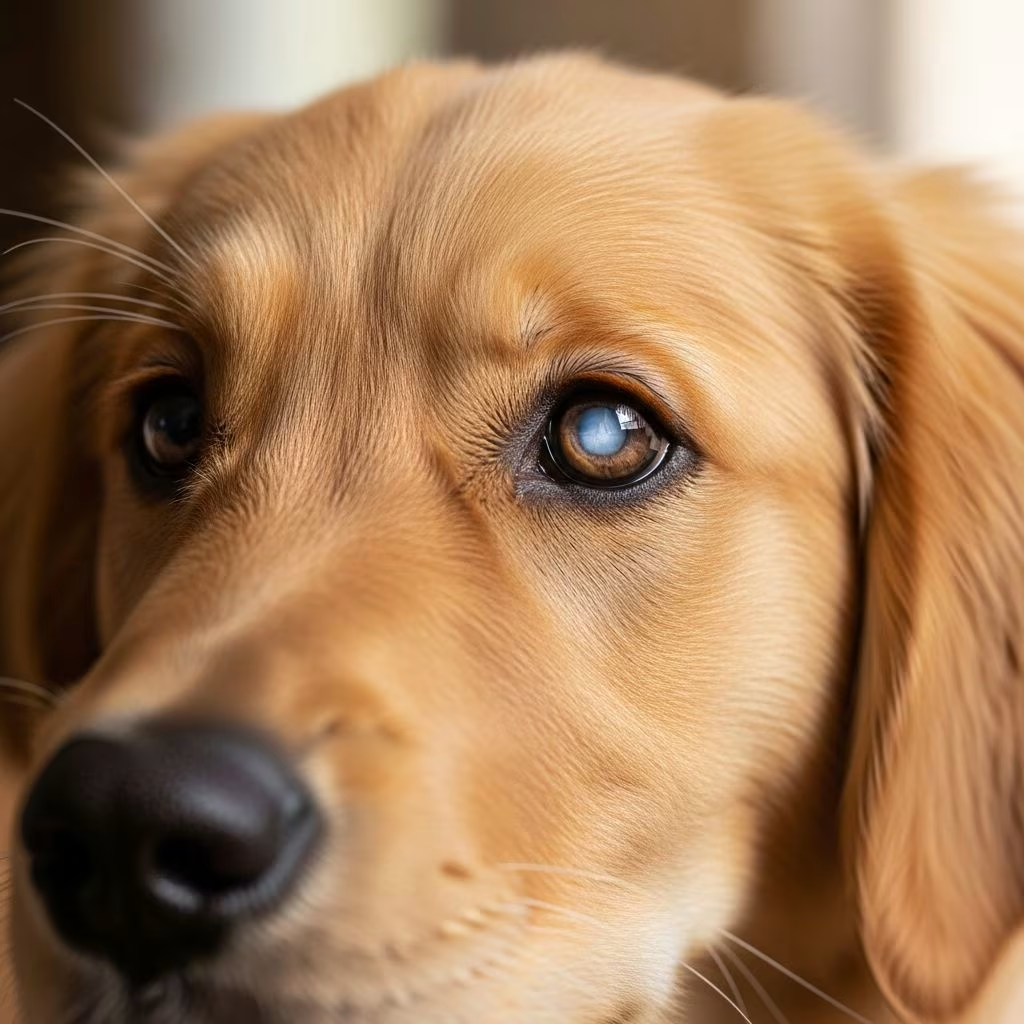
Juvenile cataracts represent a significant vision-threatening condition in young dogs, characterized by the clouding of the eye’s lens that typically manifests before adulthood. These opacities disrupt light transmission to the retina, potentially leading to partial or complete blindness if not addressed promptly. Unlike age-related cataracts in senior dogs, juvenile forms often arise from genetic predispositions, making early detection crucial for breeds at higher risk.
Defining Juvenile Cataracts and Their Impact
The lens of a dog’s eye functions like a camera lens, focusing light precisely onto the retina for clear vision. When cataracts develop, proteins within the lens clump together, creating cloudy areas that scatter light and impair sight. In juvenile cases, this process accelerates in puppies or dogs under five years old, often bilaterally affecting both eyes. Affected dogs experience vision akin to peering through frosted glass, progressing to total opacity in severe instances. Secondary issues like inflammation (uveitis), glaucoma, or lens displacement can exacerbate pain and complications.
Early Indicators Owners Should Watch For
Recognizing subtle changes can make all the difference in preserving vision. Owners may first notice a bluish-white haze in the pupil, especially under bright light, or a sparkling crystalline effect at certain angles. Behavioral shifts provide additional clues:
- Bumping into furniture, walls, or hesitating on stairs, indicating depth perception loss.
- Hugging walls while navigating or reluctance in dim lighting.
- Frequent squinting, pawing at eyes, or rubbing the face against surfaces.
- Redness, watery discharge, or bulging eyes signaling inflammation.
- Increased thirst and urination if linked to underlying diabetes.
These signs warrant immediate veterinary consultation, as progression can be swift, sometimes within weeks.
Primary Causes Behind Early Lens Clouding
Juvenile cataracts stem from diverse origins, with genetics dominating in young dogs. Key contributors include:
| Cause | Description | Common in Breeds/Ages |
|---|---|---|
| Hereditary (HSF4 Gene Mutation) | Recessive genetic defect causing bilateral cataracts before age 1-2 years. | Boston Terriers, Staffordshire Bull Terriers, French Bulldogs. |
| Diabetes Mellitus | High blood sugar converts to sorbitol, swelling the lens rapidly. | Any breed; often under 5 years if undiagnosed. |
| Trauma or Injury | Physical damage to lens capsule from penetration or shock. | All ages post-incident. |
| Metabolic/Nutritional Issues | Hypocalcemia or deficiencies disrupting lens nutrition. | Rare; linked to systemic conditions. |
| Developmental or Idiopathic | Congenital from gestation issues or unknown factors. | Puppies under 6 months. |
Hereditary forms, particularly Juvenile Hereditary Cataracts (JHC), follow autosomal recessive inheritance, requiring two mutated gene copies for expression. Carriers with one copy remain unaffected but can pass it on.
Breeds Most Susceptible to Genetic Risks
Certain breeds face elevated odds due to selective breeding concentrating faulty genes. High-risk groups include:
- Poodles, Cocker Spaniels: Early nuclear cataracts progressing rapidly.
- Boston Terriers, French Bulldogs: HSF4-linked JHC onset by 6-12 weeks.
- Staffordshire Bull Terriers, Golden Retrievers: Bilateral opacities by 2-7 years.
- Bichon Frise, Siberian Huskies: Hereditary predisposition under 5 years.
- American Cocker Spaniels: Frequent juvenile onset.
Any dog can develop cataracts, but genetic testing for at-risk breeds identifies carriers early, informing breeding decisions.
Diagnostic Approaches for Accurate Assessment
Veterinarians employ a multi-step process to confirm juvenile cataracts and rule out mimics like nuclear sclerosis (a benign aging haze). Initial exams include:
- Schirmer tear test for dryness and fluorescein staining for ulcers.
- Tonometry to measure intraocular pressure, detecting glaucoma risks.
- Ophthalmoscopy to visualize lens opacities and retinal health.
Referral to a veterinary ophthalmologist enables advanced imaging like electroretinography (ERG) for retinal function and gonioscopy for drainage angles. Bloodwork screens for diabetes or metabolic disorders, while genetic tests confirm HSF4 mutations. Early diagnosis classifies cataracts as incipient (small), immature (partial), mature (complete clouding), or hypermature (shrunken lens), guiding treatment.
Treatment Options: From Surgery to Supportive Care
Unlike humans, dogs rarely benefit from medications alone, as cataracts do not dissolve naturally. Phacoemulsification surgery—ultrasound fragmentation and aspiration of the lens—is the gold standard for restoring vision, boasting 90-95% success in uncomplicated juvenile cases. Pre-surgical stabilization involves anti-inflammatories to quell uveitis.
Non-surgical management suits inoperable cases:
- Control underlying diabetes with insulin to halt progression.
- Topical drops for inflammation or pressure management.
- Environmental adaptations like consistent furniture placement and voice cues.
Post-surgery, artificial lens implants enhance outcomes, though many dogs adapt well without them. Owners must monitor for complications like retinal detachment.
Prevention Strategies for Responsible Owners
Proactive measures reduce incidence, especially in predisposed lines. Key steps include:
- Genetic Screening: Test breeding dogs for HSF4 and other markers; avoid pairing carriers.
- Breeder Selection: Choose OFA or CERF-certified parents free of hereditary cataracts.
- Health Monitoring: Routine puppy eye exams at 6-8 weeks and annually.
- Diabetes Vigilance: Maintain ideal weight and diet to prevent metabolic triggers.
- Trauma Avoidance: Supervise play and protect eyes from hazards.
Breed clubs often track prevalence, aiding informed choices.
Living with Vision-Impaired Dogs: Adaptation Tips
Even post-treatment or in blind cases, dogs thrive with adjustments. Establish scent trails using rugs, avoid rearranging homes, and use bells on toys for play. Guide dogs or harnesses aid navigation outdoors. Surprisingly, canine senses of smell and hearing compensate remarkably, allowing joyful lives.
Common Questions About Juvenile Cataracts
Can juvenile cataracts be reversed without surgery?
Typically no; drops may manage symptoms but do not clear the lens. Surgery offers the best reversal.
At what age do hereditary cataracts usually appear?
Often by 6-12 weeks in high-risk breeds, progressing by 2-7 years.
Is cataract surgery safe for puppies?
Yes, when performed by specialists after stabilizing any inflammation, with high success rates.
Do all cloudy eyes mean cataracts?
No; nuclear sclerosis is common and non-progressive. Vet exam differentiates.
Should dogs with cataracts be bred?
No, especially if hereditary, to prevent passing genes.
Juvenile cataracts demand vigilance, but with swift action, many dogs regain clear vision and lead active lives. Consult professionals for tailored advice.
References
- Early Onset Cataracts in Dogs: Recognizing the First Signs — Noveha. 2023. https://noveha.com/early-onset-cataracts-in-dogs/
- Cataracts in Dogs: Signs, Causes, and Treatment — PetMD. 2024-01-15. https://www.petmd.com/dog/conditions/eye/c_dg_cataract
- Hereditary Cataracts in dogs — Embarkvet. 2023. https://embarkvet.com/products/dog-health/health-conditions/hereditary-cataracts-early-onset-cataracts-juvenile-cataracts/
- Cataracts in Dogs: Symptoms, Appearance & Treatment — Hill’s Pet. 2024. https://www.hillspet.ca/en-ca/dog-care/healthcare/cataracts-in-dogs
- Juvenile Hereditary Cataracts (JHC) — Veterinary Genetics Laboratory, UC Davis. 2023-05-01. https://vgl.ucdavis.edu/test/juvenile-hereditary-cataract
- Canine cataracts — Cornell University College of Veterinary Medicine. 2024-02-10. https://www.vet.cornell.edu/departments-centers-and-institutes/riney-canine-health-center/canine-health-topics/canine-cataracts



