

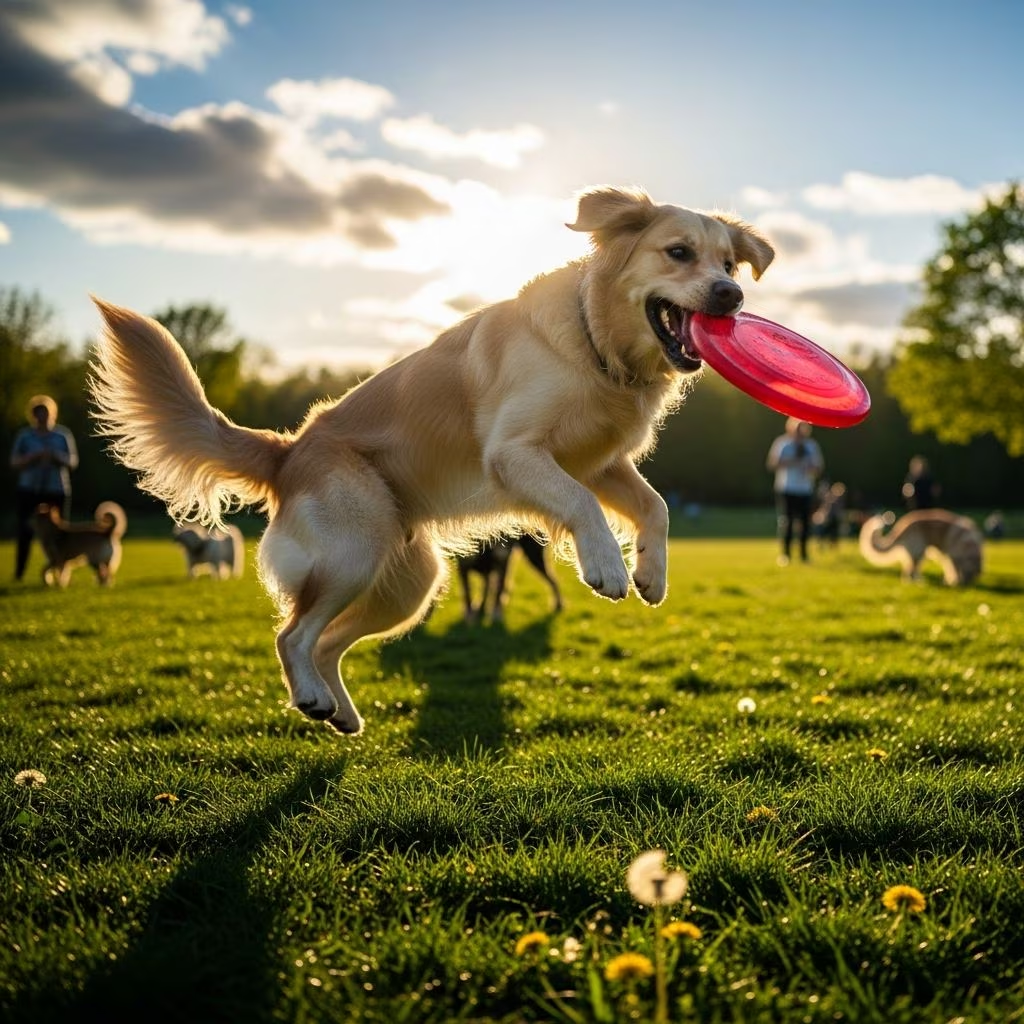
Training your dog can transform into a delightful experience when you prioritize signs of joy, like a vigorously wagging tail. This approach emphasizes positive reinforcement, where rewards follow desired behaviors, fostering enthusiasm and trust. By observing tail movements, owners gain insights into their dog’s emotional state, allowing adjustments for optimal learning.
Understanding Tail Movements in Canine Communication
Tails serve as barometers of a dog’s feelings during interactions and training. A loose, mid-height wag often signals relaxation and readiness to engage, making it prime for teaching new skills. In contrast, a tucked or rigid tail may indicate stress or overstimulation, prompting a need to simplify tasks or offer breaks.
During activities like recall exercises, an upward-curving tail with gentle motion shows balanced excitement. If it stiffens high, dial back intensity to prevent distraction. For leash walking, a steady wag at spine level reflects calm focus, while drops suggest environmental overwhelm.
- Mid-level wag: Neutral, attentive state ideal for focus.
- High, stiff tail: Overarousal; reduce stimulation.
- Low or tucked: Uncertainty; simplify or reassure.
Rewards influence tail responses too. Calm treat delivery maintains steady wags, while excited tossing elevates energy levels. Match your style to the goal behavior for consistency.
Building a Foundation with Targeting Techniques
Targeting introduces dogs to following cues reliably, using your hand or tools as focal points. Extend your palm at nose level; most dogs naturally investigate. The instant contact occurs, deliver a treat to mark success.
Progress by relocating the target around your body, encouraging the nose to follow. If interest fades, revive it by hiding treats briefly or adding playful gestures like sniffing your hand yourself. This builds voluntary touching, foundational for advanced tricks.
| Step | Action | Tail Indicator |
|---|---|---|
| 1. Introduce | Hold hand out | Curious sniff, soft wag |
| 2. Reward contact | Treat on touch | Increased wagging |
| 3. Vary position | Move hand higher | Focused pursuit |
| 4. Add distance | Step back slightly | Excited, loose tail |
Short sessions prevent fatigue, ensuring tails keep wagging enthusiastically.
Mastering Conditioned Reinforcers for Precision
Markers like clickers or verbal ‘yes’ bridge the gap between action and reward, sharpening timing. Pair the sound with treats repeatedly: click, then deliver immediately. Once linked, use the marker alone when the dog disengages, prompting return for payoff.
This creates anticipation, visible in eager tail sweeps. For targeting, click precisely on nose contact, reinforcing the exact moment. Reliability grows as dogs associate the cue with joy.
- Charge the marker: Click + treat 10-20 times.
- Test association: Marker without immediate treat; watch for alert response.
- Apply to behaviors: Use in sequence for chaining skills.
Fun Tricks That Elicit Happy Wags
Tricks elevate training into play, with tail wags as the ultimate feedback. Start with paw lifts for waving. Lure with a treat above the shoulder from a sit; reward lifted paw. Fade the lure to a hand signal.
Expand variations: Alternate paws, perform from down position, or at distance. A student dog might wave from across the room after steady practice, tail thumping joyfully.
To teach tail wagging on cue, capture natural occurrences. Watch for spontaneous wags during greetings or play; say ‘wag’ and reward. Use props like toys to prompt motion, then phase out.
- Capture method: Mark wag with click/verbal, treat.
- Prop aid: Shake toy to induce wag, cue ‘wag’.
- Standing practice: Transition from side-lie to natural posture.
Isolate the wag by rewarding stillness first on side, marking only tail twitches. This clarity prevents confusion with other movements.
Interpreting Tail Signals Across Training Scenarios
Tail positions evolve with context. In obedience drills, neutral wags predict success; drops signal confusion, cueing task breakdown. For agility prep, rising tails show readiness, but extremes demand pace adjustment.
Environmental factors matter: Quiet spaces yield clearer reads. Gradually introduce distractions as proficiency builds, monitoring for sustained joy.
Pro Tip: Reward placement affects tails—gentle feeds for calm, energetic for high-drive tasks.
Positive Reinforcement: The Core of Wag-Inducing Sessions
Focus on what works: Praise, toys, or food post-success builds desire to repeat. Clickers pinpoint moments precisely, outperforming vague praise. Sessions of 5-10 minutes twice daily maximize retention without burnout.
Basic sits pave the way: Lure overhead, reward bottom-to-ground. Pair with ‘sit’ cue, repeating for fluency. Happy tails confirm engagement.
Advanced Chain: Combining Behaviors for Engagement
Link skills like target to wave: Nose touch transitions to paw lift. Or chain sit-wave-target for routines. Each step’s wag reinforces the sequence.
Distance challenges: Cue from 3 feet, extend to 10, rewarding reliable responses. Visual or verbal alone tests cue strength.
Common Pitfalls and Tail-Smart Fixes
Avoid overlong drills causing tail drops; shorten for fun. Don’t train amid chaos—start isolated. If wags stiffen, lower energy.
Phase props gradually to prevent dependency. Praise lavishly to amplify natural joy.
FAQs
What does a fast tail wag mean during training?
Typically excitement or happiness, but context matters—loose is positive, stiff may signal arousal.
How long until my dog wags on cue?
Varies by individual; consistent 1-2 week sessions often yield results with capture methods.
Is clicker training essential?
No, but it enhances precision over verbal markers for many dogs.
Can all breeds learn wave tricks?
Yes, with adaptation for physical limits; short-legged dogs excel too.
What if my dog’s tail stays tucked?
Pause, reassure, simplify; consult vet if persistent for health checks.
Creating Lasting Bonds Through Playful Practice
Consistent, observant training turns routines into tail festivals. Celebrate small wins, read signals, and adapt—your dog will thrive in joy.
References
- Positive Reinforcement and Clicker Training Guidelines — American Kennel Club. 2024-05-15. https://www.akc.org/expert-advice/training/clicker-training-dogs/
- Canine Body Language: Tail Signals — ASPCA. 2023-11-20. https://www.aspca.org/pet-care/dog-care/common-dog-behavior-issues/understanding-tail-wagging
- Target Training for Dogs — Karen Pryor Clicker Training. 2022-08-10. https://clickertraining.com/target-training/
- Operant Conditioning in Pet Dogs — Journal of Veterinary Behavior (Peer-reviewed). 2025-01-12. https://doi.org/10.1016/j.jveb.2024.12.003
- Reading Dog Emotions via Tail Movement — University of Veterinary Medicine Vienna. 2024-03-05. https://www.vetmeduni.ac.at/en/research/publications/tail-wagging-dogs/
- Trick Training Protocols — Association of Professional Dog Trainers. 2023-09-18. https://apdt.com/resource-center/trick-training/



