

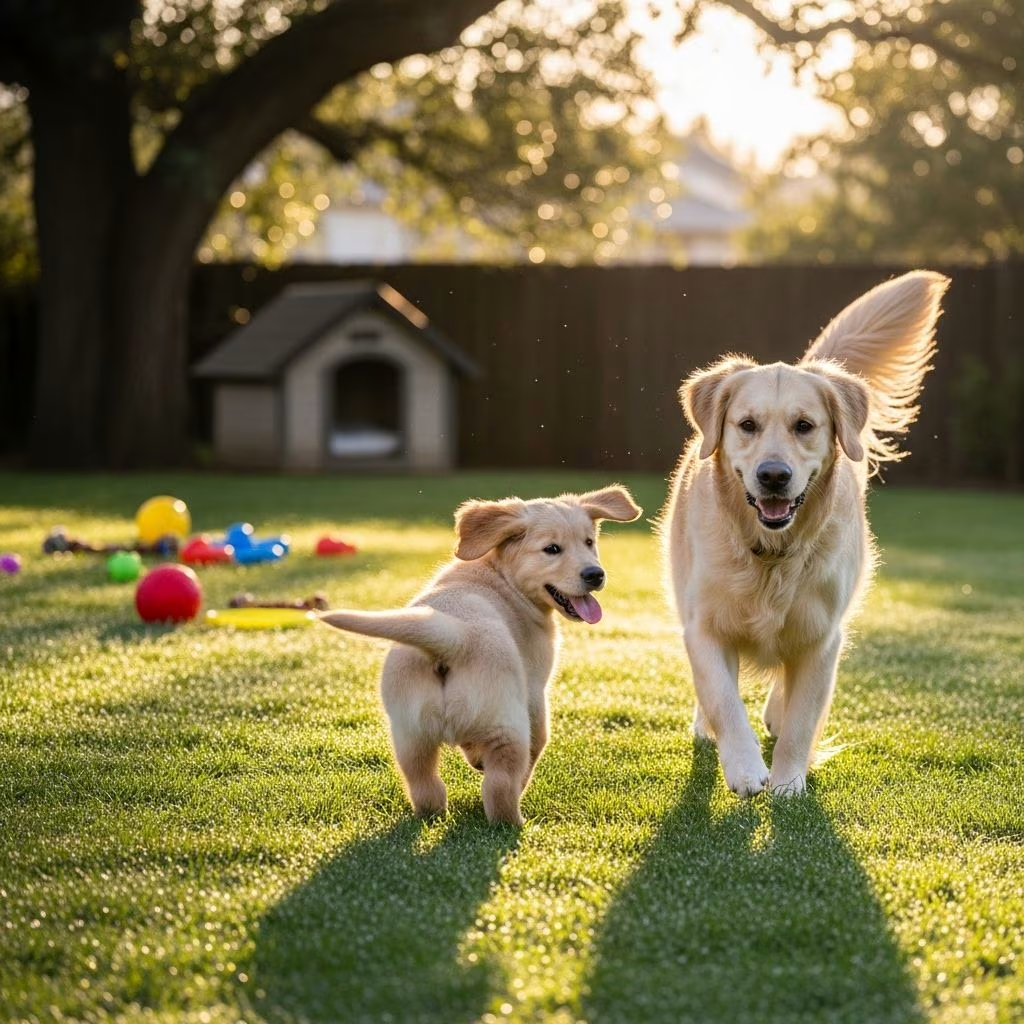
Teaching your dog to stay is one of the most valuable skills you can impart, creating safety in everyday situations while fostering a deeper connection. This guide explores proven, positive methods to master the stay command, ensuring both you and your pup enjoy the process.
Why Mastering Stay Enhances Your Dog’s Life
A reliable stay command prevents mishaps like darting into traffic or jumping on guests, promoting security and freedom for your dog. Beyond obedience, it builds confidence as dogs learn self-control, leading to calmer behavior at home and outings. Regular practice also stimulates their mind, reducing boredom-related issues like chewing or barking.
Positive training approaches, focusing on rewards rather than punishment, keep sessions enjoyable. Dogs trained this way show lower stress levels and greater eagerness to learn, turning training into playtime that strengthens your bond.
Essential Tools for Successful Stay Training
Before starting, gather a few key items to set your dog up for success:
- High-value treats: Soft, smelly options like chicken bits or cheese that your dog adores.
- Marker word: A sound like “yes!” or a clicker to pinpoint the exact moment of good behavior.
- Leash and quiet space: Begin indoors to minimize distractions.
- Toys or praise: For variety in rewards to maintain interest.
Choose treats your dog finds irresistible but healthy, avoiding overfeeding by using tiny pieces.
Building the Foundation: Basic Stay Steps
Start simple to help your dog grasp the concept quickly. Follow these foundational steps for a solid base.
- Position and cue: Ask your dog to sit or lie down. Say “stay” firmly while holding your palm out like a stop sign. This visual cue aids understanding.
- Immediate reward: Count to one silently, then mark with your word and treat while your dog remains in place. Avoid letting them break position for the reward.
- Release: Use a cheerful “okay” or “free” to end the stay, praising lavishly.
Practice 5-10 reps per session, keeping it short—under 5 minutes—to prevent fatigue. Consistency is key; use the same words and signals every time.
Progressing Distance Without Breaking Focus
Once your dog holds for a few seconds, introduce movement. This builds reliability as real-life scenarios involve you stepping away.
Begin by taking one step back. If they stay, return immediately, mark, and reward. Gradually increase to two steps, then pivot or take a step sideways. Only advance when they succeed 80-90% of the time.
| Distance Level | Steps Back | Hold Time | Tips |
|---|---|---|---|
| Beginner | 1 step | 1-2 seconds | Reward from hand |
| Intermediate | 3-5 steps | 5 seconds | Return before release |
| Advanced | 10+ steps | 10+ seconds | Add turns |
Reset calmly if they break—don’t scold, just guide back to position. This keeps training positive.
Incorporating Duration for Longer Holds
Duration training teaches patience. After mastering short distances, extend hold times incrementally.
From your position, add one second per successful rep. Use a timer mentally: hold for 3 seconds, reward; then 5, and so on. Practice re-cuing “stay” mid-hold to reinforce without ending the exercise early.
- Pro tip: Reward in position to avoid anticipation of movement.
- Sessions: 3-5 stays per set, with breaks.
Slow progression minimizes errors, boosting your dog’s confidence.
Overcoming Distractions: Real-World Proofing
Distractions test true mastery. Introduce them gradually to mimic daily life.
Movement Distractions
Start with subtle actions: clap hands, jump in place, or spin. Reward for ignoring. Progress to hiding briefly or erratic movements.
Food Temptations
Place a low-value treat (like kibble) on the floor. Cue stay, then reward with higher-value food from your hand. Tossed treats increase difficulty due to motion.
Environmental Challenges
Move to busier areas: add toys, people entering, or outdoor sounds. Practice sit-stays and down-stays for generalization.
Table of distraction progression:
| Distraction Type | Easy | Medium | Hard |
|---|---|---|---|
| Movement | Hand wave | Clapping | Jumping jacks |
| Food | Handheld | Floor kibble | Tossed meat |
| People/Toys | Quiet toy | Person approaches | Play invitation |
Fading Rewards for Lasting Behavior
Initially, reward every success. Once reliable, space them out: praise some reps, treat others randomly. This prevents treat-dependency.
- Stage 1: Reward every time.
- Stage 2: Alternate praise and treats.
- Stage 3: Random rewards, life rewards (walks, play).
Your presence and freedom become the ultimate reinforcers.
Maintaining a Positive Training Mindset
Training thrives on good vibes. Start sessions when both are calm and happy—skip if stressed.
- End on success: Switch to an easy skill if frustrated.
- Keep it fun: Use games like “Follow Me” to build attention.
- Short bursts: Multiple 3-5 minute sessions daily beat long ones.
This approach reduces stress, making dogs eager learners.
Common Pitfalls and Fixes
Avoid these errors for smoother progress:
- Repeating cues: Say once; wait patiently.
- Punishing breaks: Reset quietly.
- Rushing criteria: Only advance on high success rates.
- Ignoring body language: Watch for stress signals like yawning.
Patience yields joyful results.
Advanced Applications for Everyday Wins
Apply stay in scenarios like doorways, vet visits, or greetings. Combine with “leave it” for ultimate control: cue stay, drop a distraction, reward focus.
Group classes amplify fun and socialization, exposing dogs to varied distractions.
FAQs
How long until my dog masters stay?
Typically 2-6 weeks with daily practice, depending on age, breed, and consistency.
What if my dog won’t stay for treats?
Use toys, play, or access to games. Find their ultimate motivator.
Can puppies learn stay?
Yes, start at 8 weeks, keeping sessions playful and short.
Should I use a leash?
Initially yes, for gentle guidance without pulling.
What breeds struggle most?
High-energy herders or hounds; counter with more exercise first.
Boosting Happiness Through Training Rituals
Make training a daily ritual: morning stays for calm starts, evening reviews for bonding. Track progress in a journal to celebrate wins, enhancing mutual joy.
Integrate into walks: emergency stays at curbs. This practical application solidifies skills while enriching life.
References
- Dog Training Hacks: Three Steps to Sit, Stay, and Come — Nylabone. Accessed 2026. https://www.nylabone.com/dog101/dog-training-hacks-3-steps
- 6 Tips to Make Dog Training (More) Fun and Successful — 2 Hounds Design. Accessed 2026. https://2houndsdesign.com/blogs/blog/6-tips-to-make-dog-training-more-fun-and-successful
- The Secret to Happy, Well-Behaved Dogs: No Treats Necessary — YouTube (Sit Stay Learn). Accessed 2026. https://www.youtube.com/watch?v=3LYCO9ITmqk
- How to Train Your Dog to Stay: Step-by-Step Guide — Happy Hounds Dog Training. Accessed 2026. https://happyhoundsdogtraining.ca/how-to-train-your-dog-to-stay-step-by-step-guide/
- 6 Simple Secrets to Training Your Dog — Fear Free Happy Homes. Accessed 2026. https://www.fearfreehappyhomes.com/6-simple-secrets-to-training-your-dog/
- How to Train Your Dog to LEAVE IT in 5 Easy Steps — YouTube (Happy Hounds). Accessed 2026. https://www.youtube.com/watch?v=0ZJzGPbdRvU
- How to Train Your Dog to Stay: Complete Beginner’s Guide — YouTube (Happy Hounds). Accessed 2026. https://www.youtube.com/watch?v=hbs7yyqF2Ro



