

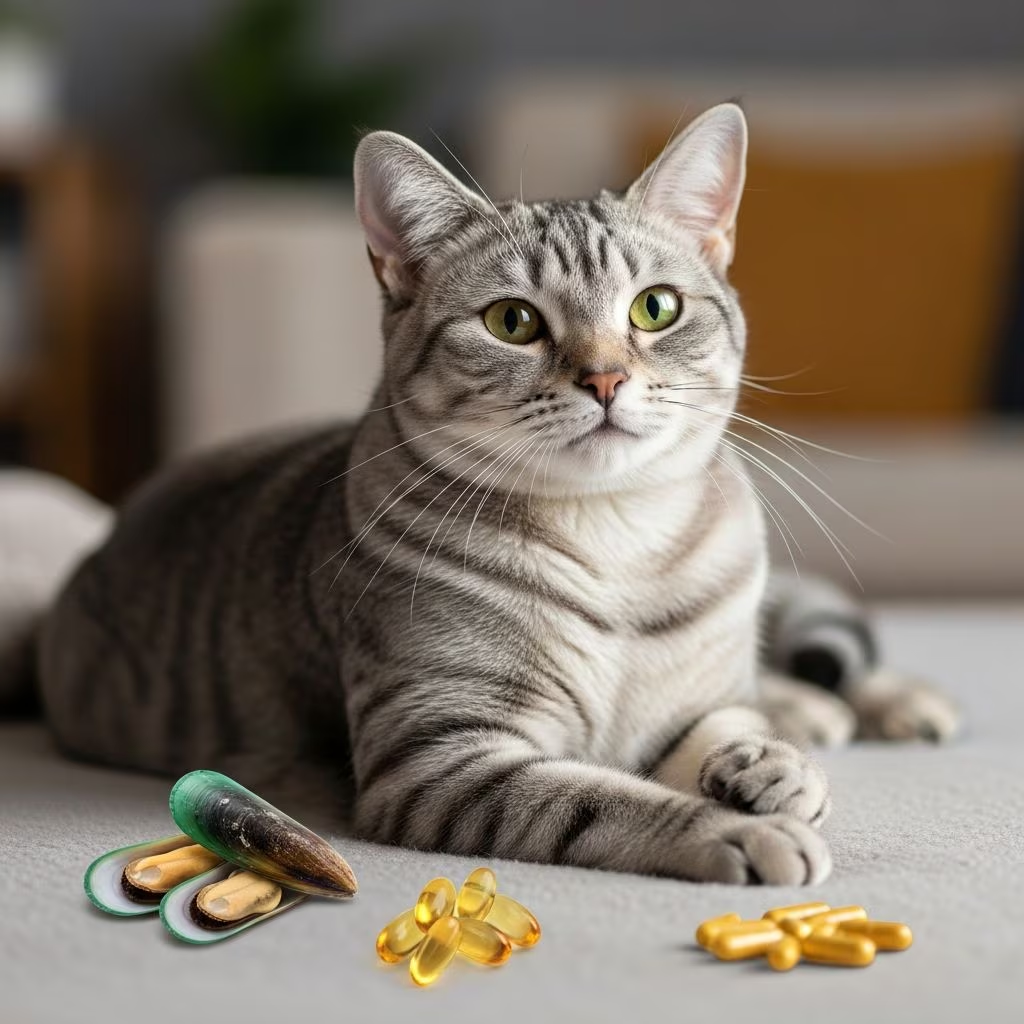
Understanding Osteoarthritis in Cats and Nutraceutical Support
Osteoarthritis (OA) is a progressive joint condition that affects many cats, particularly as they age. While there is no cure for this degenerative disease, a comprehensive management approach can significantly improve your cat’s quality of life and mobility. Beyond traditional medications and weight management, nutraceuticals have emerged as valuable tools in supporting feline joint health and slowing the progression of osteoarthritis.
Nutraceuticals are nutritional products derived from food sources that provide health benefits beyond basic nutrition. Unlike pharmaceuticals, these products are not subjected to the same rigorous testing and regulation by the FDA. This means pet owners should approach nutraceutical selection with informed skepticism and always consult with their veterinarian before introducing any new supplement to their cat’s regimen. Your veterinarian can recommend products that have been evaluated in clinical trials and demonstrated positive results for feline osteoarthritis management.
The Foundation of Osteoarthritis Management
Before exploring nutraceutical options, it is essential to establish a solid foundation for OA management. If your cat is overweight or obese, weight management should be the first priority in any treatment plan. Excess weight places additional stress on already compromised joints, accelerating cartilage degradation and increasing pain and inflammation.
A comprehensive osteoarthritis management program typically includes multiple components working synergistically:
- Weight management and dietary modifications
- Controlled, appropriate exercise to maintain muscle strength
- Prescription medications when necessary
- Joint support nutraceuticals and supplements
- Environmental modifications to reduce joint strain
- Regular veterinary monitoring and assessments
Your veterinarian is the best resource for developing a personalized OA management plan tailored to your individual cat’s needs, health status, and response to treatment.
Eicosapentaenoic Acid (EPA): The Omega-3 Foundation
One of the most extensively researched and proven nutraceuticals for feline joint support is eicosapentaenoic acid (EPA), an omega-3 fatty acid. EPA works through multiple mechanisms to support joint health and reduce osteoarthritis symptoms. Research demonstrates that high levels of EPA help prevent cartilage degeneration by controlling joint inflammation and blocking the enzymes responsible for breaking down cartilage matrix components.
EPA can be delivered to your cat through two primary routes. Therapeutic joint support diets specifically formulated for cats with OA are naturally rich in EPA and have been evaluated in clinical trials for their efficacy. Reputable manufacturers such as Hill’s Prescription Diet j/d and Royal Canin Mobility Support produce these specialized formulations. Alternatively, EPA can be supplemented directly as a liquid or capsule supplement when dietary sources alone are insufficient.
The anti-inflammatory properties of EPA make it particularly valuable in osteoarthritis management, as inflammation is a significant driver of joint pain and cartilage degradation. While human studies suggest omega-3 fatty acids may provide benefits beyond joint support, additional research is needed to determine if these extended benefits apply similarly to cats.
Green-Lipped Mussel: Nature’s Multi-Purpose Joint Support
Green-lipped mussel from New Zealand represents another evidence-based nutraceutical option for feline joint support. This marine source provides multiple beneficial compounds that work together to support joint health and reduce inflammation.
Green-lipped mussel contains eicosatetraenoic acid (ETA), another beneficial omega-3 fatty acid, along with glycosaminoglycans and other naturally occurring nutrients that support cartilage structure and function. Clinical studies have documented reduced orthopedic pain and improved joint function in cats receiving green-lipped mussel supplementation. The comprehensive nutrient profile makes this supplement particularly valuable as it addresses multiple aspects of joint health simultaneously.
When selecting a green-lipped mussel supplement, ensure the product comes from a reputable manufacturer and that the label clearly indicates the origin and concentration of active ingredients. Your veterinarian can recommend quality products and appropriate dosing for your cat’s size and condition severity.
Undenatured Collagen Type II: Supporting Joint Structure
Undenatured collagen type II serves a distinct role in osteoarthritis management by addressing immune-mediated joint damage. In osteoarthritis, the immune system sometimes overreacts to arthritic changes occurring within the joint, triggering additional inflammation and accelerating cartilage breakdown. Undenatured collagen type II helps reduce this ongoing secondary damage by modulating the immune response.
The unique benefit of undenatured collagen type II lies in its ability to preserve the three-dimensional structure that allows the immune system to recognize it, enabling more targeted immune modulation compared to hydrolyzed or denatured collagen products. This specificity may explain why undenatured collagen type II shows promise in managing the immune-inflammatory component of feline osteoarthritis.
Microlactin: Anti-Inflammatory Without NSAID Side Effects
Microlactin, a milk protein extracted from bovine milk, represents an innovative approach to managing osteoarthritis inflammation. Unlike nonsteroidal anti-inflammatory drugs (NSAIDs) that work through specific enzymatic pathways, microlactin provides broad-spectrum anti-inflammatory action regardless of the inflammation’s underlying cause. This mechanism makes it particularly valuable as part of a comprehensive OA management strategy.
One significant advantage of microlactin is its safety profile. Research demonstrates that microlactin produces no evidence of gastrointestinal irritation or kidney compromise, side effects commonly associated with long-term NSAID use in cats. This improved tolerability profile may allow veterinarians to reduce or even discontinue NSAID medications while maintaining adequate inflammation control.
It typically takes approximately two weeks for microlactin to achieve maximal anti-inflammatory effects. For this reason, veterinarians generally recommend overlapping microlactin and NSAID therapy for two to three weeks before gradually reducing the NSAID dose. This transition period ensures continuous inflammation control while allowing the microlactin to build therapeutic levels in the system.
Low-Molecular-Weight Chondroitin: A Selective Benefit
Glucosamine and chondroitin supplements have achieved widespread popularity in pet joint care products, yet clinical research supporting definitive benefits remains surprisingly limited. However, emerging evidence suggests that low-molecular-weight chondroitin may provide benefits that standard-weight chondroitin does not.
The smaller molecular size of low-molecular-weight chondroitin may enhance absorption and bioavailability, potentially allowing this form to reach damaged cartilage and provide therapeutic effects. While not all cats respond uniformly to low-molecular-weight chondroitin supplementation, a trial treatment period using this specific formulation may be worthwhile for individual cats. Response typically becomes apparent within four to six weeks of consistent supplementation.
When considering chondroitin supplementation, discuss the specific formulation with your veterinarian to ensure you are obtaining low-molecular-weight versions rather than standard chondroitin, which has less supporting evidence for efficacy in feline OA management.
Avocado and Soybean Unsaponifiable (ASU): Complementary Joint Support
Avocado and soybean unsaponifiable (ASU) represents an extract derived from avocado and soybean oils that complements other joint support supplements. ASU appears to reduce inflammation involved in cartilage degeneration through multiple mechanisms, making it a useful addition to comprehensive OA management plans.
ASU works particularly well when combined with glucosamine and low-molecular-weight chondroitin, enhancing the overall anti-inflammatory and cartilage-protective effects. Clinical evidence from feline osteoarthritis patients demonstrates positive responses to ASU supplementation, particularly when used as part of a multi-modal approach rather than as monotherapy.
The synergistic effects of combining ASU with other joint-supporting nutraceuticals often produce superior results compared to individual supplements used alone. Your veterinarian can recommend appropriate combinations based on your cat’s specific condition and response to initial treatment.
Selecting Quality Nutraceuticals for Your Cat
Because nutraceuticals are not subject to the same regulatory oversight as pharmaceutical medications, quality control varies significantly among manufacturers. When evaluating joint support products for your cat, consider the following important factors:
- Veterinarian recommendation based on clinical research
- Third-party quality certification such as NASC (National Animal Supplement Council), GMP, or USP
- Transparent ingredient labeling with clear concentration of active components
- Reputation and history of the manufacturing company
- Testing for heavy metals and contaminants
- Documented clinical trials in dogs and cats specifically
- Expiration dates and proper storage recommendations
Never purchase supplements from unknown online sources or without veterinary guidance. Your veterinarian can not only recommend appropriate products but also advise on proper dosing for your cat’s weight and condition severity, as well as potential interactions with other medications your cat may be taking.
Integrating Nutraceuticals Into a Comprehensive Plan
The most successful osteoarthritis management programs combine multiple evidence-based interventions tailored to the individual cat’s needs. Nutraceuticals function best as part of this integrated approach rather than as standalone treatments.
An effective comprehensive plan might include a therapeutic joint-support diet rich in EPA, appropriate weight management, controlled gentle exercise, pain management medications prescribed by your veterinarian, and one or more nutraceuticals selected based on your cat’s response and individual characteristics. Environmental modifications such as easy-access litter boxes, elevated food and water dishes, and ramps or steps to favorite resting places also play important roles in supporting cats with osteoarthritis.
Regular follow-up veterinary visits allow your veterinarian to assess your cat’s response to the treatment plan and make adjustments as needed. Some cats may respond excellently to specific combinations, while others may require modifications based on individual variation in response and tolerance.
Important Considerations Before Starting Supplements
Before introducing any nutraceutical to your cat’s regimen, several important considerations should be discussed with your veterinarian:
- Some supplements may interact with current medications
- Certain nutraceuticals may be contraindicated in cats with specific health conditions
- Quality and purity vary significantly among products and manufacturers
- Optimal dosing has not been established for all supplements in cats
- Individual cats respond differently to the same supplement
- Some supplements may cause gastrointestinal upset in sensitive individuals
Your veterinarian’s guidance is invaluable in navigating the nutraceutical landscape and selecting options that are both safe and likely to provide benefit for your specific cat.
Frequently Asked Questions About Feline Joint Nutraceuticals
Q: How long does it take to see improvement after starting joint nutraceuticals?
A: The timeline varies depending on the specific nutraceutical. Most supplements require four to six weeks of consistent use before noticeable improvements in mobility and comfort become apparent. Microlactin specifically reaches maximal effects around two weeks. Your veterinarian can provide more specific expectations based on which products are recommended for your cat.
Q: Can my cat take multiple joint supplements together?
A: Yes, many joint supplements work synergistically when combined appropriately. However, combinations should always be discussed with your veterinarian to ensure there are no interactions and that dosing is appropriate for your cat’s size and health status.
Q: Are joint nutraceuticals safe to use long-term?
A: Most well-researched joint nutraceuticals are considered safe for long-term use when sourced from reputable manufacturers and used at appropriate dosages. Your veterinarian can provide specific guidance on long-term safety for the particular products recommended for your cat.
Q: Can nutraceuticals replace my cat’s arthritis medications?
A: Some nutraceuticals like microlactin may eventually allow veterinarians to reduce NSAID dosages, but they typically cannot completely replace prescribed medications. The goal is usually to optimize comfort and joint health through a multi-modal approach rather than replacing one intervention entirely with another.
Q: What quality seals should I look for when purchasing supplements?
A: Look for products bearing the NASC (National Animal Supplement Council) seal, GMP (Good Manufacturing Practices) certification, or USP (United States Pharmacopeia) verification. These third-party certifications indicate the product has been tested and verified to contain the ingredients listed on the label.
Q: Is EPA really more effective than other omega-3 sources?
A: EPA specifically has the strongest clinical evidence for joint support in cats with osteoarthritis. While other omega-3 sources like green-lipped mussel provide benefits, EPA has been most thoroughly studied for this indication and consistently demonstrates efficacy in reducing joint pain and inflammation.
References
- Nutraceuticals for Joint Support in Cats with Osteoarthritis — Veterinary Care Animal Hospital (VCA). 2024. https://vcahospitals.com/know-your-pet/nutraceuticals-for-joint-support-in-cats-with-osteoarthritis
- A 2022 Systematic Review and Meta-Analysis of Enriched Therapeutic Nutrition and Nutraceuticals in Canine and Feline Osteoarthritis — National Center for Biotechnology Information (NIH/NCBI). 2022. https://pmc.ncbi.nlm.nih.gov/articles/PMC9499673/
- How Joint Supplements Can Help with Orthopedic Conditions — Cornell University College of Veterinary Medicine. 2024. https://www.vet.cornell.edu/departments-centers-and-institutes/riney-canine-health-center/canine-health-topics/how-joint-supplements-can-help-orthopedic-conditions
- Do Joint Supplements for Pets Actually Work? — Canine Arthritis Management. 2024. https://caninearthritis.org/do-joint-supplements-for-pets-actually-work/



