

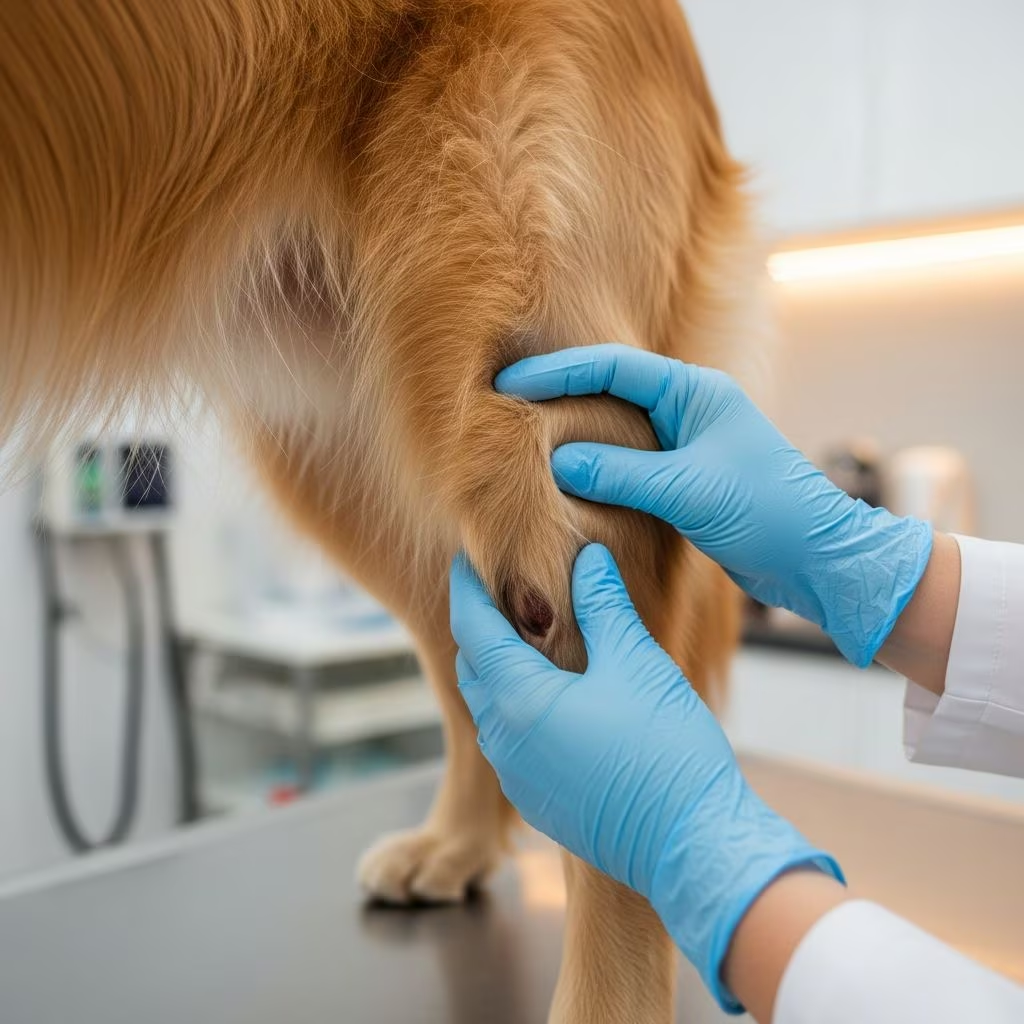
Joint disorders represent a significant health challenge for many dogs, impacting their mobility, comfort, and overall well-being. These conditions range from infectious processes to developmental abnormalities and degenerative changes, often requiring prompt veterinary attention to prevent long-term disability. Recognizing early signs like limping or stiffness can make a substantial difference in outcomes.
Recognizing the Early Warning Signs of Joint Problems
Dogs with joint issues frequently display behavioral and physical changes that alert owners to underlying problems. Common indicators include reluctance to engage in normal activities, such as jumping onto furniture or climbing stairs, alongside visible limping or favoring one limb over others. Swelling around affected areas, increased irritability when touched, and difficulty rising from a resting position are also prevalent. In severe cases, pets may exhibit loss of appetite, fever, or generalized lethargy, signaling systemic involvement.
- Limping or lameness: Often the first noticeable sign, particularly after periods of rest.
- Joint swelling and warmth: Indicates inflammation or infection.
- Stiffness: Especially prominent in the morning or after inactivity.
- Reduced activity levels: Hesitation to play, run, or walk long distances.
- Muscle wasting: Around the affected joint due to disuse.
- Behavioral shifts: Such as whining, aggression, or depression.
Monitoring these symptoms closely allows for timely intervention, potentially halting progression of the disorder.
Infectious Joint Conditions: Septic Arthritis Explained
Septic arthritis occurs when bacteria invade a dog’s joint space, leading to rapid inflammation and tissue damage. This condition typically affects younger dogs or those with wounds near joints, causing acute lameness, pronounced swelling, heat in the joint, fever, and systemic signs like anorexia and lethargy. Diagnosis involves joint fluid analysis to identify pathogens, often confirmed through culture and sensitivity testing.
Treatment demands aggressive measures: systemic antibiotics delivered orally or intravenously for weeks, thorough joint lavage to remove infected material, and sometimes surgical debridement of necrotic tissue. Early intervention yields high success rates, restoring function without residual damage. Neglected cases can lead to chronic pain and osteoarthritis.
Immune-Mediated and Polyarthritis: When the Body Attacks Its Own Joints
Immune-mediated polyarthritis involves the dog’s immune system erroneously targeting multiple joint synovial tissues, resulting in shifting lameness, fever, enlarged lymph nodes, and episodic illness. Breeds like Shar-Peis and Akitas show predisposition. Diagnostic tools include joint taps revealing inflammatory cells, blood work for autoantibodies, radiographs, and biopsies.
Management combines immunosuppressive drugs like corticosteroids with anti-inflammatories. Supportive care addresses dehydration and secondary infections. Prognosis varies; some dogs achieve remission, but relapses necessitate lifelong monitoring and medication adjustments.
Developmental Anomalies: Legg-Calvé-Perthes Disease
Legg-Calvé-Perthes disease primarily strikes small breeds like Yorkshire Terriers and Poodles under a year old, where the femoral head’s blood supply fails, causing bone necrosis, hindlimb lameness, thigh muscle atrophy, and hip pain. Radiographs reveal characteristic bone collapse and remodeling.
Surgical femoral head ostectomy removes the damaged portion, allowing fibrous tissue formation for a pseudo-joint. Postoperative physical therapy promotes limb use and muscle rebuilding. Most dogs regain near-normal function post-recovery.
Osteochondrosis: Cartilage Fragmentation in Growing Dogs
Osteochondrosis dissecans (OCD) affects rapidly growing large-breed puppies, particularly shoulders, elbows, stifles, and hocks. Faulty endochondral ossification leads to cartilage flaps or free fragments (joint mice), provoking lameness, effusion, and crepitus. Diagnosis relies on physical exams and orthogonal radiographs.
| Joint Location | Common Breeds Affected | Prognosis |
|---|---|---|
| Shoulder | Labrador Retriever, German Shepherd | Excellent |
| Stifle | Rottweiler, Great Dane | Good |
| Elbow | Bernese Mountain Dog | Fair |
| Hock | Various large breeds | Fair |
Surgery excises fragments, yielding excellent shoulder outcomes but fairer results elsewhere, especially with concurrent degenerative changes. Adjunctive therapies like NSAIDs and joint protectants aid recovery.
Cruciate Ligament Instability and Ruptures
Cranial cruciate ligament (CCL) tears are ubiquitous in dogs, especially larger ones, stemming from conformational weaknesses, trauma, or degeneration. Partial or complete ruptures cause stifle instability, cranial drawer motion, medial buttress formation, and cranial thigh muscle atrophy. Advanced cases show osteoarthritis.
Conservative management suits small, inactive dogs: weight control, NSAIDs, and rehab. Active or large dogs benefit from stabilizing surgeries like TPLO or TTA, followed by structured physical therapy. Success hinges on early intervention before arthritis advances.
Degenerative Joint Disease: Osteoarthritis Management
Osteoarthritis (OA) is a progressive cartilage erosion affecting most aged dogs, exacerbated by prior injuries or dysplasia. Symptoms evolve slowly: stiffness, exercise intolerance, joint crepitus. Cornell’s Riney Canine Health Center emphasizes multimodal therapy.
- Weight management: Critical to reduce joint load.
- NSAIDs: Carprofen or meloxicam for pain and inflammation.
- Rehabilitation: Underwater treadmill, therapeutic exercises.
- Supplements: Glucosamine, chondroitin, omega-3s.
- Injections: Polysulfated glycosaminoglycans.
Innovative options like cold laser therapy reduce inflammation non-invasively by boosting cellular repair and circulation.
Diagnostic Approaches for Joint Disorders
Veterinarians employ a stepwise process: thorough history and orthopedic exam, followed by imaging (radiographs, CT, MRI), arthrocentesis for cytology and culture, and advanced tests like arthroscopy. Blood panels screen for systemic disease.
Preventive Strategies and Home Care
Prevention focuses on balanced growth in puppies via appropriate diets, avoiding obesity through portion control and exercise, and early screening for at-risk breeds. Home care includes ramps for mobility-impaired dogs, orthopedic bedding, and consistent low-impact activities like swimming.
FAQs on Canine Joint Health
What causes most joint pain in older dogs?
Degenerative osteoarthritis from wear, prior injuries, or conformational issues predominates.
Can joint supplements really help my dog?
Evidence supports glucosamine and omega-3s for symptom relief in mild OA cases.
Is surgery always necessary for CCL tears?
No, conservative care works for some, but surgery improves outcomes in larger dogs.
How do I know if my dog’s limping is joint-related?
Persistent lameness worsening with activity or rest suggests joints; consult a vet for exam.
What breeds are prone to Legg-Calvé-Perthes?
Small toys like Pomeranians, Manchester Terriers.
When to Seek Immediate Veterinary Care
Rush to the vet for sudden severe lameness, non-weight-bearing lameness, swelling with fever, or multiple limb involvement. Delays exacerbate damage.
References
- Joint Pain in Dogs – Signs, Causes & Treatment — Van Roekel & Associates. 2024-05-22. https://www.vanroekelassociates.com/site/blog/2024/05/22/joint-pain-dogs
- Other Joint Disorders in Dogs — Merck Veterinary Manual. Recent update (authoritative veterinary reference). https://www.merckvetmanual.com/dog-owners/bone-joint-and-muscle-disorders-of-dogs/other-joint-disorders-in-dogs
- Joint Pain in Dogs: Signs, Causes & Treatment — Diamond Bar Vet Clinic. 2024-06-15. https://www.diamondbarvetclinic.com/site/blog/2024/06/15/joint-pain-dogs
- Osteoarthritis — Cornell University College of Veterinary Medicine. Recent (2023+ authoritative academic source). https://www.vet.cornell.edu/departments-centers-and-institutes/riney-canine-health-center/canine-health-topics/osteoarthritis



