

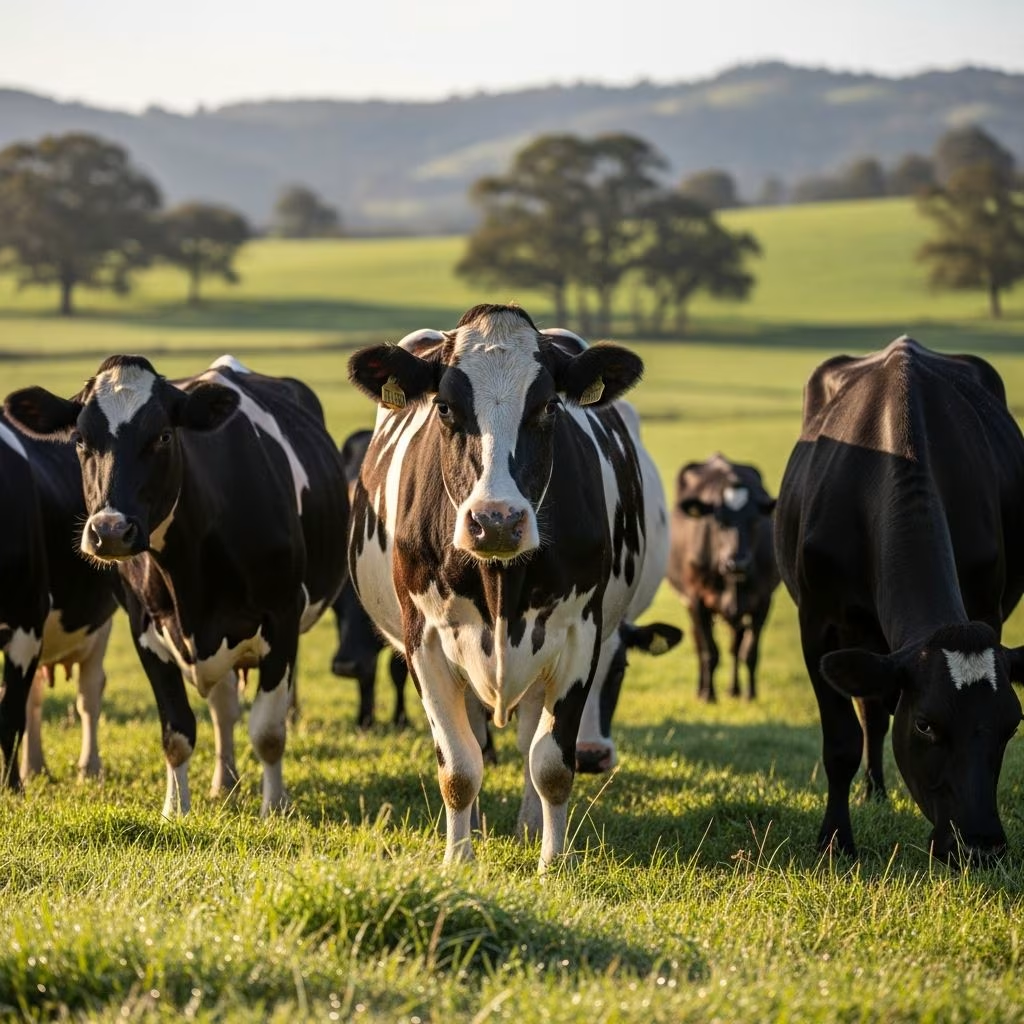
Johne’s disease, scientifically termed paratuberculosis, represents one of the most persistent and economically damaging infections in ruminant populations worldwide. Caused by the resilient bacterium Mycobacterium avium subsp. paratuberculosis (MAP), this condition leads to chronic inflammation of the intestines, resulting in severe weight loss, reduced productivity, and eventual death in affected animals. Primarily impacting cattle, sheep, goats, and other ruminants like deer and camelids, it spreads insidiously through fecal contamination, posing challenges for diagnosis and eradication.
The Nature of the Pathogen Behind Johne’s Disease
MAP is a slow-growing, acid-fast bacterium belonging to the Mycobacterium family, known for its environmental hardiness. It survives for over a year in pastures, longer in water than soil, and resists many disinfectants, making containment difficult. The bacterium thrives intracellularly within host macrophages, evading immune detection for years.
Infection typically occurs early in life via the fecal-oral route. Calves, lambs, or kids ingest MAP from contaminated milk, colostrum, feed, water, or pasture. Subclinically infected adults shed massive quantities of the pathogen in feces, perpetuating herd-level transmission. Intrauterine infection can also happen in advanced cases when bacteremia disseminates MAP systemically.
How Infection Progresses in Ruminant Hosts
Upon ingestion, MAP targets Peyer’s patches in the lower small intestine, where it invades macrophages. These infected cells multiply slowly, leading to granulomatous inflammation that thickens intestinal walls and impairs nutrient absorption. Clinical disease emerges 2-5 years post-infection, often triggered by stress like calving or lactation.
Three infection stages define progression:
- Silent Shedder Phase: Animals appear healthy but shed MAP in feces, milk, and colostrum, spreading infection unnoticed.
- Subclinical Phase: Subtle signs like reduced milk yield or slight weight loss appear, with increasing fecal shedding.
- Clinical Phase: Profound emaciation, diarrhea (in cattle), and debilitation lead to death from cachexia and dehydration.
Age resistance develops post-weaning, but no animal is fully immune. Herds introduce MAP via carrier animals, amplifying prevalence.
Recognizing Clinical Manifestations Across Species
Symptoms vary by species, but progressive wasting despite normal appetite is universal. In dairy cattle, initial signs include declining milk production, rough coat, and intermittent diarrhea without blood, mucus, or straining. Advanced cases show profuse, watery diarrhea, extreme thinness, and death within months.
Sheep and goats often lack diarrhea, instead exhibiting exercise intolerance, trailing the flock, bottle jaw (submandibular edema), wool loss, and anemia. Cervids may suffer outbreaks even in young animals, with rapid emaciation.
| Species | Key Symptoms | Diarrhea Presence | Other Notes |
|---|---|---|---|
| Cattle | Weight loss, low milk yield | Common, profuse | Emaciation, dehydration |
| Sheep/Goats | Trailing flock, bottle jaw | Rare, soft feces | Wool loss, anemia |
| Camelids/Deer | Emaciation, weakness | Variable | Outbreaks possible |
Post-mortem reveals thickened, corrugated intestines (ileum prominent), enlarged mesenteric lymph nodes, serosal lymphangitis, and granulomas with acid-fast bacteria. Sheep may show caseous, calcified foci.
Diagnostic Approaches for Accurate Detection
Diagnosing Johne’s is complex due to prolonged subclinical periods and variable shedding. No single test is definitive; a multimodal strategy is essential.
- Serology (ELISA): Detects antibodies; high sensitivity for clinical cases but misses early infections.
- Fecal Culture/PCR: Gold standard for shedding confirmation. PCR offers speed (days vs. months for culture).
- Tissue Examination: Necropsy with histopathology and Ziehl-Neelsen staining reveals MAP in macrophages.
- Milk/Environmental Testing: Monitors herd-level prevalence.
Herd profiling via pooled samples aids risk assessment. Test-negative culling interprets results cautiously due to false negatives.
Management and Prevention Strategies
No cure exists; treatment attempts fail due to MAP’s intracellular persistence. Control focuses on biosecurity, calf management, and test-based culling.
- Calving Hygiene: Isolate calving areas; feed MAP-free colostrum/milk.
- Pasture Management: Avoid grazing young stock on contaminated fields; rotate pastures >1 year.
- Herd Testing/Culling: Annually test adults; cull positives and offspring.
- Vaccination: Limited efficacy; reduces shedding but not infection. Use in high-risk herds.
- Quarantine New Stock: Test before introduction.
Voluntary programs like USDA’s Johne’s Control emphasize risk assessment and phased reduction. Economic losses from milk drop (up to 20%) and culling underscore prevention’s value.
Economic Impact on Livestock Operations
Johne’s erodes profitability through decreased productivity, premature culling, and control costs. In dairy herds, infected cows yield 10-20% less milk; beef operations face carcass weight losses. Prevalence in US herds exceeds 20% in some regions, costing billions annually.
Small ruminant impacts include wool quality decline and lambing failures, compounding losses in integrated operations.
Zoonotic Concerns and Public Health Links
Debate persists on MAP’s role in Crohn’s disease, a human inflammatory bowel condition. PCR detects MAP in Crohn’s tissues more often than controls, and its primate infections suggest zoonotic potential. Pasteurization kills MAP in milk, but underpasteurized products pose risks. Ongoing research clarifies links; prudence advises consumption safeguards.
Non-ruminant reports (pigs, horses, rabbits) show granulomatous lesions, broadening concerns.
Frequently Asked Questions (FAQs)
What causes Johne’s disease?
Johne’s is caused by Mycobacterium avium subsp. paratuberculosis (MAP), ingested via contaminated feces, milk, or environment.
Can Johne’s be cured?
No effective treatment exists; management relies on prevention and culling.
How do I test my herd for Johne’s?
Use fecal PCR, serum ELISA, or environmental sampling; consult a vet for protocols.
Is Johne’s contagious to humans?
Potential zoonotic link to Crohn’s disease under investigation; cook meat, pasteurize milk.
How can I prevent Johne’s in my farm?
Practice strict hygiene, test/cull, manage manure, and source clean replacements.
Future Directions in Johne’s Research
Advances include improved diagnostics (e.g., rapid PCR), novel vaccines targeting cell-mediated immunity, and genomics for strain tracking. Integrated programs combining AI-driven risk modeling promise better control. Global collaboration via WOAH enhances surveillance.
References
- Paratuberculosis (Johne’s Disease) — Center for Food Security and Public Health, Iowa State University. 2017-10. https://www.cfsph.iastate.edu/Factsheets/pdfs/paratuberculosis.pdf
- Paratuberculosis in Ruminants — Merck Veterinary Manual. 2023. https://www.merckvetmanual.com/digestive-system/intestinal-diseases-in-ruminants/paratuberculosis-in-ruminants
- Paratuberculosis — World Organisation for Animal Health (WOAH). 2023. https://www.woah.org/en/disease/paratuberculosis/
- Johne’s Module Overview — Cornell University Animal Health Diagnostic Center. 2023. https://www.vet.cornell.edu/animal-health-diagnostic-center/programs/nyschap/modules-documents/johnes-module-overview
- Johne’s Disease in Livestock — USDA APHIS. 2023. https://www.aphis.usda.gov/livestock-poultry-disease/cattle/johnes
- Paratuberculosis (Johne’s Disease) — Colorado Department of Agriculture. 2023. https://ag.colorado.gov/animals/livestock-health/paratuberculosis-johnes-disease



