

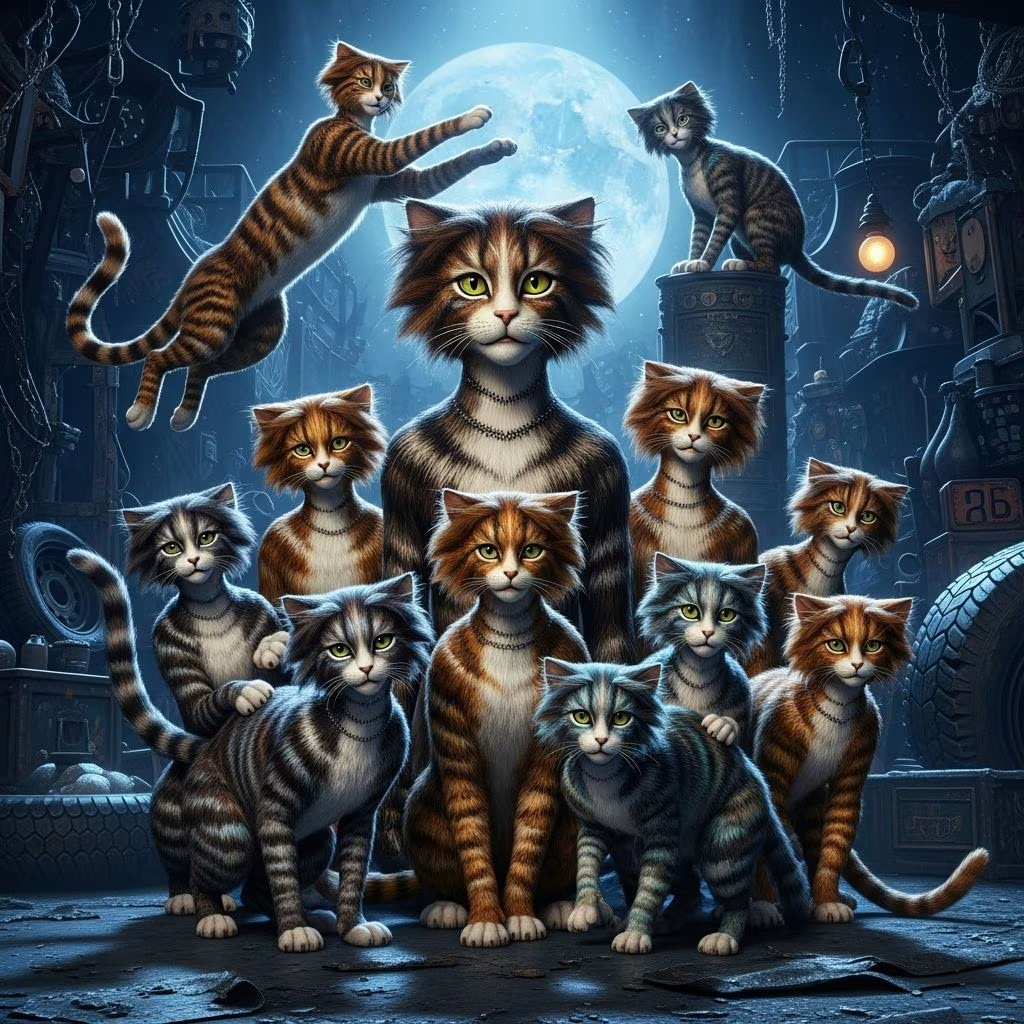
Jellicle Cats represent a whimsical creation from early 20th-century literature, evolving into cultural icons through theater and media. Originating in T.S. Eliot’s playful poetry, these fictional felines embody mystery, nocturnality, and communal celebration, captivating audiences worldwide.
The Literary Birth of Jellicle Cats
The term “Jellicle Cat” first appeared in T.S. Eliot’s 1933 collection Five-Finger Exercises, within the poem “Lines to a Yorkshire Terrier.” Here, Eliot introduced Jellicle Cats alongside Pollicle Dogs, portraying them as scruffy, black-and-white creatures full of friendly charm. Scholars suggest “Jellicle” derives from a playful twist on “dear little cat,” mirroring “Pollicle” as “poor little dog.” An alternative theory links it to Eliot’s own cat, Jellylorum, with his secretary confirming in 1959 that descriptions drew from this pet’s antics.
Building on this, Eliot expanded the concept in 1939’s Old Possum’s Book of Practical Cats. The poem “The Song of the Jellicles” paints these cats as moderate-sized, tuxedo-patterned beings with moonlit eyes. They spend days in quiet repose, washing meticulously behind ears and between toes, only to unleash terpsichorean—dance-like—energy under the Jellicle Moon at their annual ball. This nocturnal gathering highlights their joyful, acrobatic nature, jumping like jacks and gathering for communal festivities.
Traits and Behaviors of Jellicle Cats
- Nocturnal Revelers: Active primarily at night, reserving energy for the Jellicle Ball.
- Appearance: Typically black-and-white with bright, luminous eyes suited for moonlit dances.
- Habits: Meticulous groomers who nap by day and perform elaborate routines after dark.
- Social Structure: Part of a tribe led by the wise Old Deuteronomy, engaging in storytelling and selection rituals.
These attributes blend everyday cat behaviors with fantastical elements, making Jellicle Cats endearing yet otherworldly.
From Page to Stage: The Cats Musical Phenomenon
Andrew Lloyd Webber transformed Eliot’s poems into the 1981 musical Cats, premiering in London before conquering Broadway. The production centers on the Jellicle tribe assembling at the Jellicle Ball, where Old Deuteronomy selects one cat for rebirth via the Heaviside Layer—a metaphor for renewal. Songs like “The Song of the Jellicles” are performed verbatim, while diverse characters showcase varied coats and personalities, diverging from Eliot’s monochrome vision.
The show’s success lies in its choreography by Gillian Lynne, emphasizing feline grace and athleticism. Cast members, including Elaine Paige, discussed how Jellicle Cats embody a special feline society, distinct yet universal. Revivals like Cats: The Jellicle Ball (Broadway, recent years) reimagine it as an LGBTQ+ vogue ball, blending Eliot’s legacy with ballroom culture’s competitive dance and fashion.
| Aspect | Eliot’s Poems | Cats Musical |
|---|---|---|
| Appearance | Black-and-white, scruffy | Diverse colors, stylized costumes |
| Key Event | Jellicle Ball (gathering) | Jellicle Ball (selection for rebirth) |
| Leader | Not specified | Old Deuteronomy |
| Purpose | Celebratory dance | Communal stories, renewal ritual |
This evolution amplified Jellicle Cats’ appeal, turning poetry into a global spectacle.
Cultural Ripples and Modern References
Beyond theater, Jellicle Cats permeated pop culture. The 1976 film Logan’s Run (dated around 1986 in some references, but originally 1976) features characters purchasing Jellicle Cats, embedding the term in sci-fi lore. In 2017, Faber and Faber released an illustrated edition of “The Song of the Jellicles,” reviving the poem for new readers. Madame Tussauds New York installed wax figures of Jellicle characters like Grizabella since 2019, immortalizing them.
Fan theories abound: some posit all cats are Jellicles; others see them as an elite tribe with magical intellect amid ordinary felines; or one of many cat clans paralleling dog breeds like Pekes and Pollicles. Recent productions like Cats: The Jellicle Ball infuse voguing, honoring 1960s ballroom origins by Black and Latino LGBTQ+ communities, with icons like emcee Willie Ninja (as Gus) bridging eras.
Jellicle Cats in Real-World Rescue Efforts
The Jellicle Cats Rescue Foundation, a 501(c)(3) nonprofit in Long Beach, California, channels this legacy into action. Focused on Trap-Neuter-Release (TNR) programs, they curb stray cat overpopulation, promote responsible ownership, and facilitate adoptions. Their work addresses feline homelessness, echoing the communal spirit of Eliot’s tribe.
Volunteers trap ferals humanely, sterilize them, and release back to colonies, vaccinating and monitoring health. Education campaigns highlight spaying/neutering’s role in reducing euthanasia rates. Adopters find healthy, socialized cats, while resources aid those unable to commit fully.
Debunking Myths: No Official Breed Exists
Despite their fame, no recognized cat breed bears the Jellicle name. Tuxedo cats—black with white chests, paws, and faces—most resemble Eliot’s descriptions, but Jellicles remain fictional. Future breeders might honor the legacy, but today, they live in imagination and art.
Why Jellicle Cats Endure
Jellicle Cats symbolize joy, community, and transformation. From Eliot’s lighthearted verses to Webber’s dance extravaganza, they unite literature and performance. Their adaptability—spanning musicals, films, rescues, and voguing—ensures relevance. Whether dancing under a full moon or inspiring real aid, Jellicles remind us of felines’ enchanting allure.
Frequently Asked Questions
What defines a Jellicle Cat?
Jellicle Cats are fictional, nocturnal, black-and-white felines from T.S. Eliot’s poems, known for dancing at the Jellicle Ball.
Where did the term originate?
First in Eliot’s 1933 Five-Finger Exercises, expanded in 1939’s Old Possum’s Book.
Are Jellicle Cats in the Cats musical?
Yes, the entire tribe stars, gathering for Old Deuteronomy’s choice of rebirth.
Is there a Jellicle cat breed?
No, they are not a real breed but inspire tuxedo cat admiration.
How do Jellicle Cats relate to real rescues?
The Jellicle Cats Rescue Foundation uses TNR to help strays, honoring the name.
References
- Jellicle Cats – ‘Cats’ Musical Wiki – Fandom — Cats Musical Fandom. Accessed 2026. https://catsmusical.fandom.com/wiki/Jellicle_Cats
- What Is a Jellicle Cat? History & Explanation – Catster — Catster. Accessed 2026. https://www.catster.com/lifestyle/what-is-a-jellicle-cat/
- Jellicle – Sesquiotica — Sesquiotic.com. 2019-12-19. https://sesquiotic.com/2019/12/19/jellicle/
- The real history behind ‘Cats: The Jellicle Ball’ on Broadway — New York Theatre Guide. Recent. https://www.newyorktheatreguide.com/theatre-news/news/the-real-history-behind-cats-the-jellicle-ball-on-broadway
- What is a Jellicle Cat? – Behind the Scenes | Cats the Musical — YouTube (Andrew Lloyd Webber channel). Accessed 2026. https://www.youtube.com/watch?v=WPn2IcGNtW8
- The Origins of CATS — Andrew Lloyd Webber Official Site. Accessed 2026. https://www.andrewlloydwebber.com/news/the-origins-of-cats



