

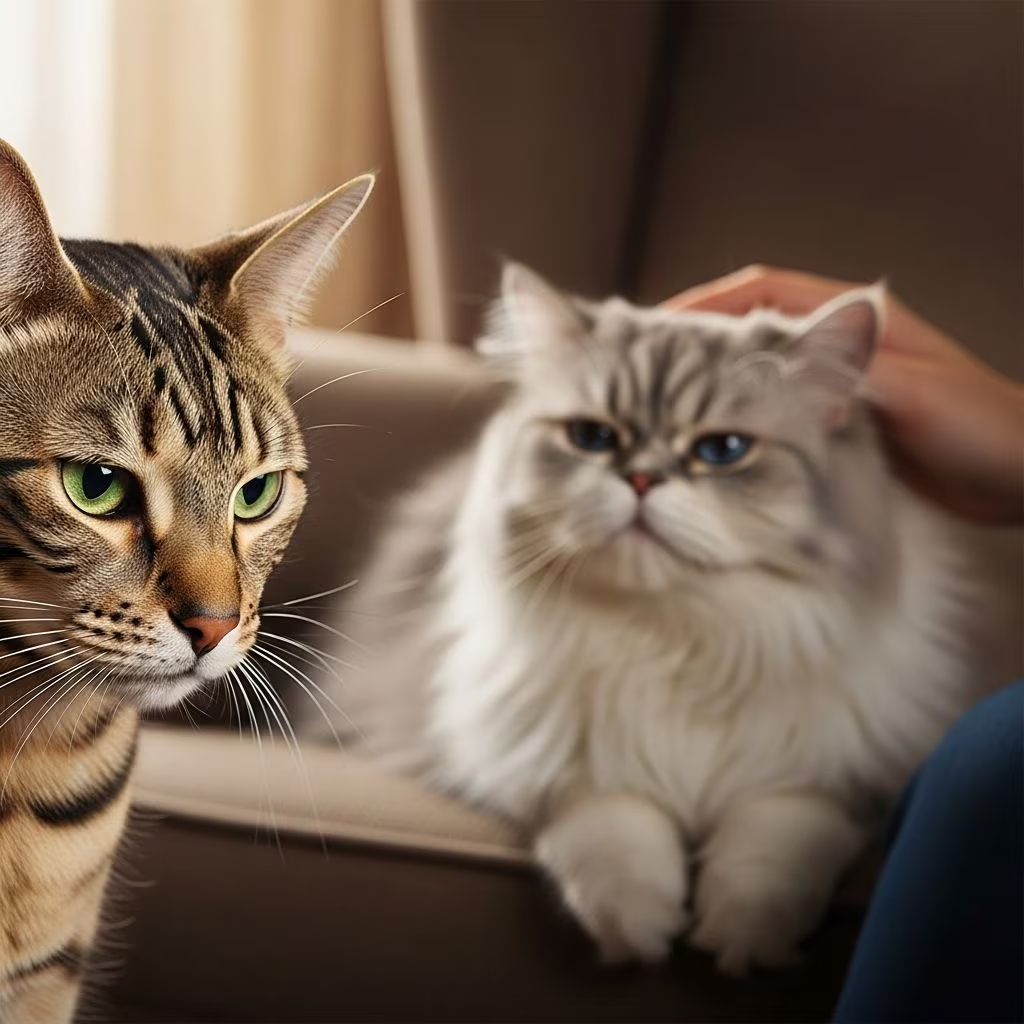
Cats are often seen as independent creatures, but many pet owners notice changes in behavior when new family members—whether human babies, other pets, or even a partner’s attention—enter the picture. These shifts can resemble human jealousy, prompting questions about whether cats truly feel this complex emotion. While cats don’t process jealousy exactly like humans, research and veterinary observations show they exhibit stress responses, territorial instincts, and resource-guarding behaviors that mimic jealousy when their routines or social status are disrupted.
Understanding these behaviors is crucial for multi-pet households or families with frequent changes. Cats thrive on predictability, and disruptions can lead to anxiety-driven actions. This article delves into the science behind feline “jealousy,” identifies key signs and triggers, differentiates it from other issues, and provides actionable strategies to help your cat adjust.
Do Cats Really Experience Jealousy?
The concept of jealousy in cats stems from observable behaviors similar to those in humans, such as monitoring rivals, increased agitation, and attempts to reclaim attention or resources. Veterinary behaviorists note that while cats lack the cognitive complexity for human-like romantic jealousy, they display possessiveness rooted in evolutionary instincts for territory and survival.
Studies on animal emotions suggest cats feel a form of resource-based jealousy, triggered by competition for food, space, or affection. For instance, when a cat sees another receiving treats or lap time, it may react with stress signals, interpreting it as a threat to its bond with the owner. This isn’t baseless anthropomorphism; behaviors align with anxiety, fear, and territorial defense observed in peer-reviewed animal behavior research.
Unlike dogs, whose pack mentality fosters clearer social hierarchies, cats are more solitary by nature. However, domesticated cats form strong attachments, making shifts in owner attention particularly disruptive. Lack of early socialization exacerbates this, leading to possessive displays.
Signs of Jealousy in Cats
Jealous cats don’t sulk silently; they communicate distress through overt actions. Common indicators include:
- Aggression: Hissing, growling, swatting, or biting at perceived rivals—new pets, babies, or even owners petting others.
- Attention-seeking: Physically inserting themselves between you and the “rival,” like jumping on your lap during a video call or blocking doorways.
- Destructive behavior: Scratching furniture, knocking items over, or turning on faucets as stress outlets.
- Excessive vocalizing: Loud meowing, yowling, or chattering to demand attention or express frustration.
- Marking territory: Inappropriate urination or spraying outside the litter box to reclaim spaces.
- Withdrawal or overgrooming: Hiding, excessive licking leading to bald spots, or clinginess as coping mechanisms.
These signs often cluster during environmental changes. A table summarizing behaviors and interpretations can help owners spot patterns:
| Behavior | Possible Meaning | Example |
|---|---|---|
| Hissing/Swatting | Territorial defense | Swatting a new puppy approaching the food bowl |
| Blocking paths | Attention reclamation | Sitting on your keyboard while you work |
| Litter avoidance | Stress protest | Eliminating outside box near owner’s bed |
| Increased meowing | Seeking reassurance | Yowling when you hold another pet |
| Overgrooming | Anxiety response | Bald patches from stress licking |
If multiple signs appear suddenly, rule out medical issues first, as pain can amplify reactivity.
Common Triggers for Jealousy in Cats
Jealousy rarely arises in isolation; it’s sparked by disruptions to a cat’s stable world. Primary triggers include:
- New pets: Introducing another cat, dog, or small animal challenges territory and resources, prompting competition.
- New babies or children: Infants demand time and change routines; unfamiliar kids can seem threatening.
- Shifts in owner attention: Work-from-home distractions, new relationships, or favoring another pet reduce lap time.
- Routine changes: Moving, remodeling, or schedule alterations like longer work hours unsettle cats.
- Resource scarcity: Insufficient litter boxes, food stations, or play areas in multi-cat homes fuel rivalry.
Cats with poor socialization or past traumas are more prone. Health limitations, like arthritis preventing bed access, can also mimic jealousy as frustration builds.
Types of Jealousy or Aggression in Cats
Cat behavior experts classify jealousy-related aggression into categories:
- Status-induced aggression: Cats asserting dominance, blocking furniture, staring aggressively, or spraying items linked to rivals. Common in uncertain hierarchies.
- Resource guarding: Protecting food, toys, or humans; biting if interrupted during petting.
- Fear-based reactivity: From big changes like moves or new roommates, leading to impulse control issues.
Genetic factors and overcrowding amplify these, especially in multi-pet setups.
Health Issues Mimicking Jealousy
Not all “jealous” behaviors stem from emotions. Underlying conditions like hyperthyroidism, urinary tract infections, or pain from arthritis can cause aggression, vocalizing, or litter avoidance. An older cat unable to join family cuddles may lash out from frustration. Always consult a vet for bloodwork and exams before assuming behavioral causes.
How to Help a Jealous Cat
Managing jealousy requires patience, consistency, and environmental tweaks:
- Gradual introductions: Use baby gates or separate rooms for new pets; swap scents before meetings.
- Enrich the environment: Provide multiple resources—litter boxes (one per cat +1), vertical spaces, toys—to reduce competition.
- Schedule one-on-one time: Daily play sessions and affection exclusively for the jealous cat rebuild security.
- Use calming aids: Pheromone diffusers (Feliway), puzzle feeders, or vet-recommended supplements ease anxiety.
- Positive reinforcement: Reward calm behavior; ignore demands to avoid reinforcing them.
- Professional help: Certified behaviorists for persistent cases; medication if anxiety is severe.
Track progress with a journal. Improvements often appear in 2-4 weeks with consistency.
Frequently Asked Questions (FAQs)
Do cats get jealous of babies?
Yes, the cries, smells, and attention shift to a baby can stress cats, leading to avoidance or aggression. Prepare with scent familiarization and safe zones.
Why is my cat aggressive toward my new dog?
Territorial instincts kick in; slow intros, separate resources, and training help integrate them.
Can jealousy cause litter box issues?
Absolutely—stress prompts avoidance or marking. Add boxes and clean daily.
How long does cat jealousy last?
With intervention, 1-4 weeks; chronic cases need expert input.
Is cat jealousy permanent?
No, most resolve with management; early socialization prevents it.
References
- Do Cats Get Jealous? Understanding Cat Behavior & Emotions — Purina. 2023-05-15. https://www.purina.com/articles/cat/behavior/understanding-cats/do-cats-get-jealous
- How I’m Managing a Jealous Cat in My Multi-Cat Home — Petful. 2022-11-10. https://www.petful.com/behaviors/cats-jealous-of-each-other/
- Vet’s 2025 Guide: Do Cats Get Jealous? — Ask A Vet. 2025-01-01. https://askavet.com/blogs/news/vet-s-2025-guide-do-cats-get-jealous-%F0%9F%90%B1
- Do Cats Get Jealous? Exploring Feline Emotions and Social Dynamics — Kinship. 2024-03-20. https://www.kinship.com/cat-behavior/jealousy-in-cats
- Do Cats Get Jealous? — WebMD. 2023-08-12. https://www.webmd.com/pets/cats/do-cats-get-jealous
- 9 Signs Your Pet Is Jealous (and How to Stop It) — PetMD. 2024-06-05. https://www.petmd.com/dog/behavior/9-signs-your-pet-jealous-and-how-stop-it
- How to Identify and Fix Jealous and Aggressive Behavior in Cats — Neater Pets. 2023-09-18. https://neaterpets.com/blogs/news/identify-fix-jealous-aggressive-behavior-cats-dogs



