

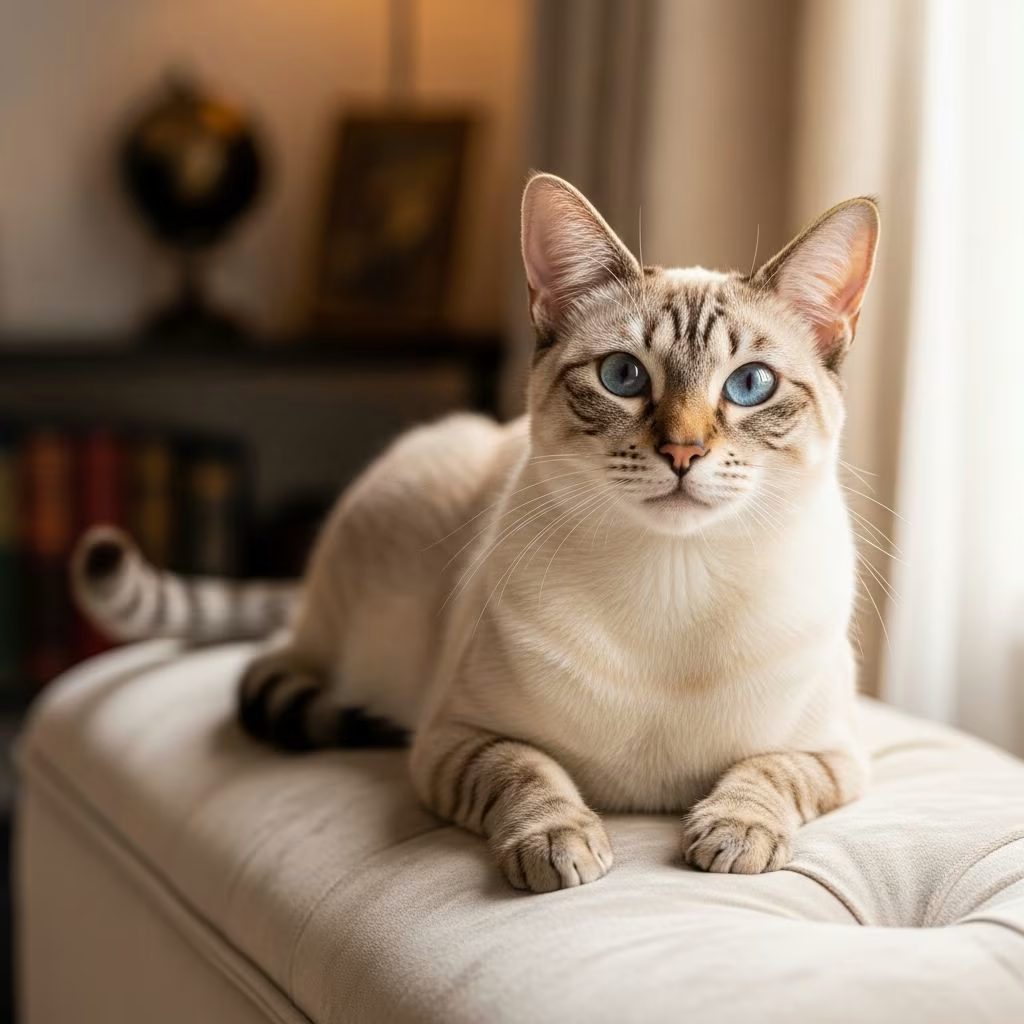
The Javanese cat stands out as a captivating blend of grace and vibrancy among feline companions. Developed in North America, this breed combines the sleek elegance of Siamese lineage with a luxurious semi-long coat in an array of non-traditional colors, making it a favorite for those seeking a lively, affectionate pet.
Origins and Development of the Breed
Despite its evocative name suggesting tropical islands, the Javanese cat has no direct ties to Java. Breeders in the United States and Canada crafted this variety in the 1970s by crossing Balinese cats with Colorpoint Shorthairs, aiming to produce longhaired cats with expanded color palettes beyond the classic Siamese points. The name ‘Javanese’ emerged from its proximity to Bali on a map, honoring its Balinese roots while distinguishing its unique traits.
The Cat Fanciers’ Association (CFA) initially recognized the Javanese as a distinct breed in 1979 for registration, granting provisional status in 1984 and full championship in 1986. Today, the CFA classifies it as a division of the Balinese, encompassing cats with lynx, tabby, tortoiseshell, or red/cream points that deviate from traditional Balinese seal, blue, chocolate, or lilac solids. Other registries vary: some merge it with Colourpoint categories or equate it to Oriental Longhairs, highlighting ongoing classification nuances.
Early development involved outcrossing to Siamese, Colorpoint Shorthairs, and Balinese for diversity, with limited Oriental Longhair crosses permitted until 2025 under current CFA rules. This man-made evolution underscores the breed’s youth relative to ancient natural breeds, prioritizing aesthetic innovation and personality retention from Siamese ancestors.
Distinctive Physical Characteristics
Javanese cats embody an athletic oriental physique: slender, muscular frames with fine boning, long necks, and elongated bodies measuring small to medium in size. Males typically weigh 8-12 pounds, occasionally up to 16, while females are slightly lighter, with a balanced, poised stance. Their legs are slender and longer in the rear, supporting exceptional jumping ability to reach high perches like refrigerators or door tops.
The head forms a modified wedge shape with large, pointed ears that lend an alert, elf-like expression. Striking blue eyes provide a hallmark contrast against varied coat colors. The tail is a standout feature—long, tapering to a plush plume that sways expressively.
Coat Varieties and Patterns
Unlike short-haired Javanese island cats, this breed boasts a medium-long, silky single coat that lies flat against the skin, minimizing matting and shedding compared to double-coated longhairs. Colorpoint patterns prevail: lighter bodies with darker masks, ears, paws, and tails. The CFA recognizes 24 combinations beyond Balinese basics, including lynx (tabby) points, cream, red, tortoiseshell, blue-cream, and exotic mixes like cinnamon-tortie lynx.
| Color Category | Examples | Distinct Features |
|---|---|---|
| Lynx/Tabby Points | Seal lynx, blue lynx | Striped or spotted patterns on points |
| Tortoiseshell Points | Tortie point, blue-cream | Mottled black, red, cream blends |
| Solid Non-Traditional | Red point, cream point | Uniform vibrancy on extremities |
| Exotic Combinations | Cinnamon-tortie lynx | Rare, warm-toned mixes |
This diversity satisfies varied aesthetic preferences, with the coat’s sleek drape enhancing the cat’s lithe silhouette.
Temperament and Behavioral Traits
Javanese cats shine in personality, inheriting Siamese’s intelligence, playfulness, and sociability. Highly active and curious, they thrive on interaction, often shadowing owners, leaping into activities, and vocalizing demands with a melodic meow. Their chatter isn’t random; perceptive felines seem to ‘respond’ to human speech, fostering deep bonds.
- Affectionate Companions: They crave lap time, purring contentedly during pets but alternating with high-energy antics.
- Playful Athletes: Expert hunters of mice or toys, they excel at tricks, fetches, and vertical exploration, necessitating cat trees and perches.
- Social Butterflies: Best in households with attention; isolation breeds depression, making them ideal for families or multi-pet homes.
- Vocal Enthusiasts: Persistent meowing signals hunger, boredom, or affection—embrace the symphony or reconsider quiet breeds.
While loving, their energy demands engagement; understimulated Javanese may climb curtains or ‘hunt’ inappropriate items. Early training leverages their smarts for harmonious living.
Health and Wellness Considerations
As a hybrid breed, Javanese inherit potential issues from Siamese/Balinese lines, though selective breeding mitigates risks. Common concerns include:
- Amyloidosis: Protein deposits in organs, more prevalent in related breeds; regular vet checks aid early detection.
- Dental Disease: Oriental cats prone to gingivitis; daily brushing prevents progression.
- Hypertrophic Cardiomyopathy (HCM): Heart thickening; screenings recommended, especially in breeding lines.
- Progressive Retinal Atrophy (PRA): Vision loss; genetic testing available.
With lifespans of 12-16 years, proactive care extends vitality. Maintain lean weight via portion control and activity, as their slender build hides overeating tendencies. Annual exams, vaccinations, and dental cleanings are essential.
Grooming and Daily Maintenance
The single coat requires minimal upkeep: weekly brushing distributes oils, reduces loose hair, and bonds with your cat. Bathe rarely, as they self-groom efficiently. Trim nails biweekly, clean ears monthly, and brush teeth daily with pet-safe paste.
Provide high-quality diet balancing proteins, taurine for heart/eye health, and omega-3s for coat sheen. Fresh water, litter training, and environmental enrichment like scratching posts complete routines.
Bringing a Javanese into Your Home
Acquire from CFA-registered breeders emphasizing health testing. Kittens thrive post-12 weeks; introduce gradually to homes. Budget $800-$2000, plus ongoing costs for food, vetting, and toys. Suited for apartments with vertical space, not ideal for aloof owners.
Multi-cat households flourish if introductions are supervised; their dog-like loyalty extends to compatible pets.
Frequently Asked Questions
Are Javanese cats hypoallergenic?
No breed is truly hypoallergenic, but Javanese shed less than double-coated longhairs due to single coats, potentially suiting mild allergies.
How vocal are Javanese cats?
Very; expect frequent, Siamese-like meows for attention or play.
Do Javanese cats get along with dogs?
Often yes, their social nature adapts well to gentle dogs with proper intros.
What’s the average lifespan of a Javanese cat?
12-16 years with excellent care.
Can Javanese cats be left alone all day?
Not ideally; they need interaction to prevent boredom.
Ideal Living Environment
Javanese flourish in stimulating spaces with heights to conquer and toys to chase. Interactive feeders, window perches, and puzzle toys match their intellect. They adapt to travel if acclimated early.
References
- Javanese cat – Wikipedia — Wikipedia. 2023-10-15. https://en.wikipedia.org/wiki/Javanese_cat
- 10 Fascinating Facts About the Javanese Cat — Rover.com. 2023. https://www.rover.com/blog/javanese-cat/
- Javanese Cat Facts — ASPCA Pet Health Insurance. 2024-01-10. https://www.aspcapetinsurance.com/resources/javanese-cat-facts/
- Javanese Cat Guide — Scrumbles. 2023-05-20. https://scrumbles.co.uk/blogs/guides/javanese-cat-guide
- Javanese Cat Breed — Hill’s Pet Nutrition. 2024. https://www.hillspet.com/cat-care/cat-breeds/javanese
- Javanese | VCA Animal Hospitals — VCA Hospitals. 2023-11-05. https://vcahospitals.com/animal-specialty-emergency/know-your-pet/cat-breeds/javanese



