

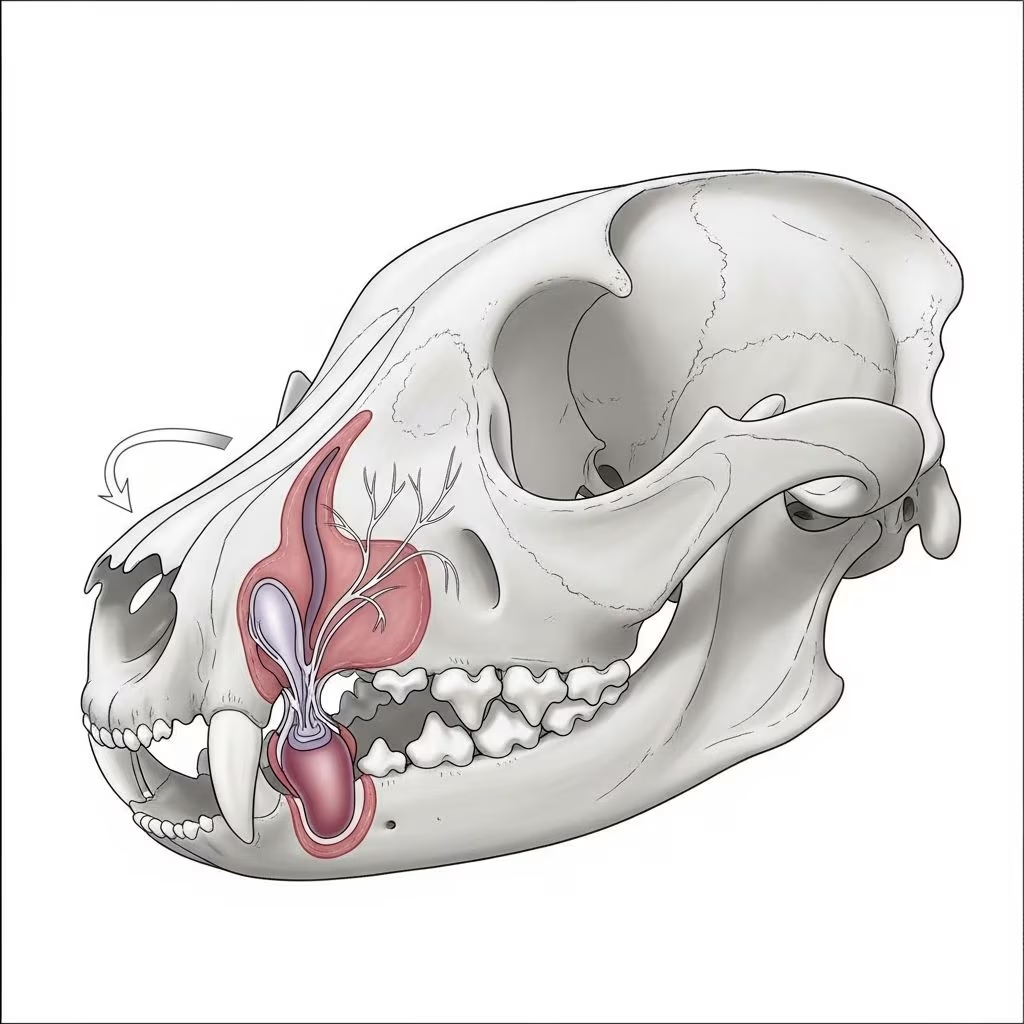
The vomeronasal organ, commonly called **Jacobson’s organ**, equips dogs with a specialized sensory tool that goes beyond everyday sniffing. This paired structure in the nasal cavity detects chemical signals like pheromones, influencing everything from mating to social interactions.
Anatomy and Location of the Vomeronasal Organ
Nestled in the roof of a dog’s mouth, Jacobson’s organ lies near the vomer bone and palatine processes of the incisive and maxillary bones. It forms a tubular, C-shaped pair separated by the nasal septum, with an entrance via the nasopalatine duct behind the upper incisors.
The organ’s interior features a lumen lined with pseudostratified epithelium, including receptor, supporting, and basal cells. These cells capture semiochemicals—molecules too large or subtle for standard olfactory detection.
- Key structural elements: Paired tubes, sensory epithelium, direct nerve pathways to the brain’s accessory olfactory bulb.
- Size and visibility: High-resolution MRI reveals its shape in live dogs, measuring millimeters in length.
Unlike humans, where this organ is vestigial, dogs retain a fully functional version, underscoring their evolutionary edge in chemical communication.
How Jacobson’s Organ Processes Pheromones
This organ specializes in pheromones, non-volatile chemicals signaling reproductive status, territory, or stress. Sensory neurons here differ from nasal olfactory cells, linking to the hypothalamus for instinctual responses like mating urges or emotional bonding.
When a dog encounters pheromones, they enter via the mouth or nose. The organ’s V1R and V2R receptors bind these molecules, triggering signals independent of the main olfactory system. This dual pathway creates nuanced scent interpretation.
| Standard Olfactory System | Jacobson’s Organ (VNO) |
|---|---|
| Detects volatile odors (e.g., food, danger) | Detects non-volatile pheromones |
| Connects to olfactory bulb | Connects to accessory olfactory bulb and amygdala |
| Processes conscious smells | Drives subconscious behaviors (mating, aggression) |
Such separation allows dogs to multitask scents, combining environmental awareness with social cues.
Everyday Behaviors Linked to Jacobson’s Organ
Dogs activate this organ through the flehmen response: curling upper lips, flaring nostrils, and holding mouths open to channel scents. Owners spot this during investigations of urine, other dogs, or novel objects.
- Social sniffing: Analyzes pack hierarchy, health, and fertility via pheromones.
- Territorial marking: Responds to competitors’ signals.
- Maternal instincts: Puppies use it to locate milk and identify mothers amid scents.
In detection work, like search-and-rescue or drug sniffing, this organ enhances precision for human-scent trails or explosives laced with pheromonal traces.
Evolutionary Role in Canine Survival
Jacobson’s organ evolved for species-specific communication, vital in wild canids for reproduction and pack cohesion. Domestic dogs inherit this, adapting to human environments while retaining instincts.
Studies show it processes semiochemicals for gustation too, blending taste and smell in ways humans can’t fathom. This aids food selection, rejecting spoiled items via chemical red flags.
Imaging and Studying the Organ in Live Dogs
Recent MRI advancements visualize Jacobson’s organ in vivo using submillimeter 3D T1-FFE sequences. Scans of eight dogs detailed its morphology, opening doors to non-invasive research.
Future fMRI on awake dogs could link organ activity to behaviors like anxiety or aggression, correlating with breed, age, or neuter status.
Health Implications and Potential Disorders
Like other tissues, the vomeronasal organ can suffer inflammation or degeneration, as seen in related species. Symptoms might include altered sniffing, aggression changes, or mating disinterest.
Veterinarians note possible ties to behavior disorders; imaging aids diagnosis. Maintaining oral health prevents duct blockages, preserving function.
- Risk factors: Dental disease, infections, aging.
- Prevention: Regular vet checkups, dental care.
Jacobson’s Organ Across Dog Breeds and Ages
Scent hounds like Bloodhounds boast amplified versions, aiding tracking. brachycephalic breeds may have reduced access due to skull structure, yet function persists.
Puppies rely heavily post-birth for nursing; adults integrate it lifelong. Spaying/neutering alters pheromone production but not organ presence.
Comparing Canine and Feline VNO Functions
| Feature | Dogs | Cats |
|---|---|---|
| Location | Roof of mouth, nasal septum | Similar, more elongated |
| Primary use | Social/reproductive pheromones | Stronger in urine marking |
| Flehmen response | Common in males | Exaggerated lip curl |
Dogs emphasize pack dynamics; cats focus on territory.
Practical Tips for Dog Owners
Observe flehmen to gauge curiosity or stress. Use pheromone diffusers mimicking calming signals to soothe anxious pets, leveraging this sensory pathway.
Enrich environments with scent games: hide treats or use puppy pads with natural odors to stimulate the organ safely.
Future Research Directions
Ongoing studies probe VNO’s role in disorders like fear aggression. Higher-res MRI and behavioral assays promise breakthroughs in training and therapy.
Frequently Asked Questions (FAQs)
What exactly is Jacobson’s organ in dogs?
A paired vomeronasal structure detecting pheromones for social and reproductive cues, located in the nasal cavity roof.
How do dogs use Jacobson’s organ?
Via flehmen response to analyze scents subconsciously, influencing mating, bonding, and territory.
Can Jacobson’s organ be imaged in living dogs?
Yes, high-resolution MRI visualizes it clearly, aiding health assessments.
Does neutering affect this organ?
It reduces pheromone production but leaves the organ intact and functional.
Why do dogs curl their lips when sniffing?
This flehmen activates Jacobson’s organ for deeper pheromone analysis.
Is Jacobson’s organ present in all dog breeds?
Yes, though size varies; even short-nosed breeds retain it.
References
- MRI Features of the Vomeronasal Organ in Dogs (Canis Familiaris) — PMC/NCBI. 2020-03-11. https://pmc.ncbi.nlm.nih.gov/articles/PMC7105831/
- The Canine Sense of Smell — Whole Dog Journal. N/A. https://www.whole-dog-journal.com/health/the-canine-sense-of-smell/
- Jacobson’s organ — Feed Real. N/A. https://www.feedreal.com/glossary/jacobsons-organ
- Why’s a Dog’s Nose so Special — Andy’s Veterinary Clinic. N/A. https://www.andysvetclinic.net/post/why-s-a-dog-s-nose-so-special
- Superpowered Snouts: Dog’s Sense of Smell — ElleVet Sciences. N/A. https://www.ellevetsciences.com/pet-care/superpowered-snouts-all-about-dogs-sense-of-smell/



