

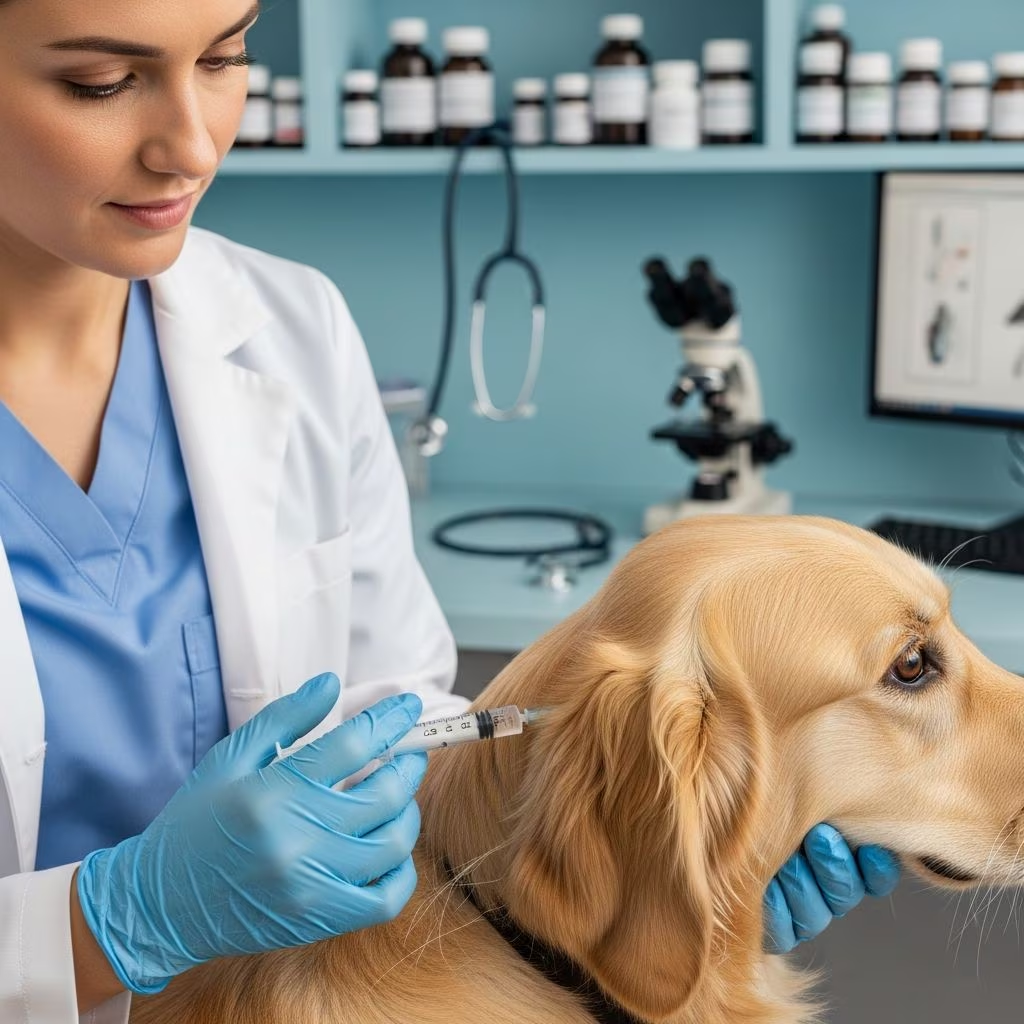
Ivermectin stands as a cornerstone in modern veterinary medicine, renowned for its efficacy against a wide array of parasites affecting companion animals and livestock alike. This antiparasitic agent, belonging to the avermectin class, targets nematodes, arthropods, and other invertebrates by disrupting their nerve and muscle functions, leading to paralysis and death.
The Science Behind Ivermectin’s Action
At its core, ivermectin binds to glutamate-gated chloride channels in invertebrate nerve and muscle cells, causing hyperpolarization and subsequent paralysis. This mechanism spares mammals because it does not readily cross the blood-brain barrier in species without genetic predispositions. In veterinary applications, it circulates through the bloodstream, exposing parasites to lethal concentrations. For heartworm prevention in dogs, monthly low-dose administration ensures immature larvae (microfilariae) are eliminated before they mature.
The drug’s broad-spectrum activity makes it indispensable. It combats internal parasites like roundworms and hookworms, as well as external ones such as mites and lice. In livestock, it addresses gastrointestinal worms, lungworms, and grubs, enhancing animal productivity and welfare.
Primary Applications in Companion Animals
In dogs, ivermectin is a staple for heartworm prophylaxis, often formulated in products like Heartgard. Administered monthly via oral chewables, it prevents Dirofilaria immitis infections transmitted by mosquitoes. It also controls intestinal nematodes like Toxocara canis (roundworms) and Ancylostoma caninum (hookworms), reducing symptoms such as diarrhea, vomiting, and weight loss.
- Heartworm prevention: Kills L3 and L4 larvae stages effectively.
- Intestinal worm control: Targets roundworms and hookworms in the gut.
- Mange treatment: Off-label use for demodectic and sarcoptic mange at higher doses.
For cats, ivermectin treats ear mites (Otodectes cynotis) and feline scabies, often via topical or injectable routes under veterinary supervision. These applications underscore its versatility in small animal practice.
Role in Livestock Parasite Management
Beyond pets, ivermectin is pivotal in large animal husbandry. In cattle, swine, sheep, goats, and horses, it eliminates gastrointestinal nematodes, lungworms, and external parasites like lice, mites, and grubs. Injectable, pour-on, or oral formulations allow tailored administration based on herd size and parasite burden.
| Species | Key Parasites Treated | Common Formulations |
|---|---|---|
| Cattle | Gastrointestinal worms, grubs, lice | Injectable, pour-on |
| Swine | Roundworms, lungworms, mites | Injectable |
| Horses | Strongyles, bots, pinworms | Paste, liquid oral |
| Sheep/Goats | Haemonchus, mites | Injectable, drench |
This table highlights ivermectin’s adaptability, supporting meat, milk, and fiber production by minimizing parasite-induced losses.
Safety Profile and Dosage Considerations
Ivermectin boasts a wide safety margin at recommended doses, making it suitable for routine use. For dogs, typical heartworm prevention is 6 mcg/kg monthly, safe for most breeds. However, herding breeds like Collies, Australian Shepherds, and Shetland Sheepdogs may carry the MDR1 gene mutation, rendering them hypersensitive. In these cases, ivermectin can cross the blood-brain barrier, causing neurotoxicity: ataxia, tremors, dilated pupils, and in severe instances, coma or death.
Veterinarians recommend genetic testing for at-risk breeds before prescribing. Alternatives like milbemycin or selamectin offer similar protection without MDR1 risks. In livestock, overdoses are rare due to precise dosing tools, but young or debilitated animals require caution.
Administration Methods and Best Practices
Veterinary ivermectin comes in diverse forms to suit animal needs:
- Oral: Chewables for dogs, pastes for horses.
- Topical: Pour-ons for cattle, spot-ons for small animals.
- Injectable: Subcutaneous for livestock and off-label pet treatments.
Always adhere to label instructions and withdrawal periods for food-producing animals to prevent residues in meat or milk. FDA approves ivermectin for heartworm prevention in dogs and cats, and parasite control in various livestock species. Consult a veterinarian for off-label uses, such as treating nasal mites or cheyletiellosis in dogs.
Potential Side Effects and Monitoring
At preventive doses, side effects are minimal, occasionally including vomiting or lethargy. High-dose treatments for mange may cause temporary hypersalivation or weakness. Neurotoxic signs demand immediate veterinary intervention: induce vomiting if recent ingestion, administer activated charcoal, and provide supportive care like IV fluids and diazepam for seizures.
In livestock, rare reactions include injection-site swelling or transient anorexia. Monitoring fecal egg counts ensures treatment efficacy and detects resistance, a growing concern in some regions.
Historical Impact and Global Reach
Discovered in the 1970s from Streptomyces avermitilis soil bacteria, ivermectin revolutionized veterinary parasitology. Its low cost and efficacy enabled mass deworming programs, boosting animal health worldwide. The Nobel Prize in Physiology or Medicine (2015) recognized its human health contributions, paralleling veterinary triumphs.
Resistance Challenges and Future Directions
Parasite resistance to ivermectin emerges from overuse, particularly in livestock. Strategies include rotation with other anthelmintics (e.g., benzimidazoles, levamisole), targeted selective treatment based on diagnostics, and combination therapies. Research explores novel formulations and synergistic drugs to sustain efficacy.
Emerging studies hint at ivermectin’s anti-inflammatory properties, potentially expanding roles in managing parasitic co-infections or dermatopathies, though veterinary approval lags human investigations.
Common Myths and Facts
- Myth: Ivermectin cures all worms. Fact: Ineffective against tapeworms; pair with praziquantel.
- Myth: Safe for all dogs without testing. Fact: MDR1 testing advised for sensitive breeds.
- Myth: Human versions interchangeable. Fact: Veterinary concentrations differ; never use interchangeably.
Frequently Asked Questions (FAQs)
What is the typical dosage for heartworm prevention in dogs?
6 mcg/kg monthly via oral products like Heartgard, prescribed by a vet.
Can ivermectin be used in pregnant animals?
Generally safe in livestock and dogs post-first trimester; confirm with vet.
How quickly does ivermectin work?
Oral form kills parasites in 1-2 days; injectables act in hours.
Is ivermectin effective against ticks?
Limited; better for mites and worms. Use acaricides for ticks.
What if my dog shows signs of overdose?
Seek emergency care immediately; symptoms include stumbling and blindness.
Integrating Ivermectin into Routine Care
Incorporate ivermectin into year-round parasite control programs, combined with flea/tick preventives and regular vet check-ups. For livestock, integrate with pasture management to break parasite life cycles. This holistic approach maximizes health outcomes and minimizes resistance risks.
By understanding ivermectin’s strengths and limitations, pet owners and producers can leverage this “wonder drug” effectively, safeguarding animal well-being across species.
References
- Ivermectin for Dogs: Dosages, Side Effects, and More — GoodRx. 2023. https://www.goodrx.com/pet-health/dog/ivermectin
- Ivermectin for Dogs: Uses, Side Effects, and Alternatives — American Kennel Club. 2023. https://www.akc.org/expert-advice/health/ivermectin-for-dogs/
- Ivermectin for Dogs and Cats — VCA Animal Hospitals. 2023. https://vcahospitals.com/know-your-pet/ivermectin
- How Ivermectin Works — PBS Animal Health. 2023. https://www.pbsanimalhealth.com/blog/learning-center/b/how-ivermectin-works/
- Ivermectin — MedlinePlus (U.S. National Library of Medicine). 2024. https://medlineplus.gov/druginfo/meds/a607069.html
- Ivermectin: A Multifaceted Drug With a Potential Beyond Anti-Parasitic Therapy — PMC (PubMed Central). 2024-04-01. https://pmc.ncbi.nlm.nih.gov/articles/PMC11008553/



