

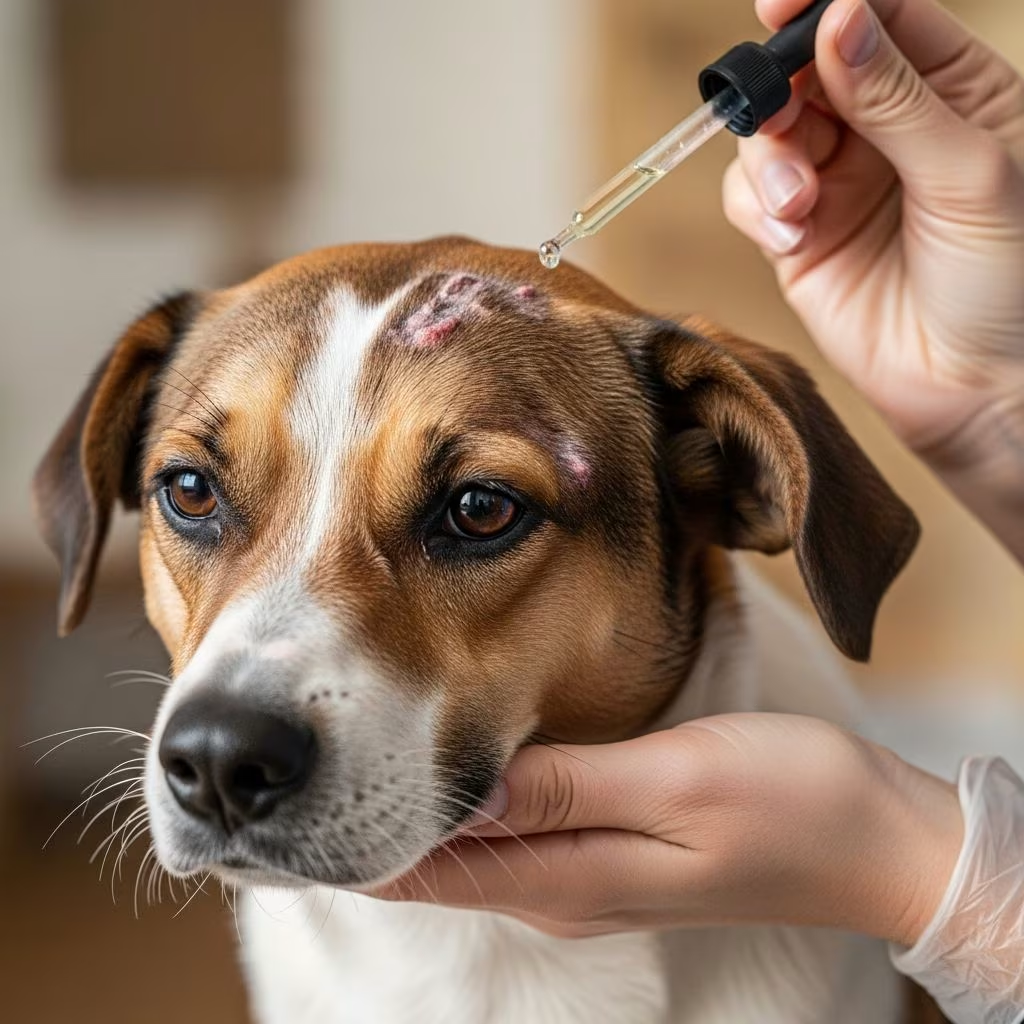
Mange represents a significant dermatological challenge for pets, primarily dogs, caused by parasitic mites that burrow into the skin, leading to intense itching, hair loss, and secondary infections. Ivermectin, a broad-spectrum antiparasitic medication, stands out as a cornerstone treatment due to its ability to target these mites effectively through systemic action. This article delves into its applications, mechanisms, protocols, and considerations for safe use across various animal species.
Understanding Mange: Types and Causes
Mange, or scabies, arises from infestations by mites such as Sarcoptes scabiei (sarcoptic mange) or Demodex species (demodectic mange). Sarcoptic mange is highly contagious, spreading via direct contact with infected animals or contaminated environments, manifesting as severe pruritus, crusty lesions, and alopecia, particularly on the ears, elbows, and abdomen. Demodectic mange, conversely, often links to underlying immune deficiencies, appearing as patchy baldness without the intense itching of sarcoptic forms, and is not transmissible between hosts.
In dogs, sarcoptic mange triggers widespread inflammation due to mite burrowing and allergic reactions to their saliva and feces. Demodectic cases divide into localized (self-resolving in juveniles) and generalized forms requiring intervention, often signaling immunosuppression from stress, poor nutrition, or concurrent diseases. Early recognition through symptoms like red, scaly skin and relentless scratching is crucial for timely intervention.
The Role of Ivermectin in Parasite Control
Ivermectin belongs to the avermectin class of macrocyclic lactones, paralyzing and killing parasites by binding to glutamate-gated chloride channels, disrupting nerve and muscle function in invertebrates like mites. Administered orally, topically, or via injection, it penetrates skin tissues effectively, achieving high concentrations at mite infestation sites. For sarcoptic mange in dogs, veterinarians often initiate treatment with ivermectin at off-label doses, monitoring response closely.
In cattle, ivermectin is FDA-approved for sarcoptic mange at labeled injectable or pour-on dosages, demonstrating robust efficacy against mites like Sarcoptes scabiei var. bovis. Similar approvals extend to doramectin and eprinomectin, underscoring the drug class’s reliability. While primarily studied in livestock, extrapolations to canine use highlight ivermectin’s versatility, though breed-specific sensitivities necessitate caution.
Treatment Protocols for Canine Sarcoptic Mange
Veterinary management of sarcoptic mange combines ivermectin with supportive therapies. A typical regimen involves oral ivermectin at 200-400 mcg/kg every 1-2 weeks for 4-6 treatments, alongside medicated baths and antibiotics for secondary pyoderma. False negatives in skin scrapings complicate diagnosis, prompting therapeutic trials where clinical improvement confirms the condition.
Alternative isoxazolines like afoxolaner (NexGard®) offer monthly chewables, achieving significant lesion reduction within one month, as evidenced in field studies with p-values indicating high statistical efficacy. However, ivermectin remains a cost-effective staple, especially in resource-limited settings.
| Mange Type | Primary Treatment | Dosage Frequency | Supportive Care |
|---|---|---|---|
| Sarcoptic | Ivermectin oral/injectable | Every 1-2 weeks x 4-6 | Antibiotics, anti-itch baths |
| Demodectic (Generalized) | Ivermectin + immune support | Daily low-dose until clear | Address underlying conditions |
| Localized Demodex | Monitor or topical | As needed | Preventives |
Managing Demodectic Mange with Ivermectin
Generalized demodicosis demands aggressive therapy, with ivermectin dosed daily at 0.3-0.6 mg/kg until two consecutive negative skin scrapings, often spanning months. Concurrent immune boosters, nutritional optimization, and flea preventives (e.g., selamectin or moxidectin combinations) enhance outcomes. Juvenile cases may resolve spontaneously, but persistent lesions warrant intervention to prevent progression.
Success hinges on owner compliance, environmental decontamination for contagious forms, and follow-up diagnostics. Most dogs recover fully, though chronic cases signal deeper health issues.
Safety Considerations and Breed Sensitivities
While ivermectin is generally safe, herding breeds like Collies, Australian Shepherds, and Shelties carry MDR1 gene mutations, amplifying neurotoxicity risks at standard doses. Pre-treatment genetic testing or alternatives like milbemycin are advised. Signs of overdose include ataxia, tremors, blindness, and coma, reversible with supportive care.
- Avoid in MDR1-positive breeds without testing.
- Start with low doses, titrate based on response.
- Monitor puppies under 6 weeks and pregnant animals closely.
- Combine with heartworm preventives cautiously to prevent interactions.
In horses and cattle, off-label use succeeds against chorioptic or psoroptic mange, with ivermectin injections repeated as needed. Hot lime sulfur dips complement systemic treatments in severe outbreaks.
Supportive Therapies and Home Care
Beyond ivermectin, holistic care accelerates healing. Weekly lime sulfur or benzoyl peroxide shampoos soothe skin, reduce bacterial load, and enhance drug penetration. Oral antibiotics (e.g., cephalexin) combat infections, while antihistamines or oclacitinib alleviate pruritus.
Owners should isolate affected pets, launder bedding, and vacuum thoroughly for sarcoptic cases. Nutritional supplements rich in omega-3 fatty acids and zinc bolster skin repair. Cones or bodysuits prevent self-trauma during recovery.
Preventive Strategies to Avoid Mange Recurrence
Monthly parasiticide administration (ivermectin-based Heartgard® or isoxazolines) prevents reinfestation. Regular grooming, prompt wound care, and stress minimization fortify immunity. Shelter protocols emphasize Revolution® (selamectin) for at-risk populations.
Breeders screen for demodex carriers, spaying/neutering to curb hereditary transmission. Community education curtails sarcoptic spread in multi-pet homes or kennels.
Emerging Alternatives and Research Insights
Recent studies validate isoxazolines’ rapid action against sarcoptic mange, with afoxolaner reducing symptoms significantly post-two doses. Macrocyclic lactones like moxidectin pour-ons show promise in livestock, potentially adaptable for pets. Resistance monitoring, especially in Europe, underscores rotation of classes.
FAQs on Ivermectin and Mange Treatment
Q: Can I treat my dog’s mange with over-the-counter ivermectin?
A: No, veterinary prescription and dosing are essential to avoid toxicity, especially in sensitive breeds.
Q: How long does recovery take with ivermectin?
A: Sarcoptic mange improves in 2-4 weeks; demodectic may require 2-3 months of therapy.
Q: Is mange contagious to humans?
A: Sarcoptic mites can cause temporary itching in humans but do not complete their lifecycle.
Q: What if my dog doesn’t respond to ivermectin?
A: Re-evaluate for misdiagnosis, resistance, or comorbidities; switch to afoxolaner or milbemycin.
Q: Are there natural remedies for mange?
A: Supportive only; tea tree oil or neem may soothe but lack efficacy against mites—consult a vet.
Conclusion: Empowering Pet Owners for Success
Ivermectin’s proven track record, paired with vigilant care, transforms mange from a distressing ordeal to a manageable condition. Collaborate with veterinarians for tailored plans, ensuring pets reclaim healthy, itch-free lives.
References
- What to do if your dog has mange — Vetster. 2023. https://vetster.com/en/wellness/what-to-do-if-your-dog-has-mange
- Mange in Cattle – Integumentary System — MSD Veterinary Manual. 2023-10-17. https://www.msdvetmanual.com/integumentary-system/mange/mange-in-cattle
- May Newsletter: What Is Mange and How Can a Veterinarian Help? — Murrayville Mixed Animal Clinic. 2023. https://www.murrayvillemixedanimalclinic.com/articles/993353-may-newsletter-what-is-mange-and-how-can-a-veterinarian-help
- Mange in Dogs: Symptoms, Causes and Treatment — PetMD. 2023. https://www.petmd.com/dog/conditions/skin/mange-dogs
- Treatment of canine sarcoptic mange with afoxolaner (NexGard®) and afoxolaner plus milbemycin oxime (NexGard Spectra®) — PMC (NCBI). 2018-12-04. https://pmc.ncbi.nlm.nih.gov/articles/PMC6280674/
- Sarcoptic mange (scabies) — Cornell University College of Veterinary Medicine. 2023. https://www.vet.cornell.edu/departments-centers-and-institutes/riney-canine-health-center/canine-health-topics/sarcoptic-mange-scabies
- Treatment and management of canine mange in a shelter — University of Wisconsin Shelter Medicine Program. 2023. https://sheltermedicine.wisc.edu/library/resources/treatment-and-management-of-canine-mange-in-a-shelter



