

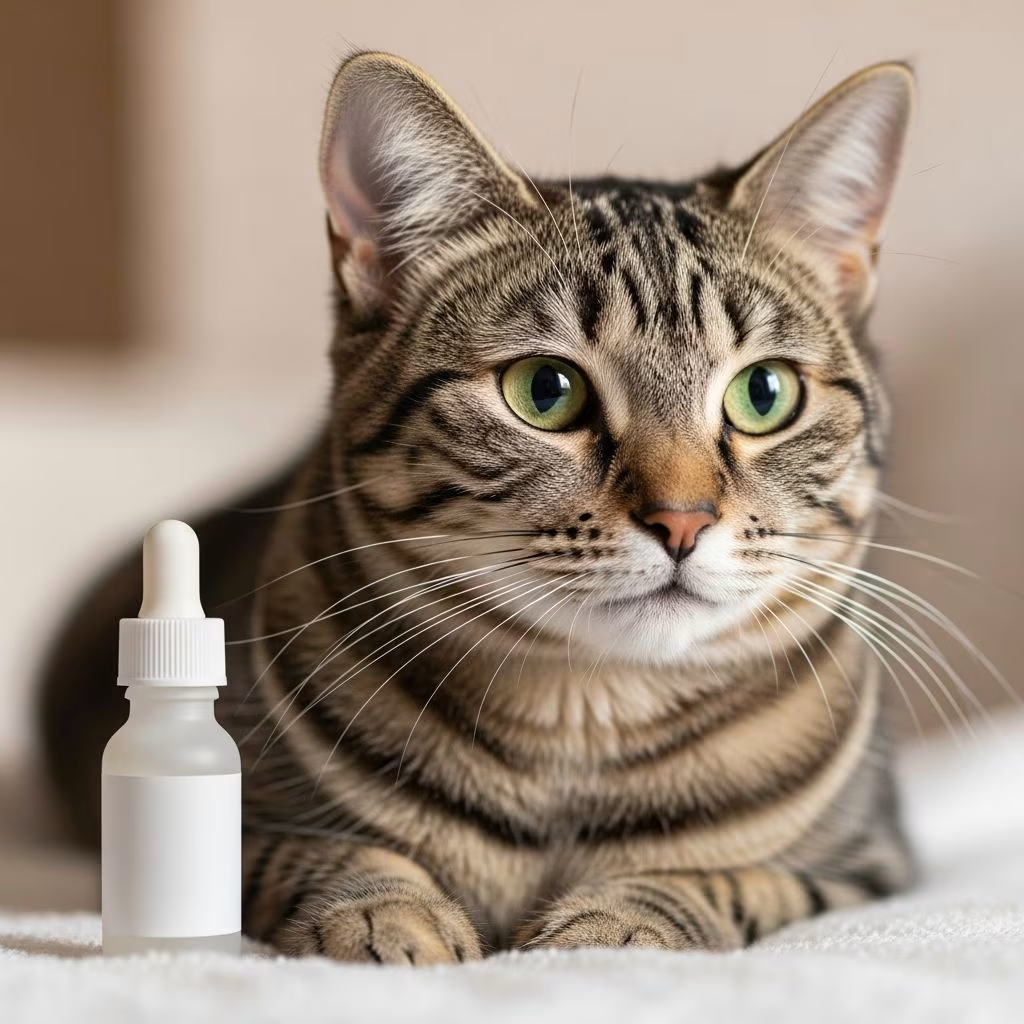
This comprehensive guide examines ivermectin, a widely used antiparasitic medication for cats, focusing on its applications, precise dosing requirements, potential risks, and best practices for administration. Drawing from veterinary standards, it equips cat owners and professionals with essential knowledge to ensure feline health.
Understanding Ivermectin as a Feline Antiparasitic
Ivermectin belongs to the avermectin class of drugs, renowned for targeting a broad spectrum of parasites by disrupting their nervous systems through glutamate-gated chloride channel enhancement. In veterinary practice, it stands out for efficacy against nematodes and arthropods affecting cats.
Primarily, ivermectin serves as a cornerstone for heartworm prevention, where FDA approval confirms its use via products like Heartgard tablets at a minimum of 12 micrograms per pound monthly. This prophylaxis counters Dirofilaria immitis, a mosquito-transmitted worm causing respiratory distress, lethargy, and potentially fatal blockages in pulmonary arteries.
Beyond heartworms, veterinarians employ ivermectin off-label for ear mites (Otodectes cynotis), notoedric mange, and certain roundworms, leveraging its systemic absorption to reach hard-to-treat sites. However, it proves ineffective against tapeworms or fleas, necessitating complementary therapies.
Key Parasitic Threats Addressed by Ivermectin
- Heartworm Disease: Transmitted via infected mosquitoes, larvae mature into adults within months, leading to coughing, vomiting, and sudden collapse. Monthly ivermectin halts larval development, averting mature infestations.
- Ear Mites: These proliferate in ear canals, causing crusty debris, head shaking, and secondary infections. Ivermectin, often in liquid form, eradicates them effectively post-cleaning.
- Scabies and Mange: Notoedric mites burrow into skin, provoking intense itching and alopecia. Systemic ivermectin penetrates tissues to kill mites and their eggs.
- Intestinal Nematodes: Limited efficacy against hookworms and roundworms like Toxocara cati, where higher doses (e.g., 200-400 micrograms/kg subcutaneously) have cleared infections in studies.
Precise Dosage Guidelines for Cats
Accurate dosing remains paramount due to cats’ sensitivity; overdoses can trigger neurotoxicity. The FDA endorses 12 micrograms per pound (24 micrograms/kg) orally monthly for heartworm prevention, aligning with Heartgard formulations.
For off-label uses:
| Condition | Typical Dosage (mg/kg) | Route/Frequency |
|---|---|---|
| Heartworm Prevention | 0.024 | Oral, monthly |
| Ear Mites | 0.2-0.4 | Topical (ear) or subcutaneous, 1-2 doses |
| Mange/Scabies | 0.2-0.4 | Subcutaneous or oral, repeated as needed |
| Roundworms (off-label) | 0.2-0.4 | Subcutaneous, 1-2 treatments |
Note: These are general benchmarks; veterinarians tailor based on weight, health status, and diagnostics like heartworm antigen tests prior to prophylaxis.
Forms of Ivermectin Available for Feline Use
Ivermectin manifests in versatile formats to suit treatment needs:
- Tablets: Chewable Heartgard for convenient monthly heartworm dosing, palatable for most cats.
- Liquid Solutions: Injectable or oral suspensions for precise measurement, ideal for off-label parasite control.
- Topical Applications: Ear drops for mites, minimizing systemic exposure while targeting localized infestations.
- Injectables: Veterinary-administered for severe cases like lungworms, ensuring bioavailability.
Avoid horse pastes or unregulated livestock products; their concentrations risk fatal overdoses in cats.
Recognizing and Managing Side Effects
At recommended levels, ivermectin exhibits a robust safety profile, with clinical data reporting vomiting in under 0.3% and diarrhea in under 0.2% of cats. Its 30-fold safety margin over minimum doses underscores tolerability.
Toxicity emerges above 100 micrograms/pound, manifesting as:
- Ataxia and tremors
- Dilated pupils and hypersalivation
- Coma or respiratory depression in extremes
Cats with MDR1 gene mutations (rare in felines but analogous to collie sensitivity in dogs) heighten vulnerability. Immediate veterinary intervention with activated charcoal, IV fluids, and supportive care reverses most cases.
Drug Interactions and Contraindications
Ivermectin integrates safely with vaccines, antibiotics, and steroids, but caution applies to:
- CYP3A4 Inhibitors: Erythromycin, certain antifungals amplify levels.
- Neurological Agents: Benzodiazepines, ketamine exacerbate CNS depression.
- Spinosad: Found in flea products like Comfortis, risks enhanced toxicity.
Disclose all supplements and medications to vets pre-prescription.
Administration Best Practices
- Weigh your cat accurately using a gram scale for micro-dosing.
- Administer on an empty stomach for optimal absorption, except tablets with food per label.
- Monitor post-dose for 24 hours, noting behavior or appetite changes.
- Combine with flea/tick preventives lacking interactions.
- Schedule fecal exams and heartworm tests annually.
Alternatives to Ivermectin for Parasite Control
For comprehensive coverage:
| Product | Targets | Form |
|---|---|---|
| Revolution (Selamectin) | Heartworm, fleas, mites, worms | Topical |
| Profender | Round/hook/tapeworms | Topical |
| Interceptor (Milbemycin) | Heartworm, round/hookworms | Oral |
These offer multi-parasite action, reducing polypharmacy needs.
Frequently Asked Questions
Is ivermectin FDA-approved for cats?
Yes, specifically for heartworm prevention at 12 mcg/lb monthly via Heartgard.
Can ivermectin treat fleas on cats?
No, it lacks efficacy against fleas or tapeworms; pair with fipronil or similar.
What if my cat vomits after dosing?
Redose if within hours per vet advice; isolated vomiting is rare and mild.
How soon do effects appear for ear mites?
Cleaning plus ivermectin resolves symptoms in 1-2 weeks with follow-up.
Is ivermectin safe for kittens or pregnant cats?
Use cautiously post-6 weeks and under vet supervision; limited data exists.
Preventive Strategies Beyond Medication
Minimize risks by eliminating standing water to deter mosquitoes, routine grooming for mite detection, and indoor housing. Annual vet checkups with parasite screenings fortify defenses, ensuring ivermectin’s role in a holistic plan.
In summary, ivermectin’s versatility cements its status in feline parasitology, but precision and professional oversight guarantee safety and success. Consult your veterinarian for personalized protocols.
References
- Ivermectin for Cats: Overview, Dosage & Side Effects — cats.com. 2023. https://cats.com/ivermectin-in-cats
- Ivermectin for Dogs & Cats: Dosage, Safety, and Alternatives — PetPlace. 2024. https://www.petplace.com/article/drug-library/drug-library/library/ivermectin-ivomec-heartgard-for-dogs-and-cats
- Ivermectin for Dogs and Cats — VCA Animal Hospitals. 2025. https://vcahospitals.com/know-your-pet/ivermectin
- Use of ivermectin in treatment of Aelurostrongylus abstrusus and … — PubMed (peer-reviewed). 1987-01-01. https://pubmed.ncbi.nlm.nih.gov/3583886/
- Ivermectin Use in Veterinary Medicine – What you need to know — University of Tennessee College of Veterinary Medicine (.edu). 2024. https://vetmed.tennessee.edu/ivermectin-use-in-veterinary-medicine-what-you-need-to-know/



