

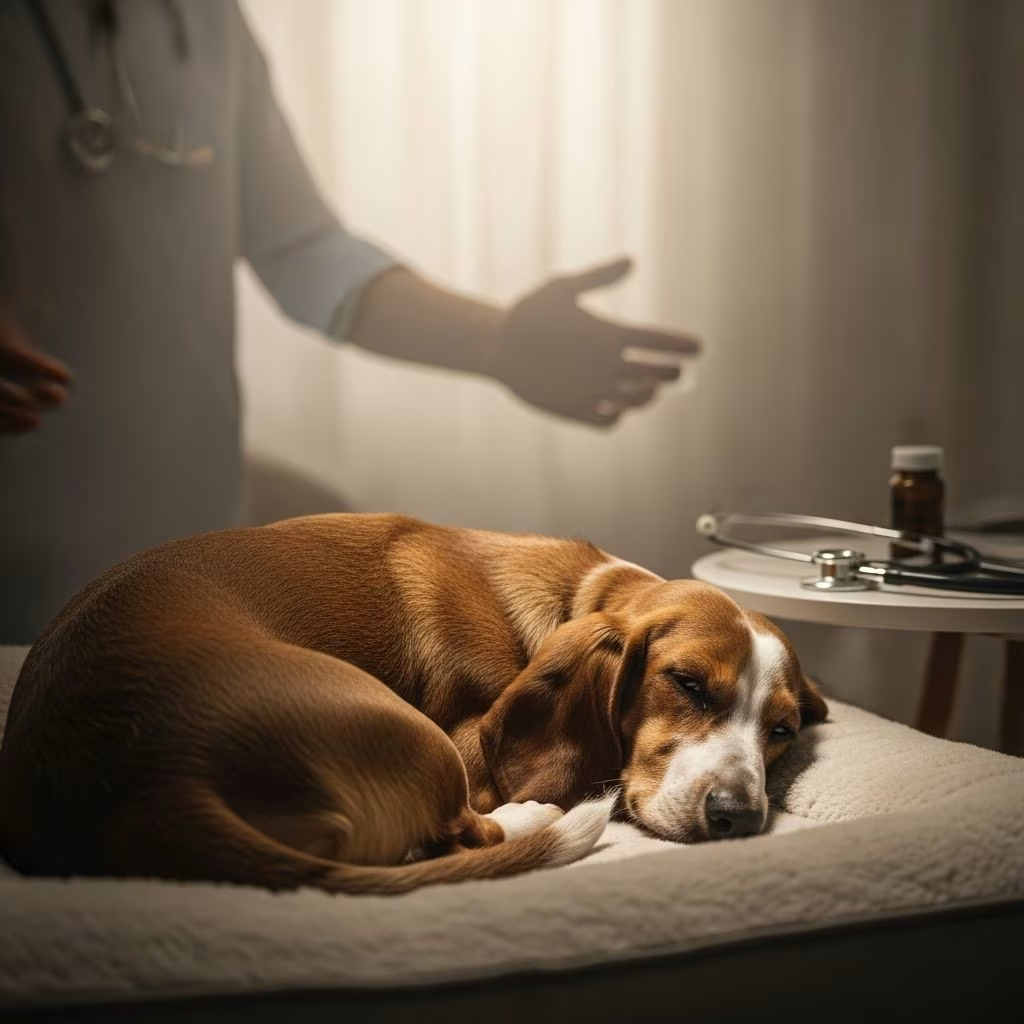
Intervertebral disc disease (IVDD) is a prevalent spinal condition in dogs where the cushions between vertebrae degenerate, bulge, or rupture, compressing the spinal cord and causing pain, weakness, or paralysis. This guide covers everything dog owners need to know about recognizing signs early, pursuing accurate diagnosis, choosing between conservative care and surgery, aiding recovery, and preventing recurrence in at-risk breeds.
What Is IVDD in Dogs?
The spine consists of vertebrae separated by intervertebral discs that act as shock absorbers, allowing flexibility while protecting the spinal cord. In IVDD, these discs undergo degeneration: the soft inner nucleus pulposus hardens and may herniate through the tough outer annulus fibrosus, pressing on nerves and the spinal cord. This leads to inflammation, pain, and neurological deficits.
IVDD affects dogs of any age but is especially common in chondrodystrophic breeds with long backs and short legs, such as Dachshunds, where discs calcify prematurely. Large breeds like German Shepherds are prone to slower degeneration. About 65% of cases occur in the thoracolumbar (mid-back) region, 18% in the neck, with the rest multi-site.
Types of IVDD in Dogs
IVDD is classified into two main types based on degeneration pattern and typical affected dogs.
- Hansen Type I (Disc Extrusion): Acute herniation where calcified nucleus material bursts explosively into the spinal canal, often triggered by jumping or trauma. Common in young chondrodystrophic small breeds like Dachshunds, French Bulldogs, Beagles, Shih Tzus, Pekingese, Corgis, and Basset Hounds (as young as 3 years). Causes sudden severe pain and paralysis.
- Hansen Type II (Disc Prolapse): Gradual annulus degeneration leading to disc bulging without rupture. Seen in older, large non-chondrodystrophic breeds like German Shepherds. Symptoms develop slowly with chronic back pain.
Both types compress the spinal cord, disrupting nerve signals to limbs, bladder, and bowels, but Type I is more explosive and paralyzing.
Breeds at Risk for IVDD
Genetic predisposition makes certain breeds highly susceptible due to chondrodystrophy, which accelerates disc mineralization.
| Breed | Risk Level | Typical Age of Onset | Common Type |
|---|---|---|---|
| Dachshund | High | 3-7 years | Type I |
| French Bulldog | High | 3-6 years | Type I |
| Beagle | Moderate-High | 4-8 years | Type I |
| Shih Tzu | Moderate | 5-9 years | Type I |
| German Shepherd | Moderate | 7+ years | Type II |
| Corgi, Basset Hound, Pekingese | Moderate | 4-8 years | Type I |
French Bulldogs progress rapidly to paralysis, warranting immediate referral. Non-chondrodystrophic dogs like Border Collies can also suffer acute extrusions, though less commonly.
Symptoms of IVDD in Dogs
Signs vary by herniation location, severity, and type but often start subtly before escalating. Back (thoracolumbar) IVDD affects hind limbs; neck (cervical) impacts all four.
- Mild/Back Pain Stage: Hunched back, muscle spasms, reluctance to jump/climb stairs, abnormal gait, panting, vocalizing when touched, anxiety, decreased appetite.
- Moderate/Weakness Stage: Wobbly hind legs (ataxia), dragging toes, weakness, pain on palpation.
- Severe/Paralysis Stage: Sudden inability to walk, complete hind limb paralysis, loss of pain sensation, urinary/fecal incontinence (bladder overfills without expression, risking UTIs).
Deep pain sensation (DPS) assessment is critical: dogs with intact DPS have better surgical prognosis. Seek emergency vet care for any walking inability.
Diagnosis of IVDD in Dogs
Diagnosis starts with physical/neurological exam evaluating gait, reflexes, pain response, and localization. X-rays detect disc calcification/narrowing but miss soft tissue compression.
Advanced imaging confirms IVDD vs. tumors/infections:
- MRI: Gold standard for disc herniation visualization, spinal cord edema.
- CT/Myelography: Alternatives under anesthesia.
Neurology referral recommended for non-ambulatory dogs.
Treatment Options for IVDD in Dogs
Treatment depends on severity, DPS, duration, and owner finances. Goals: relieve compression, reduce inflammation/pain, restore function.
Conservative (Medical) Management
Suitable for mild cases with intact walking/DPS and back pain only. Success rate: 50-90% with compliance.
- Strict Crate Rest: 4-8 weeks, no walks/jumps; sling support for short potty breaks.
- Medications: NSAIDs/steroids for inflammation, analgesics, muscle relaxants.
- Rehab: Electroacupuncture, laser therapy, underwater treadmill, home exercises post-rest.
Monitor: No improvement in 3-4 days or worsening mandates imaging/surgery.
Surgical Treatment
Recommended for non-ambulatory dogs, lost DPS >48 hours, or failed medical management. Decompressive hemilaminectomy removes extruded material; success 80-95% with early intervention.
Post-op: 4-6 weeks crate rest, rehab. French Bulldogs often need urgent surgery due to rapid progression.
Recovery and Rehabilitation for IVDD Dogs
Recovery timelines: Ambulatory dogs 2-4 weeks; paralyzed 4-12 weeks with intensive care. Prognosis best with DPS, surgery <24 hours.
- Home Care: Manual bladder expression, sling walks, clean to prevent UTIs/sores.
- Physical Therapy: Gradual walks, balance exercises, hydrotherapy.
- Weight Management: Lean body reduces spinal load.
50% of Dachshunds recur; lifelong low-impact lifestyle essential.
Prevention of IVDD in Dogs
- Maintain ideal weight to minimize disc stress.
- Avoid high-impact activities: no jumping on/off furniture, stairs; use ramps.
- Chondroprotective supplements (e.g., glucosamine) may slow degeneration (vet-approved).
- Early neutering debate: some studies link to increased risk in chondrodystrophics—discuss with vet.
- Regular vet checks for at-risk breeds.
Frequently Asked Questions (FAQs)
Can IVDD be cured in dogs?
Yes, many dogs recover fully with prompt treatment—95% surgical success if DPS intact. Recurrence risk remains 30-50%.
How long does IVDD recovery take?
Mild cases: 2-4 weeks rest. Paralyzed: 1-3 months with rehab; some need lifelong management.
Is surgery necessary for IVDD?
Not always—mild cases respond to rest/meds. Surgery for paralysis or failed conservative care.
What breeds get IVDD most?
Dachshunds, French Bulldogs, Beagles, Shih Tzus (Type I); German Shepherds (Type II).
Can paralyzed dogs recover from IVDD?
Yes, 50-90% with surgery <24h and rehab; express bladder to prevent complications.
References
- Back to Basics: A Pet Owner’s Guide to Intervertebral Disc Disease — Animal Clinic of Council Bluffs. 2023. https://animalclinicofcb.com/back-to-basics-a-pet-owners-owners-guide-to-intervertebral-disc-disease/
- Intervertebral Disc Disease — Cornell University College of Veterinary Medicine. 2024-10-15. https://www.vet.cornell.edu/departments-centers-and-institutes/riney-canine-health-center/canine-health-topics/intervertebral-disc-disease
- The Expert’s Guide to IVDD in Dogs — Sage Veterinary Imaging. 2024. https://www.sageveterinary.com/blog/3yuuzomy53u1ikk5899c195on8es0s
- A review of intervertebral disc disease classification in dogs — Veterinary Practice. 2023-05-01. https://www.veterinary-practice.com/article/intervertebral-disc-disease-classification-dogs
- The Ultimate Guide to IVDD in Dogs — WiggleLess. 2024. https://wiggleless.com/blogs/blog/the-ultimate-guide-to-ivdd-in-dogs
- Owner’s Guide to Intervertebral Disc Disease (IVDD) in Dogs — SASH Vets. 2025-08. https://sashvets.com/wp-content/uploads/2025/08/IVDD-Education-Client-Handout-_6pp-DL-Roll-Fold_FA.pdf



