

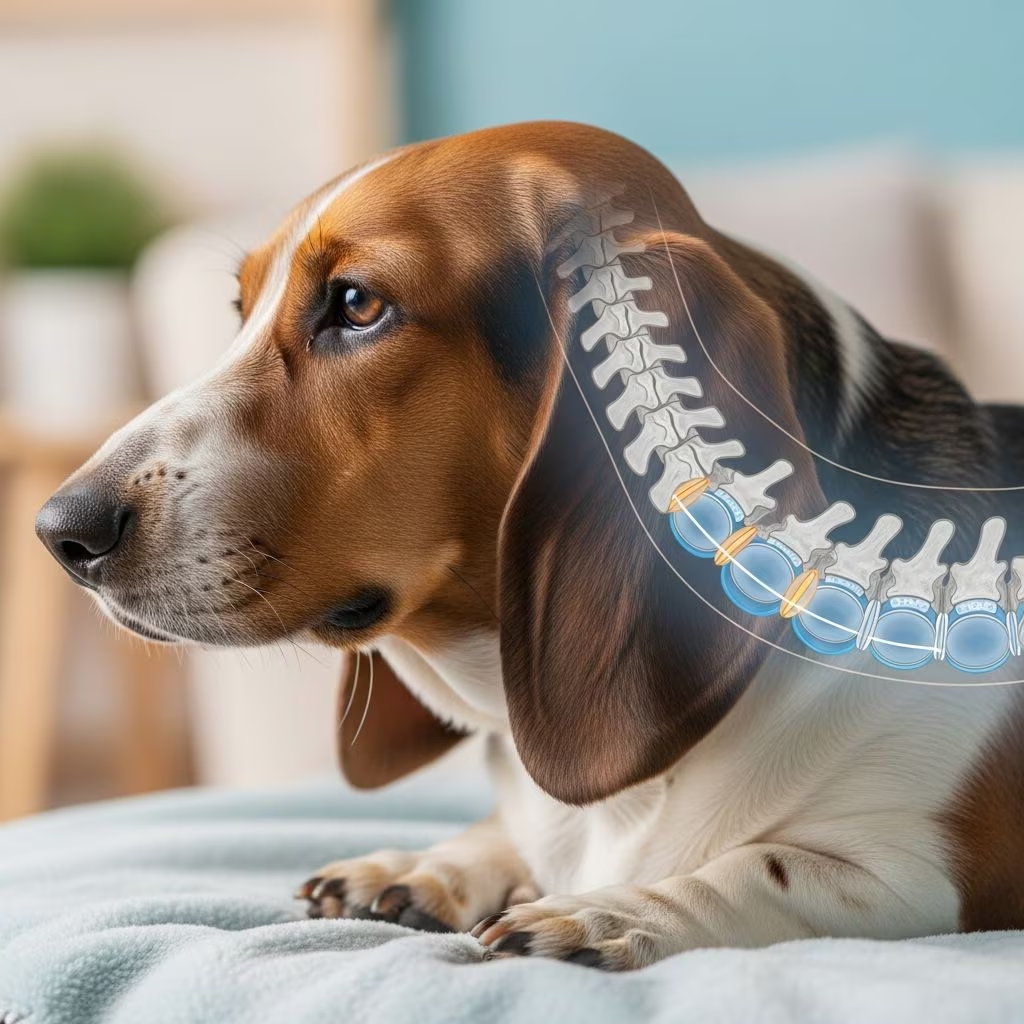
Intervertebral disc disease (IVDD) affects the spine in dogs, causing the cushions between vertebrae to degenerate, bulge, or rupture, leading to pain and mobility issues. This condition strikes certain breeds more frequently and requires prompt action for the best outcomes.
Understanding the Canine Spine and Disc Function
The spine consists of vertebrae separated by intervertebral discs, which act as shock absorbers during movement. These discs have a tough outer layer and a gel-like center. In healthy dogs, they maintain flexibility and protect the spinal cord.
When degeneration occurs, the disc’s inner material can herniate, pressing on the spinal cord or nerves. This leads to inflammation, pain, and neurological deficits. Two types exist: Hansen Type I (sudden herniation in younger chondrodystrophic breeds) and Type II (slower degeneration in larger breeds).
Breeds at Highest Risk for IVDD
Chondrodystrophic breeds with long backs and short legs, like Dachshunds, French Bulldogs, Beagles, and Corgis, face elevated risks due to genetic disc calcification starting young—sometimes as early as 3 years.
- Dachshunds: Most common, with up to 25% affected by age 6.
- French Bulldogs and Basset Hounds: Prone to thoracolumbar herniations.
- Larger breeds: Like Labradors or German Shepherds, via Type II degeneration.
Obesity exacerbates risks in all breeds by increasing spinal stress.
Early Warning Signs of IVDD
Detecting IVDD early prevents progression from pain to paralysis. Initial symptoms include:
- Reluctance to jump, climb stairs, or play.
- Stiff, arched back or shivering unrelated to cold.
- Yelping when touched along the back or neck.
- Mild wobbliness or dragging toes (knuckling).
Symptoms vary by spinal region:
| Region | Common Symptoms |
|---|---|
| Thoracolumbar (mid-back) | Hind leg weakness, dragging paws, muscle spasms, incontinence. |
| Cervical (neck) | Foreleg lameness, head holding low, forelimb dragging. |
| Lumbosacral (lower back) | Tail base pain, hindquarter weakness, difficulty rising. |
Severe signs demand immediate care: complete inability to walk, loss of deep pain sensation, or urinary/fecal incontinence.
IVDD Severity Grading System
Vets grade IVDD from 0 to 5 based on neurological function, guiding treatment:
- Grade 0: Pain only, normal gait.
- Grade 1: Pain + mild ataxia (wobbly walk), walks normally.
- Grade 2: Pain + severe ataxia, still ambulatory.
- Grade 3: Non-ambulatory but conscious, hind legs paralyzed.
- Grade 4: Paralyzed, no deep pain sensation.
- Grade 5: Paralyzed >48 hours, no deep pain.
Grades 1-2 often recover conservatively; Grades 3+ may need surgery.
Diagnostic Process for Suspected IVDD
Start with a neurological exam assessing reflexes, pain response, and gait. Imaging confirms:
- X-rays: Show narrowed disc spaces or mineralization.
- MRI/CT: Gold standard for disc herniation location and spinal cord compression.
Deep pain testing (pinch test) predicts surgical success—positive in 90% of recovering dogs.
Conservative Treatment: Non-Surgical Options
For Grades 1-3 with deep pain, strict rest succeeds in 80-90% of cases. Key elements:
- Crate Rest: 4-8 weeks in a confined space; no jumping, stairs, or play. Use for potty breaks only.
- Medications: NSAIDs, steroids for inflammation; muscle relaxants, pain relievers.
- Support Aids: Rear-end slings/harnesses for walking; back braces for stability during early recovery.
Home setup: Orthopedic bed, non-slip surfaces, bladder expression if needed (manual squeeze every 6-8 hours).
Surgical Interventions for Severe Cases
Grades 3-5 or deep pain-negative dogs benefit from hemilaminectomy: Removing herniated material to decompress the cord. Success rates: 95% for Grade 5 if surgery within 24 hours; drops after 48 hours.
Post-op: Crate rest 2-4 weeks, then rehab. Most walk within 3 weeks; full mobility varies.
Rehabilitation and Physical Therapy Protocols
After rest, rehab rebuilds strength:
- Passive Range of Motion (PROM): Gently flex/extend limbs daily.
- Active Exercises: Sit-to-stand, balance on peanut balls.
- Hydrotherapy: Underwater treadmill reduces spinal load.
- Advanced: Laser therapy, PEMF, acupuncture.
Work with CCRP-certified therapists. Progress monitoring via vet check-ups.
At-Home Care During Recovery
Daily routines ensure success:
- Strict schedule: Potty every 4-6 hours with sling support.
- Monitor for relapse: Increased pain, knuckling, incontinence.
- Weight control: Lean body prevents re-herniation.
- Environment: Baby gates, ramps for furniture.
Bladder care: If atonic, express gently to avoid infections.
Preventing IVDD Recurrence and Progression
25-50% risk of re-herniation; mitigate with:
- Weight Management: Ideal BMI reduces load.
- Controlled Exercise: Leash walks, no off-leash running.
- Core Strengthening: Ongoing PT like cookie stretches, cavaletti poles.
- Supplements: Omega-3s, glucosamine (vet-approved).
Annual neuro exams for at-risk breeds.
Prognosis by Grade and Treatment
| Grade | Conservative Success | Surgical Success | Time to Walk |
|---|---|---|---|
| 1-2 | 90-95% | N/A | 2-4 weeks |
| 3 | 50-70% | 80-90% | 1-3 weeks |
| 4-5 (deep pain +) | Low | 50-95% | 3-12 weeks |
Early intervention boosts all odds.
Frequently Asked Questions (FAQs)
Can my dog recover from IVDD without surgery?
Yes, especially Grades 1-3 with strict rest and meds—up to 95% success.
How long does crate rest last for IVDD?
Typically 4-8 weeks, based on vet rechecks and imaging.
Is IVDD fatal in dogs?
No, but untreated severe cases lead to permanent paralysis or euthanasia. Most recover with care.
What if my dog loses bladder control?
Emergency sign—seek vet immediately; manual expression prevents complications.
Are back braces effective for IVDD dogs?
Yes, they stabilize during rest and early rehab, especially Grades 1-3.
Emergency Action Plan
If symptoms appear:
- Confine immediately—no waiting.
- Call vet/emergency clinic; describe symptoms.
- Transport on rigid board with padding.
References
- Owner’s Guide to Intervertebral Disc Disease (IVDD) in Dogs — SASH Vets. 2025-08. https://sashvets.com/wp-content/uploads/2025/08/IVDD-Education-Client-Handout-_6pp-DL-Roll-Fold_FA.pdf
- Your Guide to Recovery: Intervertebral Disc Disease — Move Unleashed. 2025-06. https://moveunleashed.com.au/wp-content/uploads/2025/06/Your-Guide-To-Recovery-Intervertebral-Disc-Disease.pdf
- The Ultimate Guide to IVDD in Dogs — WiggleLess. N/A. https://wiggleless.com/blogs/blog/the-ultimate-guide-to-ivdd-in-dogs
- IVDD in Dogs: Emergency Signs & Fast Action Steps — GSVS. N/A. https://gsvs.org/blog/ivdd-dogs-emergency-signs/
- The IVDD Handbook — The Rehab Vet. N/A. https://therehabvet.com/the-ivdd-handbook/
- The Expert’s Guide to IVDD in Dogs — Sage Veterinary Imaging. N/A. https://www.sageveterinary.com/blog/3yuuzomy53u1ikk5899c195on8es0s
- Intervertebral disc disease — Cornell University College of Veterinary Medicine. N/A. https://www.vet.cornell.edu/departments-centers-and-institutes/riney-canine-health-center/canine-health-topics/intervertebral-disc-disease



