

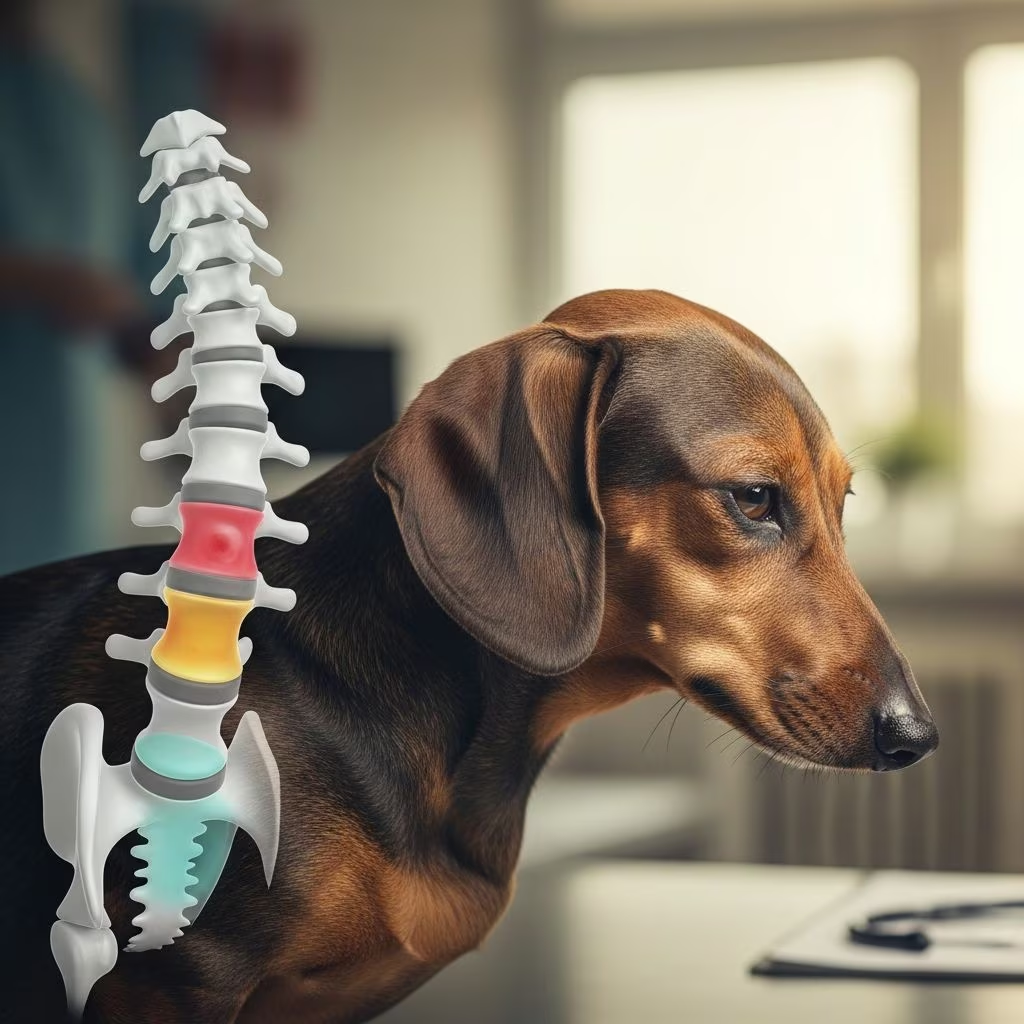
Intervertebral disc disease (IVDD) represents a prevalent spinal condition in dogs, particularly those with elongated bodies, where the cushions between vertebrae rupture or bulge, compressing the spinal cord and nerves. This leads to discomfort, mobility challenges, and in severe instances, paralysis, demanding swift veterinary evaluation to preserve neurological function.
The Anatomy of a Dog’s Spine and Disc Vulnerability
Dogs possess a spinal column composed of vertebrae separated by intervertebral discs, which act as shock absorbers during movement. These discs consist of a tough outer ring encasing a gel-like core. In susceptible breeds, the disc material hardens over time or suddenly extrudes, impinging on the spinal cord.
Two primary forms exist: Type I involves abrupt disc extrusion, often in younger dogs of chondrodystrophic breeds like Dachshunds, and Type II entails slower disc protrusion, more common in older large-breed dogs. Both disrupt nerve signals, causing pain or loss of function in limbs.
Breeds and Factors Heightening IVDD Risk
Certain genetic predispositions make specific breeds prone to IVDD. Chondrodystrophic dogs, characterized by short legs and long backs, face elevated risks due to abnormal disc development.
- Dachshunds top the list, with up to 25% affected in their lifetime.
- Other high-risk breeds include Beagles, Basset Hounds, Corgis, Shih Tzus, and French Bulldogs.
- Large breeds like German Shepherds may develop Type II later in life.
Age plays a role, with Type I peaking at 3-6 years and Type II in seniors. Trauma, obesity, and excessive jumping accelerate degeneration.
Recognizing IVDD Symptoms: From Subtle to Severe
Signs vary by herniation location—cervical (neck), thoracolumbar (mid-back), or lumbosacral (lower back)—and severity. Owners often notice gradual or sudden changes in behavior and gait.
Early Indicators of Discomfort
- Hunched posture or guarded abdomen.
- Reluctance to climb stairs, jump, or play.
- Whining, shivering, or panting when touched along the back.
- Reduced appetite or anxious demeanor.
Progressive Neurological Deficits
As compression worsens, motor issues emerge:
- Wobbly gait, dragging hind feet, or knuckling toes.
- Hind limb weakness, crossing legs, or inability to stand.
- Loss of coordination in all limbs for cervical cases.
Critical Emergency Signals
- Complete paralysis without deep pain sensation.
- Incontinence or inability to urinate/defecate.
- Limp tail or dilated anus in lumbosacral IVDD.
These demand immediate care, as delays reduce recovery odds.
Diagnostic Approaches for Accurate Assessment
Veterinarians start with a neurological exam to gauge pain perception, reflexes, and proprioception. Imaging confirms the diagnosis:
- Myelography: Injects dye into spinal fluid for X-ray visualization of compression (traditional method).
- CT/MRI: Provide detailed 3D images of disc herniation and cord damage, preferred for precision.
Bloodwork rules out infections or clotting issues. Pain scales and gait analysis guide treatment urgency.
Non-Surgical Management: When Rest and Meds Suffice
Mild cases (Grades 1-2: pain with/without ataxia) respond well to conservative care, avoiding surgery risks.
| Component | Details | Duration |
|---|---|---|
| Strict Confinement | Crate rest in padded enclosure; no stairs, jumps, or play | 4-8 weeks |
| Pain Relief | NSAIDs (carprofen), gabapentin, muscle relaxants (methocarbamol) | Tailored to response |
| Anti-Inflammatories | Steroids (prednisone) if NSAIDs unsuitable | Short-term, tapered |
| Supportive Care | Bladder expression 3x/day if needed; soft bedding | Until function returns |
Success rates exceed 80% for deep pain-intact dogs, with physical therapy aiding muscle rebuilding post-rest.
Surgical Interventions: Relieving Spinal Pressure
Severe cases (Grades 3-5: paralysis with/without pain) require surgery to excise herniated material and decompress the cord. Procedures include:
- Hemilaminectomy: Removes bone and disc fragments from thoracolumbar sites.
- Ventral slot: For cervical herniations.
Timing is critical: within 48 hours for non-pain-aware dogs boosts 50-60% recovery chance. Post-op, 90% regain ambulation if pain was present pre-surgery.
Rehabilitation and Long-Term Recovery Strategies
Post-treatment, structured rehab prevents re-injury and restores strength:
- Physical Therapy: Underwater treadmill, balance exercises, laser therapy starting Week 3-4.
- Home Management: Slings for support, non-slip surfaces, weight control.
- Monitoring: Weekly neuro checks; gradual activity increase.
Full recovery spans 4-12 weeks; some dogs need ongoing meds or mobility aids.
Preventive Measures to Safeguard Your Dog’s Spine
Proactive steps reduce IVDD incidence:
- Maintain ideal weight to lessen disc stress.
- Use ramps for furniture/car access.
- Avoid high-impact activities in at-risk breeds.
- Regular vet exams for early degeneration detection via imaging.
Controlled exercise builds core strength without overload.
Prognosis Insights: Factors Influencing Outcomes
Recovery hinges on grade at presentation, speed of intervention, and aftercare diligence:
- Grade 1-2: 95%+ success non-surgically.
- Grade 3-4: 80-90% with timely surgery.
- Grade 5 (no pain): 50% ambulate, lower if >48 hours delay.
Recurrence affects 30-50%; repeat offenders may need preventive surgery.
FAQs on IVDD in Dogs
Can my dog recover from IVDD without surgery?
Yes, mild cases often resolve with 4-6 weeks of strict rest and medications, achieving over 80% success if deep pain persists.
What breeds are most prone to IVDD?
Dachshunds, Beagles, Basset Hounds, Corgis, and similar long-backed breeds face highest risks.
How much does IVDD surgery cost?
Costs range $3,000-$8,000, varying by location, imaging, and rehab; pet insurance can offset expenses.
Is physical therapy necessary after IVDD treatment?
Highly recommended to rebuild strength and prevent atrophy, improving long-term mobility.
Can IVDD be fatal?
Rarely directly, but untreated severe cases lead to secondary issues like pneumonia from immobility.
References
- Intervertebral Disk Disease in Dogs (IVDD) in Dogs – PetMD — PetMD. 2023. https://www.petmd.com/dog/conditions/neurological/c_dg_intervertebral_disc_disease
- IVDD – Intervertebral Disc Disease in Dogs | Rock Hill, SC — Carolina Veterinary Specialists. 2020-08-14. https://www.rock-hill.carolinavet.com/site/blog/2020/08/14/ivdd-intervertebral-disc-disease-in-dogs
- Intervertebral Disk Disease in Dogs | Today’s Veterinary Practice — Today’s Veterinary Practice. 2023. https://todaysveterinarypractice.com/neurology/intervertebral-disk-disease-in-dogs/
- What is IVDD in dogs, and how is it treated? — Virginia Veterinary Centers. 2021-07-30. https://www.vscot.com/site/blog/2021/07/30/ivdd-in-dogs
- Intervertebral Disc Disease – American College of Veterinary Surgeons — ACVS. 2023. https://www.acvs.org/small-animal/intervertebral-disc-disease/



