

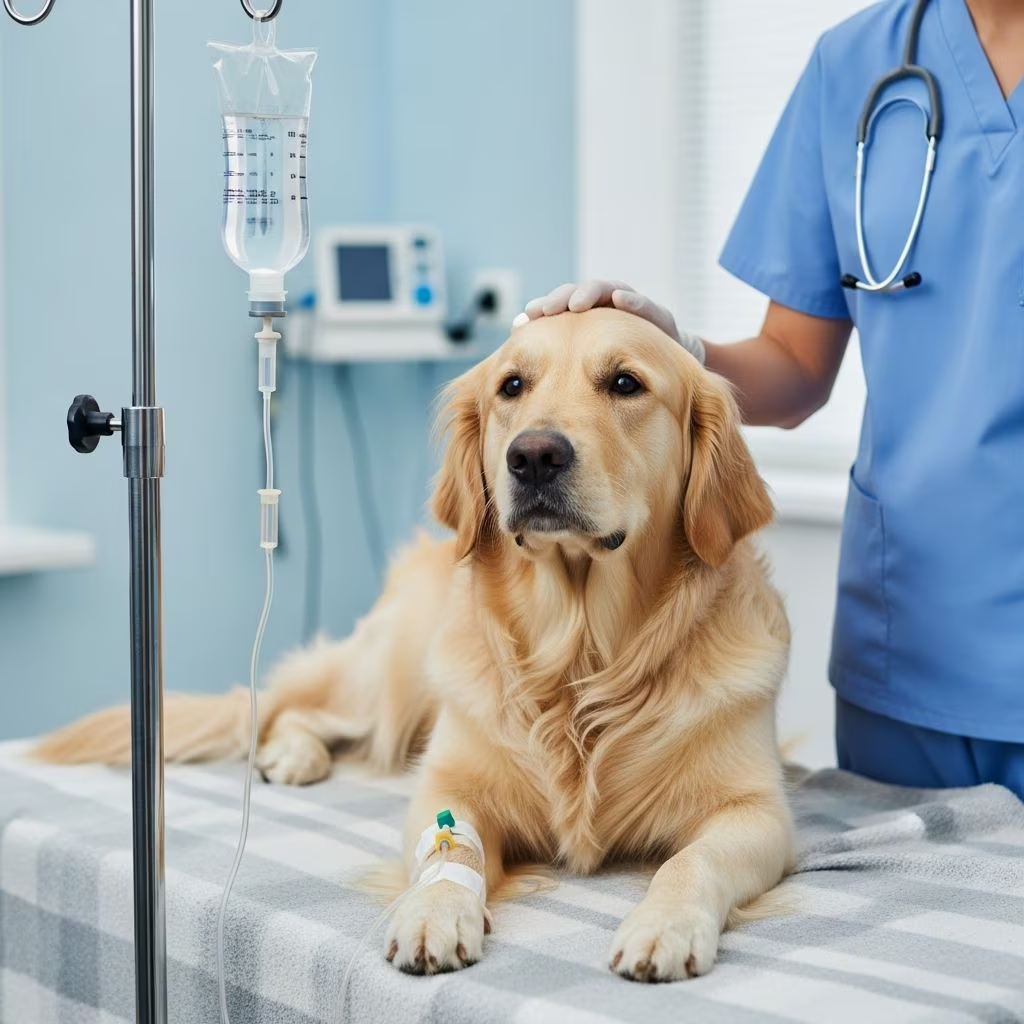
Fluid therapy plays a crucial role in canine veterinary medicine, helping dogs recover from dehydration, shock, and organ dysfunction by restoring hydration and supporting vital functions.
Understanding Hydration Needs in Dogs
Dogs can become dehydrated from vomiting, diarrhea, heatstroke, or kidney disease, leading to reduced blood volume and impaired organ perfusion. Early intervention with fluids prevents complications like acute kidney injury.
Hypovolemia, a state of low blood volume, requires rapid correction to maintain blood pressure and oxygen delivery to tissues. Dehydration, while less urgent, still demands precise fluid replacement to achieve normal hydration status.
Types of Fluids Used in Canine Therapy
Veterinarians select fluids based on the dog’s condition, electrolyte balance, and kidney function. Common categories include:
- Crystalloids: Balanced isotonic solutions like lactated Ringer’s for resuscitation and maintenance, providing electrolytes and water.
- Hypotonic solutions: Preferred in renal cases to minimize sodium overload and support kidney recovery.
- Colloids: Used sparingly for severe hypovolemia to expand plasma volume longer-term.
Maintenance rates for healthy adult dogs average 2 mL/kg/hour or 50 mL/kg/24 hours, adjusted for illness.
Phases of Fluid Administration
Fluid therapy progresses through distinct stages tailored to the dog’s stability:
- Resuscitation: For shock, administer boluses of 10 mL/kg over 15 minutes, up to three times, monitoring perfusion.
- Stabilization: Replace deficits and provide maintenance, reassessing every few hours.
- Optimization: Fine-tune based on response, aiming for euvolemia.
- Evacuation: Taper fluids gradually, using diuretics if overloaded, to promote negative balance.
| Phase | Dog Dose Example (per kg) | Duration/Monitoring |
|---|---|---|
| Resuscitation | 10 mL bolus | 15 min; check BP, lactate |
| Stabilization | Deficit + maintenance | 24-48 hrs; urine output |
| Maintenance | 2 mL/hr | Ongoing; weight, electrolytes |
Intravenous Fluid Delivery Methods
IV therapy provides the fastest access to circulation, essential for emergencies. Veterinary technicians place catheters in peripheral veins, enabling rapid boluses and continuous infusion.
Intraosseous (IO) access serves as an alternative for tiny or collapsed-vein patients, delivering fluids comparably to central lines.
Key steps for IV setup include sterile catheter placement, securing the line, and priming to remove air bubbles.
Subcutaneous Fluids: Home Administration Guide
For chronic conditions like kidney failure, subcutaneous (SQ) fluids allow at-home care, absorbing slowly under the skin.
Equipment needed:
- Fluid bag or pre-filled syringe (100-250 mL doses).
- Drip set or butterfly needle.
- Clean towels, gloves.
Step-by-step SQ administration:
- Warm fluids to body temperature.
- Part fur at scruff or flank, tent skin.
- Insert needle subcutaneously, unclamp line.
- Deliver volume over 5-15 minutes, monitoring for comfort.
- Remove needle; gentle massage site.
Owners track intake/output; typical doses are 100-200 mL daily for medium dogs with renal disease.
Calculating Fluid Requirements Precisely
Assess dehydration percentage (e.g., 5-10% body weight loss) to compute deficit: % dehydrated × body weight (kg) = liters needed.
Example: 20 kg dog at 8% dehydrated = 1.6 L deficit, replaced over 24 hours plus maintenance (40 mL/hr).
Combine with ongoing losses from vomiting/diarrhea. Formulas ensure accuracy:
- Maintenance: 2 mL/kg/hr.
- Total: Deficit/24 + maintenance + losses.
Monitoring During Fluid Therapy
Regular evaluation prevents overload or under-treatment. Track:
- Physical: Skin tent, mucous membranes, capillary refill.
- Vitals: Heart rate, blood pressure, urine output (>0.5 mL/kg/hr).
- Lab: Electrolytes, creatinine, lactate every 4-12 hours.
- Weight: Daily; gains >5% signal overload.
AAHA guidelines stress dynamic adjustments, not static plans.
Special Considerations for Kidney Disease
In acute kidney injury (AKI), fluids restore perfusion without forcing diuresis, which risks overload. Use hypotonic fluids, taper by 15-20% every 8 hours once stable.
Chronic kidney disease benefits from daily SQ fluids to combat uremia and maintain hydration.
Potential Risks and Complications
While beneficial, improper use causes issues:
- Overload: Edema, pulmonary issues, worsened renal function.
- Electrolyte imbalance: Hyponatremia from hypotonic fluids.
- Infection: Rare with sterile technique; watch SQ sites for redness.
- Phlebitis: From irritating fluids in IV lines.
Fluid overload affects multiple organs, increasing mortality; monitor urine output closely.
FAQs on Canine Fluid Therapy
Q: How often should I give SQ fluids at home?
A: Typically daily or every other day, per vet prescription; adjust based on appetite and urination.
Q: Can all dogs tolerate IV fluids?
A: Most yes, but cardiac or severe renal cases need cautious dosing.
Q: What if my dog vomits after SQ fluids?
A: Rare; contact vet. Ensure slow administration.
Q: How do I store fluid bags?
A: Refrigerate if multi-use; warm before giving.
Q: Is IO common for adult dogs?
A: Rare; mainly puppies or emergencies.
When to Seek Veterinary Help
Consult a vet immediately for lethargy, rapid breathing, swelling, or no improvement post-fluids. Home SQ works for stable chronic cases only.
Professional oversight ensures safe, effective therapy tailored to each dog.
References
- Considerations for Creating a Fluid Therapy Plan — University of Illinois College of Veterinary Medicine. 2022-12-04. https://vetmed.illinois.edu/2022/12/04/considerations-for-creating-a-fluid-therapy-plan/
- Effects of IV Fluids in Dogs and Cats With Kidney Failure — Frontiers in Veterinary Science. 2021. https://www.frontiersin.org/journals/veterinary-science/articles/10.3389/fvets.2021.659960/full
- 2024 AAHA Fluid Therapy Guidelines for Dogs and Cats — American Animal Hospital Association. 2024. https://www.aaha.org/resources/2024-aaha-fluid-therapy-guidelines-for-dogs-and-cats/
- The Basics of Fluid Therapy for Small Animal Veterinary Technicians — Today’s Veterinary Nurse. N/A. https://todaysveterinarynurse.com/internal-medicine/the-basics-of-fluid-therapy-for-small-animal-veterinary-technicians/
- Subcutaneous Fluid Administration in Dogs — VCA Animal Hospitals. N/A. https://vcahospitals.com/know-your-pet/subcutaneous-fluid-administration-in-dogs
- How to Give Subcutaneous Fluids to Dogs and Cats — PetMD. N/A. https://www.petmd.com/general-health/how-give-subcutaneous-fluids-dogs-and-cats
- IV Fluid Therapy Calculations — University of Bristol Vet School. N/A. https://www.bristol.ac.uk/media-library/sites/vetscience/documents/clinical-skills/IV%20Fluid%20Therapy%20Calculations.pdf



