

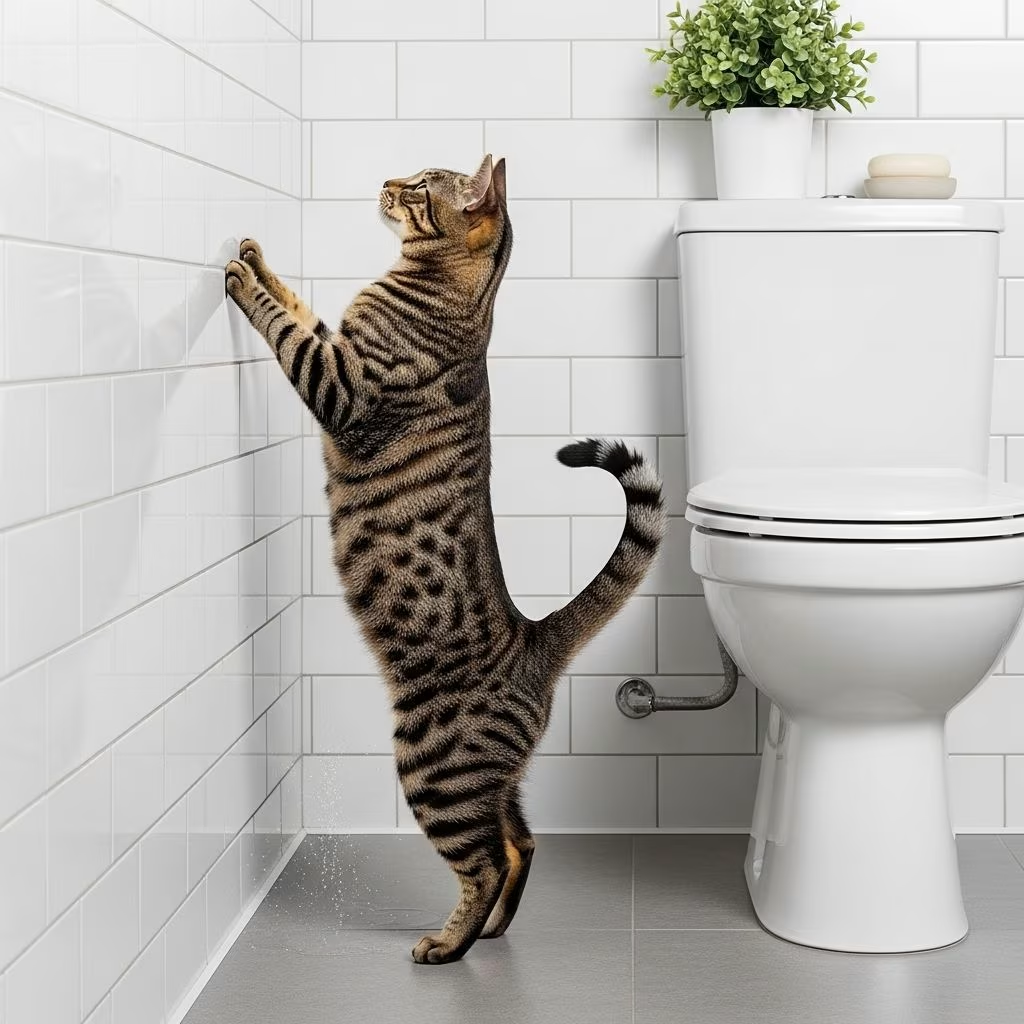
Vertical peeing in cats, where they back up to walls, furniture, or other upright surfaces and spray urine, is a common yet frustrating issue for many cat owners. Unlike typical litter box accidents, this behavior often signals territorial marking or stress rather than medical problems, though health issues must be ruled out first. Understanding the distinction between spraying (vertical) and regular inappropriate elimination (horizontal) is crucial for effective resolution.
This guide covers why cats engage in vertical peeing, how to identify it, potential medical and behavioral causes, diagnostic steps, treatment options, and prevention strategies. With prompt action, most cases can be managed successfully, restoring harmony to your home.
What Does Vertical Peeing Look Like?
Vertical peeing, also known as spraying or urine marking, involves a cat assuming a distinctive posture: backing up to a vertical surface, raising and quivering its tail, treading with hind feet, and directing a stream of urine backward. The urine often appears higher up, like on walls, doors, or curtains, in small amounts rather than large puddles. This contrasts with horizontal peeing, where cats squat and deposit larger volumes on flat surfaces, more indicative of litter box aversion or medical urgency.
- Key signs of vertical peeing: Tail raised high, urine on upright objects, small sprays rather than puddles.
- Common locations: Doorways, furniture corners, new items, or areas with strong scents.
- Affected cats: Both intact and neutered/spayed, though more prevalent in unsterilized cats or multi-cat homes.
Recognizing this posture helps differentiate it from other elimination issues, guiding whether to seek veterinary care or focus on behavioral fixes.
Medical Causes of Vertical Peeing in Cats
While vertical peeing is often behavioral, underlying health problems can trigger or mimic it. Cats in pain or discomfort from urinary issues may avoid the litter box and choose nearby vertical surfaces instead. Always rule out medical causes first with a vet visit.
Urinary Tract Infections (UTIs) and Bladder Stones
UTIs, bacterial infections in the urethra or bladder, cause pain, frequent small-volume urination, and incontinence, leading cats to pee outside the box—even vertically if associating litter with discomfort. Bladder stones, mineral formations irritating the bladder wall, produce similar symptoms: straining, blood in urine, and accidents. These are common, especially in females, and require antibiotics or dietary changes for resolution.
Feline Idiopathic Cystitis (FIC)
FIC is a sterile bladder inflammation common in young to middle-aged cats, causing painful urination and urgency without infection. Stress exacerbates it, leading to litter avoidance and vertical spraying as a pain response. Symptoms include frequent box visits with little output and vocalizing.
Kidney Disease
Chronic kidney disease, prevalent in seniors, increases thirst and urination frequency, overwhelming litter box use and causing overflow incontinence—sometimes on walls. Acute cases from toxins or infections demand immediate care.
Other Medical Issues
- Neoplasia (tumors): Rare bladder/urethral growths cause incontinence and bloody urine.
- Arthritis/mobility: Older cats struggle with high-sided boxes, opting for easy vertical spots.
- Diabetes/hyperthyroidism: Boost urine output, leading to accidents.
- Urethral blockages: Emergencies in males, with straining and minimal output.
| Condition | Key Symptoms | Prevalence | Urgency |
|---|---|---|---|
| UTI/Bladder Stones | Pain, frequent small pees, blood | Common | High |
| FIC | Straining, urgency, no infection | Common in young adults | Moderate |
| Kidney Disease | Increased thirst/urination | Older cats | High |
| Tumors | Incontinence, blood | Rare | Very High |
Behavioral Causes: Why Do Cats Spray Vertically?
Once medical issues are excluded, vertical peeing is usually spraying—a normal feline communication method to mark territory with pheromones in urine. Intact cats spray most, but stress triggers it in any cat.
- Territorial marking: New pets, visitors, or outdoor cats prompt spraying on entry points.
- Stress/anxiety: Changes like moves, new furniture, or conflicts cause insecurity.
- Litter box aversion: Dirty boxes, wrong litter type, or poor location lead to nearby vertical alternatives.
- Sexual maturity: Unneutered males/females spray to attract mates.
In multi-cat homes, hierarchy disputes amplify spraying. Unlike stress elimination, spraying targets vertical scents to advertise presence.
How to Tell If It’s Spraying or a Health Problem
Differentiate by posture, volume, and pattern:
- Spraying (behavioral): Vertical targets, small amounts, tail up, no straining.
- Medical issue: Horizontal puddles, straining, blood, licking genitals, frequent attempts.
Monitor for 24-48 hours: note posture, urine amount/color, litter visits, and other symptoms like lethargy or appetite loss. Urine staining under tail or unaware dribbling signals incontinence.
Diagnosis: When to See a Vet
Consult a vet immediately if symptoms suggest illness: straining, blood, no urination (emergency in males), or sudden onset. Expect:
- Urinalysis for infection/crystals.
- Bloodwork for kidney/diabetes.
- Imaging for stones/tumors.
- Physical exam for arthritis.
Post-diagnosis, vets may prescribe antibiotics, pain relief, or special diets.
Treatment Options for Vertical Peeing
Medical Treatments
Address root causes: antibiotics for UTIs, stone-dissolving diets, anti-inflammatories for FIC, or fluids for kidneys.
Behavioral Solutions
- Spay/neuter: Reduces spraying by 90% in most cases.
- Clean thoroughly: Use enzymatic cleaners to remove pheromones.
- Litter box optimization: One box per cat +1, unscented clumping litter, low sides, quiet spots.
- Reduce stress: Pheromone diffusers (Feliway), play therapy, vertical space.
- Confine during retraining: Limit access, reward box use.
Prevention Tips to Stop Vertical Peeing
Proactive steps minimize recurrence:
- Scoop boxes daily, deep clean weekly.
- Provide multiple, accessible boxes.
- Minimize household changes; use Feliway for stressors.
- Enrich environment: scratching posts, perches.
- Block visual access to outdoor cats.
Track progress with a elimination diary.
Frequently Asked Questions (FAQs)
Why is my neutered cat suddenly peeing on walls?
Stress, new smells, or undiagnosed UTI; vet check first, then optimize litter setup.
Is vertical peeing always spraying?
Usually, but medical pain can mimic it—look for straining or blood.
How long to stop cat spraying after neuter?
Effects in days to weeks; combine with cleaning and stress reduction.
Will my cat outgrow vertical peeing?
Unlikely without intervention; address causes early.
Emergency signs for cat peeing vertically?
No urine output, crying, blood—rush to vet.
Final Thoughts
Vertical peeing frustrates but is solvable with vet evaluation, medical treatment if needed, and behavioral tweaks. Patience and consistency pay off, preventing chronic issues.
References
- Cat Peeing Outside Litter Box: Top 12 Reasons [& What to Do] — Sploot Veterinary Care. 2023. https://www.splootvets.com/post/cat-peeing-outside-litter-box
- Inappropriate Elimination — Newport Veterinary Hospital. 2023. https://www.newportvethospital.com/inappropriate-elimination
- Urinary Incontinence in Cats — PetMD. 2024-01-15. https://www.petmd.com/cat/conditions/urinary/c_ct_incontinence_urinary
- Why Is My Cat Peeing Everywhere? Here’s What You Need to Know — CTVSH. 2023. https://ctvsh.com/why-is-my-cat-peeing-everywhere-heres-what-you-need-to-know/
- Cat Behavior Problems – House Soiling — VCA Animal Hospitals. 2024. https://vcahospitals.com/know-your-pet/cat-behavior-problems-house-soiling
- 3 Reasons Your Cat May Be Urinating Outside the Litter Box — Lebanon Animal Hospital. 2023. https://lebanonanimalhospital.com/3-reasons-your-cat-may-be-urinating-outside-the-litter-box/



