

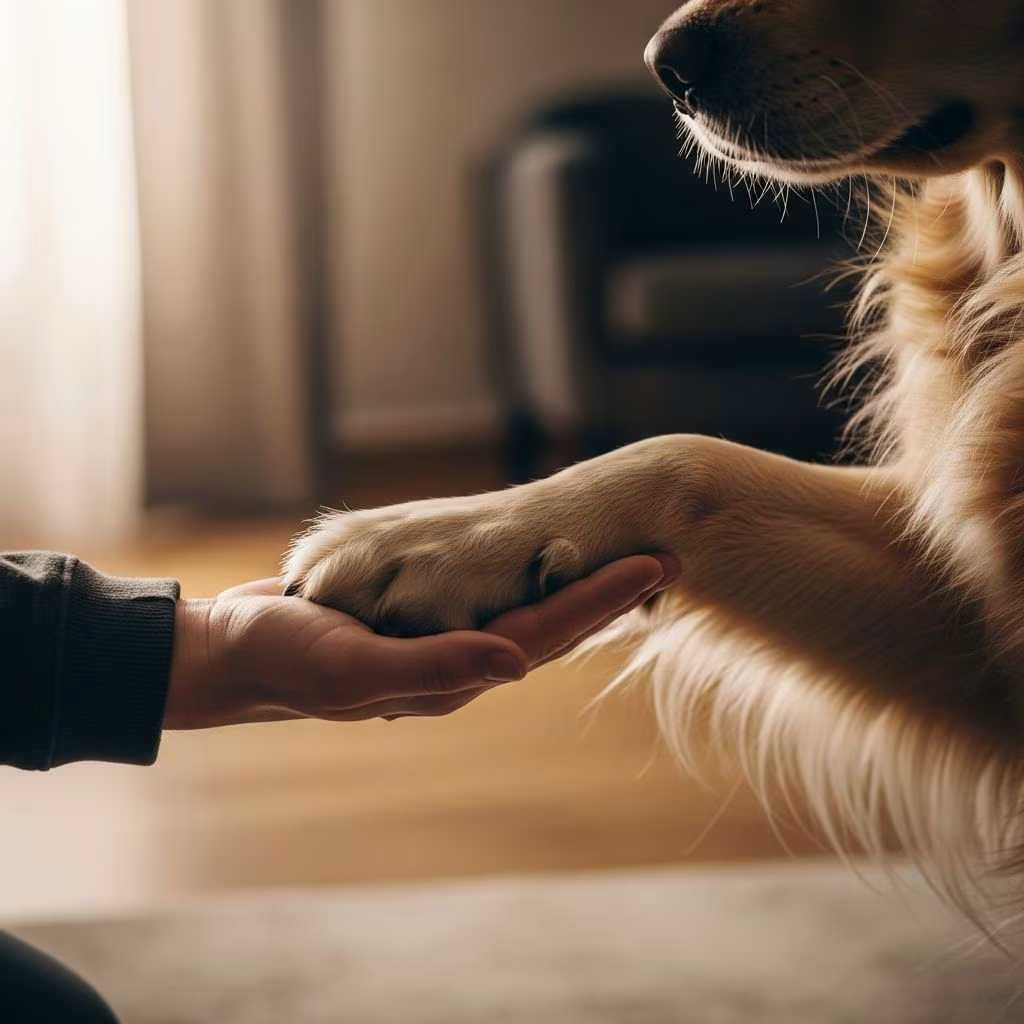
The classic paw-shake feels like a rite of passage for many dog parents. It is cute, charming, and often one of the first tricks people teach their dogs. But more trainers and behavior professionals are now questioning whether the “shake” cue is always a good idea, especially in everyday homes rather than service‑dog settings.
This article takes a closer look at why the trick can sometimes create more problems than it solves, how dogs actually learn and generalize pawing behavior, and what alternatives you can teach if you decide shaking hands is not worth the risk for your individual dog.
Why “Shake” Became a Controversial Trick
For a long time, “shake” has been framed as a harmless, fun way to impress guests and strengthen your bond. So where did its new, slightly notorious reputation come from?
Modern positive-reinforcement trainers now recognize that any behavior that is heavily rewarded tends to appear outside of formal training sessions. When you reinforce your dog for offering a paw, your dog reasonably learns:
- Pawing at people often leads to attention, treats, or both.
- Trying the behavior again later might pay off, even if no cue was given.
- Using paws is a good strategy when they want something from a human.
In other words, what you think of as a neat party trick can become your dog’s go‑to move when they are excited, frustrated, or hoping for food. Over time, this can reshape how they greet guests, ask for interaction, or handle arousing situations.
How Dogs Learn: Why Pawing Spreads to Other Moments
To understand why the “shake” cue can leak into unwanted behavior, it helps to look at the basics of how dogs learn. In reward-based training, dogs repeat actions that lead to good outcomes and gradually try those actions in more contexts.
Key learning concepts that affect the shake trick include:
- Generalization: Once your dog learns that pawing your hand earns food, they may try pawing a leg, arm, or another person, assuming the same rule applies.
- Reinforcement history: The more repetitions and the higher the rewards, the stronger and more persistent the behavior becomes.
- Spontaneous offering: Dogs often cycle through their trained tricks when they are unsure what we want; if shaking is heavily reinforced, it will appear early in that sequence.
- Context confusion: Dogs do not automatically understand that a behavior is allowed on cue but forbidden at all other times; this only comes with deliberate work on stimulus control and careful management.
Research on canine learning consistently shows that positively reinforced behaviors are more likely to recur and to appear in new settings, particularly when the reinforcement value is high and variable.
When Teaching “Shake” Can Become a Problem
Some dogs go their whole lives happily offering a polite handshake on cue and never cause an issue. For others, teaching “shake” opens the door to a string of nuisance or even risky behaviors. Whether the trick is problematic depends on your individual dog, your household, and how precisely you train.
1. Pawing Turns Into Jumping and Clawing
When you reward your dog for lifting one paw and touching people, you are also rehearsing the idea that front paws belong on humans. Many dogs struggle to distinguish between:
- One gentle paw on a forearm in training, and
- Two paws on a person’s chest when they are excited at the door.
Over time, this can morph into:
- Jumping up on guests or family members.
- Scratching at people’s clothes or bare skin.
- Pawing at servers or strangers in public places, such as patios or cafes.
Jumping and rough pawing are among the most common reasons guardians seek help from dog trainers, and both behaviors are easily fueled by unintentionally reinforcing “hands-on” greetings.
2. Safety Risks for Children, Older Adults, and Strangers
For some humans, especially young children and older adults, a seemingly harmless paw or jump can be more than a minor annoyance. Potential risks include:
- Scratches and bruises from nails or sudden movements.
- Loss of balance or falls if a dog jumps up with both paws.
- Fear and startle responses in people who are not comfortable with dogs.
In public spaces or socially complex environments (like busy sidewalks, restaurants, or friends’ homes), an uninvited paw can damage your dog’s reputation and, in worst cases, escalate into complaints or conflicts.
3. Stress and Discomfort for Shy or Sensitive Dogs
Not every dog enjoys having their paws handled, even by people they know. For shy, anxious, or touch‑sensitive dogs, being asked to offer a paw to a stranger can:
- Increase tension and vigilance during greetings.
- Create a conflict between wanting rewards and wanting to avoid touch.
- Potentially contribute to growling, snapping, or avoidance if they feel cornered.
Studies on canine body language and fear responses show that forced or unwanted contact, especially with sensitive body parts like paws, can heighten stress and contribute to defensive behavior in some dogs.
4. Mixed Messages About Consent and Handling
Many modern training approaches emphasize cooperative care and consent-based handling: teaching dogs that they can opt in and out of touch, grooming, or medical procedures. When you treat the handshake as a social requirement or party trick, it may conflict with this philosophy by:
- Encouraging contact on your schedule, not the dog’s.
- Reinforcing the idea that people can take a dog’s paw at any time.
- Inviting strangers to grab a paw without first checking in with the dog’s comfort level.
For some dogs, this can erode trust around handling rather than building it.
When “Shake” Might Still Be Appropriate
Despite its drawbacks, there are homes and contexts where the shake cue can be used carefully and responsibly. It is not inherently a “bad” behavior; it is simply one that requires more thought than its cute image suggests.
| Situation | Shake May Be Reasonable If… |
|---|---|
| Highly trained service or working dog | You have strong stimulus control and the dog only offers behaviors on cue. |
| Adult-only, dog-savvy household | Everyone understands the rules, and nobody is physically vulnerable to occasional pawing. |
| Low-arousal, calm dog | Your dog rarely jumps or paws otherwise, and you consistently reinforce four paws on the floor. |
| Therapy or demo settings | Interactions are structured, supervised, and practiced with strict criteria. |
Whether the trick fits your life ultimately comes down to your personal tolerance for pawing and your willingness to do the extra training needed to keep it under control.
Questions to Ask Before Teaching “Shake”
If you are on the fence about the handshake, it helps to ask yourself a few honest questions:
- Do I already struggle with my dog jumping on people or putting paws on laps?
- Do we regularly have children, older adults, or mobility‑impaired visitors in our home?
- Is my dog shy, touch‑sensitive, or uncomfortable with strangers touching their paws?
- Do I care if my dog sometimes paws at me uninvited when they want something?
- Am I prepared to put in the work to teach the difference between on‑cue and off‑limits pawing?
If you answer “yes” to concerns about safety, stress, or existing jumping problems, the safest option is often to skip the shake cue entirely and build other, more polite greeting behaviors instead.
Shaking Off “Shake”: What to Do If You Regret Teaching It
If you have already taught the trick and now see pawing cropping up everywhere, you do not need to panic or feel ashamed. Training is always a moving target, and you can adjust course at any time.
1. Stop Asking for the Behavior
The first and simplest step is to retire the cue in everyday life:
- Avoid asking for a handshake with guests or in public settings.
- Phase it out of your regular trick routine with your dog.
- Redirect friends or family who try to ask your dog to shake.
When the behavior stops getting reinforced on cue, many dogs gradually offer it less often.
2. Reward a Calm Sit Instead
Choose a solid, polite alternative to greet people, such as:
- Sit with all four paws on the floor.
- Down stay on a mat when guests arrive.
- Hands‑off targeting like touching a hand with their nose instead of a paw.
Consistently reward these behaviors in situations where your dog used to shake, and gradually these will become your dog’s new default strategies for seeking attention.
3. Manage the Environment During Greetings
While you are retraining, make greetings as easy as possible for your dog:
- Use a leash, baby gate, or harness to prevent jumping during the early stages.
- Ask visitors to ignore your dog until you cue a calm sit or similar behavior.
- Practice scripted greeting routines with friends who follow your instructions.
Research on behavior modification in dogs shows that combining management (preventing practice of the unwanted behavior) with reinforcement of alternatives is more effective than punishment or simple “no” cues.
A Friendlier Alternative: Teaching a “Wave” Instead
If you love the idea of a cute, social trick but want to reduce the risk of unwanted contact, many trainers recommend teaching a “wave” instead of a traditional handshake.
Why the Wave Is Less Likely to Cause Trouble
The wave shares some of the same elements as shake—lifting a paw and engaging with people—but it removes the direct physical contact. That difference matters because:
- The dog’s paw is aimed at the air, not at a person’s body.
- It requires more conscious effort than a simple paw touch, making it less likely to appear randomly.
- It is easier for people to admire from a distance without reaching for the dog.
You still get the charm, photos, and conversation starter you want, but with a lower risk of scratches, jumps, or misinterpreted invitations to touch.
Basic Steps to Teach a Friendly Wave
There are many ways to teach a wave using positive reinforcement. One simple approach is:
- Start with your dog in a sit facing you.
- Hold a treat slightly above and to the side of one front paw so your dog shifts weight and begins to lift that paw.
- Mark the moment the paw leaves the ground (with a clicker or a short word like “Yes!”) and then reward.
- Gradually wait for a slightly higher or clearer paw lift before marking and treating.
- Once the motion is consistent, add a verbal cue such as “Wave” just before you expect the behavior.
- Over time, reduce the hand lure and reward only when your dog lifts the paw in response to the word alone.
Because the wave is more physically demanding and does not involve direct contact with the person, most dogs are less inclined to offer it repeatedly in everyday situations unless prompted.
Balancing Fun, Safety, and Your Dog’s Well‑Being
Ultimately, there is no universal rule that “shake” is always bad or always safe. It is a personal training choice that depends on:
- Your household makeup and visitors.
- Your dog’s size, temperament, and comfort with touch.
- Your tolerance for the occasional spontaneous paw.
- Your willingness to train and maintain clear boundaries around greetings.
Many guardians decide that the safest, most respectful option—especially for shy, large, or easily excited dogs—is to skip the handshake and put their training energy into solid, no‑contact behaviors like sits, nose targets, or waves. Others may keep the trick but use it sparingly and under tight control.
Whatever you choose, centering your dog’s comfort, the safety of the people around them, and the behaviors you truly want to live with every day will help you make the best decision for your team.
Frequently Asked Questions (FAQs)
Q: Is teaching my dog to shake always a bad idea?
A: Not always. In highly controlled homes with well-trained, calm dogs and no vulnerable visitors, shake can be used responsibly. But because it encourages pawing at people, many trainers consider it a higher‑risk trick for typical family dogs.
Q: Can I undo the problems caused by teaching “shake”?
A: You cannot erase your dog’s learning history, but you can greatly reduce pawing by retiring the cue, ignoring unsolicited shakes, and heavily rewarding alternative behaviors like sitting calmly or keeping all four paws on the floor.
Q: Is it better to teach a wave instead of a shake?
A: For most pet homes, yes. A paw wave keeps distance between dog and person, is less likely to morph into jumping or scratching, and still satisfies the desire for a cute, social trick.
Q: What if my dog is scared of having their paws touched?
A: Avoid paw‑based tricks like shake. Focus instead on building trust around touch using slow desensitization and counterconditioning, and choose tricks that involve safer body parts, like nose targets or spins. If your dog shows strong fear or resistance, working with a certified behavior professional is recommended.
Q: How do I know if my dog is uncomfortable when asked to shake?
A: Watch for subtle stress signals such as lip licking, yawning, looking away, turning the head, pulling the paw back, or stiffening the body. If you see these, stop asking for the behavior, give your dog space, and consider alternatives that respect their comfort.
References
- Handling, Touch and Restraint: Behavioral and Physiological Responses of Dogs — Stella JL, Croney CC. 2016-09-01. https://doi.org/10.1016/j.jveb.2016.08.003
- AVSAB Position Statement on Humane Dog Training — American Veterinary Society of Animal Behavior. 2021-01-01. https://avsab.org/wp-content/uploads/2021/01/HumaneDogTraining_PositionStatement_Download.pdf
- The Welfare Consequences and Efficacy of Training Pet Dogs with Remote Electronic Training Collars in Comparison to Reward Based Training — Cooper JJ et al. 2014-02-01. https://doi.org/10.3390/ani4020385
- Dog training methods: their use, effectiveness and interaction with behaviour and welfare — Blackwell EJ, Twells C, Seawright A, Casey RA. 2008-05-01. https://doi.org/10.1016/j.applanim.2008.02.004
- Shake It Off: Investigating the Function of a Domestic Dog Behavior — Tu NM et al. 2024-06-07. https://pmc.ncbi.nlm.nih.gov/articles/PMC11591167/



