

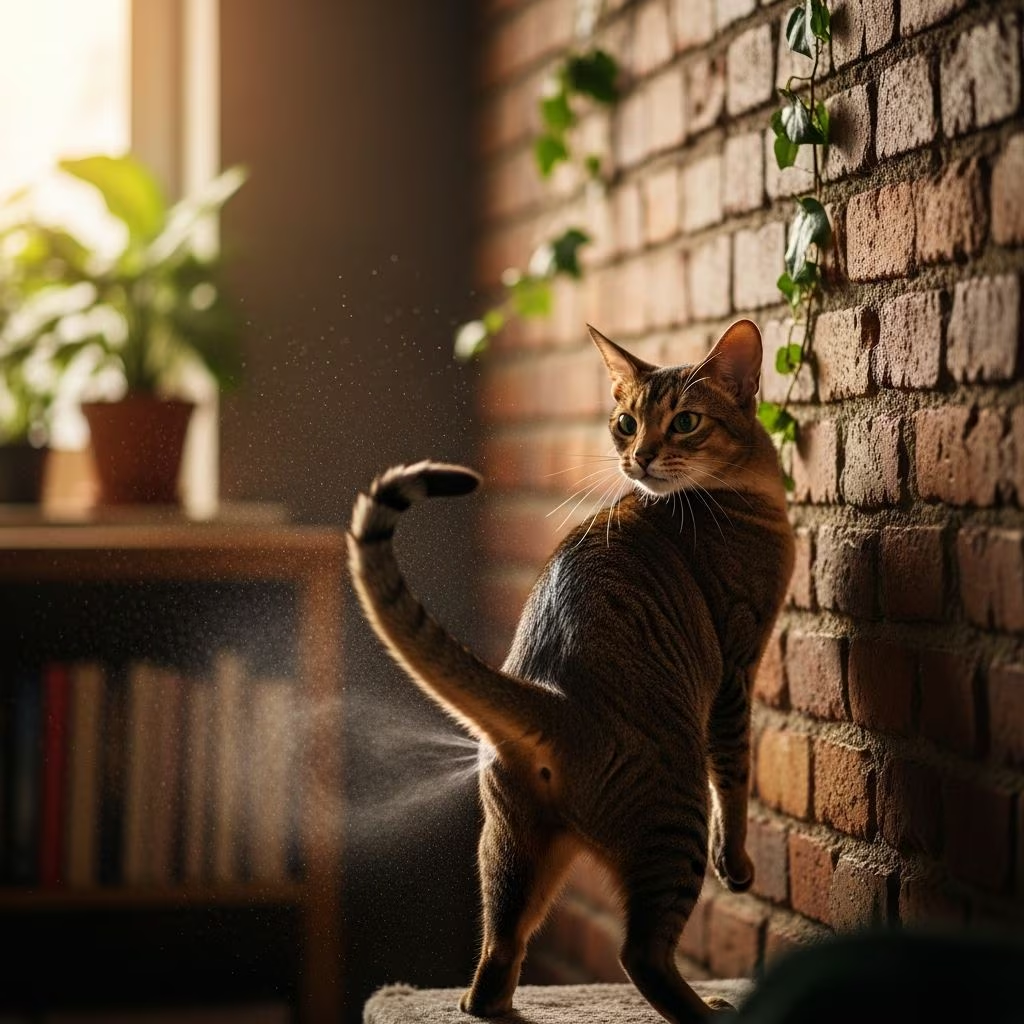
While all cats have the physical ability to spray urine, not every cat does so. Spraying is a normal feline communication method, more common in unneutered males but possible in females too, often triggered by territory, stress, or hormones.
This behavior involves a cat backing up to a vertical surface—like a wall, door, or furniture—raising its tail, quivering it, and releasing a small amount of urine. Unlike typical urination, which occurs in a squat position to empty the bladder, spraying leaves pungent pheromones to mark territory. Indoor spraying frustrates owners due to its strong odor, but understanding the causes empowers effective solutions.
Do All Male Cats Spray?
No, not all male cats spray. Males are significantly more likely to spray than females, especially if intact (unneutered), but neutering before 6 months of age prevents this in about 95% of cases. Even neutered males may spray under stress, though it’s rare.
Females spray less frequently but can do so when in heat or stressed. Spaying resolves heat-related spraying, while territorial anxiety affects both genders. Factors like multi-cat households or visible outdoor cats increase risks for any cat.
- Intact males: 90-100% spray risk due to testosterone.
- Neutered males: 10% or less, if stressed.
- Intact females: Spray during heat cycles.
- Spayed females: Rare, usually anxiety-driven.
Why Do Cats Spray?
Cats spray primarily to communicate via scent, depositing urine with pheromones on vertical surfaces. This instinctive behavior serves multiple purposes.
Territorial Marking
The most common reason: Cats claim space to deter rivals. Indoor cats may spray near windows if spotting outdoor felines, or in multi-cat homes to set boundaries. Stressed or insecure cats spray more, not dominant ones—contrary to myth.
Mating Signals
Intact cats spray to advertise availability. Males mark to attract females; both genders signal fertility. Late spaying/neutering (after 1 year) may not fully eliminate this habit.
Stress and Anxiety
Changes like moves, new pets, or routine shifts trigger spraying as a coping mechanism. Household conflicts or resource scarcity (litter boxes, food) exacerbate it. Medical issues like UTIs can mimic or cause spraying.
Other Triggers
- Visible/smelly outdoor cats.
- New household members (people/pets).
- Inadequate litter access.
- Illness or pain.
| Trigger | Examples | Common in |
|---|---|---|
| Territorial | Neighbor cats, multi-cat homes | All, especially males |
| Mating | Heat cycles | Intact cats |
| Stress | Moves, new pets | Any stressed cat |
| Medical | UTIs, arthritis | Seniors, ill cats |
How to Stop a Cat From Spraying
Stopping spraying requires addressing root causes. Start with a vet visit to rule out health issues—UTIs or crystals can cause sudden onset.
Spay or Neuter
The most effective step: Reduces spraying by 90%+ in males, most females. Early procedure (under 6 months) yields best results.
Reduce Stressors
Identify changes: Block window views of outsiders with curtains. Use pheromone diffusers (Feliway) to calm.
Improve Environment
- Provide 1+ litter box per cat in quiet spots.
- Offer vertical spaces (shelves, trees).
- Separate feuding cats gradually.
Cleaning Protocols
Enzymatic cleaners break down pheromones—regular cleaners fail, encouraging re-marking. Avoid ammonia-based products mimicking urine.
Behavior Interventions
Never punish: It worsens stress. Distract with toys/treats if caught pre-spray. Consult behaviorists for persistent cases.
- Vet exam first.
- Spay/neuter if needed.
- Clean thoroughly.
- Add litter boxes/resources.
- Use calming aids.
- Monitor for 4-6 weeks.
Spraying vs. Inappropriate Urination
Key distinction: Spraying targets verticals (small volume, strong odor); urination soaks horizontals (large volume, to empty bladder). Misdiagnosis leads to wrong fixes—litter issues cause peeing, not spraying.
- Spraying: Vertical, tail up, quivering.
- Urination: Squat, puddle.
Common Myths About Cat Spraying
Myth 1: Only males spray. Females do too, especially in heat or stress.
Myth 2: It’s dominance. Actually insecurity/territorial defense.
Myth 3: Punishment stops it. Increases stress, worsens behavior.
Myth 4: Same as accidents. No—communicative vs. elimination.
Myth 5: Spiteful/\”hates you.\” Environmental stress, not personal.
Frequently Asked Questions (FAQs)
Why is my neutered cat spraying suddenly?
Stress, medical issues, or new stimuli. Vet check first, then reduce anxiety.
How do I clean cat spray?
Use enzymatic cleaners like Nature’s Miracle. Multiple treatments needed.
Will pheromone products stop spraying?
They help stress-related cases (50-70% success), not all.
Can multiple cats live without spraying?
Yes, with ample resources, slow intros, and no overcrowding.
Is spraying a sign of illness?
Possibly—UTIs, diabetes, etc. Rule out medically.
Spraying is manageable with patience. Most cats stop with proper intervention, restoring harmony.
References
- 13 Common Cat Myths Debunked! — Union Lake Pet Services. Accessed 2026. https://unionlakepetservices.com/blog/13-common-cat-myths-debunked
- 5 Common Cat Spraying Myths Busted — YouTube (Cat Behaviour Deep Dives). Accessed 2026. https://www.youtube.com/watch?v=4B8ol7c20wI
- Is It True That All Cats Spray? Vet-Verified Facts & FAQ — Catster. Accessed 2026. https://www.catster.com/cat-behavior/is-it-true-that-all-cats-spray/
- Stop Cat Spraying in House — Best Friends Animal Society. Accessed 2026. https://bestfriends.org/pet-care-resources/why-my-cat-spraying-house-and-how-do-i-stop-it
- Cat Behavior Problems – Marking and Spraying Behavior — VCA Animal Hospitals. Accessed 2026. https://vcahospitals.com/know-your-pet/cat-behavior-problems-marking-and-spraying-behavior



