

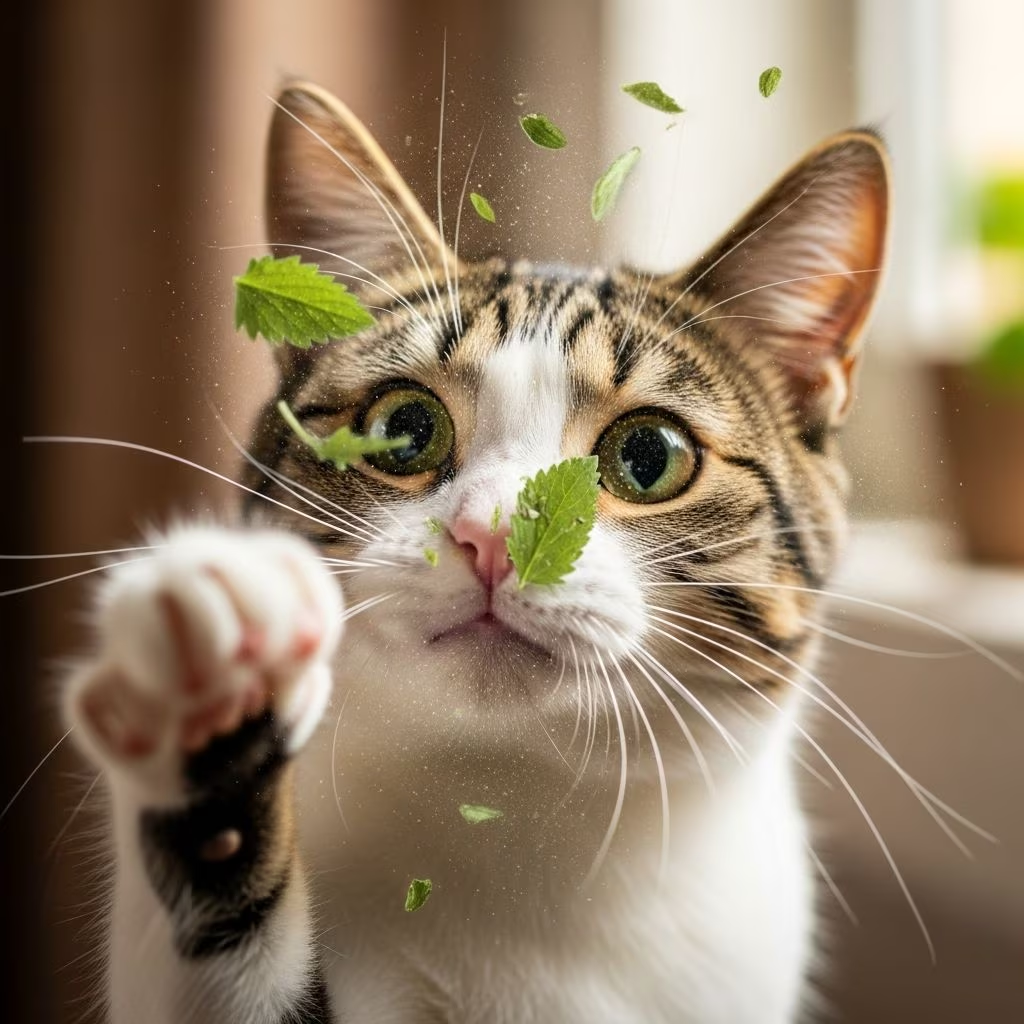
The sight of a cat rolling ecstatically on the floor after encountering catnip is a classic scene for pet owners. But is it true that all cats react to catnip? The short answer is no—not every cat succumbs to its charms. Approximately 60-80% of cats exhibit a response, influenced by genetics, age, and individual sensitivity. This article dives deep into the science of catnip, its active compound nepetalactone, why some cats ignore it, the behaviors it triggers, safety considerations, and effective alternatives.
What Is Catnip and What Does It Do to Cats?
Catnip, scientifically known as Nepeta cataria, is a perennial herb in the mint family native to Europe, Asia, and parts of Africa. It’s widely available dried, fresh, or in toys, sprays, and treats. The magic lies in nepetalactone, an essential oil concentrated in the plant’s leaves and stems, released when crushed or rubbed.
When a cat sniffs nepetalactone, it binds to receptors in the nose and stimulates the vomeronasal organ (VNO)—a scent-detection structure in the roof of the mouth linked to the brain’s olfactory bulb. This triggers a burst of neural activity, mimicking pheromones and activating the brain’s opioid system, similar to how opioids affect humans by elevating beta-endorphins, the ‘happiness hormone’.
Effects typically last 5-15 minutes, followed by a refractory period of 30 minutes to 2 hours where the cat becomes desensitized. Unlike true hallucinogens, catnip doesn’t cause disorientation, vomiting, or dilated pupils—signs of being ‘high’ in a harmful sense.
How Do Cats React to Catnip?
Catnip reactions vary but share common euphoric traits:
- Rolling and rubbing: Cats flop onto their backs, writhing and rubbing cheeks, chin, and body against the plant or toy.
- Playful hyperactivity: Zoomies, batting, pouncing, and batting at imaginary prey.
- Vocalizations: Meowing, yowling, purring, or chirping more intensely.
- Physical signs: Drooling, dilated pupils, skin rippling (wavelike contractions over the back), head shaking, and hind-leg kicking.
- Passive responses: About 20% show calmer behavior like zoning out or reduced activity.
These mimic sexual or hunting behaviors, likely an evolutionary holdover. Interestingly, nepetalactone also repels mosquitoes—rubbing it on fur provides natural insect protection, halving mosquito landings in studies.
| Active Behavior | Passive Behavior |
|---|---|
| Hyperactivity (80%) | Relaxed zoning (20%) |
| Duration: 10-15 min | Duration: 5-10 min |
| Examples: Rolling, zoomies | Examples: Staring, lying still |
Not All Cats React to Catnip—Here’s Why
Only about 60-70% of adult domestic cats respond to catnip, per veterinary studies. Sensitivity is hereditary, linked to a dominant gene—kittens under 6-8 weeks and seniors over 15 years often show no reaction as the trait matures late and fades with age.
Big cats like lions, tigers, leopards, lynxes, and jaguars respond similarly, but not domestic cats under 3 months or those without the gene. In one study, 6% of cats ignored all attractants, while 24% reacted to everything tested.
Non-responders aren’t defective; they simply lack olfactory receptors for nepetalactone. Females may respond less if spayed early, though evidence is anecdotal.
Alternatives to Catnip for Non-Responders
If your cat ignores catnip, try these:
- Silver vine (Actinidia polygama): Contains nepetalactol, even more potent than nepetalactone. 70% of catnip non-responders love it; effective on big cats too.
- Valerian root: Earthy scent triggers similar euphoria via actinidine; use sparingly as it can sedate.
- Tatarian honeysuckle: Berries yield iridoids mimicking catnip.
A study exposed 100 cats to four plants: 71% of catnip ignorees responded to silver vine, with 94% reacting to at least one. These iridoids (terpenoids) evolved to deter aphids but euphorize cats via opioid pathways.
Is Catnip Safe for Cats?
Yes, catnip is non-addictive and non-toxic. Sniffing poses no risk; eating small amounts aids digestion with antidiarrheal properties. Overindulgence (large quantities) may cause vomiting or diarrhea—offer sparingly.
No long-term effects; opioid receptor blockade prevents response, confirming safety. It’s used for anxiety relief, pain mitigation, and enriching solo time. Pregnant cats should avoid excess due to mild uterine stimulant properties, though evidence is limited.
How Catnip Works: The Science Behind the Euphoria
Nepetalactone, biosynthesized via unique terpene pathways in catnip glands, volatilizes when rubbed. It enters via olfactory epithelium to the VNO, then brain, releasing dopamine and endorphins without addiction risk.
Ingestion stimulates via gut-VNO pathways; scent via main olfactory bulb. Researchers at John Innes Centre decoded biosynthesis for potential anti-cancer drugs. Iwate University’s work patented nepetalactol repellents.
Evolutionarily, plant iridoids repelled herbivores; cats’ response may aid parasite control in wild ancestors.
Frequently Asked Questions (FAQs)
What percentage of cats react to catnip?
About 60-80% of adults; genetic, absent in kittens under 6 weeks.
Can kittens have catnip?
Wait until 6-8 weeks; sensitivity develops then.
Does catnip get cats high?
It induces euphoria via opioids, but no toxicity or withdrawal.
Can cats overdose on catnip?
No overdose risk; excess causes mild GI upset only.
Why does my cat ignore catnip?
Genetic non-responder (30-40%); try silver vine.
Is catnip safe to eat?
Yes, in moderation; aids digestion.
Do big cats like catnip?
Yes, leopards, jaguars, lynxes respond strongly.
Final Thoughts on Catnip and Your Cat
Whether your cat flips for catnip or not, these plants enrich lives, reduce stress, and entertain. Experiment responsibly with alternatives to find your feline’s bliss. Consult vets for anxious cats—catnip complements but doesn’t replace care.
References
- How catnip makes nepetalactone — John Innes Centre. 2023-10-18. https://www.jic.ac.uk/press-release/how-catnip-makes-nepetalactone/
- Why cats are crazy for catnip — Science | AAAS. 2020-12-09. https://www.science.org/content/article/why-cats-are-crazy-catnip
- What Is Catnip and What Does It Do to Cats? — PetMD. 2024-05-15. https://www.petmd.com/cat/general-health/what-is-catnip
- Catnip: Its uses and effects, past and present — PMC – NIH. 2006-02-01. https://pmc.ncbi.nlm.nih.gov/articles/PMC1480656/
- Catnip Study — Cats Cradle Senior Cat Sanctuary. 2022-08-12. https://www.cats-cradle.org/catnip-study.html



