

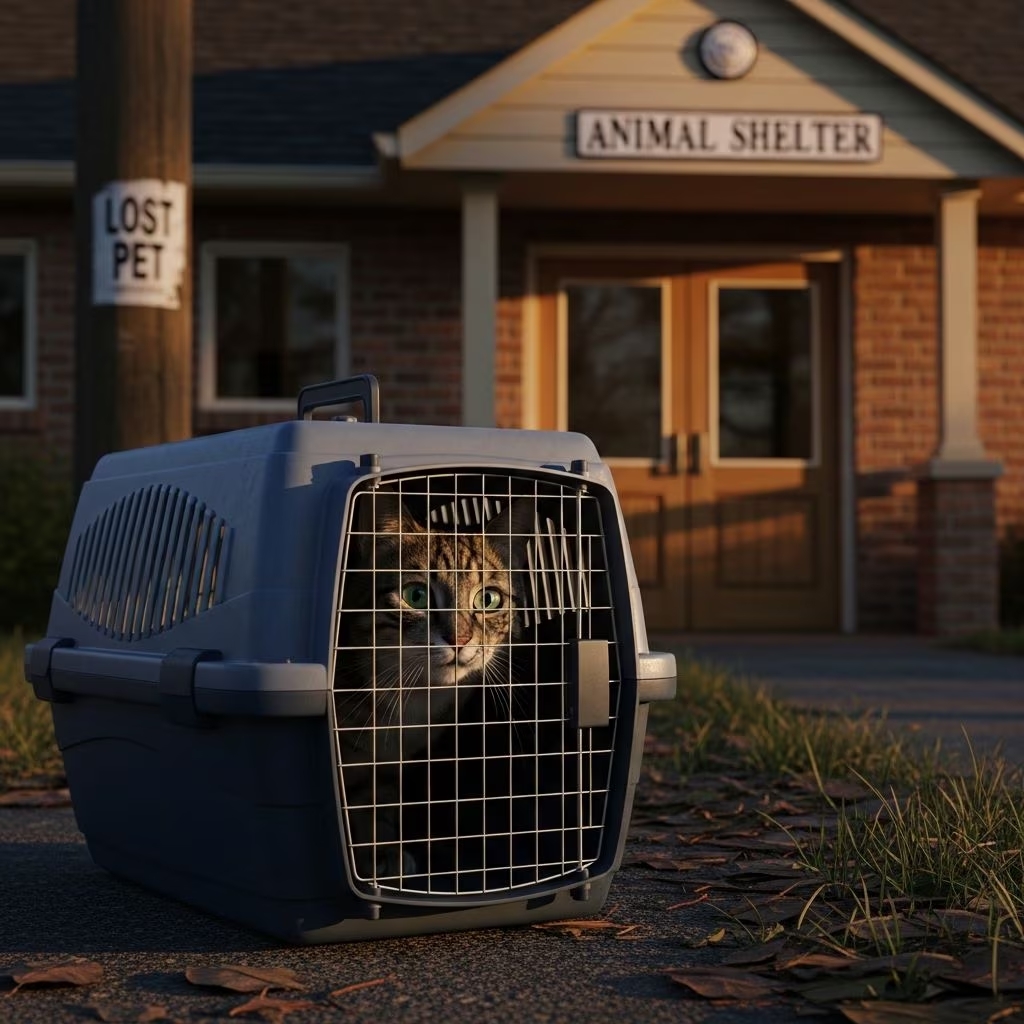
In most places across the United States, it is not illegal to surrender a cat to an animal shelter, provided you follow the shelter’s specific intake procedures and local regulations. However, laws and policies differ significantly by state, county, and even individual shelter, with requirements often focusing on verifying ownership, ensuring the cat’s health, and preventing abandonment. Abandoning a cat—leaving it without proper surrender—is illegal in all states as it constitutes animal cruelty. This article breaks down the legal landscape, surrender processes, common requirements, state variations (with a focus on California), alternatives to shelters, and frequently asked questions to help cat owners make informed, responsible decisions.
Understanding Animal Surrender vs. Abandonment
Surrendering a cat involves formally relinquishing ownership to a shelter through established channels, typically requiring identification, paperwork, and sometimes fees. This protects both the owner and the animal by ensuring traceability and care. In contrast, abandonment—dumping a cat at a location without notification—falls under animal cruelty statutes nationwide, punishable by fines, jail time, or both.
- Legal Surrender: Contact shelter ahead, provide ID, complete forms verifying ownership.
- Illegal Abandonment: Leaving cat tied to shelter door or roadside without process; violates anti-cruelty laws.
Shelters prioritize owner surrenders over strays to reduce euthanasia rates, but high intake volumes mean waitlists are common. Always call ahead—many public shelters in urban areas turn away surrenders due to capacity.
General Surrender Process at U.S. Shelters
The typical process for dropping off a cat includes several steps to comply with welfare standards:
- Appointment Required: Most shelters mandate appointments via phone or online to manage space.
- Owner Verification: Present government-issued ID; sign statement affirming lawful ownership. False claims can incur $1,000 penalties in some areas.
- Health and History: Provide vaccination records, medical history; note behavior issues.
- Fees: Vary from $0-$100+; some waive for low-income or veterans.
- Post-Surrender: Cat enters holding period (3-7 days for owners to reclaim), then available for adoption after spay/neuter/microchip.
Private no-kill shelters like those affiliated with ASPCA or Best Friends Animal Society often have stricter criteria, prioritizing foster-to-adopt programs.
Common Shelter Requirements for Cat Surrender
Shelters impose requirements to ensure cats are adoptable and to curb overpopulation. Key mandates include:
- Spay/Neuter: Many states prohibit releasing unsterilized cats; owners may need to comply pre-surrender. Exceptions for kittens under 8 weeks.
- Microchipping: Required before release; owner agrees to chip within 30 days if not on-site.
- Vaccinations: Rabies vaccine often mandatory; proof speeds process.
- Age/ID Limits: Must be 18+; photo ID with address proof.
| Requirement | Purpose | Common Exceptions |
|---|---|---|
| Spay/Neuter | Population control | Kittens <8 weeks |
| Microchip | Ownership tracking | Agreement to comply in 30 days |
| ID/Proof of Ownership | Prevent dumping | Strays (no owner claim) |
| Fees | Offset costs | Veterans, low-income |
State-Specific Laws: Focus on California
California has some of the nation’s strictest animal welfare laws, consolidated under Food & Agricultural Code Sections 31750-31752. Key provisions:
- Ownership ID: Owners must present sufficient ID and sign ownership statement upon relinquishment; falsification penalties up to $1,000.
- Spay/Neuter Deposit: Shelters cannot release unsterilized cats without deposit or agreement; applies to public/private shelters.
- Veteran Waivers: No adoption fee for cats if veteran ID presented; limited to 1 cat per 6 months.
- Microchipping: Mandatory for release/adoption; shelter not listed as primary owner.
- Feral Cats: Caretakers exempt from feeding bans; shelters cannot trap for euthanasia if TNR (Trap-Neuter-Return) viable.
In Los Angeles, stray cats held 30 days before adoption/surrender options; fees waived for found animals. Recent bills like AB2265 expand veteran perks and evacuation holds (90-day no-euthanasia for disaster pets). Other states like Texas or Florida have looser rules but similar cruelty bans.
Alternatives to Traditional Shelters
Due to overcrowding (euthanasia rates ~700k cats/year nationally), explore these before surrendering:
- Rehoming Networks: Platforms like Rehome by Adopt-a-Pet match directly with families.
- Breed Rescues: Specialized groups for Siamese, Persians, etc., often no-kill.
- Foster Programs: Short-term care via shelters; LA County provides supplies.
- TNR for Feral/Strays: Sterilize and release; legal protections for caretakers.
- No-Kill Shelters: Best Friends (93% save rate) prioritizes transfers.
Low-cost spay/neuter via programs like FixNation reduces future surrenders.
Challenges and Overcrowding in Shelters
U.S. shelters intake ~6.5M animals yearly; cats face higher euthanasia due to feral populations and litter rates (4-6 kittens per cycle). Post-COVID surges hit 20% in some areas. Solutions include:
- Mandatory spay/neuter laws.
- Foster expansion.
- Retail pet sale bans (CA AB506).
Owners citing allergies, moves, or costs drive 30% of surrenders—preventable with planning.
Frequently Asked Questions (FAQs)
Q: Is it illegal to drop a cat off at a shelter without an appointment?
A: Not inherently illegal, but many shelters refuse no-appointment surrenders due to capacity; abandonment without process is illegal.
Q: Do I need to spay/neuter my cat before surrender?
A: Often required or deposit needed; CA mandates for release.
Q: Can shelters charge surrender fees?
A: Yes, $20-$100 common; waivers for veterans/low-income.
Q: What about feral cats?
A: TNR preferred; caretakers have redemption rights without fees.
Q: How long before my surrendered cat is adopted?
A: 3-7 day hold, then spay/microchip; varies by shelter.
Q: Are there ID requirements?
A: Yes, photo ID and address proof; ownership statement.
Final Thoughts on Responsible Pet Ownership
Surrendering should be last resort—commit to lifetime care when adopting. Resources like ASPCA helplines aid retention. By understanding laws and alternatives, owners ensure humane outcomes amid shelter strains.
References
- CA – Cats – Consolidated Cat Laws — Animal Legal & Historical Center. Accessed 2026. https://www.animallaw.info/statute/ca-cats-consolidated-cat-laws
- California Initiative on Animal Shelter Standards — CA Dept. of Justice. 2007. https://oag.ca.gov/system/files/initiatives/pdfs/07-0059%20(i728_07-0059_Initiative).pdf
- California-2023-AB2265-Amended — LegiScan. 2024-03-18. https://legiscan.com/CA/text/AB2265/id/2962649/California-2023-AB2265-Amended.html
- Advocacy Legislation — California Animal Welfare Assoc. Accessed 2026. https://www.calanimals.org/advocacy-legislation
- LA Municipal Code SEC. 53.09 — American Legal Publishing. Accessed 2026. https://codelibrary.amlegal.com/codes/los_angeles/latest/lamc/0-0-0-136501
- FAQ – LA County Animal Care — LA County Animal Care & Control. Accessed 2026. https://animalcare.lacounty.gov/faq/



