

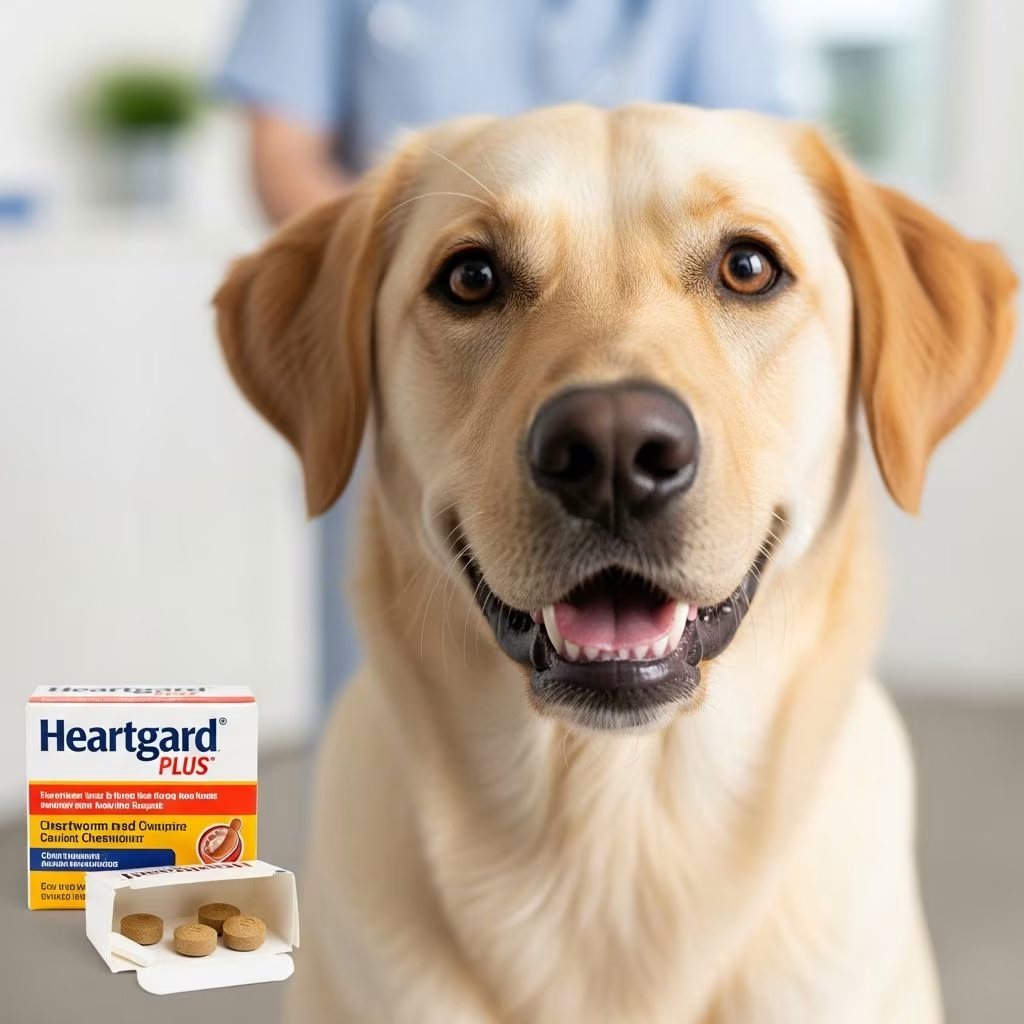
Heartgard is a widely used monthly chewable medication primarily designed to prevent heartworm disease in dogs by targeting the larval stages of Dirofilaria immitis, the heartworm parasite transmitted through mosquito bites. Composed mainly of ivermectin combined with pyrantel pamoate, it also controls certain intestinal parasites like hookworms and roundworms. When administered as directed, Heartgard demonstrates a strong safety profile backed by extensive laboratory, field, and regulatory studies.
Understanding Heartgard’s Core Components and Mechanism
The active ingredient ivermectin belongs to the macrocyclic lactone class of antiparasitic drugs. It works by interfering with the parasite’s nerve and muscle functions, leading to paralysis and death of heartworm larvae (microfilariae and L3/L4 stages). Pyrantel pamoate complements this by paralyzing intestinal nematodes, expelling them from the dog’s system. This dual action makes Heartgard effective not just for prevention but also for managing common gastrointestinal worms.
Administered orally once monthly, the chewable format is palatable to most dogs, with field trials reporting over 97% acceptance rates. Dosing is weight-based, ensuring appropriate delivery for dogs from 6 weeks of age and up, including breeding animals.
Proven Efficacy Against Heartworm Disease
Regulatory approvals and clinical studies confirm Heartgard’s high effectiveness. In pivotal trials, it achieved 100% prevention against 30-day-old heartworm larvae when dogs were challenged and examined after 5-6 months. No heartworms were recovered in treated groups, unlike controls.
Field studies further validate its performance. In a large-scale trial involving 410 dogs across 23 U.S. clinics, Heartgard Plus prevented adult heartworm development in most cases over 11 months, though two dogs from heartworm-prevalent regions tested positive, highlighting regional resistance challenges. Against macrocyclic lactone (ML)-resistant strains like JYD-34, monthly Heartgard dosing showed reduced efficacy (around 10-37%) compared to longer-acting alternatives like ProHeart 12, which reached 98-100% effectiveness.
| Treatment | Study Type | Efficacy vs. Standard Strain | Efficacy vs. Resistant Strain (JYD-34) |
|---|---|---|---|
| Heartgard Plus | Lab/Field | 100% | 10.5-37.7% |
| ProHeart 12 | Controlled | N/A | 98-100% |
| Combination (Moxidectin-based) | Field | 100% | N/A |
This table summarizes comparative efficacies, underscoring Heartgard’s reliability against susceptible strains but potential vulnerabilities in resistance hotspots.
Safety Profile Across Dog Populations
Heartgard exhibits a wide safety margin at recommended doses (minimum 6 µg/kg ivermectin). Target animal safety studies tested multiples of the dose—up to 5X in puppies as young as 38 days and 10X in sensitive breeds like Collies—with no significant toxicity observed. Puppies, breeding bitches, and stud dogs tolerated repeated administrations well, showing no adverse effects on reproduction or development.
- Puppies (6+ weeks): Safe at 1-5X doses; no clinical or microscopic abnormalities post-necropsy.
- Breeding Dogs: Compatible with standard veterinary therapies; no impacts on fertility or litter health.
- Senior Dogs: Well-tolerated in field conditions alongside vaccines, antibiotics, and flea products.
Human safety is also affirmed, with low risk from accidental ingestion due to the formulation.
Potential Side Effects and Incidence Rates
Adverse reactions are infrequent. In clinical field trials, vomiting or diarrhea occurred in only 1.1% of doses within 24 hours. No severe events like neurotoxicity were linked to label-compliant use. Rare hypersalivation or lethargy may occur but typically resolve without intervention.
Overdoses at 10X yielded no toxicity in sensitive Collies, including no ataxia, tremors, or coma—symptoms associated with higher, non-recommended exposures.
Special Considerations for Sensitive Breeds
Breeds with the MDR1 gene mutation (e.g., Collies, Australian Shepherds, Shelties) can exhibit heightened sensitivity to ivermectin, potentially leading to neurological signs at elevated doses. However, Heartgard’s precise low-dose formulation (6 µg/kg) remains safe even for these dogs, as confirmed in breed-specific trials up to 60 µg/kg without issues.
- Test for MDR1 via genetic screening if breed-risk is present.
- Monitor initially; symptoms like dilated pupils or incoordination warrant immediate vet contact.
- Alternatives like milbemycin-based products exist for confirmed carriers.
Heartworm Resistance: A Growing Concern
Emerging ML resistance, particularly in the Mississippi River Valley, challenges all ivermectin products. Field data showed Heartgard failures in resistant areas, with antigen-positive dogs despite compliance. In lab challenges with JYD-34 strain, Heartgard prevented only 10.5% of infections versus placebo, while moxidectin-based options excelled.
Veterinarians recommend:
- Annual antigen testing before starting prevention.
- Year-round monthly dosing in endemic zones.
- Switching protocols if resistance is suspected, per local surveillance.
Administration Best Practices
Give on an empty stomach or with food for optimal absorption. Use the provided weight chart for accurate dosing—never split chews. Store at room temperature, away from children and pets.
In multi-pet homes, supervise to prevent cross-dosing. Combine with broad-spectrum flea/tick preventives, as Heartgard lacks ectoparasite coverage.
Comparing Heartgard to Other Preventives
| Product | Active Ingredients | Dosing Frequency | Parasite Coverage | Notes on Resistance |
|---|---|---|---|---|
| Heartgard Plus | Ivermectin + Pyrantel | Monthly | Heartworm, hook/roundworms | Lower vs. ML-resistant strains |
| Interceptor Plus | Milbemycin + Praziquantel | Monthly | Heartworm, tapeworms, intestinal | Similar resistance issues |
| ProHeart 12 | Moxidectin injection | Every 12 months | Heartworm | Superior vs. resistant strains |
Frequently Asked Questions (FAQs)
What if my dog misses a dose of Heartgard?
Administer as soon as remembered; if near the next dose, give it and resume monthly schedule. Consult a vet for extended gaps, as heartworm larvae can develop rapidly.
Can Heartgard be used with flea medications?
Yes, clinical trials confirm compatibility with most flea collars, topicals, and orals without interactions.
Is Heartgard safe for pregnant dogs?
Safety studies support use in breeding bitches at recommended doses, with no reproductive harm observed.
How soon after starting Heartgard can I test for heartworms?
Antigen tests at 6-9 months post-challenge detect adults; pre-treatment testing is essential.
What breeds should avoid Heartgard?
No outright avoidance needed, but MDR1-tested dogs may prefer alternatives if highly sensitive.
Role of Veterinary Guidance in Prevention Strategies
While Heartgard is safe and effective for the vast majority, personalized plans are crucial. Vets assess risk based on location, lifestyle (e.g., outdoor exposure), and health history. Annual heartworm testing, even on preventives, detects rare failures early. In resistance-prone areas, multi-drug rotation or injectables may be advised.
Heartworm disease remains fatal if untreated, making prevention non-negotiable. Heartgard’s decades-long track record, regulatory backing, and low side-effect profile position it as a cornerstone of canine care—provided it’s used judiciously.
References
- Laboratory and field studies to investigate the efficacy of a novel combination product… — Parasites & Vectors (PMC). 2019-09-26. https://pmc.ncbi.nlm.nih.gov/articles/PMC6737634/
- Comparative preventive efficacy of ProHeart® 12, Heartgard® Plus… — Parasites & Vectors (PMC). 2021-04-20. https://pmc.ncbi.nlm.nih.gov/articles/PMC8074443/
- FOI Summary NADA 140-971 HEARTGARD-30® Plus — FDA Center for Veterinary Medicine. 1993-01-15. https://animaldrugsatfda.fda.gov/adafda/app/search/public/document/downloadFoi/542
- The Future of Veterinary Medicine Makes Headlines – A RESPONSE… — Today’s Veterinary Practice. 2013. https://todaysveterinarypractice.com/wp-content/uploads/sites/4/2016/09/T1303C12.pdf
- Frequently Asked Questions (FAQ) About HEARTGARD® Plus — Boehringer Ingelheim (Heartgard official). N/A. https://heartgard.com/faq



