

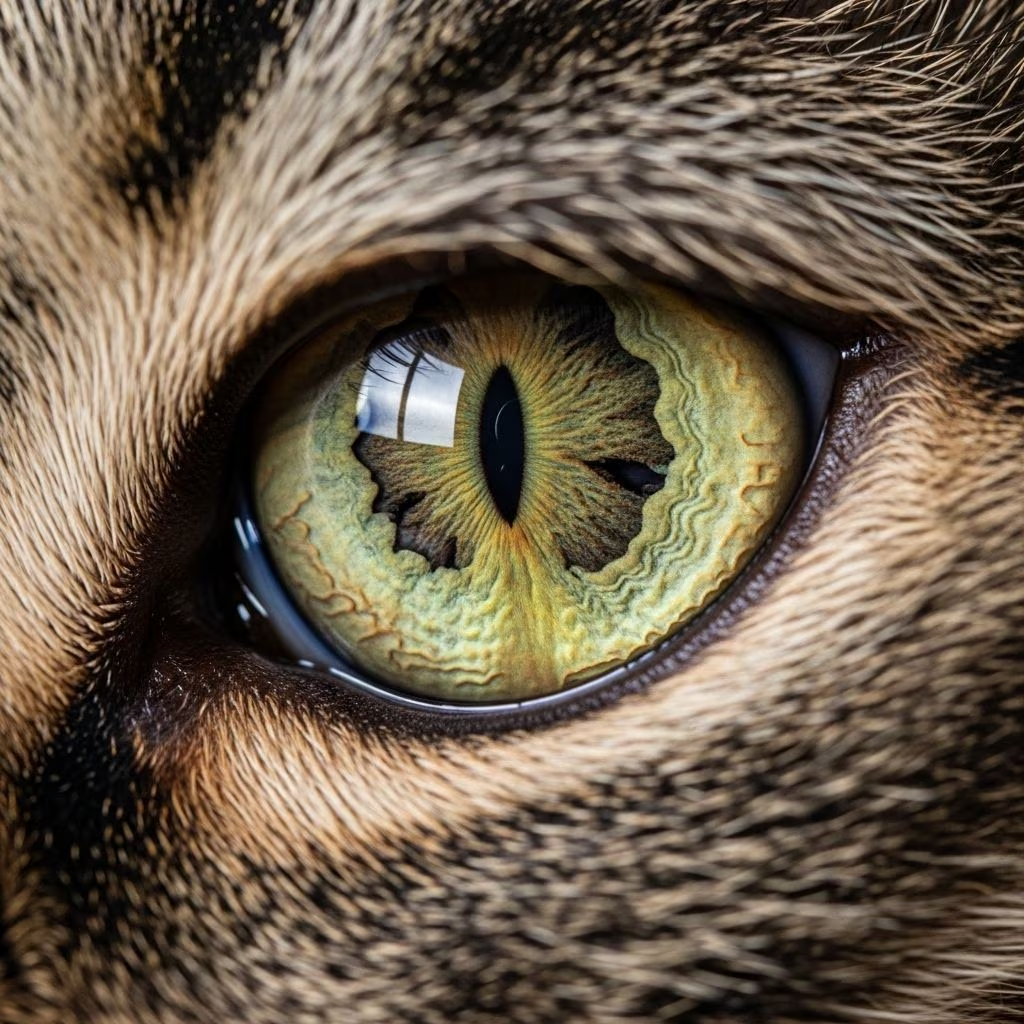
Iris melanosis refers to the development of darkened pigment spots or patches on the colored portion of a cat’s eye, known as the iris. This condition is frequently observed in felines and is generally harmless, not impairing vision or causing discomfort. However, its potential to evolve into a more serious issue necessitates ongoing observation by pet owners and veterinarians alike.
Recognizing the Signs in Your Feline Companion
The primary indicator of iris melanosis is the emergence of flat, brown or black spots on the iris surface. These markings can appear in one or both eyes, often becoming noticeable to owners during routine close-up interactions with their pets. Unlike inflamed or raised lesions, these pigments remain smooth and level with the surrounding tissue.
- Dark freckle-like spots that grow gradually over time.
- Asymmetrical pigmentation altering the eye’s natural hue.
- No associated redness, discharge, or behavioral changes indicative of pain.
Typically surfacing in middle-aged or older cats, this pigmentation change does not favor any specific breed, affecting domestic shorthairs and pedigrees equally. Owners might first spot it during grooming or play when the cat’s eyes are fully dilated or constricted.
Distinguishing Benign Pigmentation from Serious Threats
While iris melanosis itself poses no immediate danger, it shares visual similarities with uveal melanoma, a cancerous growth originating in the eye’s pigmented layers. Key differentiators include the rate of spread and textural shifts. Benign melanosis expands slowly, maintaining a flat profile, whereas malignant forms thicken, become irregular, or invade adjacent structures like the pupil margin or cornea.
| Feature | Iris Melanosis (Benign) | Uveal Melanoma (Malignant) |
|---|---|---|
| Growth Speed | Slow, over months/years | Rapid, within weeks |
| Surface Texture | Smooth, flat | Raised, irregular |
| Spread Pattern | Localized to iris | Extends to pupil, sclera, or retina |
| Associated Issues | None | Glaucoma, uveitis, vision loss |
Secondary complications from advancing melanoma may include elevated intraocular pressure (glaucoma), pupil distortion (dyscoria), or inflammation (uveitis), prompting squinting, tearing, or cloudiness in the eye.
Professional Evaluation and Diagnostic Approaches
Upon noticing pigmentation changes, a veterinary visit is essential. General practitioners often conduct an initial assessment using an ophthalmoscope to magnify the iris. For precise evaluation, referral to a veterinary ophthalmologist is standard, employing tools like slit-lamp biomicroscopy for detailed surface analysis and gonioscopy to inspect drainage angles.
- Fundoscopic exam to check retina and optic nerve.
- Intraocular pressure measurement via tonometry.
- Serial photography for baseline comparison.
Biopsy is rarely performed on suspected benign cases due to risks like inflammation but may be considered if malignancy is probable. Ongoing monitoring every 3-6 months tracks progression through documented photos, measurements, and pressure readings.
Management Strategies for Stability
Since iris melanosis is non-threatening, intervention is unnecessary unless ominous changes emerge. Home vigilance empowers owners to contribute to their cat’s care.
At-Home Monitoring Protocols
- Capture weekly smartphone photos under consistent lighting to document spot size and shape.
- Observe for rapid enlargement, color deepening, or new satellite spots.
- Track any rubbing, light sensitivity, or appetite shifts signaling discomfort.
Scheduled veterinary rechecks, potentially quarterly, quantify changes objectively. No medications or drops are prescribed for uncomplicated melanosis.
Advanced Interventions for Progression
Should pigmentation thicken or spread aggressively, options escalate. Laser photocoagulation targets melanin clusters, ablating cells to curb expansion. This outpatient procedure under anesthesia shrinks lesions by 50% or more, though long-term efficacy lacks large-scale validation.
For confirmed diffuse iris melanoma, enucleation—surgical eye removal—offers the definitive solution. Performed under general anesthesia, it prevents metastasis, with cats adapting swiftly to monocular vision. Post-op care involves antibiotics, pain relief, and an e-collar for 5-7 days, yielding full recovery.
Experimental approaches like melanoma vaccines show promise in trials, eliciting immune responses with minimal side effects, but remain adjunctive.
Risks and Prognosis Insights
Benign iris melanosis carries an excellent outlook, with most cats living unaffected lifespans. The pivotal concern is malignant transformation, estimated in a minority of cases, particularly when pigment reaches iris borders or induces glaucoma.
Early enucleation in suspicious scenarios markedly improves survival by halting spread to lungs or liver. Factors influencing decisions include the cat’s age, contralateral eye health, and lesion dynamics. Veterinary ophthalmologists weigh these holistically, favoring conservative monitoring for stable cases.
Preventive Measures and Routine Wellness
No direct prevention exists for melanosis, but holistic eye health mitigates risks. Annual wellness exams facilitate early detection, while UV-protective environments may indirectly benefit light-colored irises.
- Maintain balanced nutrition supporting ocular antioxidants.
- Avoid trauma that could exacerbate pigmentation.
- Promptly address unrelated eye infections to prevent confounding inflammation.
Frequently Asked Questions
Does iris melanosis impact my cat’s sight?
No, benign melanosis does not obstruct vision. Only advanced melanoma causing glaucoma or retinal detachment does.
How frequently should I monitor the eyes?
Daily visual checks at home, with professional exams every 3-4 months or sooner if changes occur.
Is surgery always required for dark iris spots?
Absolutely not; monitoring suffices for benign cases. Surgery addresses confirmed cancer.
Can both eyes develop this condition?
Yes, though unilateral presentation is more common.
What are monitoring visit costs?
Expect $100-$300 per ophthalmology consult, including exams and imaging.
Empowering Owners for Long-Term Success
Knowledge equips cat guardians to safeguard ocular wellness proactively. Iris melanosis underscores the value of attentiveness, transforming a subtle change into a manageable aspect of pet care. Collaborate with specialists to tailor surveillance, ensuring your feline thrives unhindered by this pigmentary quirk.
References
- Iris Melanosis in Cats: Causes, Symptoms, and Treatment — cats.com. 2023. https://cats.com/iris-melanosis-in-cats
- Iris Melanosis in Cats — BluePearl Pet Hospital. 2023. https://bluepearlvet.com/medical-articles-for-pet-owners/feline-iris-melanosis/
- Iris Melanosis vs Iris Melanoma — The Cat Hospital of Media. 2023. https://www.thecathospitalofmedia.com/iris-melanosis-vs-iris-melanoma/
- Feline Iris Hyperpigmentation — MSPCA-Angell. 2023. https://www.mspca.org/angell_services/feline-iris-hyperpigmentation/
- Diffuse Iris Melanoma in Cats — Veterinary Vision Center. 2023. https://veterinaryvisioncenter.com/diffuse-iris-melanoma-in-cats/
- Eye Tumors – Melanoma in Cats — VCA Animal Hospitals. 2023. https://vcahospitals.com/know-your-pet/eye-tumors-melanoma-in-cats



