

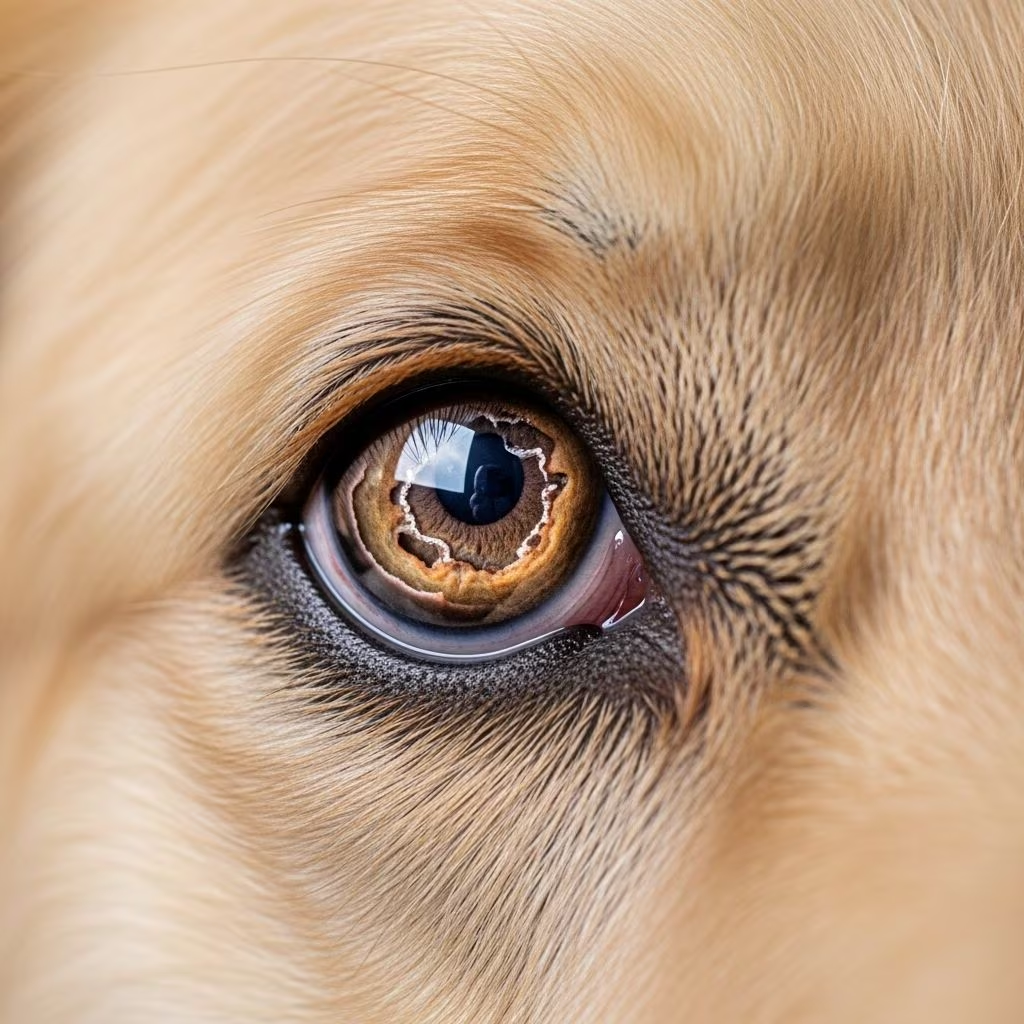
Iris atrophy refers to the progressive thinning and weakening of the iris muscles in dogs, often leading to irregular pupil shapes and altered light responses. This condition primarily affects older dogs as a natural aging process but can also stem from underlying diseases.
Understanding the Iris and Its Role in Canine Vision
The iris is the colored part of the eye that controls the amount of light entering through the pupil by contracting or dilating its sphincter muscle. In healthy dogs, this mechanism adjusts pupil size rapidly to changing light conditions, ensuring optimal vision.
When atrophy occurs, the iris loses elasticity and strength, impairing this function. Primary forms are benign and age-related, while secondary types signal more serious issues like inflammation or pressure buildup.
Types of Iris Atrophy: Primary vs. Secondary
Primary (Senile) Iris Atrophy develops naturally with age, typically in dogs over 8 years old. It involves degeneration of the iris sphincter muscle, resulting in a moth-eaten appearance or scalloped pupil edges. Small and toy breeds, such as Miniature Poodles, Yorkshire Terriers, Chihuahuas, and Miniature Schnauzers, show higher susceptibility.
Secondary Iris Atrophy arises from chronic conditions damaging the iris. Common triggers include uveitis (inflammation of the uvea), glaucoma (elevated intraocular pressure), or ocular trauma. These cases often accompany vision-impairing complications.
| Type | Main Causes | Typical Age/Breeds | Vision Impact |
|---|---|---|---|
| Primary | Age-related degeneration | Senior dogs, small breeds | Minimal, light sensitivity |
| Secondary | Uveitis, glaucoma, trauma | Any age, variable breeds | Potential vision loss |
Recognizing the Signs of Iris Atrophy
Early detection relies on observing subtle eye changes. Common symptoms include:
- Irregular or scalloped pupil margins, resembling a jagged edge.
- Holes or translucent patches in the iris stroma, appearing as black spots.
- Poor pupillary light reflex: pupils fail to constrict properly in bright light.
- Anisocoria: unequal pupil sizes between eyes.
- Increased light sensitivity, leading to squinting or avoiding bright areas.
- Occasional iris strands stretching across the pupil.
These signs often develop gradually over months to years and rarely cause pain. Owners might notice during routine grooming or play in sunlight.
Potential Complications and Differential Diagnoses
While primary atrophy seldom leads to blindness, secondary forms can progress to glaucoma or cataracts if untreated. Differentiate from progressive retinal atrophy (PRA), which causes night blindness and eventual total vision loss, or Horner’s syndrome, featuring a small, miotic pupil.
Uveitis presents with redness, cloudiness, and low eye pressure, contrasting atrophy’s painless nature.
How Veterinarians Diagnose Iris Atrophy
Diagnosis begins with a thorough ophthalmic exam. Vets use a bright light (focal illumination) to inspect iris defects and assess pupil response. Retroillumination highlights holes by projecting light through the pupil onto the iris.
Additional tests include:
- Tonometry: Measures intraocular pressure to rule out glaucoma.
- Fundoscopic exam: Evaluates the retina and optic nerve.
- Ocular ultrasound: Detects hidden trauma or tumors.
- Schirmer tear test and fluorescein staining: Checks for dryness or ulcers.
Bloodwork or aqueous humor analysis may identify systemic causes in secondary cases.
Treatment and Management Strategies
Primary iris atrophy requires no specific therapy, as it poses no threat to vision. Management focuses on comfort:
- Provide shaded environments and limit direct sunlight exposure.
- Use UV-protective dog goggles (Doggles) for outdoor activities to reduce glare.
- Regular vet check-ups to monitor progression.
For secondary atrophy, treat the root cause. Uveitis management involves topical steroids, mydriatics to prevent pupil adhesion, and antibiotics if infection is present. Glaucoma demands pressure-lowering drops like latanoprost or surgery in advanced stages.
Pain relief with NSAIDs improves quality of life during inflammatory episodes.
Prognosis for Dogs with Iris Atrophy
The outlook is excellent for primary cases, with unaffected menace response (blinking to hand motion) confirming preserved vision. Most dogs adapt well, maintaining active lifestyles into seniority.
Secondary cases vary by underlying disease severity. Early intervention prevents complications, yielding good control in 70-80% of uveitis instances per veterinary reports.
Preventive Measures for Canine Eye Health
Though age-related atrophy is unavoidable, proactive steps safeguard eyes:
- Annual senior wellness exams starting at age 7.
- Protect from trauma: Use eyewear during rough play or hikes.
- Maintain vaccinations and parasite control to avert uveitis triggers.
- Balanced senior diet rich in antioxidants (vitamins C, E, lutein) supports ocular tissues.
Avoid self-diagnosis; subtle changes warrant professional evaluation.
FAQs on Iris Atrophy in Dogs
Is iris atrophy painful for dogs?
No, primary atrophy is painless. Secondary types may cause discomfort from underlying inflammation.
Can young dogs get iris atrophy?
Rarely; it’s predominantly senile. Trauma or disease can mimic it in younger pets.
Does iris atrophy lead to blindness?
Primary does not; secondary might if glaucoma or uveitis advances unchecked.
How fast does iris atrophy progress?
Slowly, over months to years in primary cases.
Are there home remedies?
No remedies reverse it. Focus on environmental adjustments and vet-guided care.
Supporting Your Senior Dog’s Vision
As dogs age, iris atrophy symbolizes broader ocular shifts, like lens hardening or retinal thinning. Holistic care—enriched environments, mental stimulation, and mobility aids—ensures joyful golden years. Consult board-certified veterinary ophthalmologists for specialized cases via ACVO directories.
By staying vigilant, owners empower dogs to navigate light and life comfortably.
References
- Disorders of the Anterior Uvea in Dogs — Merck Veterinary Manual. 2023. https://www.merckvetmanual.com/dog-owners/eye-disorders-of-dogs/disorders-of-the-anterior-uvea-in-dogs
- Degeneration of the Iris in the Eye in Dogs / Iris Atrophy — PetMD. 2024. https://www.petmd.com/dog/conditions/eyes/c_dg_iris_atrophy
- Eye: iris atrophy in Dogs (Canis) — Vetlexicon. 2024. https://www.vetlexicon.com/canis/ophthalmology/articles/eye-iris-atrophy/
- Iris Atrophy in Dogs: Vet-Reviewed Causes, Signs, & Care — Dogster. 2024. https://www.dogster.com/dog-health-care/iris-atrophy-in-dogs
- Degenerative iris atrophy — Brooklyn Veterinary Group. 2023. https://www.brooklynvetgroup.com/11/128/Degenerative_Iris_Atrophy.htm



