

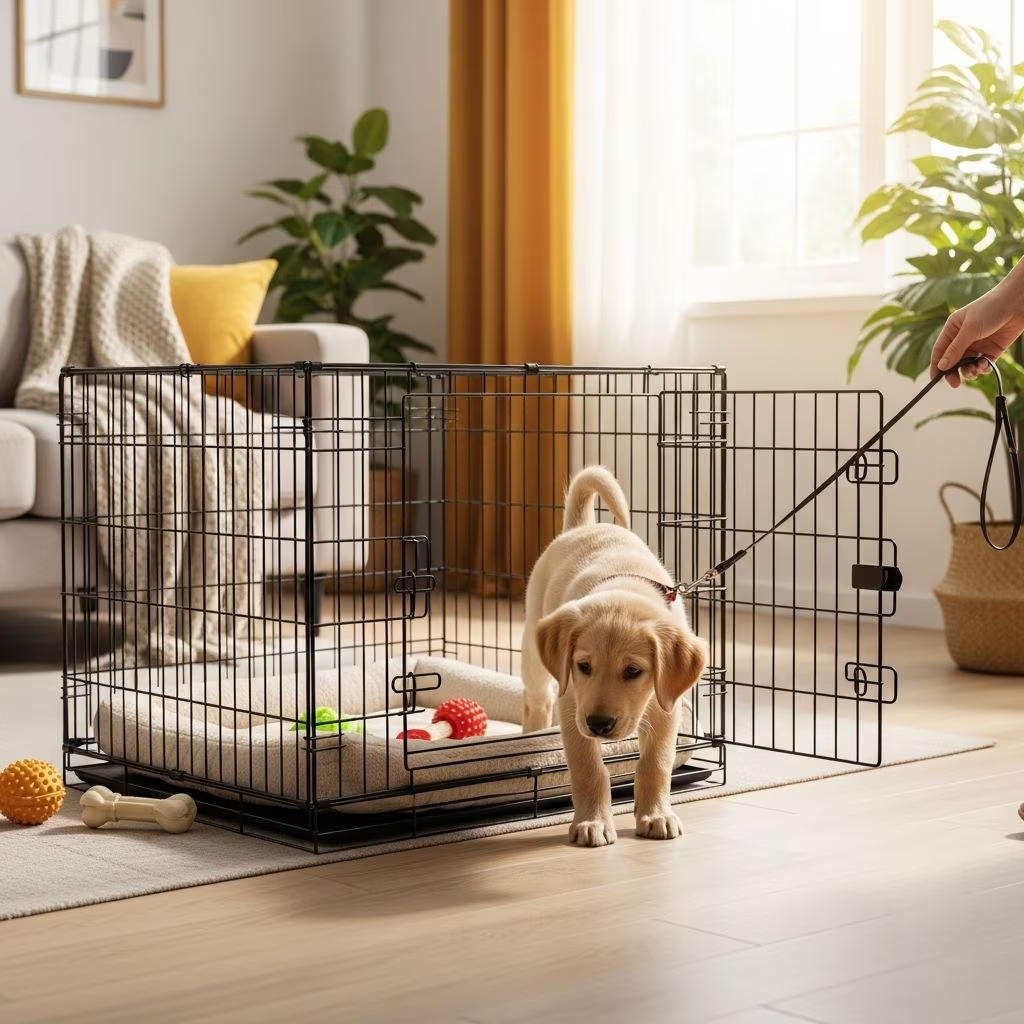
Crate training provides dogs with a secure, den-like space that mimics their natural instincts for safe resting. When done correctly, it prevents destructive behaviors, aids house training, and ensures safety during alone time. This comprehensive guide outlines a positive, gradual approach suitable for puppies as young as 8 weeks and adult dogs, drawing from established humane methods to foster comfort rather than confinement.
Why Crate Train Your Dog?
Dogs are denning animals by nature, seeking enclosed spaces for security and rest. A properly introduced crate becomes a voluntary retreat, reducing anxiety and promoting calm behavior. Key benefits include:
- House training acceleration: Crates leverage a dog’s instinct to avoid soiling their sleeping area, minimizing accidents.
- Safety during absences: Prevents chewing hazards or escapes when unsupervised.
- Travel readiness: Eases car trips, vet visits, and boarding by familiarizing dogs with confinement.
- Behavioral management: Offers a timeout space without punishment, helping overstimulated dogs relax.
Contrary to misconceptions, crates are not ‘prisons’ when introduced positively. Studies from animal welfare organizations confirm that dogs spending 97% of crate time resting or sleeping view them as havens, not punishments. Always prioritize short sessions initially—puppies under 6 months should not exceed 3-4 hours, adults up to 6-8 hours max during the day.
Choosing the Right Crate
Select a crate sized so your dog can stand, turn around, and lie down comfortably, but not so large they can soil one end and sleep in the other. For growing puppies, use dividers to adjust space progressively.
| Crate Type | Best For | Pros | Cons |
|---|---|---|---|
| Wire | Most dogs | Breathable, foldable, durable | Can feel exposed; cover for security |
| Plastic (Airline-approved) | Travel, shy dogs | Enclosed, secure | Less ventilation, harder to clean |
| Fabric Soft-sided | Small dogs, apartments | Lightweight, portable | Not chew-proof, poor for puppies |
Placement matters: Position in a family area like the living room for socialization, or bedroom for nighttime. Avoid drafts, direct sun, or isolation to prevent stress.
Step 1: Introduce the Crate
Begin without pressure to build positive associations. Place the crate in a high-traffic family area with the door removed or propped open.
- Add a soft, washable bed or blanket scented with your dog’s smell for familiarity.
- Include safe chew toys or a stuffed Kong to entice exploration.
- Encourage entry by tossing high-value treats nearby, then inside, praising happily without forcing.
Let your dog investigate at their pace—curious pups may enter immediately, while fearful ones need days. Speak in an enthusiastic tone: “Look at this cool den!” Never push or scare them, as this creates aversion. For reluctant dogs, start feedings just inside the door, inching the bowl deeper over meals until they eat confidently at the back.
Step 2: Feeding and Toys in the Crate
Mealtimes solidify positivity. Feed every meal inside once they enter willingly.
- Place the food dish at the back after entry.
- Close the door while they eat; open immediately after for the first sessions.
- Gradually extend door-closed time post-meal: 1 minute, then 5, up to 10 minutes.
Enhance with puzzle toys or frozen Kongs filled with peanut butter—your dog associates the crate with rewards, not isolation. Vary toys to maintain interest, ensuring they’re safe and non-swallowable. Provide a clip-on water bowl for longer sessions, but monitor spills.
Step 3: Closing the Door
Once comfortable eating inside, practice short closures with you present.
- Cue entry (e.g., “Crate” or “Kennel”), treat, and latch the door.
- Sit quietly nearby for 5-10 minutes, speaking soothingly if needed.
- Step to another room briefly, return calmly, then release with praise—not excitement.
- Repeat 3-5 times daily, extending to 30 minutes over days/weeks.
Watch for stress signs: whining, pawing, drooling. If seen, shorten sessions and rebuild slowly. Patience prevents setbacks—most dogs adapt in 1-4 weeks.
Step 4: Leaving Your Dog Crated Alone
Transition to absences once 30-60 minutes is easy.
- Crate 5-20 minutes before your “leaving routine” (picking keys, shoes) to desensitize triggers.
- Start with 1-5 minute departures, building to 1-2 hours.
- Return quietly; ignore until calm before release.
- Nighttime: Crate in your bedroom initially for comfort, moving to preferred spot later.
Vary routines to avoid anxiety cues. For puppies, combine with potty breaks every 2-4 hours based on age (e.g., 2-month-old: 2 hours max). Adults handle 4-6 hours daytime.
Tips for Success
Maximize comfort and minimize errors:
- Cover partially: Drape a blanket over three sides for den-like security, leaving ventilation.
- Quiet zone rules: Teach family/children not to disturb—crate is sacred.
- Exercise first: Tire dogs with walks/play before crating.
- Never punish: No scolding into crate; it’s a haven, not timeout.
- Monitor duration: Pups: age in months +1 = max hours (e.g., 3 months = 4 hours).
Pro tip: Use calming aids like Adaptil diffusers if needed, but prioritize behavioral conditioning.
Troubleshooting Common Issues
| Problem | Solution |
|---|---|
| Whining/Barking | Wait for 5-second quiet before release; ignore attention-seeking noise. |
| Escapes/Chewing | Upgrade to stronger crate; increase exercise/toys. |
| Fear of Entry | Go slower with treats; feed outside first. |
| Soiling Inside | More frequent potty breaks; smaller crate size. |
If regressions occur (e.g., new home), restart at introduction. Consult vets/trainers for severe anxiety.
Frequently Asked Questions (FAQs)
Can I crate train an adult rescue dog?
Yes, with extra patience. Many rescues have negative connotations, so use high-value rewards and short sessions. Success rates are high within 2-6 weeks.
How long can I leave my puppy crated?
Follow the rule: puppy’s age in months +1 hour max daytime (e.g., 4 months = 5 hours). Overnight up to 8 hours with water.
Should I put water in the crate?
For sessions over 2 hours, yes—use spill-proof bowls. Monitor puppies closely to avoid mess.
Is crate training cruel?
No, when voluntary and sized right. Humane societies endorse it as a welfare tool, with dogs self-entering 80%+ of the time post-training.
What if my dog hates the crate?
Revisit basics: new location, softer bedding, slower pace. Professional help if phobia persists.
Crate training transforms behavior long-term. Consistency yields a confident, secure dog who views their crate as home. Start today for safer, happier pet parenting.
References
- How to Crate Train Your Dog or Puppy — Humane World for Animals. 2023. https://www.humaneworld.org/en/resources/crate-training-101
- How to Crate Train a Puppy — RSPCA. 2024. https://www.rspca.org.uk/adviceandwelfare/pets/dogs/environment/crates
- A Foolproof Guide to Successful Crate Training — CCSPCA. 2023. https://ccspca.com/blog-spca/education/crate-training/
- Crate Training Your Dog — Richmond SPCA. 2024-09. https://richmondspca.org/wp-content/uploads/2024/09/Crate-Training-Your-Dog-2024.pdf
- Crate Training for Your Dog — SPCA Tampa Bay. 2024. https://spcatampabay.org/dog-crate-training/
- Crate Training Your Dog or Puppy — Animal Humane Society. 2024. https://www.animalhumanesociety.org/resource/crate-training-your-dog-or-puppy



