

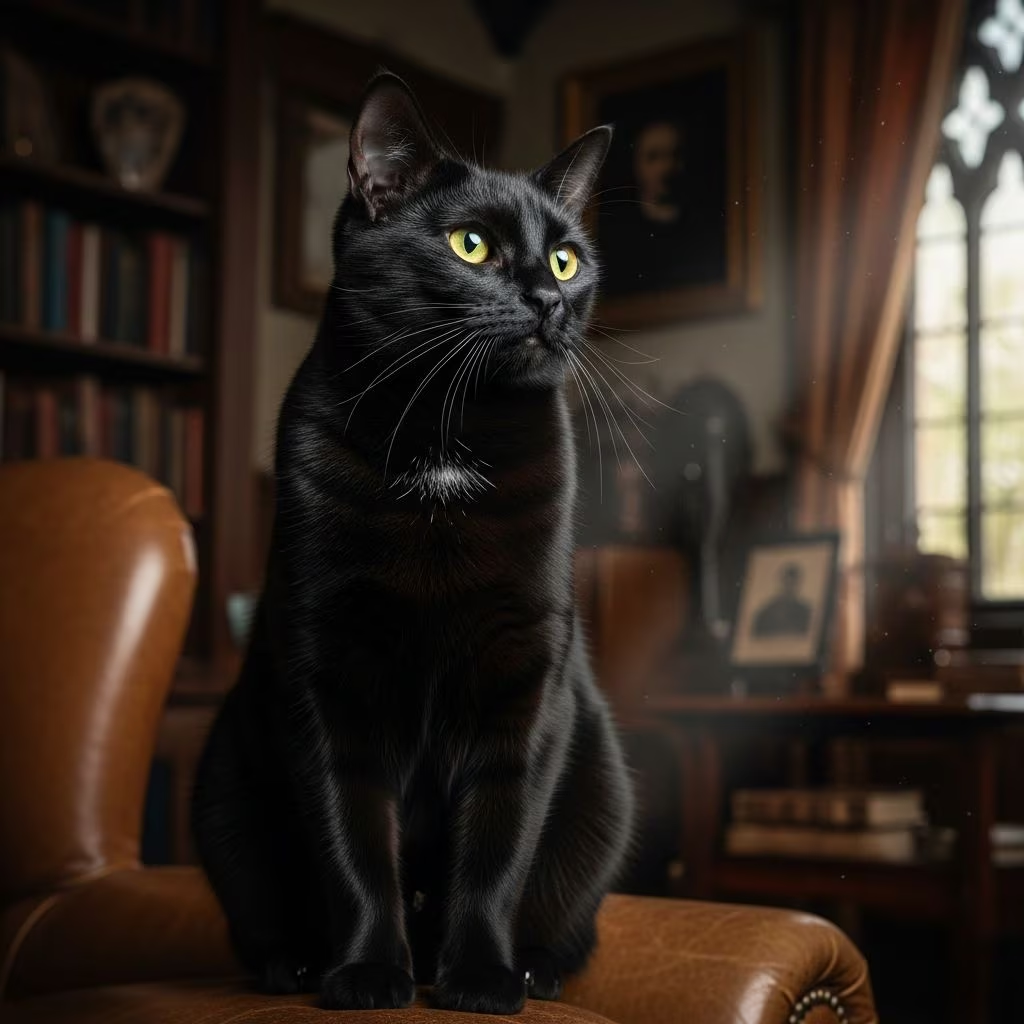
Introducing the Newest Poe Museum Cat
Edgar Allan Poe famously adored cats, and his beloved tortoiseshell companion frequently curled up on his shoulder while he worked on his literary masterpieces. It seems only appropriate that the Poe Museum in Richmond, Virginia, where the celebrated author grew up, has maintained a long-standing tradition of welcoming feline residents. For more than a decade, two black cats named Edgar and Pluto, discovered as kittens in the museum’s garden, have served as official greeters, lounged throughout the gift shop, and enchanted visitors both in person and through the museum’s online presence. However, when Pluto passed away in 2023, Edgar found himself without his lifelong companion, leaving museum staff to seek a new friend for the beloved senior cat.
The Legacy of Poe Museum Cats
The tradition of cats at the Poe Museum represents more than just a charming addition to the visitor experience. These feline residents embody the spirit of Edgar Allan Poe’s own appreciation for cats and serve as living connections to the author’s life and work. The museum’s commitment to housing rescue cats demonstrates a dedication to animal welfare that extends beyond the museum’s mission to preserve and share Poe’s literary legacy. The previous residents, Edgar and Pluto, became so integral to the museum’s identity that visitors often asked about them as much as they inquired about the historic house and its exhibits.
The decision to replace Pluto with another rescue cat reflected the museum’s values and commitment to supporting animal shelters in their mission to save lives. Rather than seeking a kitten through conventional means, museum staff recognized an opportunity to partner with local animal welfare organizations to find a new companion for Edgar while also promoting animal adoption.
Finding the Perfect Match
When the time came to find Edgar a new companion, the Poe Museum staff turned to a trusted local partner: the Richmond SPCA, an established animal shelter with a strong reputation for rescuing and rehoming cats and other animals. This partnership proved particularly fruitful, as the Richmond SPCA had recently worked with the museum on a Friday the 13th black cat adoption event held just weeks before Pluto’s passing. The shelter staff were already familiar with the museum’s commitment to animal welfare and understood what qualities would make an ideal fit for the museum environment.
The timing of this search coincided with an important rescue mission at the Richmond SPCA. The shelter had recently taken in a group of 11 kittens from a rural shelter, providing them with a second chance at finding loving homes. Among these kittens was one particularly special little cat whose personality would prove to be exactly what the museum was seeking. The shelter staff recognized the potential for something remarkable to unfold when they learned about the museum’s search for a new resident.
Welcoming Tib to the Poe Museum
The kitten who would become the Poe Museum’s newest resident possessed the ideal combination of traits: playful, bold, and possessing just the right amount of mischief to charm visitors while maintaining the dignified atmosphere befitting a literary museum. Museum staff named their new arrival Tib, a meaningful choice that references Edgar Allan Poe’s own childhood cat. This thoughtful naming decision honored both Poe’s personal history and the new kitten’s role in continuing the museum’s feline legacy.
Edgar, the senior black cat who had mourned the loss of his lifelong companion Pluto, quickly warmed to Tib’s infectious energy and playful antics. The two cats formed an immediate bond, with Edgar assuming the role of mentor and guide. Through this dynamic duo, a touching story of companionship and mentorship emerged—one that would resonate with museum visitors and online followers alike.
The Daily Life of a Museum Cat
Role and Responsibilities
Tib’s position at the Poe Museum encompasses far more than simply being a resident cat. As one of the museum’s official greeters, Tib has taken on the responsibility of welcoming visitors as they arrive to explore the historic house and learn about Poe’s life and works. The young cat can frequently be found napping on the admissions desk, creating charming photo opportunities for guests. Tib also serves as an unofficial gift shop supervisor, often lounging in the retail space and adding a touch of feline charm to the shopping experience.
One of Tib’s most endearing qualities is his willingness to become part of visitor photographs and selfies. Museum guests delight in capturing candid moments with the playful kitten photobombing their pictures, creating memories that extend beyond the typical museum visit. Additionally, Tib has proven himself to be something of a troublemaker in the most lovable way possible—Edgar has taught his young protégé the fine art of occasionally toppling trash cans in pursuit of snacks, keeping museum staff on their toes while maintaining the lighthearted atmosphere that makes the museum experience memorable.
Training and Mentorship from Edgar
Edgar’s role as mentor has proven invaluable in Tib’s development as a museum ambassador. The senior cat has been teaching Tib the essential skills required to thrive in the museum environment, including the art of charming guests, stealing hearts with a well-timed purr or head bump, and navigating the complex social dynamics of a busy visitor-filled space. This natural mentorship has allowed for a smooth transition and has ensured that Tib understands his role within the museum’s ecosystem.
Partnership with Richmond SPCA
The collaboration between the Poe Museum and the Richmond SPCA represents a significant example of how cultural institutions can support animal welfare efforts in their communities. The Richmond SPCA’s work with rural shelters, as demonstrated by their rescue of the 11 kittens that included Tib, showcases the broader network of animal welfare organizations working together to save lives. Through partnerships like this, rural shelters can transfer animals to urban facilities with greater adoption resources, significantly improving their chances of finding permanent homes.
This partnership model has become increasingly important in the animal welfare landscape. By working collaboratively across geographic and organizational boundaries, shelters maximize their capacity to save lives. The fact that Tib came from a group of kittens rescued from a rural shelter and was brought to the Richmond SPCA demonstrates how these networks operate to give animals multiple opportunities for placement and adoption.
The Broader Impact on No-Kill Initiatives
Tib’s story represents more than just a feel-good tale of a kitten finding a home in an unexpected place. It exemplifies the broader mission of organizations like Best Friends Animal Society to create no-kill communities across the United States. The no-kill philosophy centers on the belief that every dog and cat in a shelter who can be saved should be saved, accounting for community safety and ensuring good quality of life for all animals.
The success of Tib’s placement at the Poe Museum contributes to larger conversations about alternative housing options for shelter animals. While traditional family homes remain the primary goal for most rescue animals, Tib’s experience demonstrates that creative placements—such as retail shops, farms, and cultural institutions—can provide excellent homes for animals with the right temperament and needs.
Why Museum Cats Matter
The presence of cats in museums and cultural institutions serves multiple purposes beyond simple companionship. These feline residents can enhance visitor experiences, create emotional connections to institutions, and serve as ambassadors for animal welfare causes. Tib and Edgar, along with other museum cats like Bone Jovi at the Bone Museum in Brooklyn, New York, have become attractions in their own right, drawing visitors and generating social media engagement.
Museums that employ cats also contribute to broader cultural conversations about animal welfare and the value of adoption. When visitors encounter happy, well-cared-for shelter cats thriving in museum environments, it challenges preconceptions about where rescue animals can find suitable homes and encourages visitors to consider adoption for their own households.
Tib’s Impact on the Museum Community
Since joining the Poe Museum staff, Tib has become a beloved fixture of the visitor experience. Regular visitors now ask about the young cat’s antics, and the museum’s social media followers have embraced Tib as a personality worth following. The kitten’s presence has reinvigorated interest in the museum’s feline residents and has drawn new attention to the institution’s partnership with the Richmond SPCA.
The story of Tib also serves as an inspiration for other cultural institutions considering animal residents. By demonstrating that a rescue kitten can successfully integrate into a museum environment and thrive while contributing to the visitor experience, the Poe Museum has set an example for other institutions interested in supporting animal welfare while enriching their own operations.
Looking Forward: Continuing the Legacy
As Tib settles into his role at the Poe Museum, he and Edgar continue to write new chapters in the museum’s feline history. Edgar, now paired with a young companion who energizes him, has regained some of his spark and vitality. Meanwhile, Tib brings fresh enthusiasm and charm to the museum’s daily operations. Together, they represent a living bridge between Edgar Allan Poe’s own love of cats and contemporary animal welfare efforts.
The success of this partnership suggests that the Poe Museum may continue to welcome rescue cats as residents for years to come. Should Edgar eventually retire or pass away, the museum now has a proven model for finding and integrating new feline companions, ensuring that the tradition established more than a decade ago continues to thrive.
Frequently Asked Questions
Q: Where did Tib come from before joining the Poe Museum?
A: Tib was one of 11 kittens rescued by the Richmond SPCA from a rural shelter. The shelter staff recognized his playful and bold personality as an ideal fit for the museum environment and connected him with the Poe Museum staff.
Q: How did the Poe Museum choose the name Tib?
A: Museum staff named the kitten Tib as a tribute to Edgar Allan Poe’s own childhood cat, honoring both the author’s personal history and continuing the museum’s feline legacy.
Q: What is Tib’s relationship with Edgar, the senior museum cat?
A: Edgar and Tib have formed a strong bond, with Edgar serving as Tib’s mentor, teaching him how to charm guests and navigate the museum environment. The two are now inseparable companions.
Q: Can visitors interact with Tib during museum visits?
A: Yes, Tib frequently greets visitors from the admissions desk and gift shop, and guests often capture photos with the playful kitten. However, visitors should follow museum guidelines regarding interaction with Tib.
Q: Why is the partnership between the Poe Museum and Richmond SPCA important?
A: This partnership demonstrates how cultural institutions can support animal welfare efforts by providing alternative placement options for shelter animals and promoting adoption to their audiences.
Q: What does the no-kill philosophy mean?
A: No-kill means saving every dog and cat in a shelter who can be saved, accounting for community safety and ensuring good quality of life for pets. It requires collaboration between shelters, rescue organizations, and communities.
References
- Introducing the newest Poe Museum cat — Best Friends Animal Society. 2024. https://bestfriends.org/stories/features/introducing-newest-poe-museum-cat
- Home sweet bone: Adopted cat living in museum — Best Friends Animal Society. 2024. https://bestfriends.org/stories/videos/home-sweet-bone-adopted-cat-living-museum
- Let’s make every shelter and every community no-kill in 2025 — Best Friends Animal Society. 2024. https://bestfriends.org



